
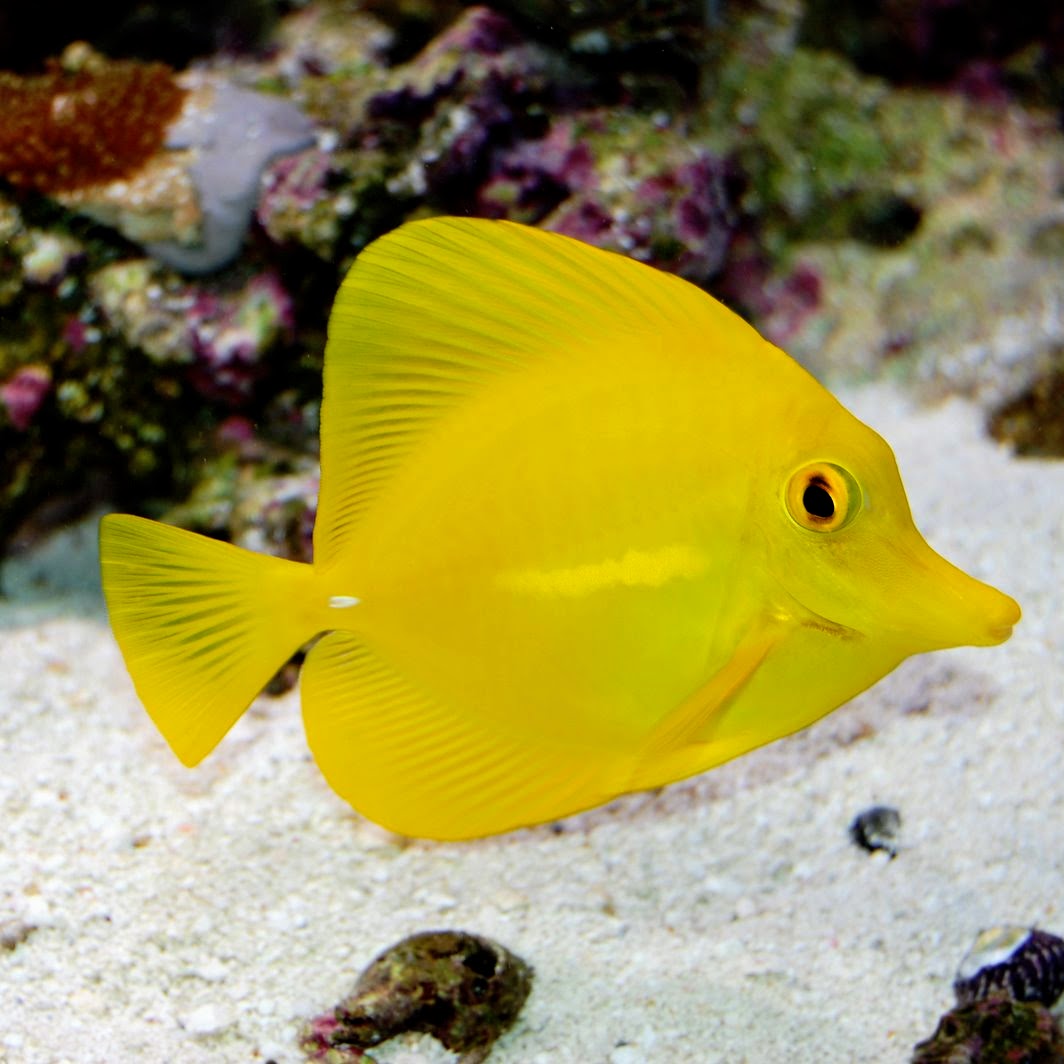
Yellow Tang Care: A Bright Icon for Marine Aquariums
The Yellow Tang is one of the most recognizable and sought-after saltwater fish in the hobby. With its vivid golden body and constant grazing behavior, this active surgeonfish adds movement and color to almost any reef tank. Before bringing one home, it’s important to understand its care needs, temperament, and long-term requirements.
Yellow Tang Basics: Size, Temperament, and Tank Requirements
Yellow Tangs (Zebrasoma flavescens) are active swimmers that need plenty of open space and rockwork to explore. They are generally hardy once established, but they do require stable water quality and an appropriately sized system.
- Scientific name: Zebrasoma flavescens
- Adult size: 7–8 inches (18–20 cm)
- Minimum tank size: 75 gallons, larger preferred
- Temperament: Semi-aggressive, especially toward other tangs
- Reef compatibility: Generally reef-safe
Because of their constant swimming, a long tank with strong, varied flow is ideal. Provide plenty of live rock for grazing and hiding, while leaving ample open water for cruising.
Diet and Nutrition: Keeping Your Yellow Tang Healthy
In the wild, the Yellow Tang spends most of its day grazing on algae. Replicating this diet in captivity is key to long-term health, coloration, and immune strength.
Feeding Guidelines
- Offer marine-based seaweed (nori) on a clip 4–7 times per week.
- Supplement with high-quality herbivore pellets or flakes.
- Include frozen foods like mysis shrimp and spirulina-enriched blends.
- Feed small portions 2–3 times daily rather than one large meal.
Tip: Soak seaweed or pellets in a vitamin supplement to support immune health and help prevent common issues like head and lateral line erosion.
A well-fed Yellow Tang is more resistant to stress and disease, and will show deeper yellow coloration with a full, rounded body profile.
Compatibility, Acclimation, and Long-Term Care
Yellow Tangs can be territorial, particularly with other surgeonfish or similarly shaped species. Planning your stocking list and introduction order will help minimize aggression.
Stocking and Compatibility Tips
- Add your Yellow Tang to a mature, stable system with established biological filtration.
- Introduce it after smaller, timid fish to reduce bullying.
- Avoid keeping it with other Zebrasoma tangs in smaller tanks.
- Provide multiple hiding spots and visual barriers with rockwork.
Consistent water parameters are vital. Aim for:
- Temperature: 76–80°F (24–27°C)
- Salinity: 1.024–1.026 specific gravity
- pH: 8.1–8.4
- Low nitrates and minimal phosphates
Because they are prone to marine ich and other parasites, a proper quarantine process is highly recommended before adding a Yellow Tang to your display. For more on building a stable system, see our guide on beginner reef tank setup and our overview of saltwater fish care. If you’re planning a mixed community, you may also want to read about reef-safe fish that pair well with tangs.
With adequate space, a nutritious diet, and careful tankmate selection, the Yellow Tang can thrive for many years, becoming a centerpiece and constant grazer in your marine aquarium.