Watermelon Psammocora
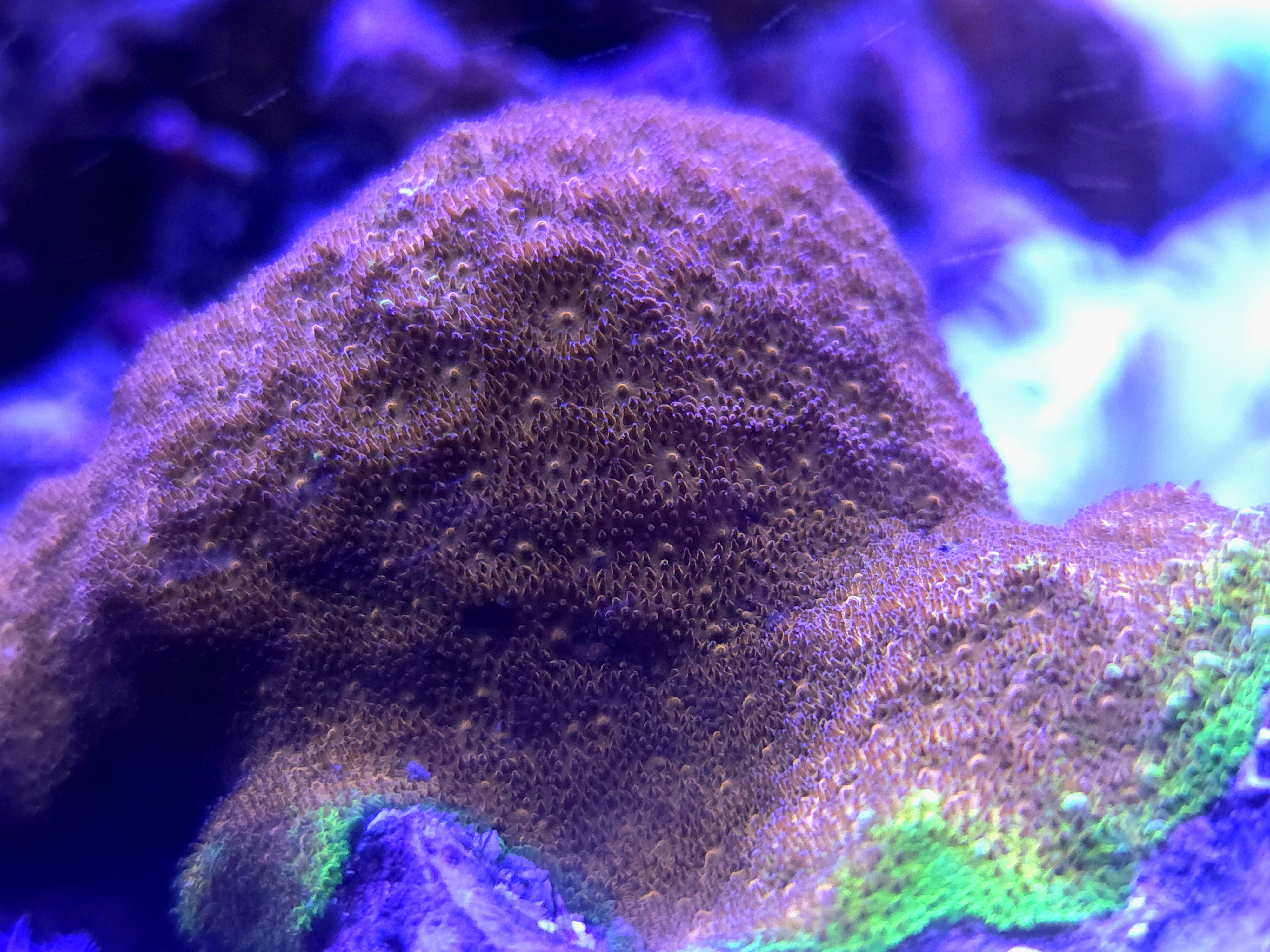
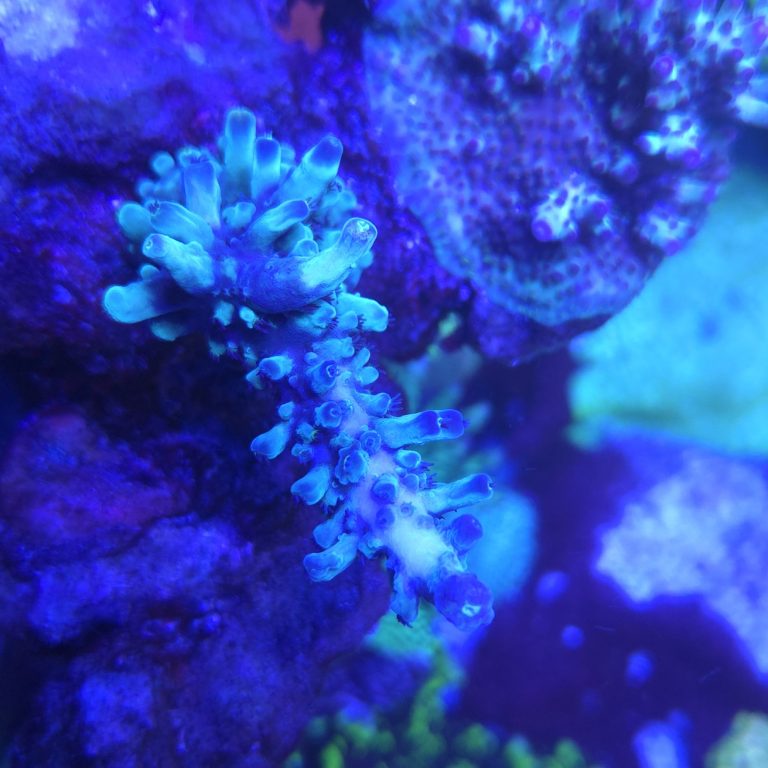
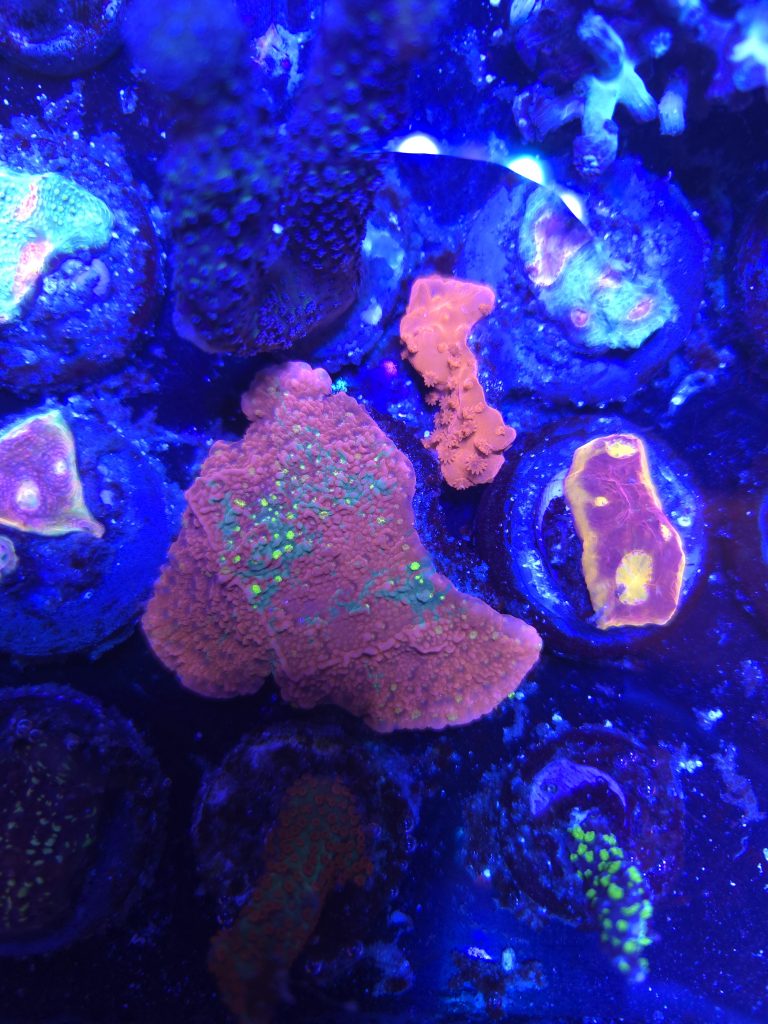
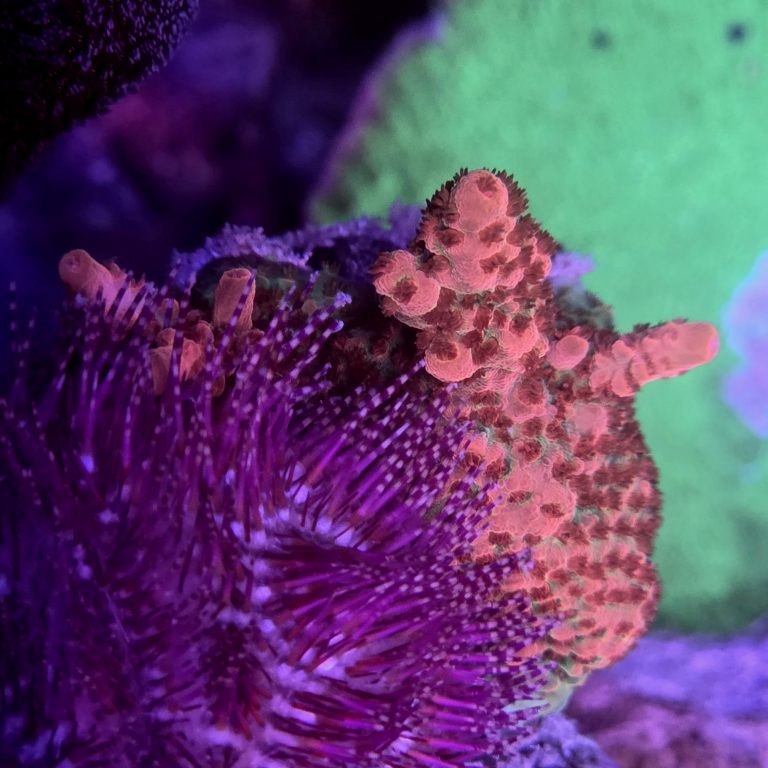
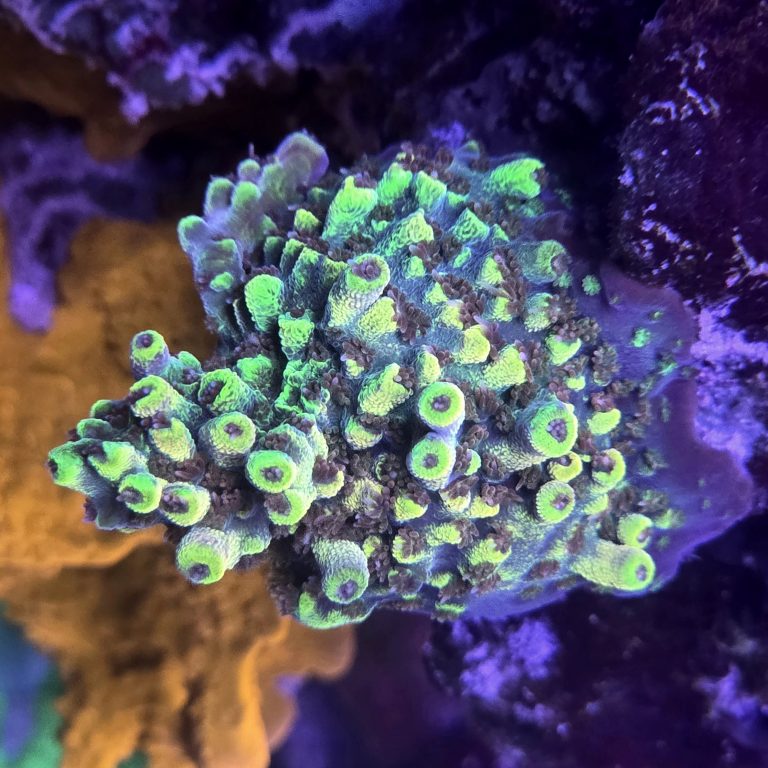
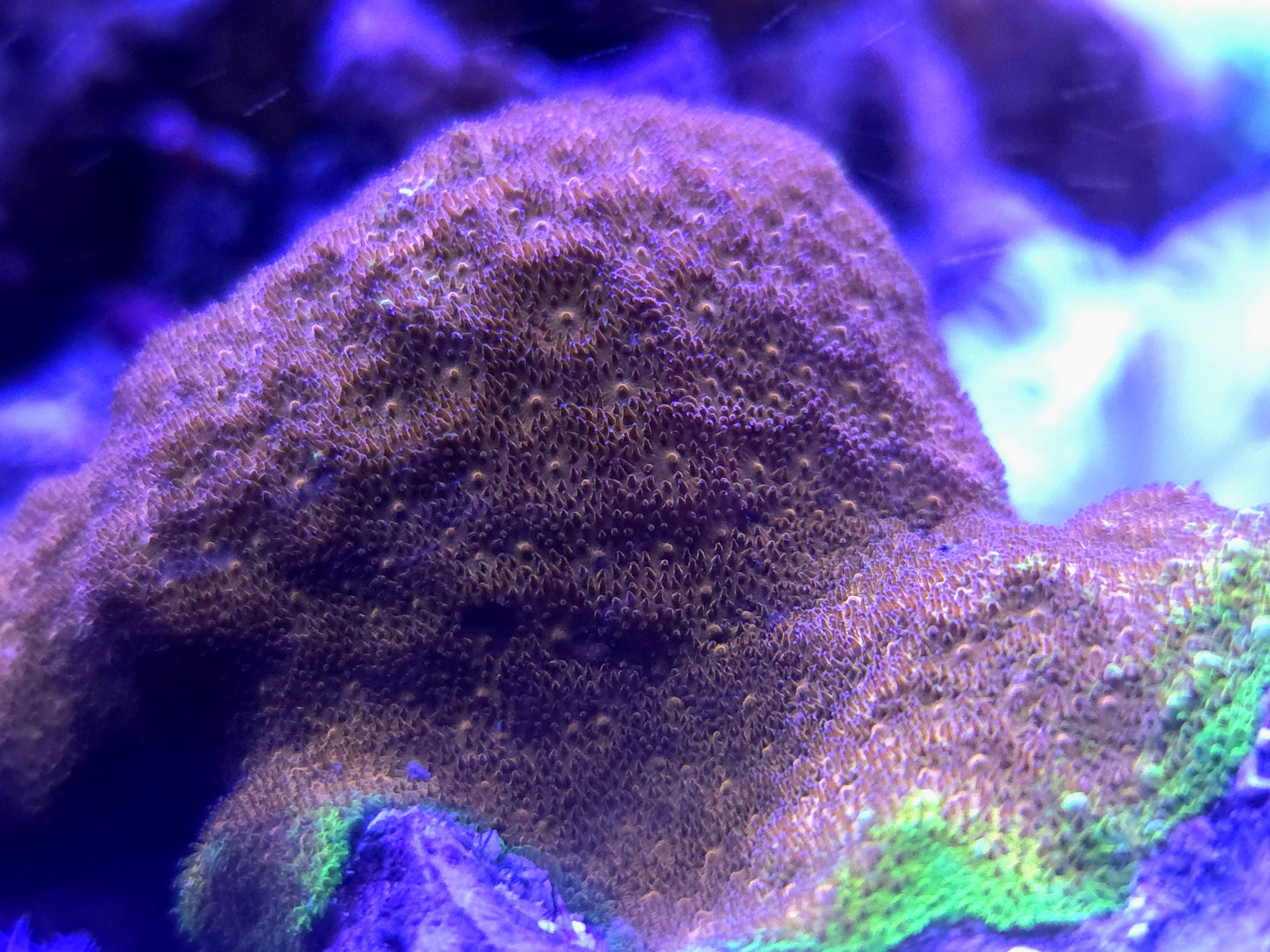
Watermelon Psammocora is a hardy, encrusting SPS coral with bright green and pink tones. It is a great choice for reef keepers who want color without extreme difficulty. With the right placement and care, this coral can quickly cover rock and create a vivid, textured reef wall.
Watermelon Psammocora Basics and Placement
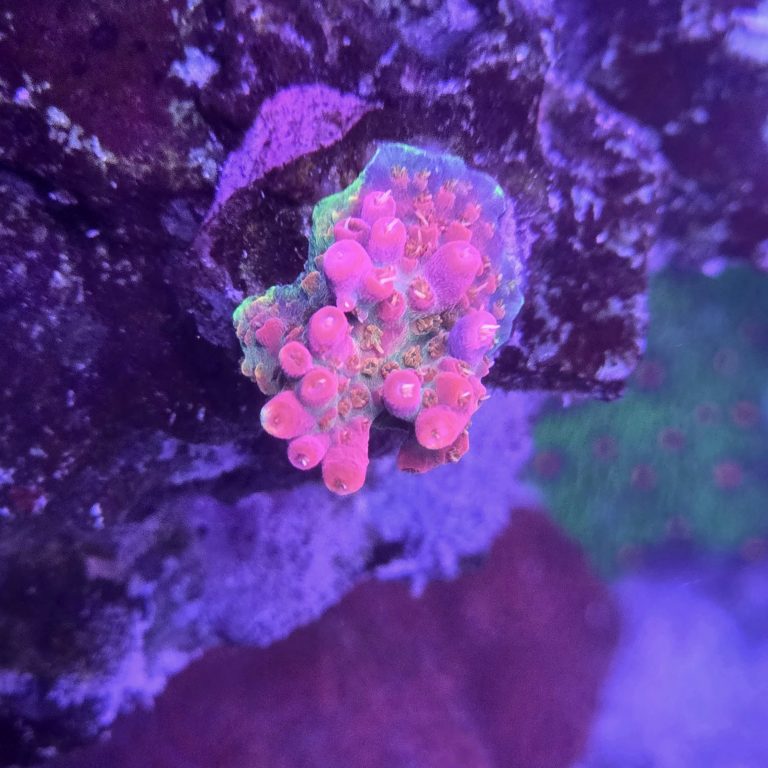
Watermelon Psammocora is an encrusting small polyp stony coral. It spreads across rock surfaces rather than forming large branches. The classic “watermelon” look shows a green base with pink to reddish highlights. Color can shift with light intensity and nutrient levels.
A tank size of 20 gallons or larger works best. This coral can grow fast and needs room to spread. Place new frags on separate rocks or islands. This prevents it from overrunning slower corals. Glue frags to clean, stable rock using reef-safe super glue gel.
Target moderate to strong flow. Aim for random, indirect movement rather than a direct blast. Good flow keeps detritus off the surface and helps prevent algae from settling. It also improves gas exchange and polyp health.
- Ideal temperature: 24–26°C (75–79°F)
- Salinity: 1.025–1.026 specific gravity
- Alkalinity: 8–9.5 dKH, stable
- Calcium: 420–450 ppm
- Magnesium: 1300–1400 ppm
Keep nutrients low but not stripped. Aim for 2–10 ppm nitrate and 0.02–0.08 ppm phosphate. Very low nutrients can cause pale tissue and slow growth. Dirty water encourages algae that can smother the colony.
Lighting, Feeding, and Troubleshooting
Watermelon Psammocora prefers moderate to high PAR. Aim for 150–250 PAR at the coral surface. Start new frags lower in the tank and move them up slowly. Increase light over 2–3 weeks to avoid bleaching. Use a PAR meter if possible, or follow your light manufacturer’s guidelines.
Blue-heavy spectrums bring out the best fluorescence. Too much white light can wash out colors. Keep a stable photoperiod of 8–10 hours. Sudden changes in schedule or intensity can stress the coral.
- Acclimate to new lights using a ramp-up mode.
- Watch for faded tips, which can signal too much light.
- Look for browned tissue, which can indicate excess nutrients.
Psammocora mainly relies on its zooxanthellae for energy. It still benefits from targeted feeding. Offer fine particulate foods once or twice per week. Use products like reef roids, powdered plankton, or very fine coral foods. Turn off flow for 10–15 minutes so food can settle on the surface.
- Do not overfeed; watch your skimmer and nutrients.
- Rinse frozen foods to reduce phosphate.
- Perform 10–15% water changes every 2–4 weeks.
Common issues include tissue recession at the edges and algae creeping onto bare skeleton. Check alkalinity first when you see recession. Rapid swings often cause stress. If algae appears, gently brush it off with a soft toothbrush during a water change. Improve flow and reduce nutrients to prevent it from returning.
Watermelon Psammocora is a forgiving SPS for mixed reefs. With stable parameters, balanced light, and thoughtful placement, it can become a colorful, fast-growing highlight in your aquascape.
Add to Wishlist