
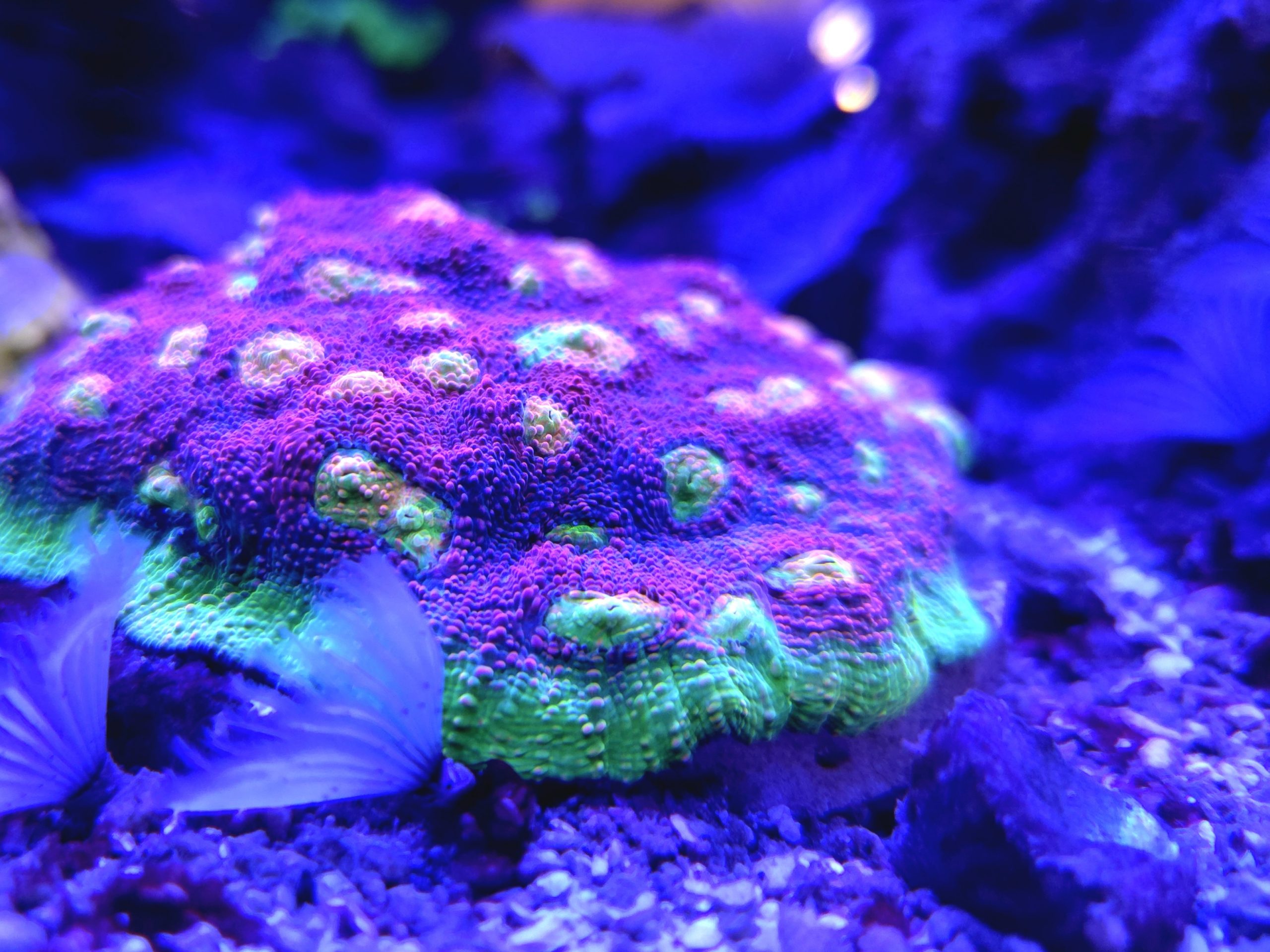
The Watermelon Chalice is a stunning LPS coral known for its neon green base, pink to red “rind,” and bright eyes. It’s not the hardest chalice to keep, but it does demand stable conditions and a bit of strategy in placement and feeding.
Placement, Lighting & Flow
Start your Watermelon Chalice low and shaded, then slowly adjust if needed. These corals often lose color or recede when blasted with light or flow.
- Lighting: Low to moderate PAR (60–120). If you’re running strong LEDs, place it on the sandbed or in a shaded ledge.
- Acclimation: Use a 2–3 week light acclimation mode or move the coral up no more than a few inches per week.
- Flow: Low to gentle, indirect flow. The tissue should sway slightly, not flap or expose skeleton.
- Space: Give at least 2–3 inches around it; chalices can extend sweeper tentacles at night.
Water Parameters & Feeding
Consistency matters more than chasing exact numbers. Aim for stable, “middle-of-the-road” reef parameters:
- Alkalinity: 8–9 dKH
- Calcium: 420–450 ppm
- Magnesium: 1300–1400 ppm
- Nitrate: 5–15 ppm; Phosphate: 0.03–0.08 ppm
Tip: If you see the edges lightening or receding, test alkalinity first—rapid swings are a common trigger.
Feeding for Color and Growth
- Target feed 1–2 times per week after lights out with small meaty foods (mysis, reef roids, fine pellet).
- Turn off pumps for 10–15 minutes so food stays on the coral’s surface.
- Watch for feeding response: tiny tentacles or “slime” grabbing food is a good sign.
With gentle light, soft flow, and stable nutrients, your Watermelon Chalice will reward you with intense color and a fast-enough growth rate to frag and share with other hobbyists.