Watermelon Chalice
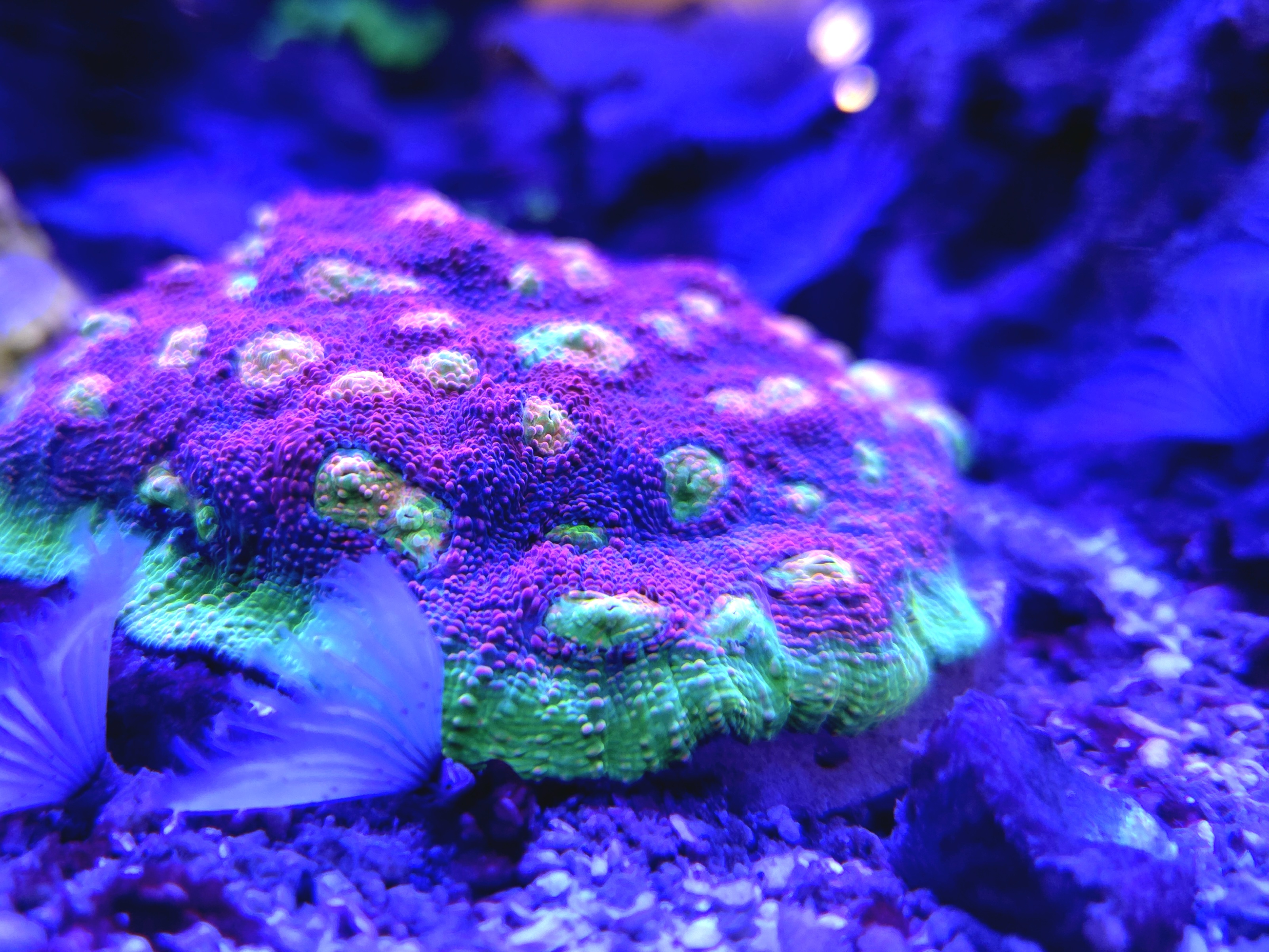
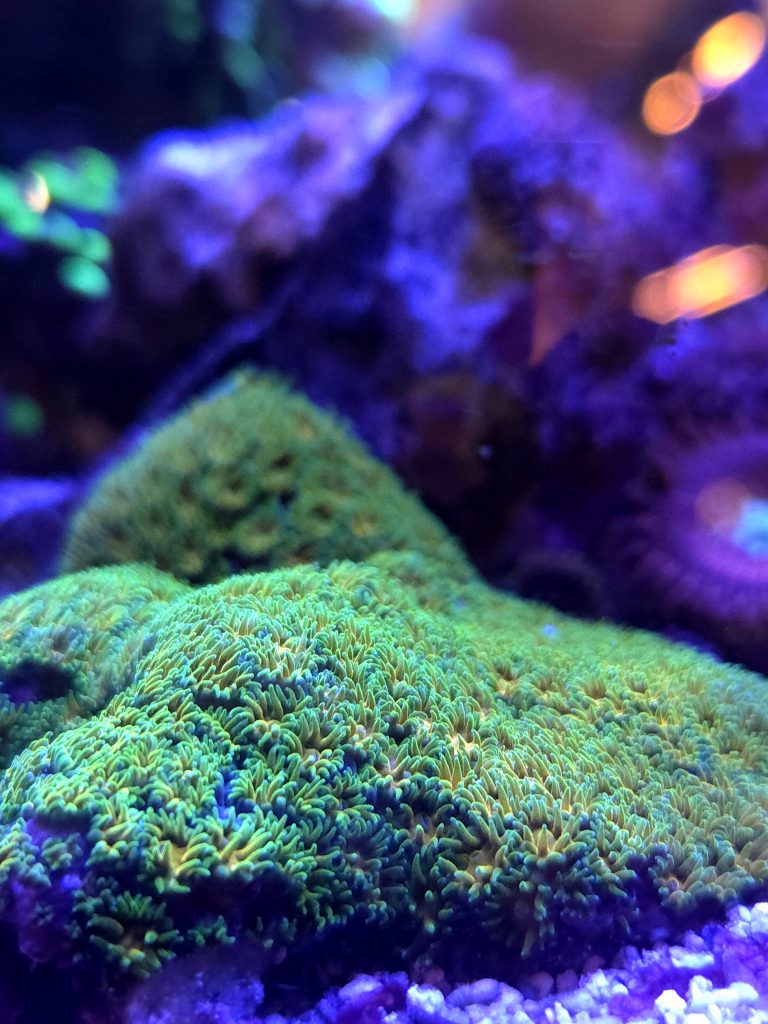
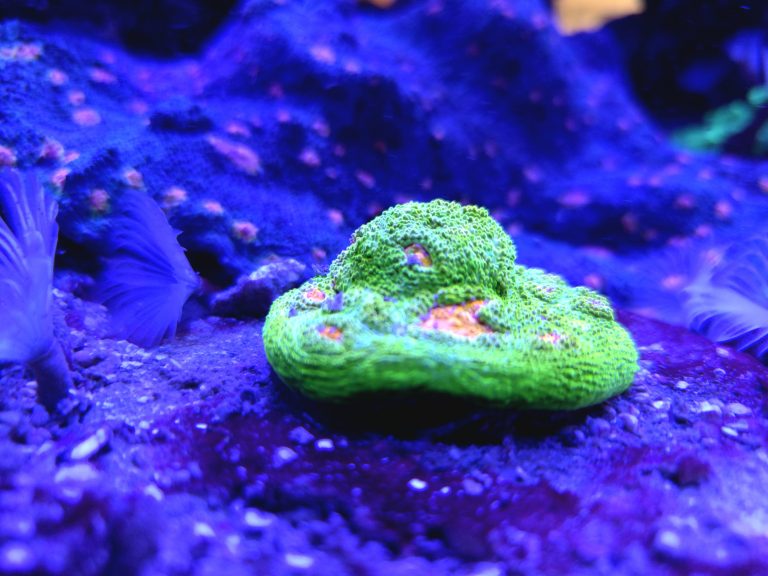
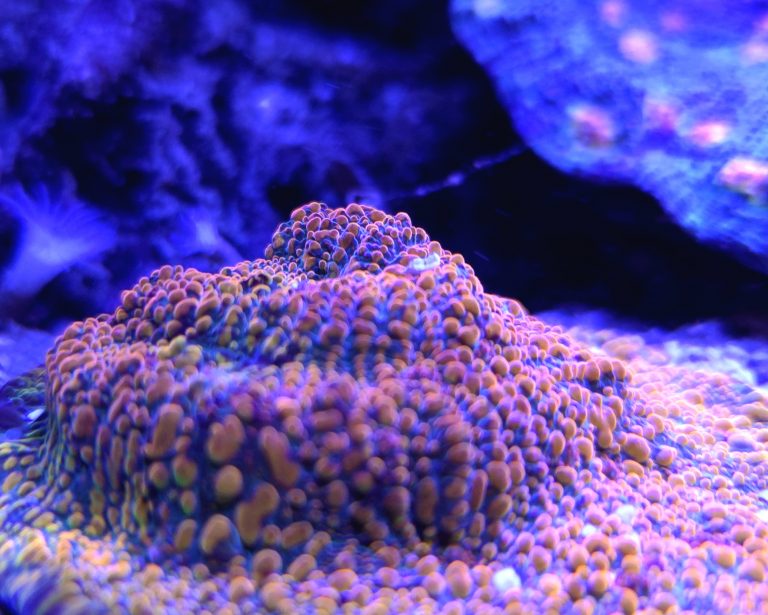
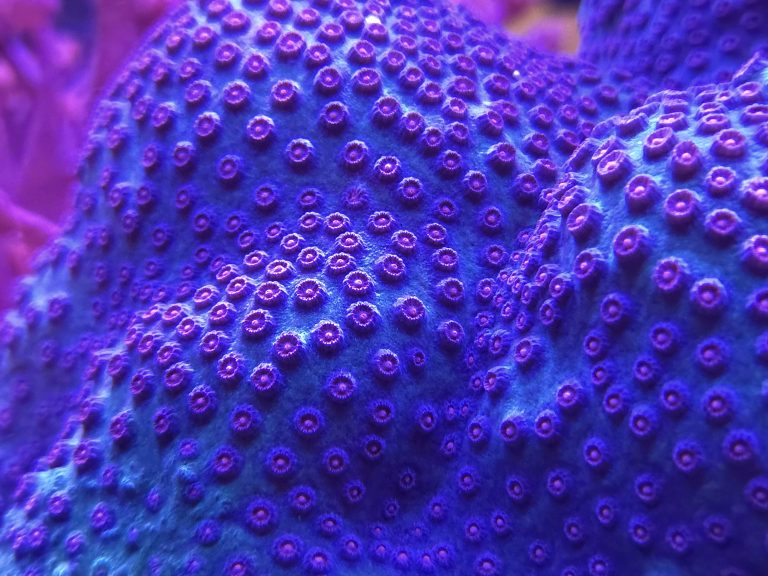
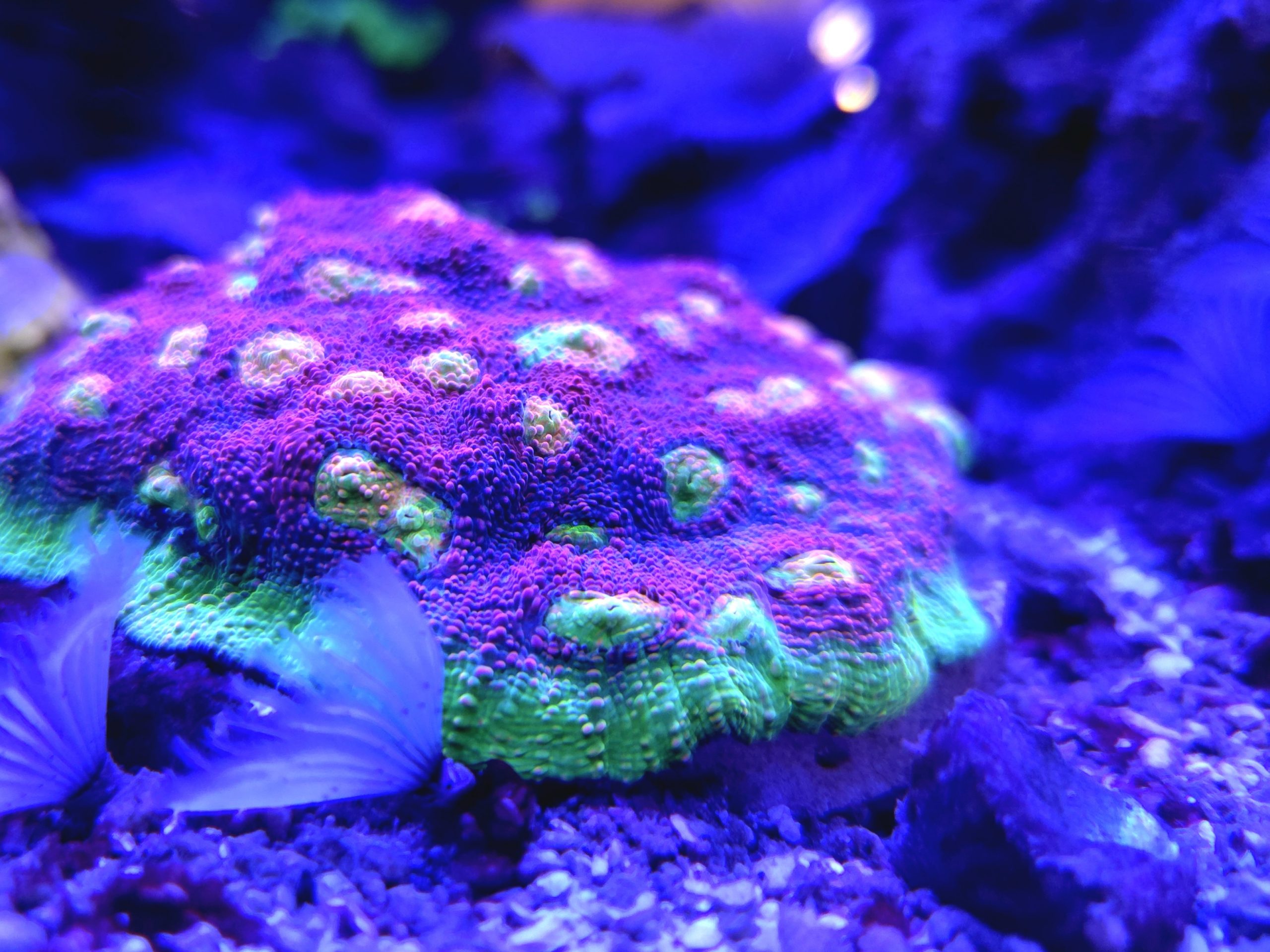
Watermelon chalice corals are colorful, eye-catching LPS corals. They show bright green rims, pink to red eyes, and swirling patterns. With the right care, they grow into stunning display pieces in a reef tank.
Watermelon Chalice Basics and Placement
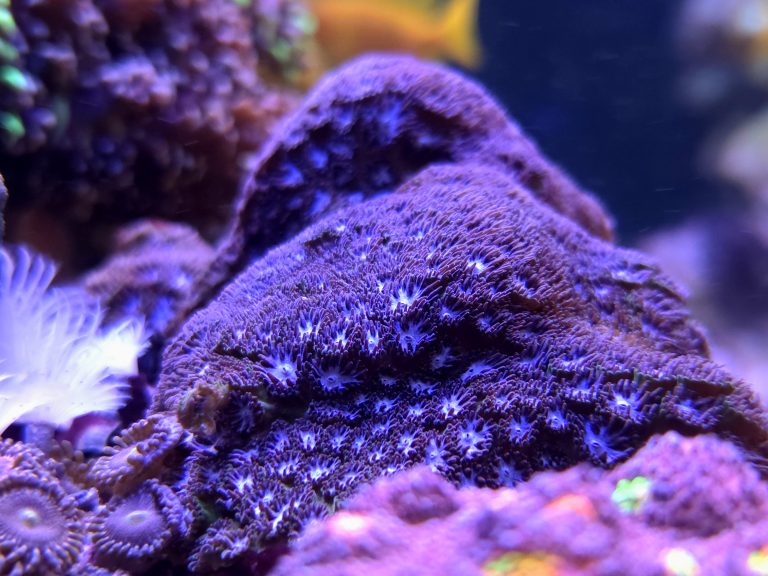
Watermelon chalices are usually Echinophyllia or Oxypora species. They form encrusting plates that spread over rock. Growth is slow to moderate, so patience is important. This makes them ideal for aquarists who enjoy watching gradual progress.
Place your first frag low in the tank. Start in partial shade. These corals can bleach under intense light. Aim for PAR between 80 and 150. Use a PAR meter if possible. If you only have high-output LEDs, place the chalice in a shaded area or under an overhang.
Water parameters should stay very stable. Keep salinity at 1.025–1.026 specific gravity. Maintain alkalinity between 8–9 dKH. Calcium should be 420–450 ppm. Magnesium should sit near 1300–1400 ppm. Nitrates between 5–15 ppm and phosphates around 0.03–0.08 ppm usually give the best color.
- Acclimate to light slowly over 2–3 weeks.
- Use a light acclimation mode on LEDs when possible.
- Test alkalinity at least twice per week in growing systems.
Give the chalice room to spread. Mount it on a separate rock island if possible. This helps control growth and reduces future fragging work.
Feeding, Growth, and Troubleshooting
Watermelon chalices benefit from targeted feeding. They extend feeding tentacles after lights out. Try feeding 1–2 times per week. Use small particle foods like reef roids, powdered coral foods, or finely chopped mysis. Turn off flow for 10–15 minutes so food can settle.
- Feed at the same time each night to build a routine.
- Use a turkey baster or pipette for precise placement.
- Avoid overfeeding to prevent nutrient spikes.
Flow should be moderate and indirect. Strong, direct flow can peel tissue from the skeleton. Gentle, random flow keeps detritus off the surface. It also improves gas exchange and nutrient delivery.
Watch for common problems. Pale tissue usually means too much light or low nutrients. Recede from the edges often points to alk swings or pests. Inspect at night for nipping fish or coral-eating invertebrates. Dips can help remove flatworms or nudibranchs.
- Check for alkalinity swings after water changes.
- Quarantine new corals for 2–4 weeks when possible.
- Keep aggressive sweeper corals at least 3–4 inches away.
With stable parameters, gentle light, and occasional feeding, watermelon chalices color up beautifully. Over time, a small frag can become a vivid, plate-like colony that anchors your reef aquascape.
Add to Wishlist