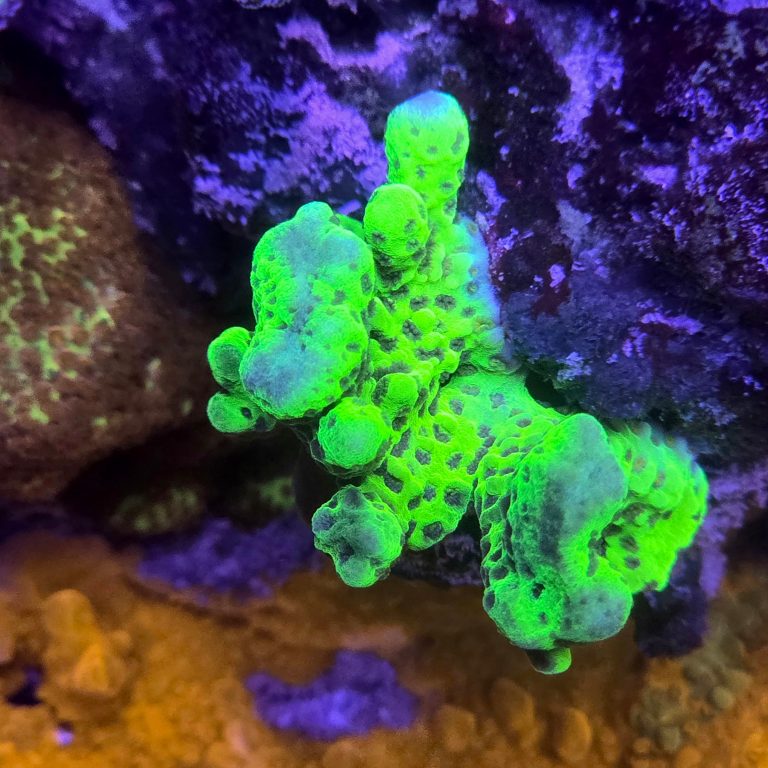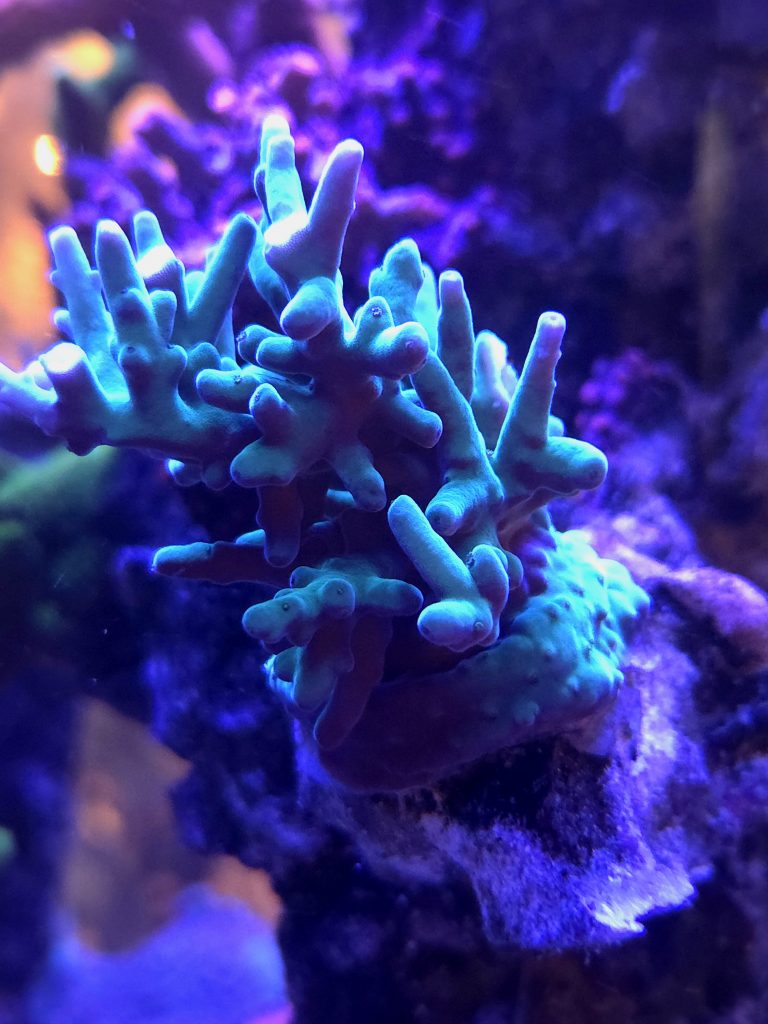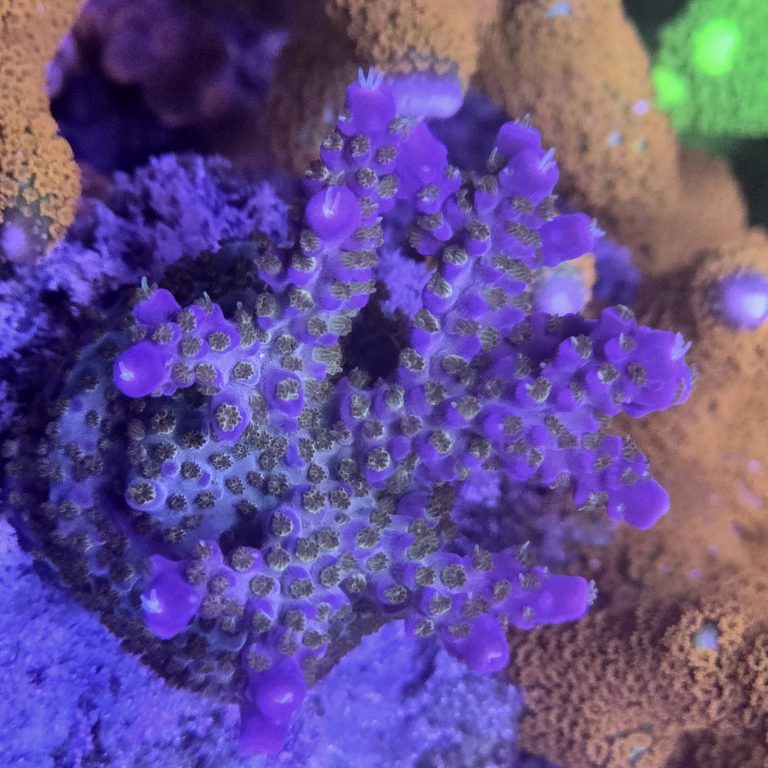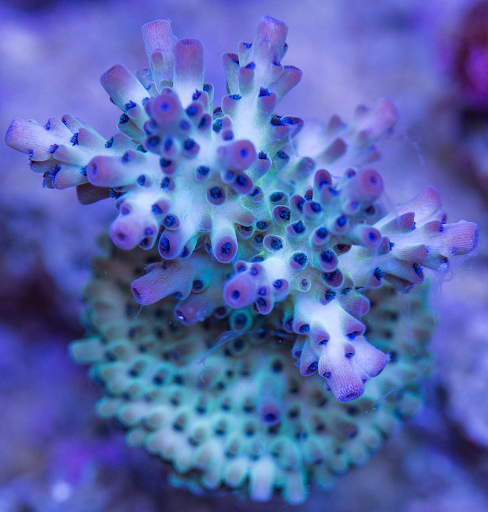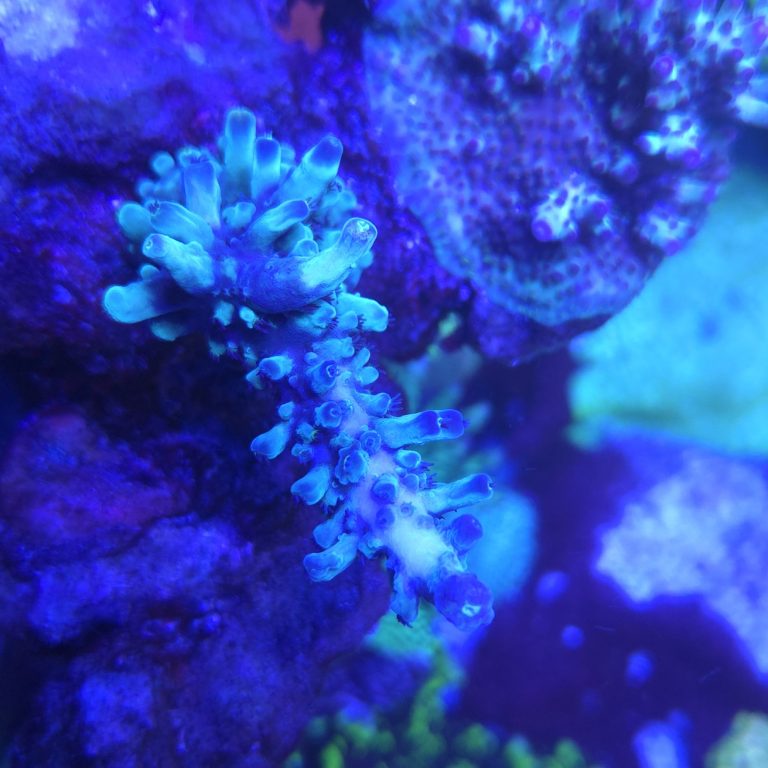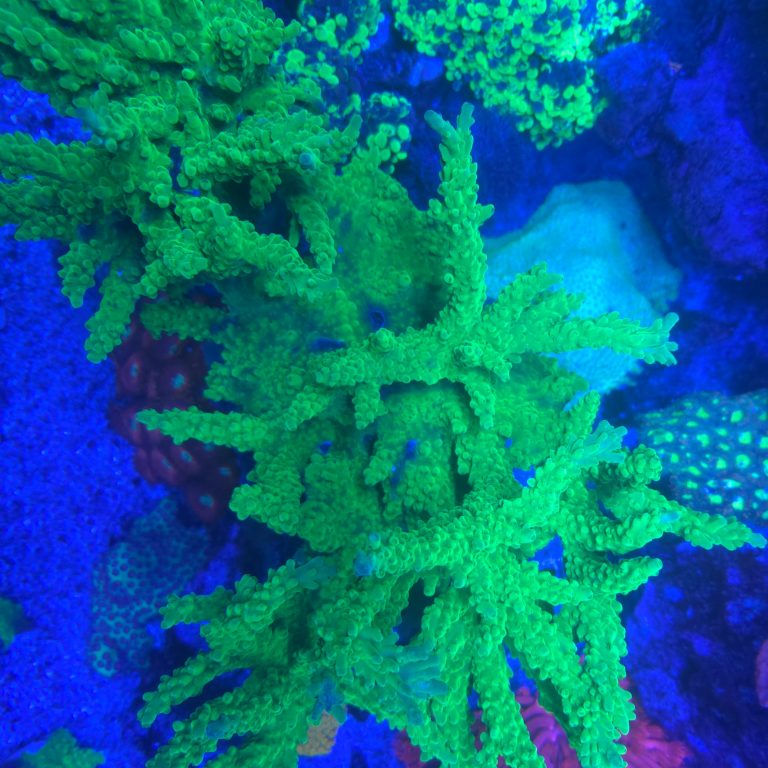
Vivid Rainbow Delight Acropora Colony
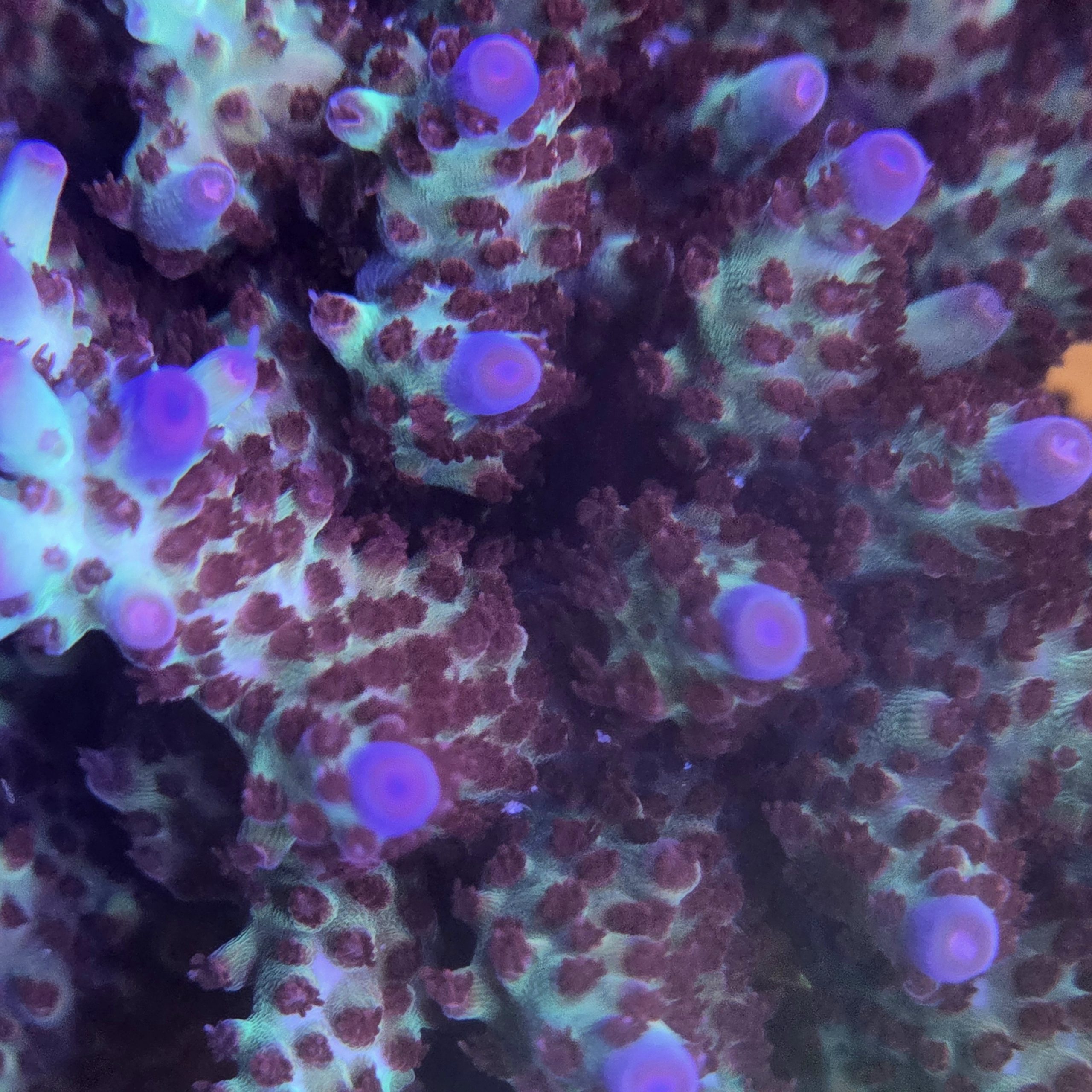
The Vivid Rainbow Delight Acropora colony is a true showpiece coral. Its intense colors reward careful, consistent care. With the right lighting, flow, and stability, this acro can become the star of your reef.
Understanding the Vivid Rainbow Delight Acropora
This Acropora is a fast-growing, branching SPS coral. It often shows bright pinks, greens, yellows, and blues on the same colony. Colors shift with lighting, nutrients, and placement.
Plan for a mature system before adding it. Your tank should be at least 6–8 months old. Aim for stable parameters: 78–79°F, salinity 1.025–1.026, pH 8.1–8.4. Keep nitrate around 5–15 ppm and phosphate between 0.03–0.08 ppm. Ultra-low nutrients can cause pale color and slow growth.
Lighting is critical. This coral thrives under strong PAR, usually 250–350 at the top of the colony. Use quality LEDs, T5s, or hybrids. Start the frag lower and move it up over 2–3 weeks. Watch for signs of stress like tissue lightening or retracted polyps.
Flow should be strong and random. Aim for 30–50 times tank turnover per hour. Place the colony in an area with turbulent flow, not a direct blast. The tissue should sway, not peel back. Good flow prevents detritus buildup and improves gas exchange.
- Target alkalinity: 8.0–9.0 dKH, avoid swings over 0.3 dKH per day.
- Calcium: 420–450 ppm, magnesium: 1300–1400 ppm.
- Use an auto top-off to keep salinity stable.
Placement, Feeding, and Troubleshooting Tips
Plan your rockwork before placing this coral. Give the colony room to branch out 3–4 inches in all directions. Keep it away from aggressive LPS with long sweeper tentacles. Place other Acropora nearby for similar care, but leave space for growth.
Acropora corals get most energy from light, but feeding helps. Dose amino acids 1–2 times per week in low amounts. Overdosing can fuel algae and brown out the coral. You can also broadcast-feed fine particle foods after lights out. Turn off return pumps for 15–20 minutes so food stays in the display.
- Acclimate new frags with a 10–15 minute coral dip.
- Inspect for pests like red bugs and Acropora-eating flatworms.
- Quarantine new SPS for 2–4 weeks when possible.
Watch for common problems. Rapid tissue loss from the base often points to unstable alkalinity. Tip burn can signal sudden PAR increases or high alkalinity. Brown color usually means higher nutrients or lack of light. Pale color often comes from too much light or very low nutrients.
Use a simple weekly routine. Test alkalinity at least three times per week. Test calcium, magnesium, nitrate, and phosphate weekly. Clean light lenses and pumps monthly to maintain output. Take photos every few weeks to track color and growth. Small changes are easier to correct when you spot them early.
- Adjust only one parameter at a time.
- Make changes slowly over several days.
- Keep a log of test results and dosing amounts.