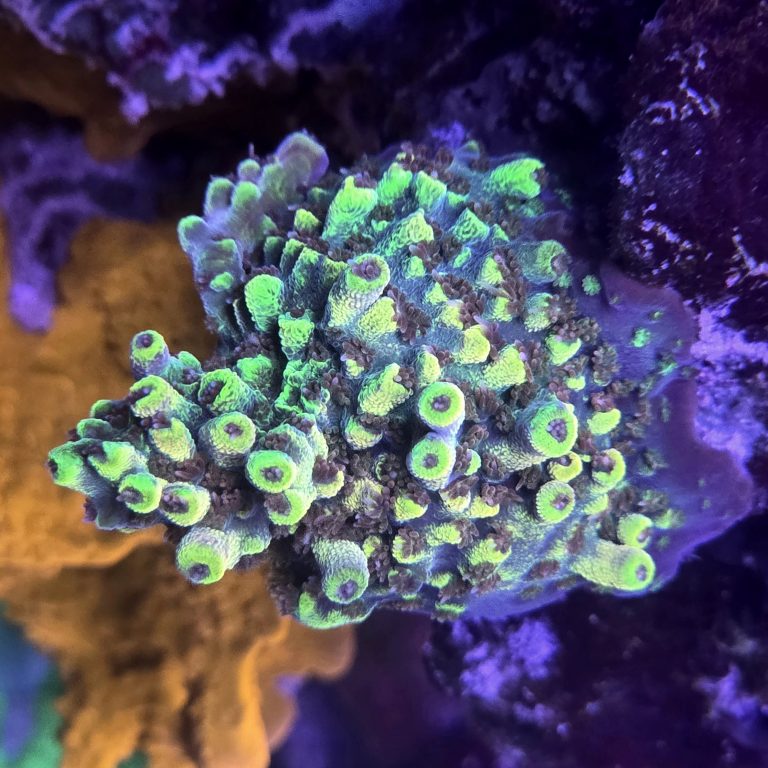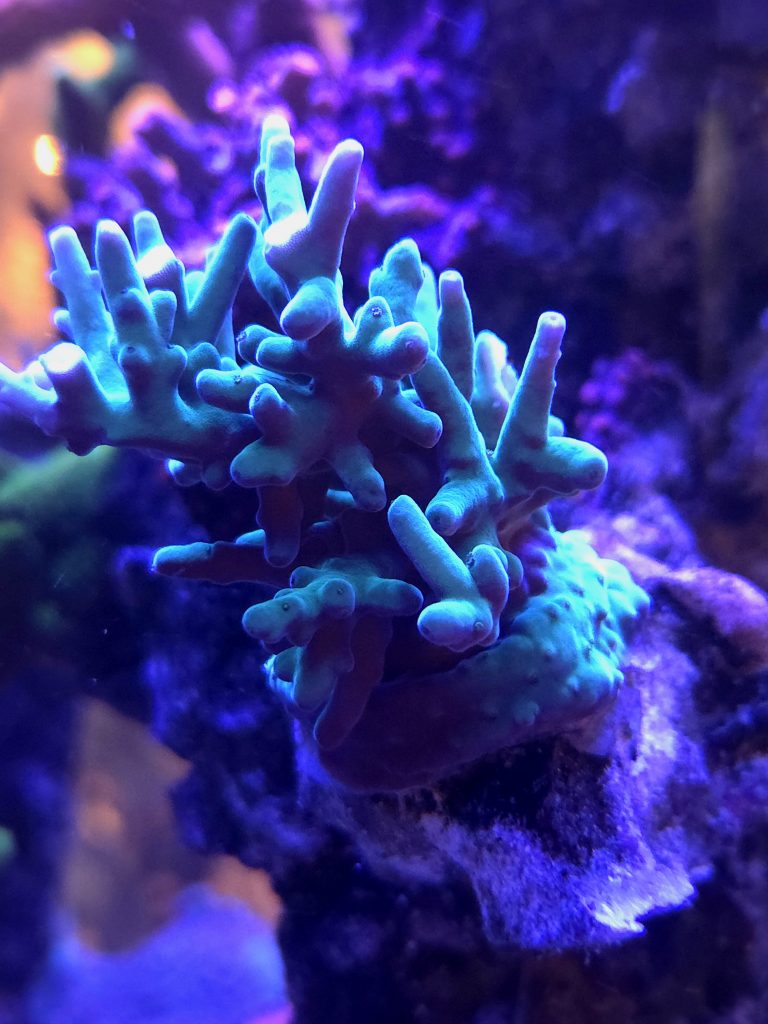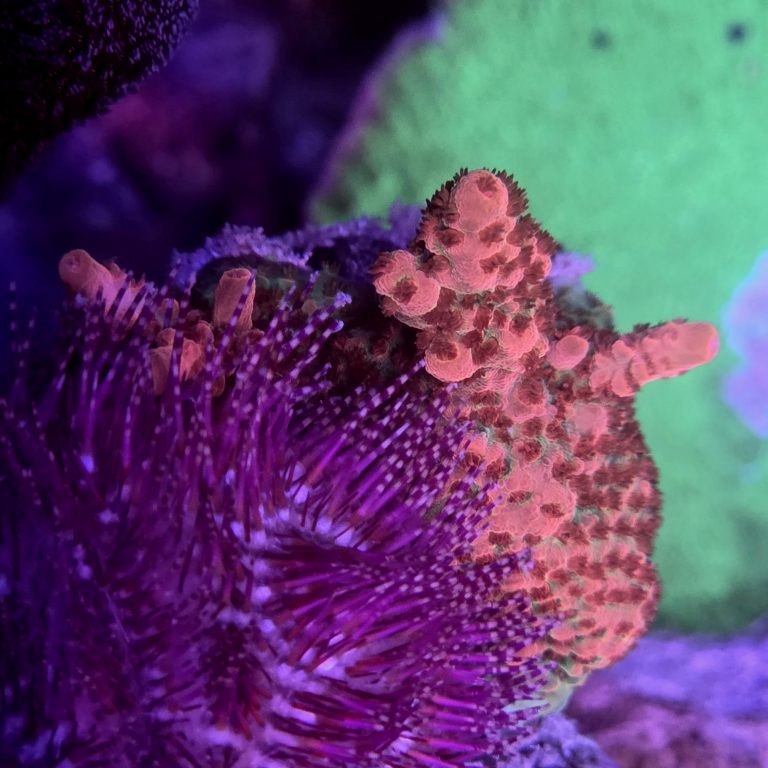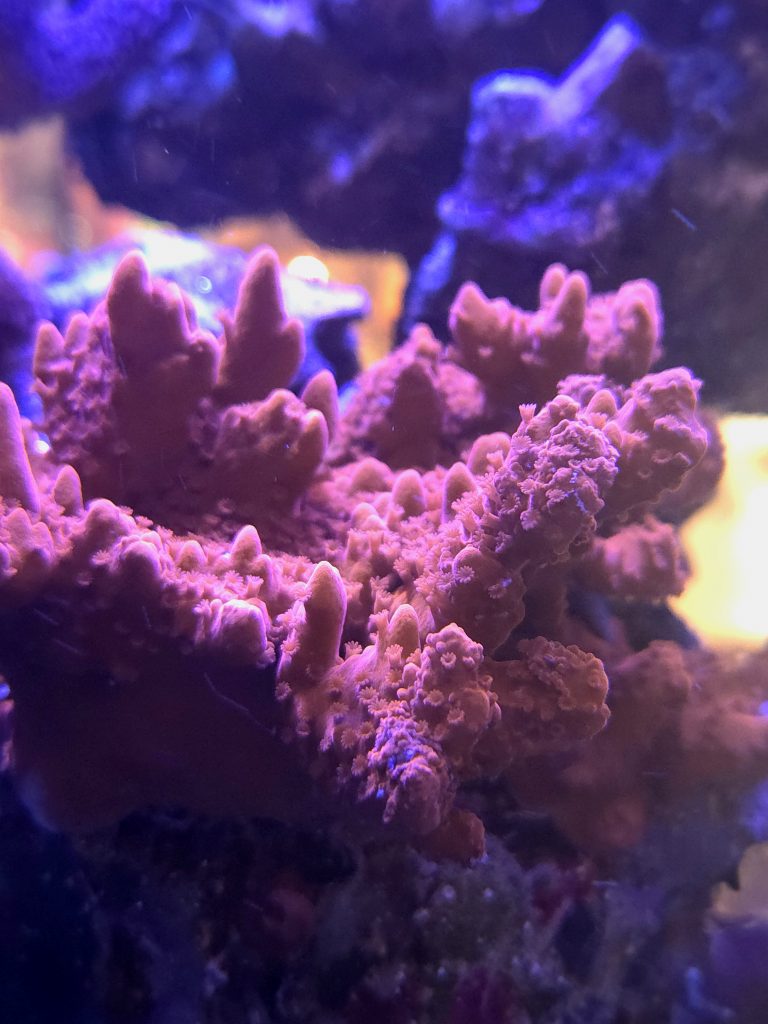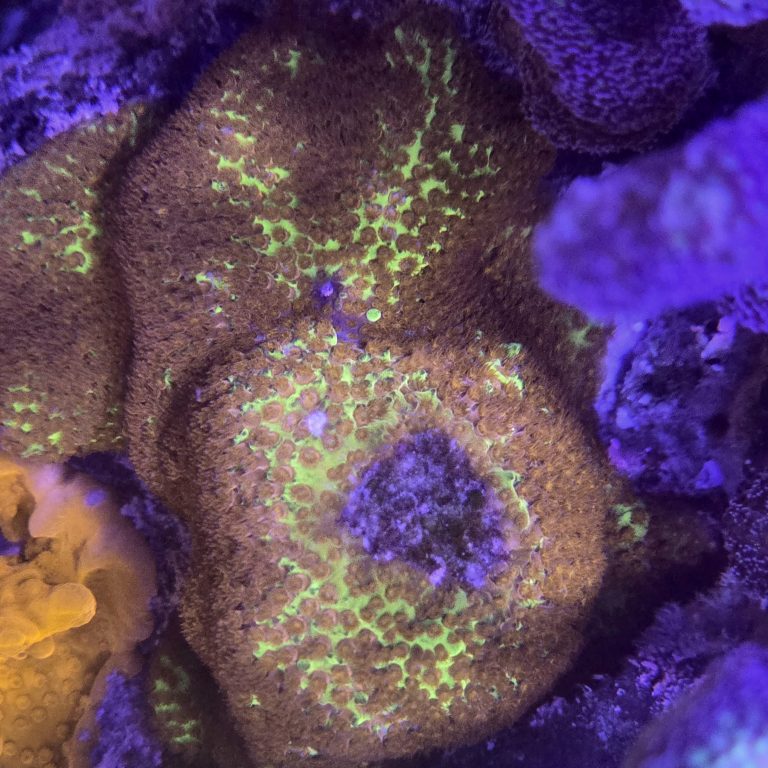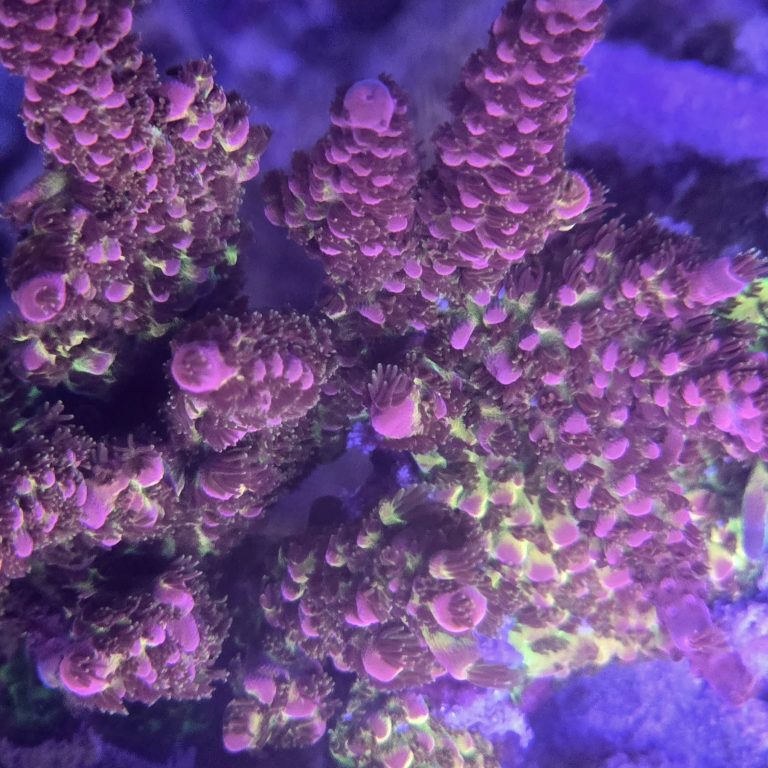
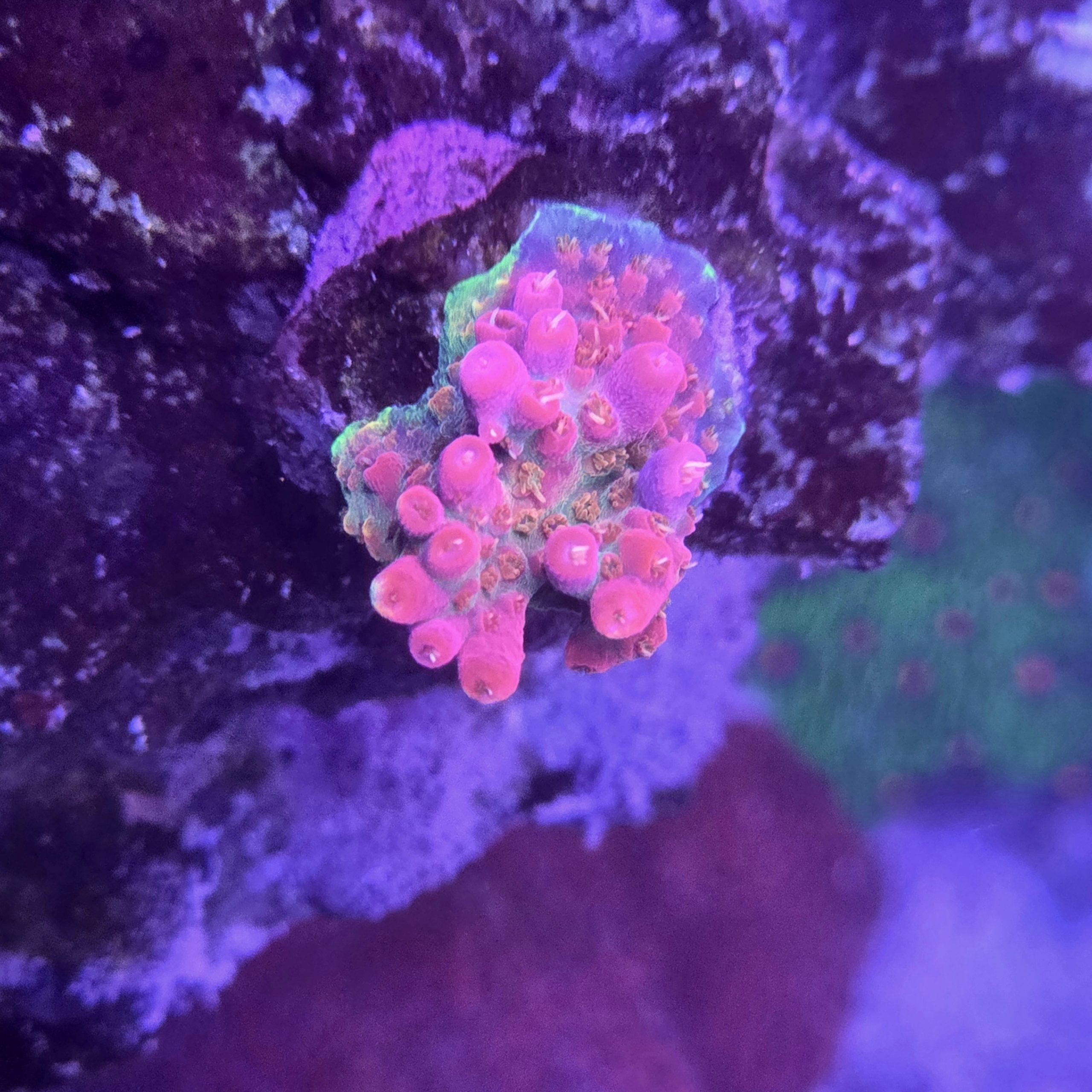
Vivid Confetti Acropora
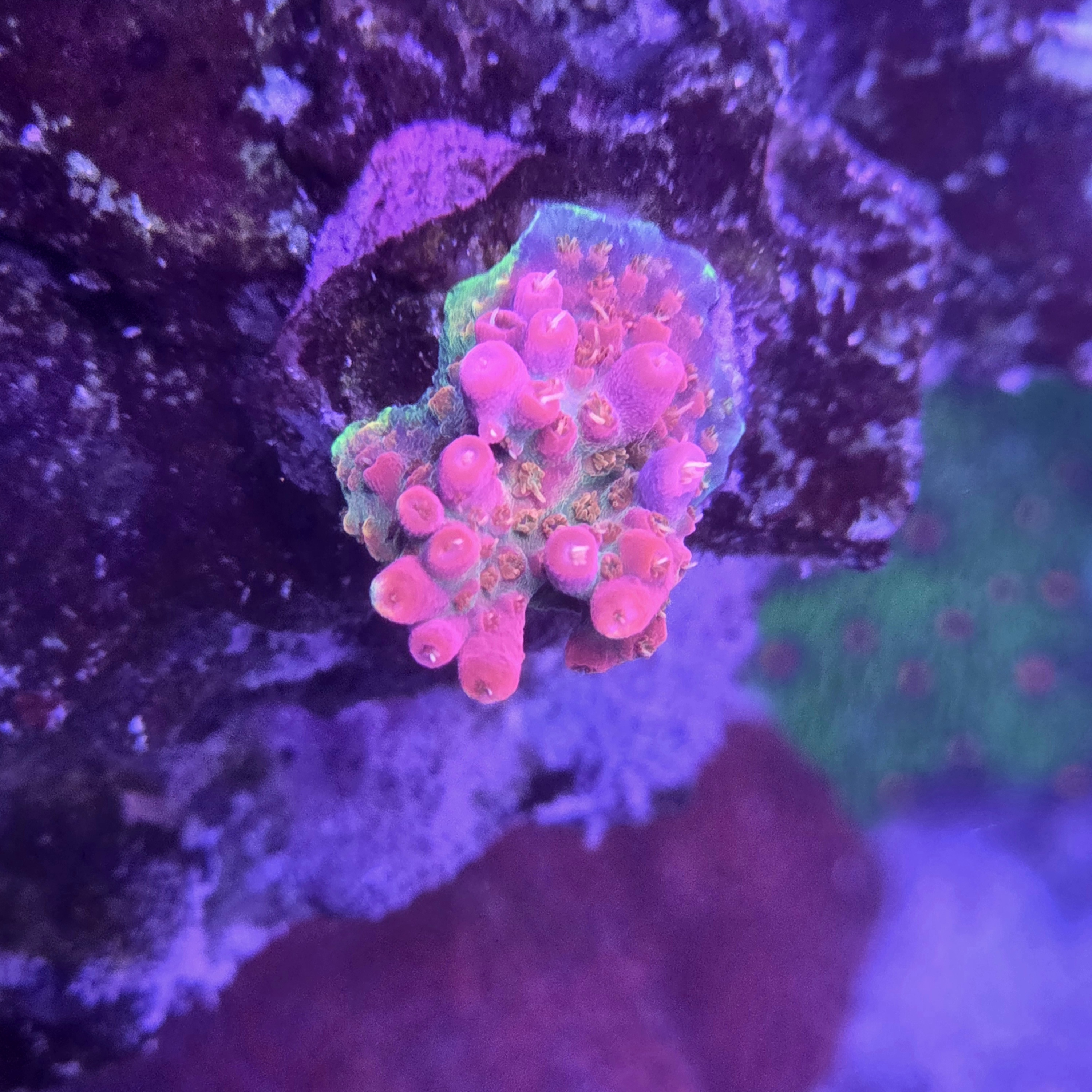
Vivid Confetti Acropora is a standout SPS coral with wild color and fast growth. It rewards stable systems with incredible pink, green, and yellow branches. With the right care, this coral becomes a true centerpiece in any modern reef.
Vivid Confetti Basics: Placement, Lighting, and Flow
Vivid Confetti is an Acropora tenuis variety. It prefers strong light and high, random flow. Plan your rockwork before you buy the frag. Leave space for future branching.
Place new frags in the upper half of the tank. Aim for 250–350 PAR at the final location. Start lower, around 150–200 PAR, then increase over two to three weeks. Use a PAR meter or rental service if possible.
- Target 8–10 inches below LED surface for most setups.
- Avoid direct blasting from a single powerhead.
- Use cross-flow or gyre pumps for random turbulence.
Provide strong, indirect flow around the colony. Polyps should sway, not fold over. Dead spots at the base can cause tissue loss. Adjust pumps until detritus does not settle around the frag plug.
Stable parameters are critical. Keep temperature at 77–79°F. Maintain salinity at 1.025–1.026 specific gravity. Swinging values will dull colors and slow growth.
Water Parameters, Feeding, and Troubleshooting Color
Vivid Confetti responds best to tight parameter control. Test weekly at minimum. Daily testing is helpful in newer SPS systems. Use reliable test kits or a reef controller where possible.
- Alkalinity: 8.0–9.0 dKH, with changes under 0.2 dKH per day.
- Calcium: 420–450 ppm for steady skeleton growth.
- Magnesium: 1300–1400 ppm to stabilize alkalinity and calcium.
- Nitrate: 5–15 ppm; avoid zero nutrients.
- Phosphate: 0.03–0.08 ppm for color and polyp extension.
Feed the tank rather than target feeding every polyp. Vivid Confetti benefits from fine particle foods. Dose reef roids, powdered foods, or amino acids two to three times per week. Turn off the skimmer for 30–60 minutes during feeding.
- Run strong, clean filtration, but do not strip nutrients.
- Use activated carbon in a small bag or reactor.
- Perform 10–15% water changes every two weeks.
Pale colors usually mean too little nutrient or too much light. Increase nitrate slightly or reduce PAR by 10–20%. Brown, dull tissue often means high nutrients or low flow. Improve export with a refugium or better skimming. Check for shading from neighboring colonies.
Always quarantine new Acropora if possible. Dip frags to reduce pests like Acropora eating flatworms and red bugs. Inspect the frag plug and base with a magnifying glass. A few careful steps at the start protect your prized Vivid Confetti colony for years.
Add to Wishlist