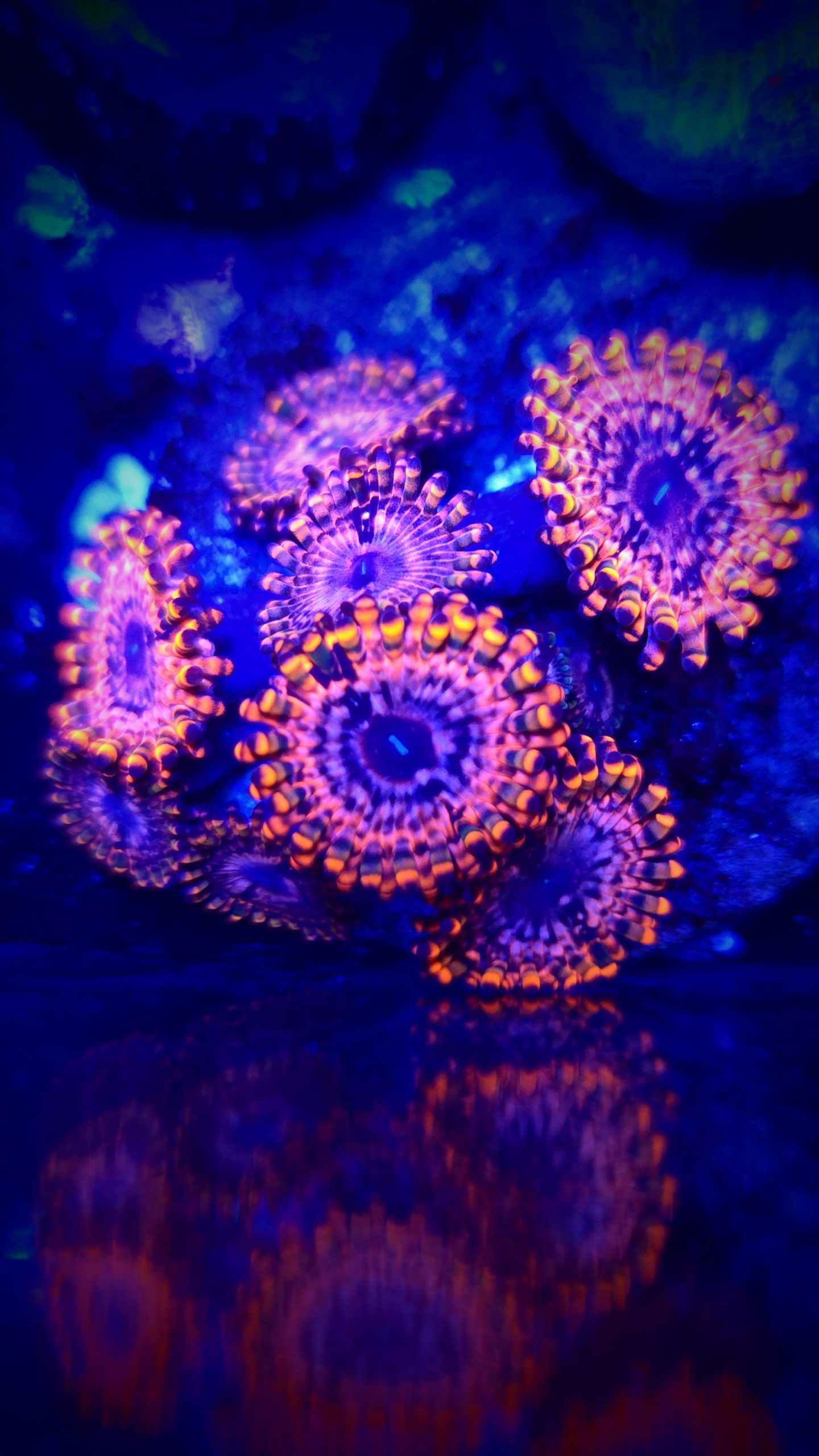
Utter Chaos Zoanthid
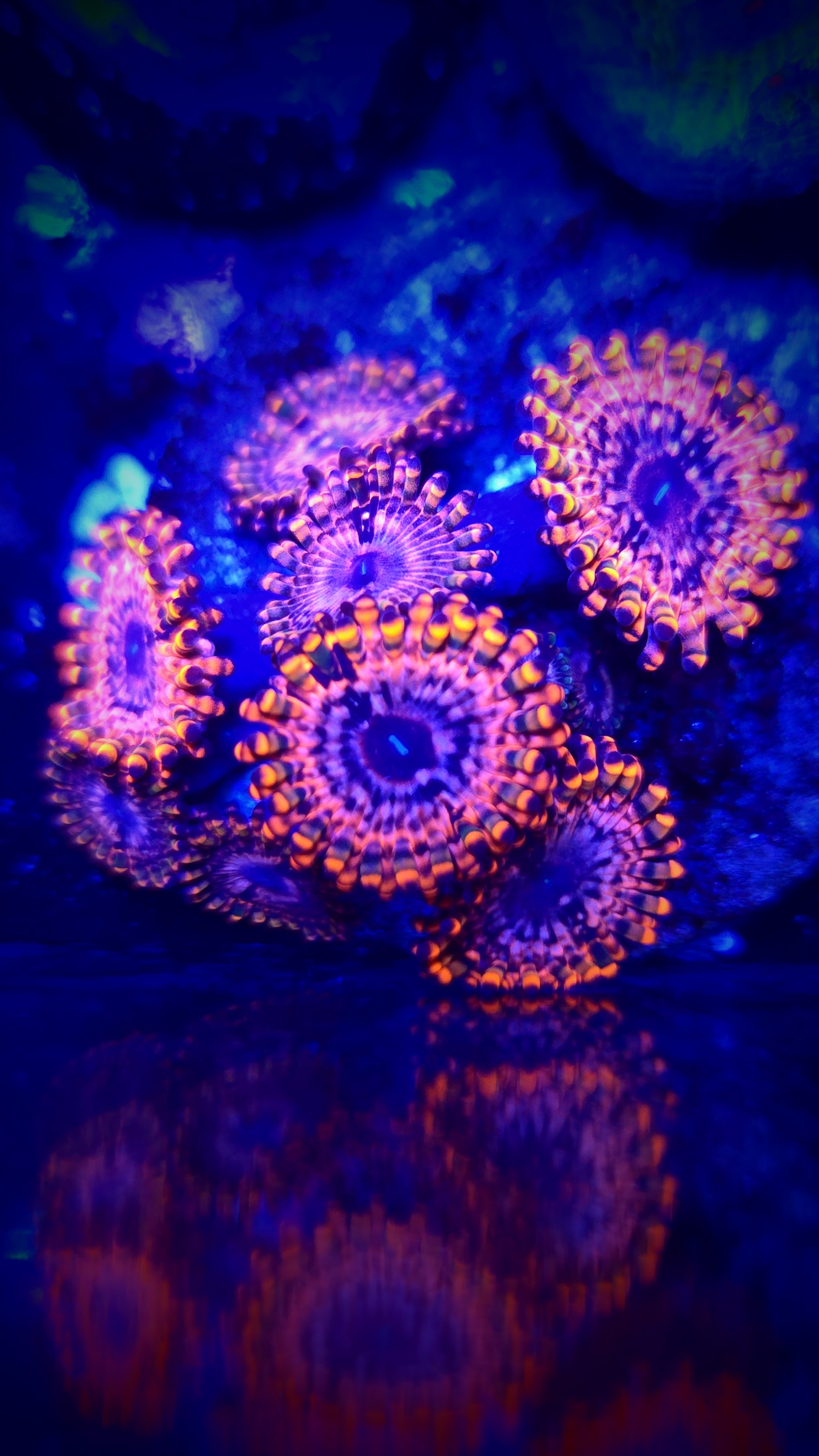
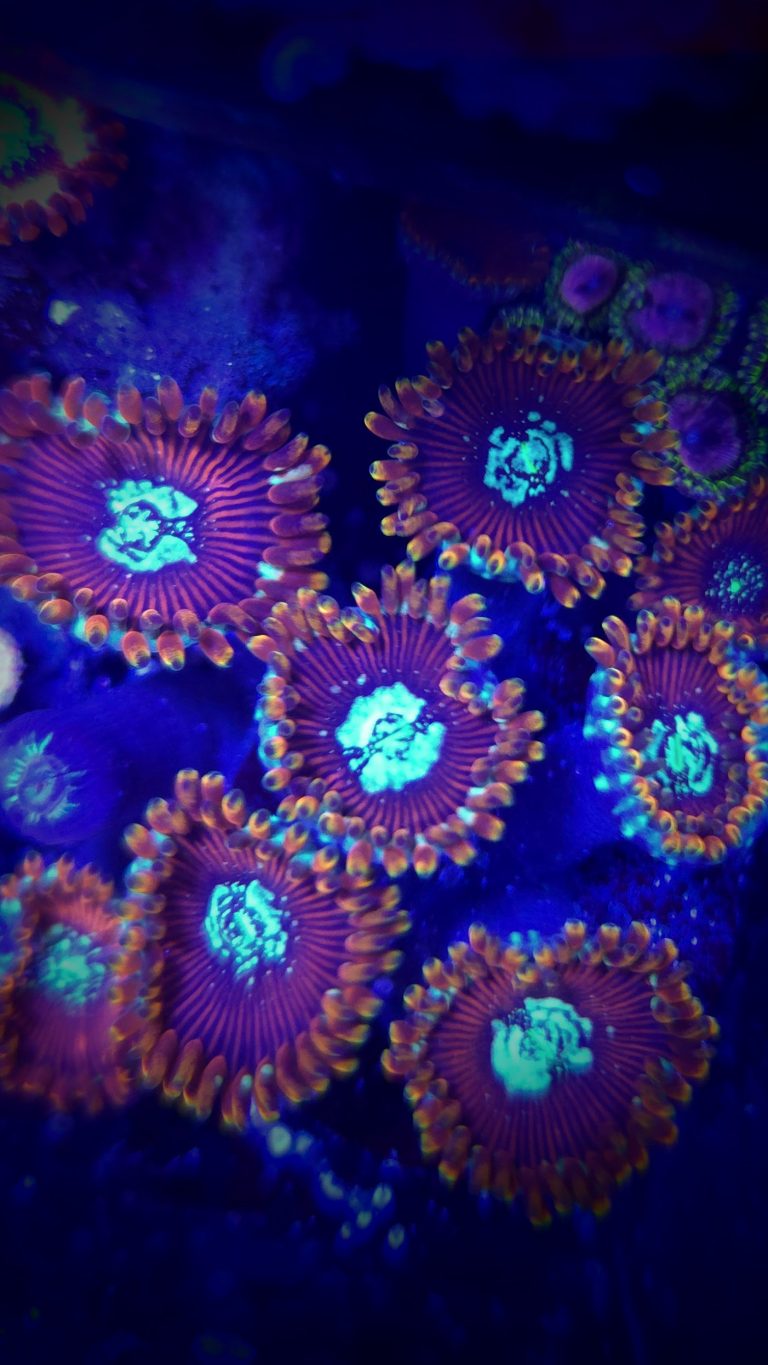
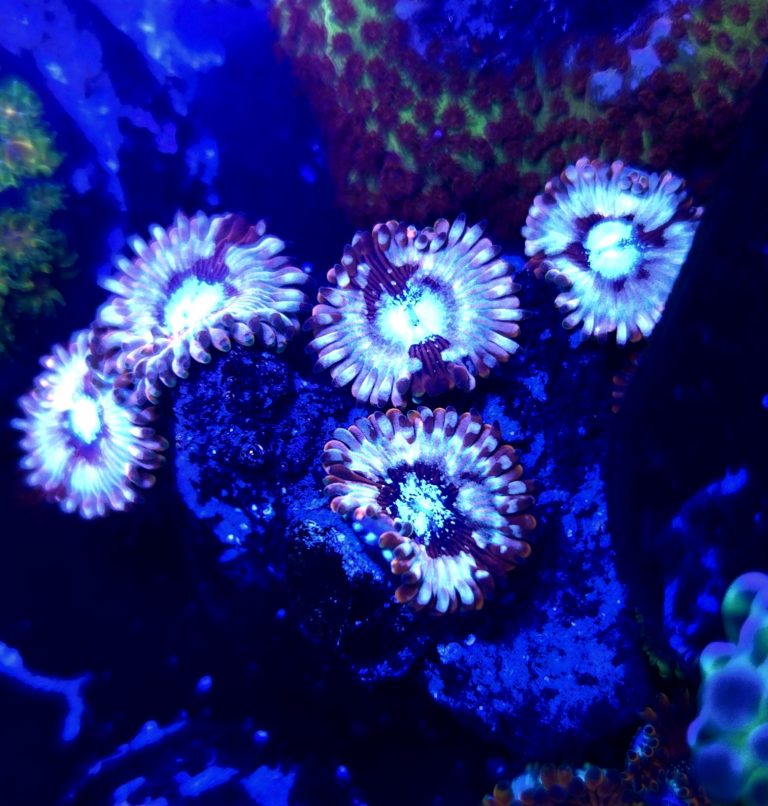
Utter Chaos zoanthids are bold, bright, and surprisingly hardy. Their swirling orange and purple patterns stand out in any reef. With the right care, they grow into dense, colorful colonies that become a true focal point.
Utter Chaos Zoanthid Basics and Placement
Utter Chaos zoas do best in stable reef systems. Aim for a mature tank that has been running at least six months. Keep salinity at 1.025–1.026 specific gravity. Maintain temperature between 76–78°F for best polyp extension.
These zoanthids prefer moderate to high light. PAR levels between 150–250 work well for most colonies. Start new frags lower, around 80–120 PAR. Then slowly move them higher over two to three weeks. This prevents bleaching and stress.
Flow should be moderate and indirect. You want the polyps to sway gently, not fold over. Too much direct flow causes them to stay closed. Too little flow can lead to detritus buildup and algae on the mat.
Place Utter Chaos on a separate rock or island if possible. They can spread quickly under good conditions. Isolating them makes it easier to control their growth. It also allows you to move the colony later if needed.
- Target parameters: alkalinity 8–9 dKH, calcium 420–450 ppm, magnesium 1300–1400 ppm.
- Keep nitrates between 5–15 ppm and phosphates around 0.03–0.08 ppm.
- Avoid sudden swings in salinity or temperature over 1°F per day.
Feeding, Growth, and Troubleshooting
Utter Chaos zoanthids can survive on light and nutrients in the water. However, feeding boosts growth and color. Target feed once or twice a week. Use fine particle foods like reef roids or powdered coral blends. Turn off flow for 10–15 minutes while they feed.
Dip all new frags before adding them to your display. Use a coral dip for 5–10 minutes. This helps remove zoa-eating nudibranchs, spiders, and sundial snails. Inspect the frag plug and underside carefully with a flashlight.
- Quarantine new zoa frags in a small tank for 2–4 weeks if possible.
- Check at night with a blue light for pests on the mat and stalks.
- Remove any suspicious eggs or nudibranchs with tweezers.
Common issues include shrinking polyps, closed colonies, or melting tissue. First, test your water. Look for low alkalinity, high nutrients, or rapid parameter swings. Next, check for pests or irritants like vermetid snails or nearby stinging corals.
- If polyps stay closed, move them to slightly lower light and softer flow.
- Siphon detritus from around the colony during weekly water changes.
- Frag away any melting polyps to protect healthy areas of the colony.
With stable water, careful placement, and basic pest control, Utter Chaos zoanthids thrive. They reward patience with fast growth, rich color, and a dramatic display that stands out in any reef tank.
Add to Wishlist