
SPS corals are the crown jewels of many reef tanks: vivid colors, intricate growth forms, and incredible texture. They’re also less forgiving than soft corals and LPS, which is why a clear, practical care guide makes a huge difference. This overview walks you through the core requirements for keeping SPS thriving, not just surviving.
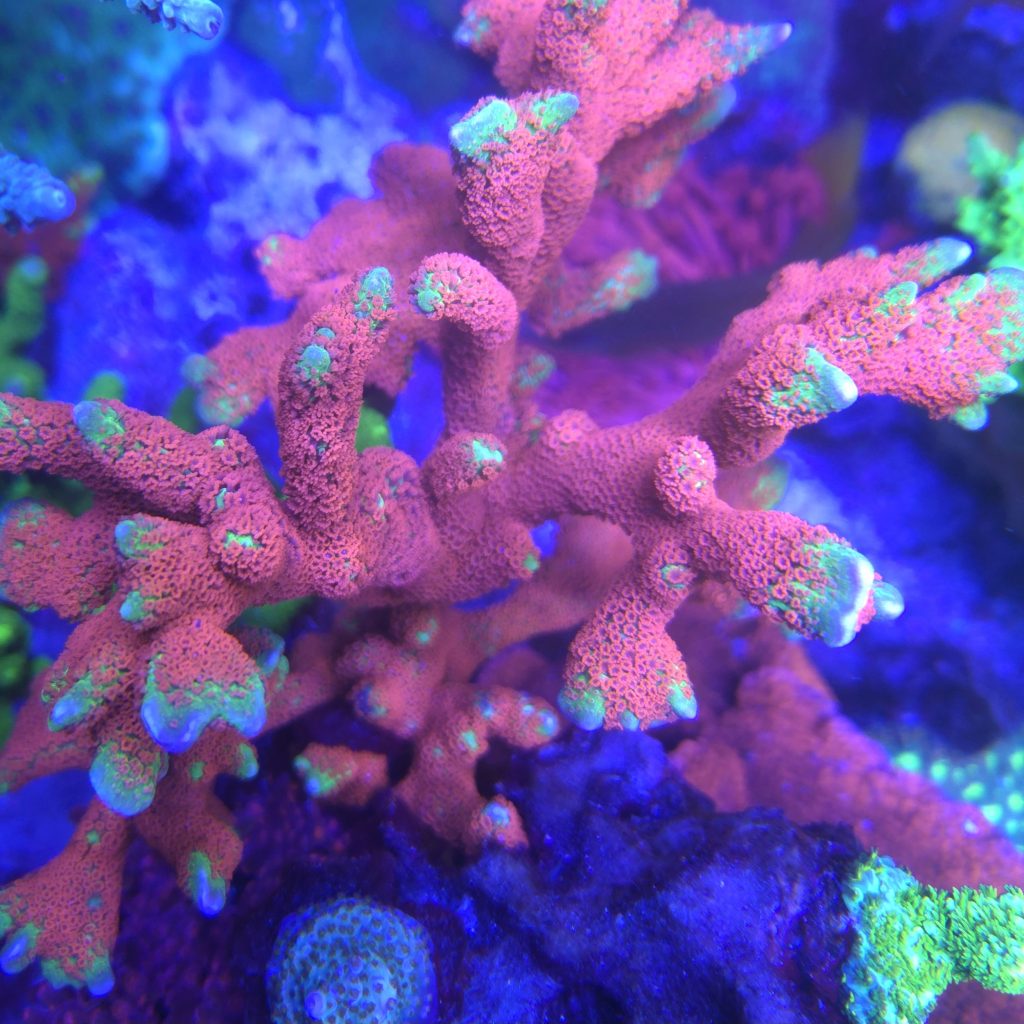
Key Water Parameters for SPS Coral Success
Stability matters more than chasing perfect numbers, but SPS do demand tight control. Aim for the following ranges and avoid big daily swings:
- Temperature: 77–79°F (25–26°C)
- Salinity: 1.025–1.026 specific gravity
- Alkalinity: 8–9 dKH (keep daily swing under 0.3 dKH)
- Calcium: 420–450 ppm
- Magnesium: 1300–1400 ppm
- Nitrate: 5–15 ppm (avoid bottoming out at 0)
- Phosphate: 0.03–0.08 ppm
For a deeper dive into keeping nutrients in that sweet spot, check out our guide on nutrient control in the reef tank.
Lighting and Flow: The Engine of SPS Growth
SPS corals rely heavily on intense light and strong, variable water movement. Underpowered lighting and weak flow are two of the most common reasons new SPS keepers struggle.
Lighting for SPS Corals
Most SPS species prefer moderate to high PAR in the 250–400 range, depending on species and placement. LED, T5, and hybrid systems can all work well if:
- You provide a gradual ramp-up when introducing new pieces (use acclimation modes or lower intensity at first).
- You maintain a consistent photoperiod of 8–10 hours of strong light per day.
- You favor blue-heavy spectrums, which support health and coloration.
Flow Patterns SPS Prefer
Think of flow as the life support system that delivers oxygen and nutrients while carrying away waste. SPS generally thrive in:
- High, randomized flow rather than a constant jet.
- Alternating patterns using wave modes or multiple pumps.
- No direct blasting at the tissue; aim pumps to create intersecting currents.
Tip: Watch for tissue recession on the side facing a powerhead. That can signal too much direct flow even if overall flow seems fine.
Feeding, Placement, and Long-Term Stability
While SPS corals get a lot of energy from light, targeted feeding and smart placement help them reach their full potential.
Feeding SPS Corals
- Use fine powdered or liquid coral foods 1–3 times per week.
- Turn off return pumps briefly so food stays in the display.
- Do not overfeed—watch for algae blooms or cloudy water as warning signs.
Balanced feeding goes hand in hand with a strong clean-up crew and good export methods. Our article on reef tank maintenance schedules covers how to match your feeding to your filtration.
Placement and Growth Planning
- Place high-light species higher on the rockwork; more delicate or lower-light SPS can sit a bit lower.
- Leave room for growth so colonies don’t shade or sting one another.
- Secure new pieces well so they don’t topple in strong flow.
Finally, commit to consistency: test weekly, adjust slowly, and log changes. Over time, you’ll recognize the subtle color shifts and polyp extension cues that tell you when your system is dialed in. When parameters, lighting, and flow are stable, SPS corals reward you with dense, colorful colonies that become the centerpiece of your reef. For newer hobbyists stepping up to this challenge, our beginner reef coral guide is a helpful starting point before diving deep into SPS.