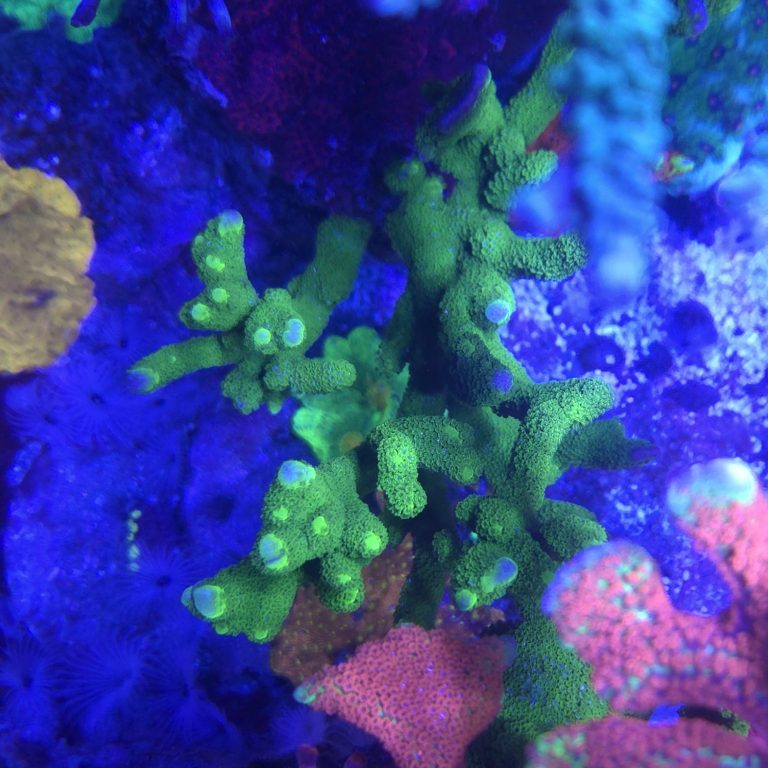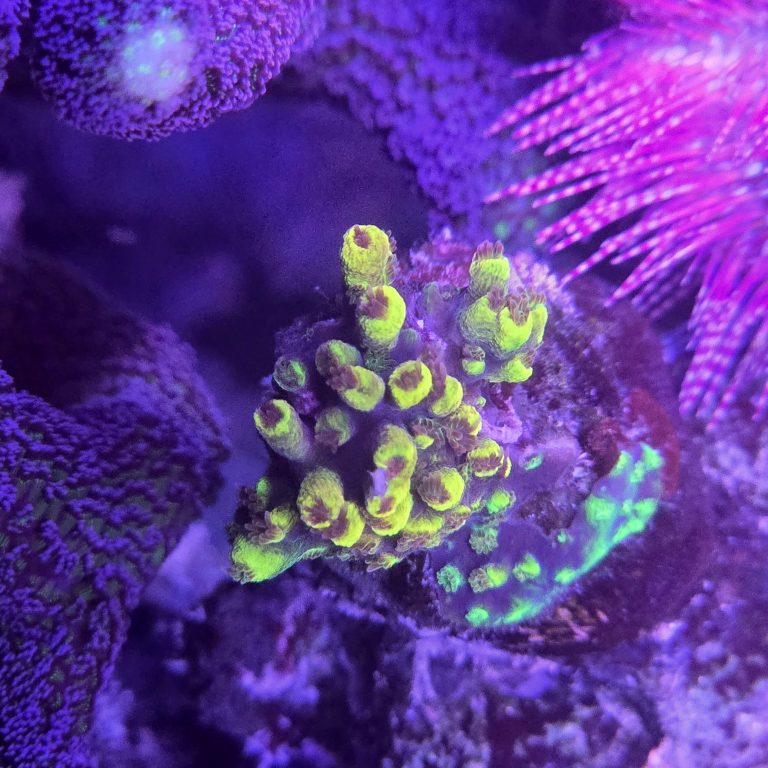
Slow Burn Montipora Danae
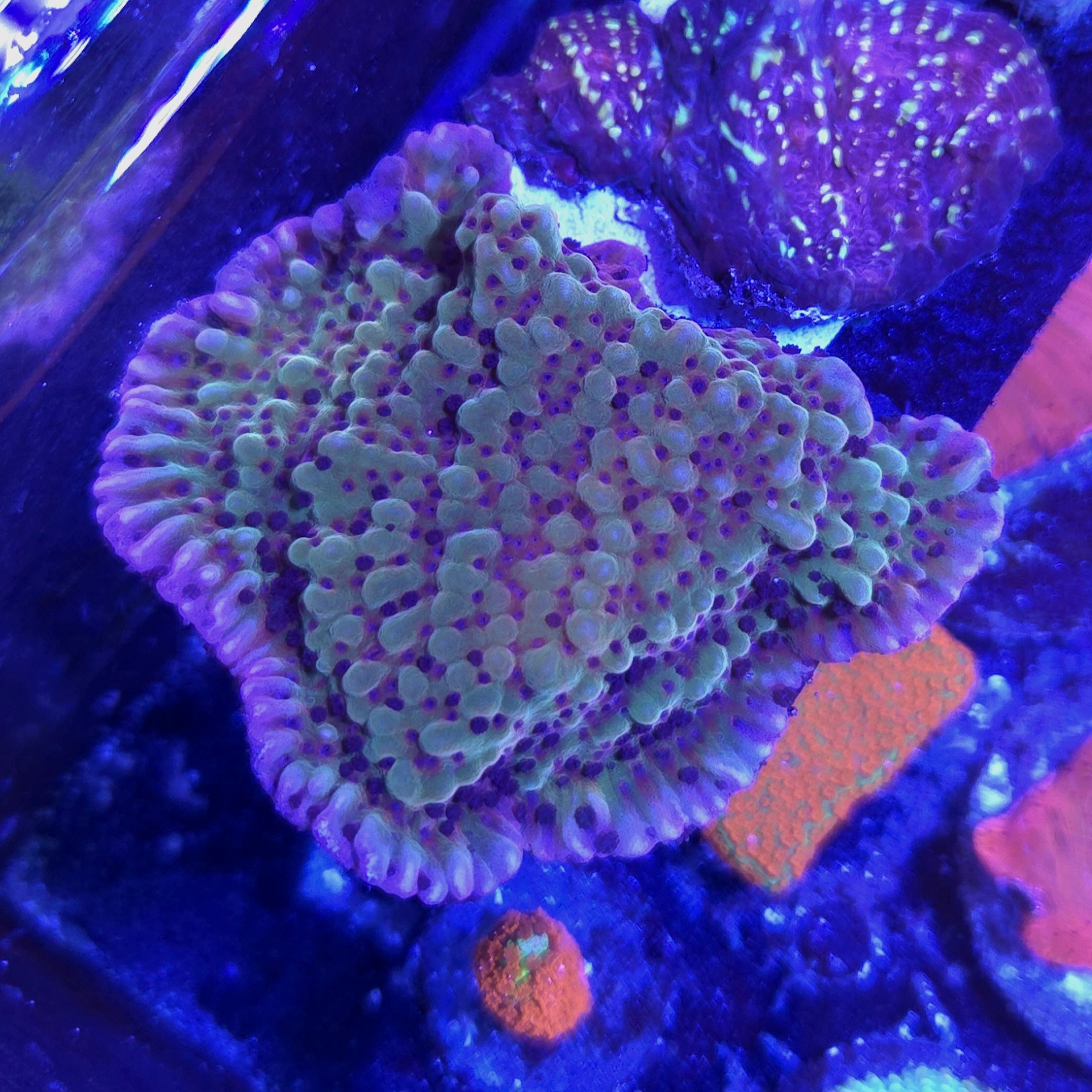
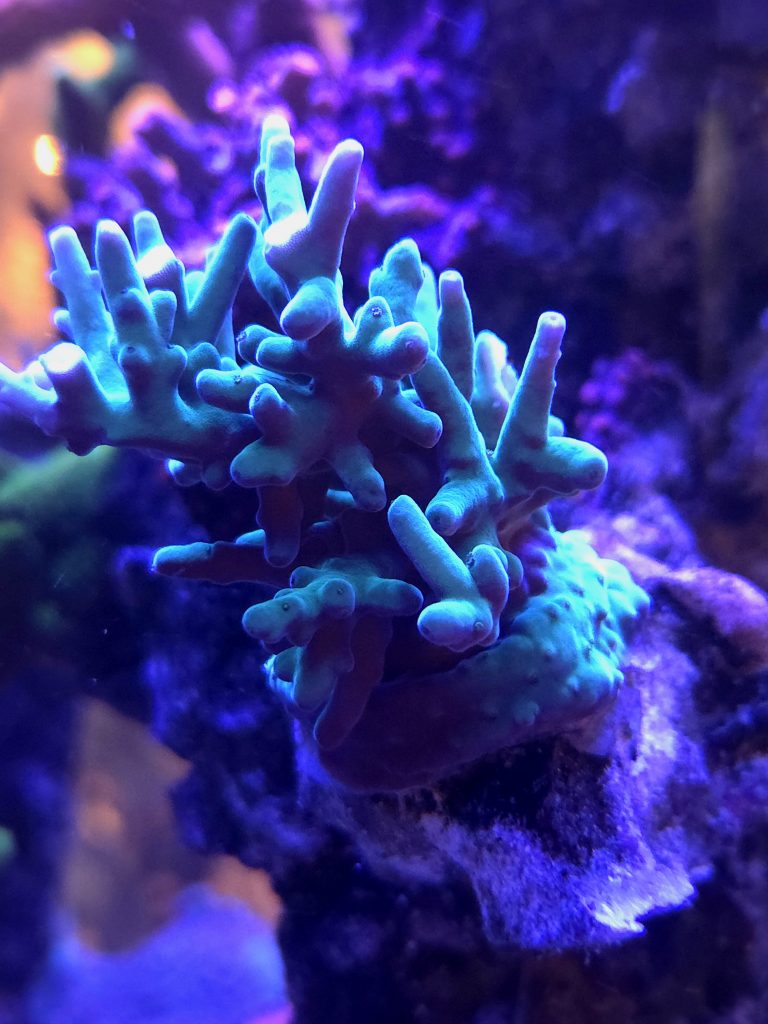
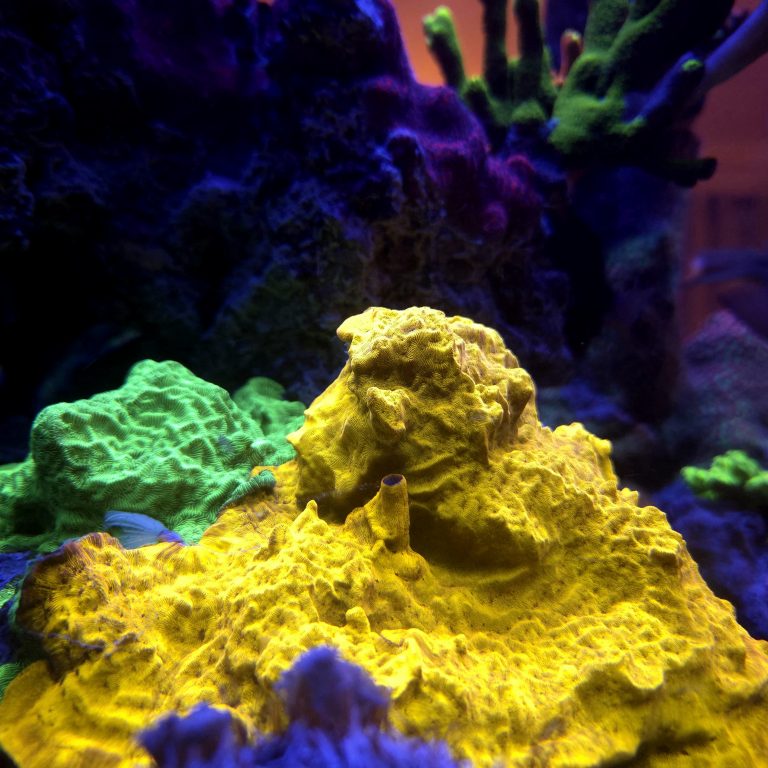
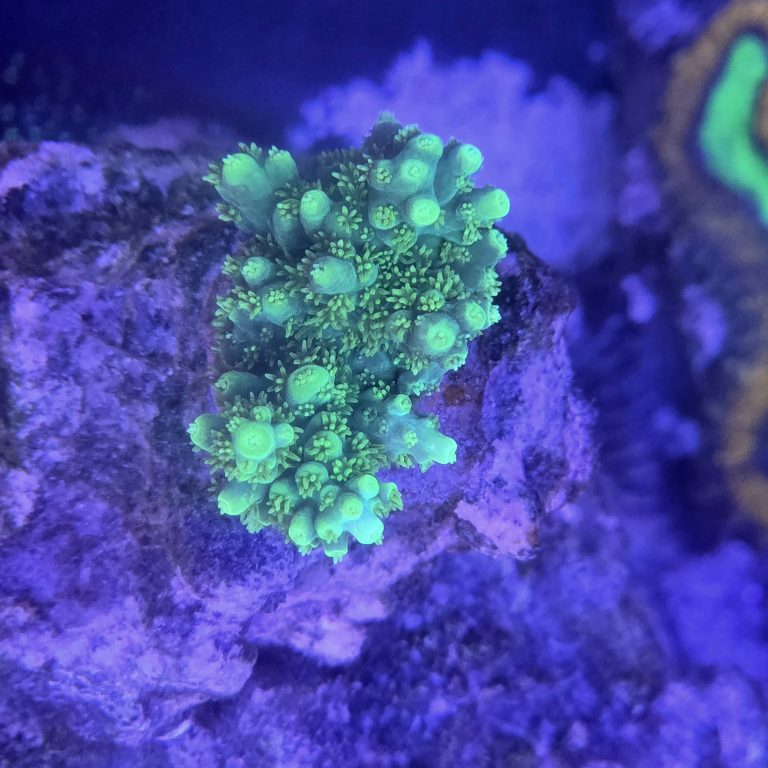
Slow Burn Montipora danae is a stunning SPS coral with glowing orange and green tones. It can thrive in many reef tanks when you give it stable conditions and careful placement. This guide walks you through lighting, flow, placement, and daily care so your Slow Burn colony can grow into a colorful showpiece.
Understanding Slow Burn Montipora Danae
Slow Burn Montipora danae is an encrusting to plating SPS coral. It forms tight, bumpy polyps and a vivid base color. Expect a slow to moderate growth rate once it settles. This coral prefers stability over fast changes.
Target these water parameters for best results:
- Temperature: 24–26°C (75–79°F)
- Salinity: 1.025–1.026 specific gravity
- Alkalinity: 8–9 dKH, Calcium: 420–450 ppm, Magnesium: 1300–1400 ppm
- Nitrate: 5–15 ppm, Phosphate: 0.03–0.08 ppm
Use a reliable test kit and check at least weekly. Sudden swings in alkalinity or temperature often cause tissue loss in Montipora. If you must correct a parameter, do it slowly over several days.
Lighting is critical for Slow Burn color. Aim for moderate to high PAR, roughly 200–300 at the coral. Use a PAR meter if possible. If not, place it in the upper half of the rockwork under quality LEDs or T5s. Acclimate it to light over 2–3 weeks by starting lower and gradually moving it up.
Water flow should be strong but indirect. Use alternating flow from wavemakers. Avoid a direct jet on the coral, which can strip tissue. Watch the polyps. They should move gently, not whip back and forth.
Placement, Feeding, and Troubleshooting
Plan your placement before gluing. Slow Burn Montipora will encrust rock and nearby plugs. Leave at least 5–7 cm of space from other corals. Keep it away from aggressive LPS with long sweeper tentacles.
- Mount on a stable rock, not loose rubble.
- Use reef-safe super glue gel for a firm bond.
- Place where you can easily view and photograph it.
Feeding is simple but helpful. Montipora relies mainly on light and dissolved nutrients. However, it can benefit from occasional coral foods. Dose amino acids 1–2 times per week. Target feed a fine particle food once weekly with pumps off for 10–15 minutes.
Practical care tips:
- Perform 10–15% water changes every 1–2 weeks for trace elements.
- Clean light lenses and check PAR after any lighting change.
- Quarantine new frags for 2–4 weeks to avoid pests like Montipora-eating nudibranchs.
Watch for early warning signs. Faded color often means low nutrients or too much light. Increase nitrate slightly or lower intensity by 10–15%. White patches or peeling edges suggest rapid parameter swings. Test alkalinity first and correct slowly.
With stable water, thoughtful placement, and patient observation, Slow Burn Montipora danae can become a reliable, glowing centerpiece in your SPS section. Start small, track your parameters, and let this coral slowly burn its way across the rock.
Add to Wishlist