
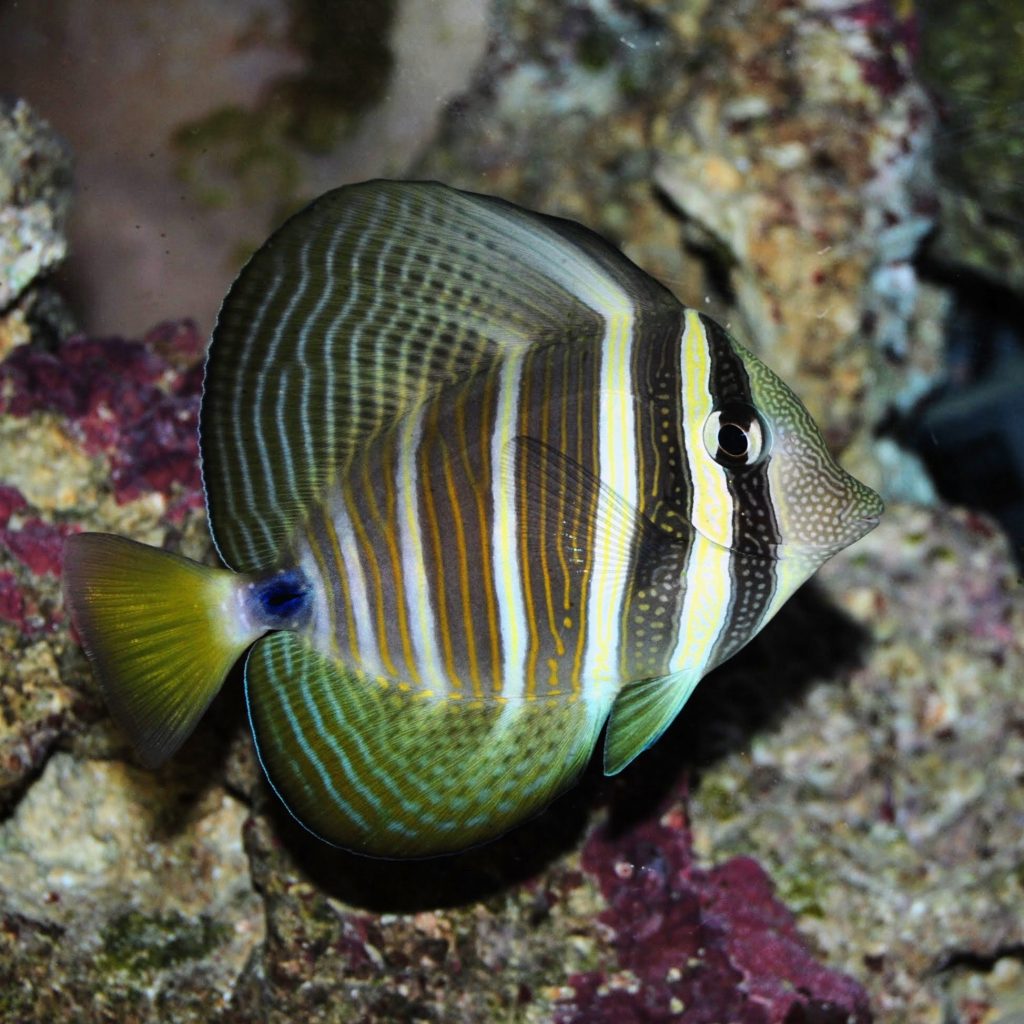
The Sailfin Tang (Zebrasoma veliferum and Zebrasoma desjardinii) is a show-stopping addition to larger reef aquariums. With its bold stripes, oversized dorsal and anal fins, and constant cruising behavior, this fish quickly becomes a centerpiece. But that beauty comes with specific care requirements. Understanding its needs will help you keep a healthy, long-lived Sailfin Tang in your marine system.
Tank Requirements & Compatibility
Sailfin Tangs are active, high-energy swimmers that demand space and stable conditions. They’re best suited to mature marine systems rather than new setups. If you’re still planning your first saltwater tank, you may want to start with hardier, smaller species first, then graduate to a Sailfin later.
Key tank guidelines:
- Minimum tank size: 180 gallons (680 L) is a realistic starting point for an adult.
- Aquascape: Open swimming lanes with rockwork arranged into arches and islands.
- Water parameters: 1.024–1.026 salinity, 76–80°F, pH 8.1–8.4, low nitrate and phosphate.
- Flow: Moderate to strong, with varied patterns for oxygenation and exercise.
In terms of temperament, Sailfin Tangs are generally peaceful with other species but can be territorial with other tangs, especially those of similar shape. Add them after more timid fish have settled in. If you’re planning a broader community, check out our guide on best beginner saltwater fish to build a compatible stocking list.
Diet, Health, and Daily Care
As herbivores, Sailfin Tangs spend most of their day grazing. A strong, varied diet is the foundation of their health and color. Underfeeding or poor nutrition often leads to weight loss, lateral line erosion, and susceptibility to parasites.
Feeding Your Sailfin Tang
- Offer nori (dried seaweed) on a clip once or twice daily.
- Rotate high-quality algae-based pellets and flakes.
- Supplement with frozen herbivore blends and occasional mysis or brine shrimp.
- Soak foods in vitamins and garlic to support immunity and appetite.
Pro tip: Position algae clips in high-flow areas so food moves naturally, encouraging the Sailfin to graze and stay active.
Sailfin Tangs are prone to marine ich and other external parasites, particularly after shipping stress. A proper quarantine routine, strong nutrition, and pristine water quality are your best defenses. For help planning your system, read our overview on reef tank setup basics so your tang goes into a stable, established environment.
Reef-Safe Behavior & Long-Term Care
The Sailfin Tang is considered reef-safe with corals and clams, focusing almost exclusively on algae and film on rock and glass. In fact, they can be a huge asset in controlling nuisance algae, especially in larger systems with strong lighting.
Long-term success tips:
- Plan for adult size: These fish can exceed 10–12 inches; avoid overstocking.
- Provide hiding spots: Caves and overhangs help reduce stress at night.
- Maintain stable parameters: Avoid rapid swings in temperature, salinity, and alkalinity.
- Monitor aggression: Introduce new tangs carefully, ideally all at once or using acclimation boxes.
If you’re building an SPS or mixed reef and want a showy, algae-grazing workhorse, the Sailfin Tang can be a fantastic choice. Combine a spacious tank, strong filtration, and a thoughtful stocking plan—similar to what we discuss in our large reef tank planning guide—and you’ll be well on your way to providing a thriving home for this iconic fish.
With room to roam, a steady supply of greens, and consistent care, the Sailfin Tang rewards aquarists with constant motion, bold patterning, and years of enjoyment. It’s not the right fish for every tank, but in a properly sized and well-managed system, it truly shines as a centerpiece of the reef.