
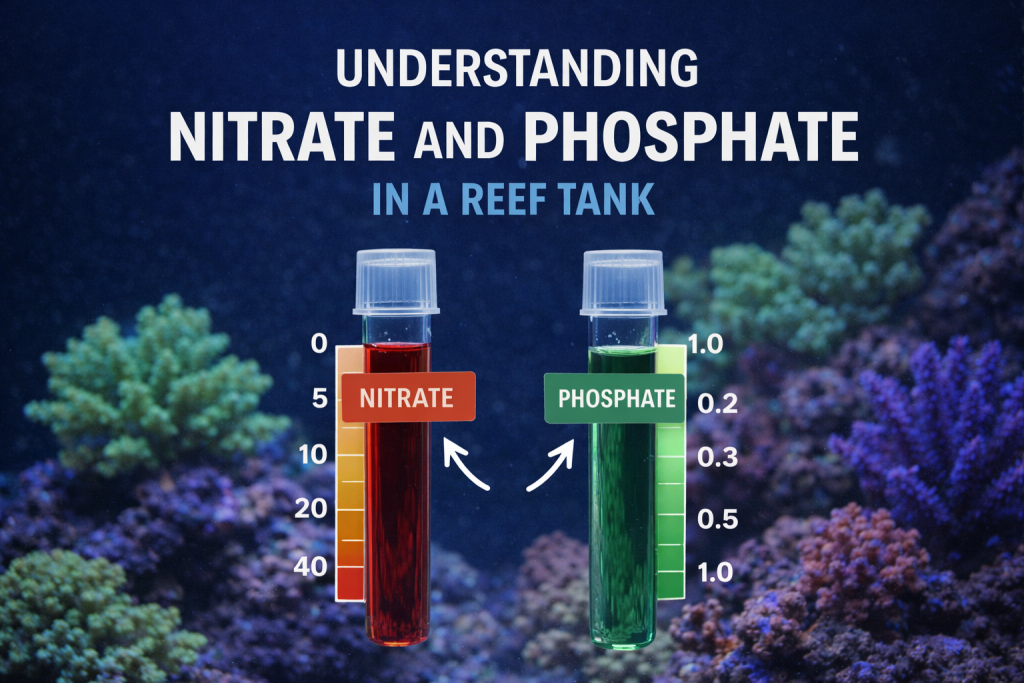
Keeping nutrients in check is one of the biggest challenges in a reef tank. Too much nitrate or phosphate fuels algae and dulls coral color; too little can starve corals and beneficial bacteria. The goal isn’t zero nutrients, but a stable, balanced range that keeps your reef thriving.
Understanding Nitrate and Phosphate in a Reef Tank
Nitrate (NO3) and phosphate (PO4) are the main nutrients reef keepers track. They come from fish waste, uneaten food, and decaying organics. Over time, they build up unless you export them.
Many successful mixed reefs aim for:
- Nitrate: 5–15 ppm
- Phosphate: 0.03–0.10 ppm
Exact numbers vary by system, but stability is more important than chasing a perfect value. Regular testing with reliable kits and logging your results is key. For a deeper dive on testing routines, see our post on building a reef tank maintenance schedule.
Tip: Always test at the same time of day and before doing water changes or dosing. This gives you a consistent baseline.
Practical Ways to Control Nutrients
Think of nutrient control as a balance between inputs (feeding, livestock load) and exports (filtration, water changes, biological processes).
1. Smart Feeding and Stocking
- Feed small amounts that fish completely consume in 1–2 minutes.
- Rinse frozen foods to remove excess juices rich in phosphate.
- Avoid overstocking; more fish means more waste and faster nutrient buildup.
2. Mechanical and Biological Filtration
- Filter socks or rollers: Change or clean them every 2–3 days so trapped waste doesn’t break down in the system.
- Protein skimmer: A properly tuned skimmer removes dissolved organics before they become nitrate and phosphate.
- Live rock and sand: Provide surface area for beneficial bacteria that convert toxic ammonia into less harmful nitrate.
If you’re designing or upgrading your system, our guide to setting up a reef sump covers how to lay out filtration for efficient nutrient export.
3. Refugiums, Media, and Water Changes
- Refugium with macroalgae: Chaetomorpha and other macroalgae consume nitrate and phosphate as they grow. Harvesting them removes nutrients from the system.
- GFO or phosphate media: Helps bring down elevated phosphate, but go slowly to avoid shocking corals.
- Carbon dosing or biopellets: Encourages bacteria to consume nitrate and phosphate, which are then removed by your skimmer.
- Regular water changes: A simple, reliable way to dilute excess nutrients and replenish trace elements.
Tip: Change only one major nutrient control method at a time. That way you can see what’s actually working before adding something new.
Finding and Keeping the Sweet Spot
Reef tank nutrient control is about consistency, not perfection. Aim for reasonable target ranges, test regularly, and adjust slowly. Watch your corals: pale tissue, receding flesh, or sudden algae blooms are all signs that nutrients may be out of balance.
As your reef matures, its nutrient demands will change. Corals grow, bacteria populations shift, and your maintenance routine evolves. Revisit your approach every few months, and don’t be afraid to tweak feeding, export methods, or even your lighting schedule. For more long-term planning ideas, check out our article on reef tank growth and stability.
With patience, observation, and a thoughtful nutrient control strategy, you’ll create a stable environment where fish, corals, and invertebrates can truly thrive.