
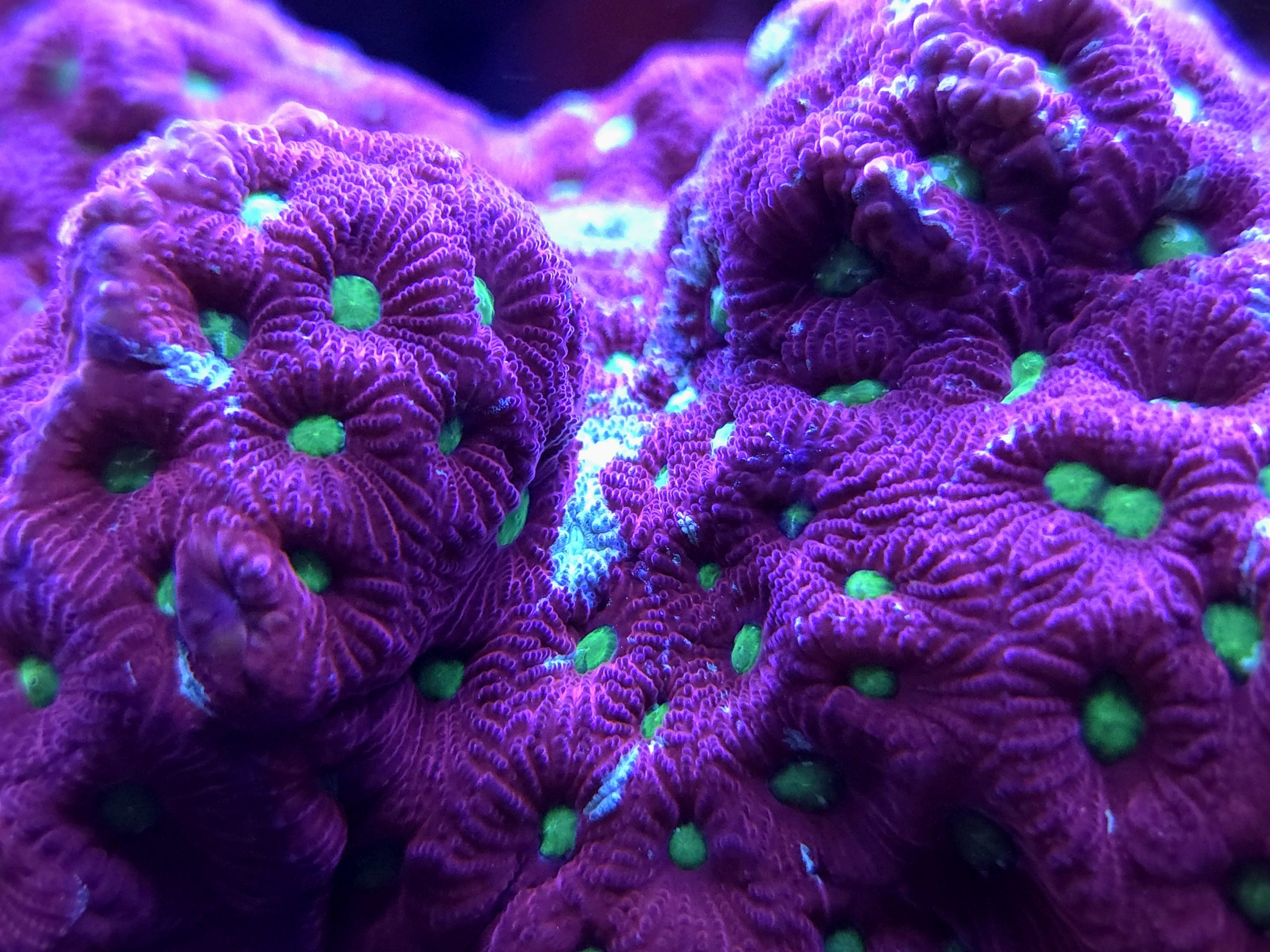
The Red War Favia is a striking LPS coral that brings deep red and contrasting green or gold eyes to your reef. It’s hardy, relatively slow-growing, and a great choice for hobbyists who want bold color without extreme difficulty.
Placement, Lighting & Flow
Red War Favia does best in stable, moderate conditions. Think of it as a low-to-mid rockwork coral rather than a high-light showpiece.
- Placement: Lower half of the tank, on rock or a small frag platform where it won’t be shaded but also not blasted with light.
- Lighting: Moderate PAR (75–150). Too much light can wash out the reds and cause receding tissue. If colors fade, lower the intensity or move it down.
- Flow: Low to moderate, indirect flow. Enough to keep detritus from settling, but not so strong that the fleshy tissue whips around.
Feeding, Aggression & Care Tips
While Red War Favia can live on light and dissolved nutrients, targeted feeding brings out its best color and growth.
- Feeding: 1–2 times per week, offer small meaty foods (mysis, finely chopped shrimp, or coral-specific pellets) when feeder tentacles extend at night.
- Water parameters: Keep alkalinity 8–9 dKH, calcium 420–450 ppm, magnesium 1300–1400 ppm, and nitrates/phosphates in the low-but-detectable range.
- Sweeper tentacles: This coral is aggressive. Leave 2–3 inches of space around it to avoid stinging neighboring corals.
- Acclimation: Start it in lower light and gradually move it brighter over 1–2 weeks to prevent bleaching.
Quick tip: View your Red War Favia under blues after feeding. Healthy polyps will swell and glow, giving you a fast visual check on its overall condition.
Was this helpful?
Thanks for your feedback!