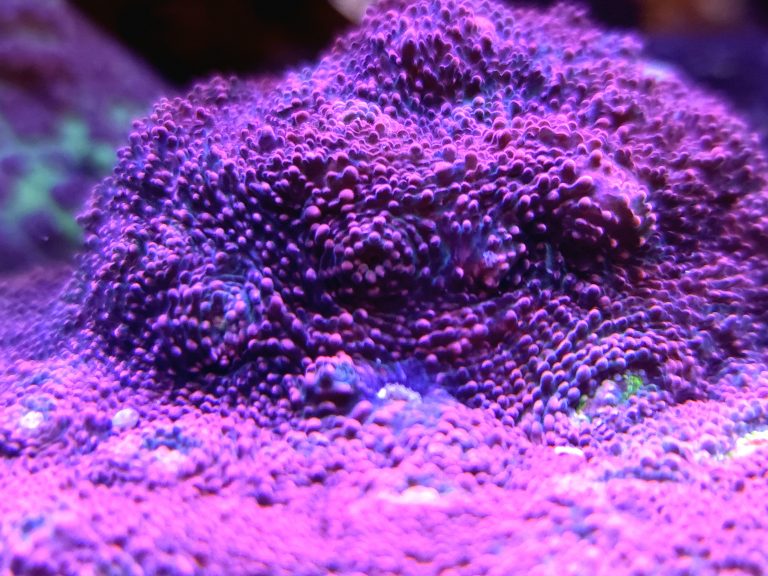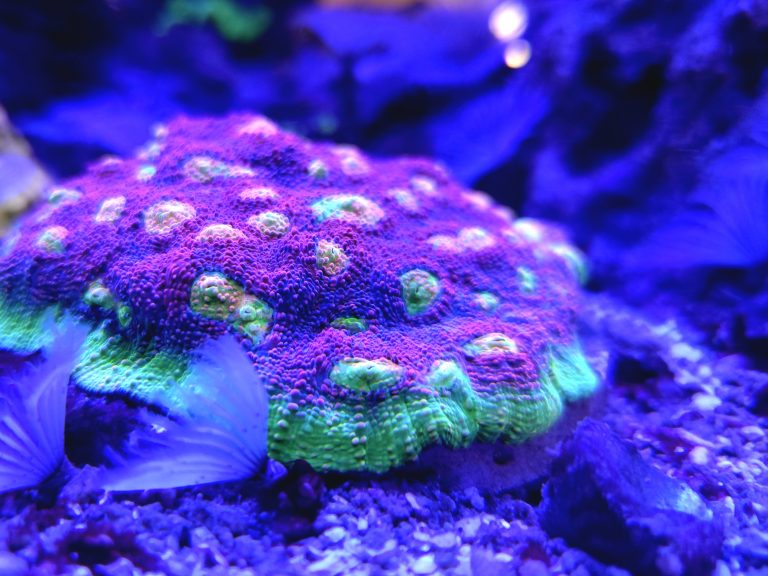
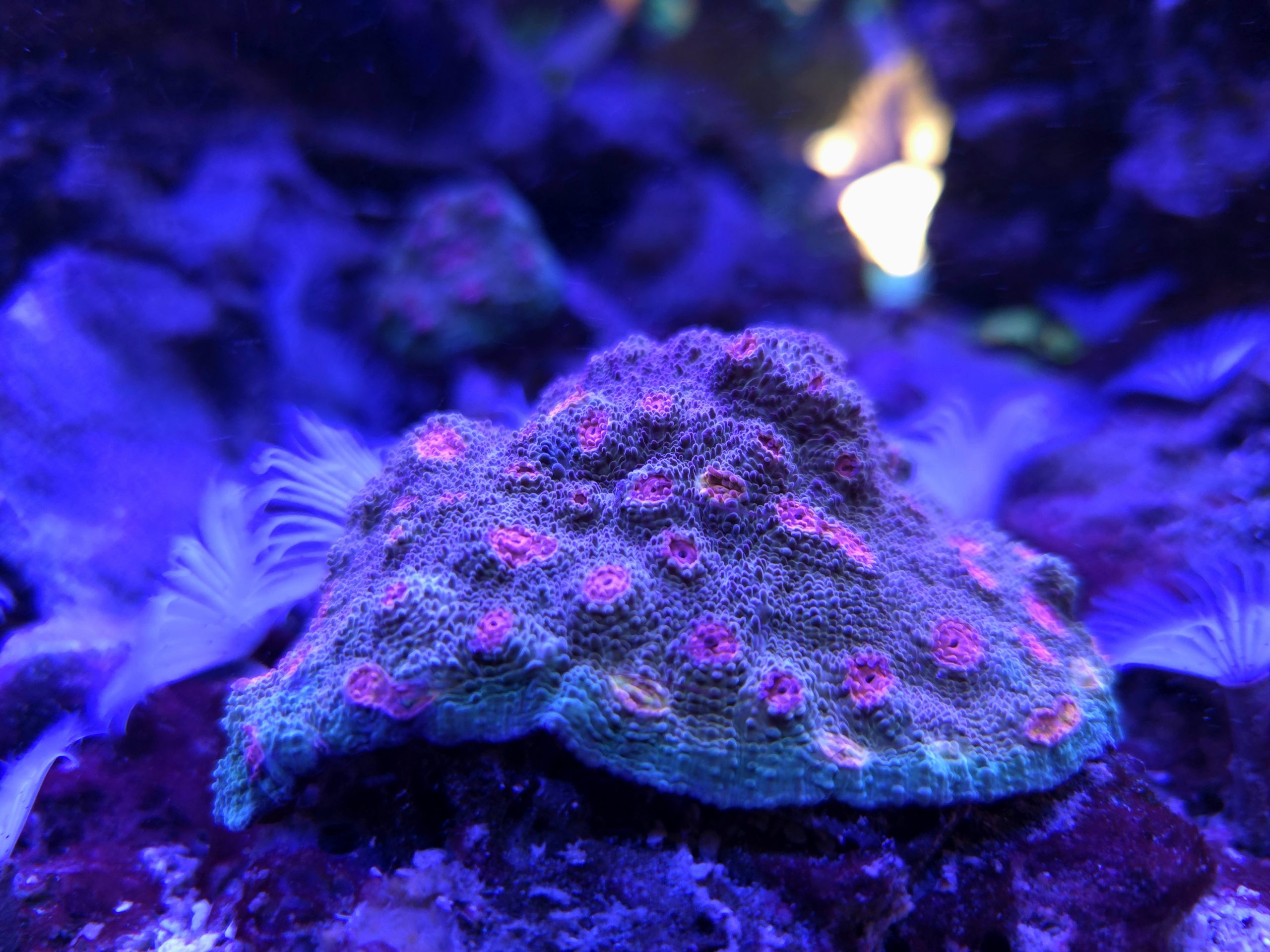
Purple Urkel Chalice
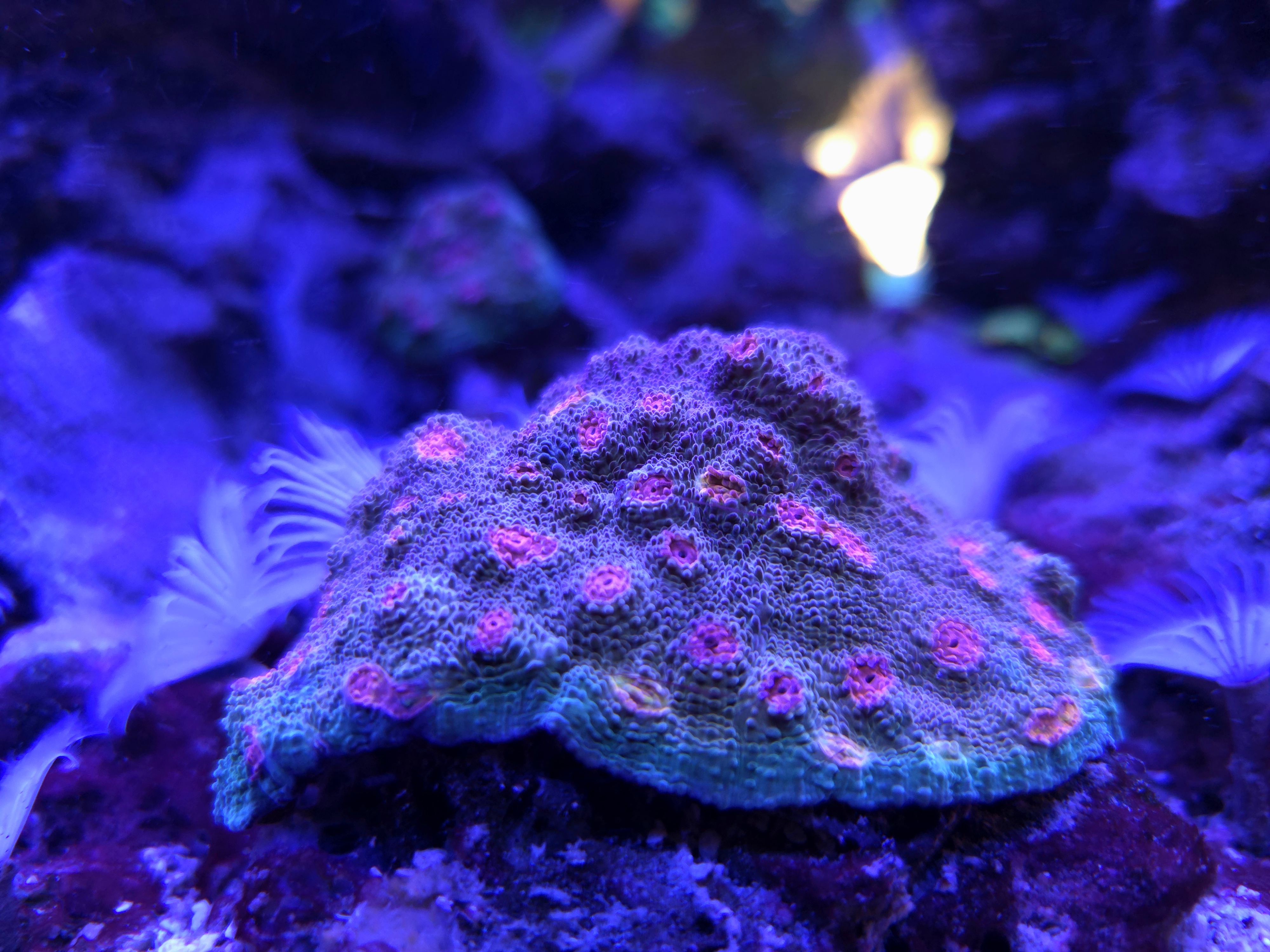
The Purple Urkel Chalice is a striking LPS coral with deep purple eyes and swirls. It can be hardy once settled, but it needs stable conditions and careful placement. With the right setup, this chalice can become a glowing centerpiece in your reef.
Purple Urkel Chalice Care: Placement, Lighting, and Flow
Start the Purple Urkel Chalice low in the tank. Place it on the sand bed or a low rock ledge. This coral prefers indirect light at first. Sudden strong light can bleach the tissue and fade the purple color.
For long-term lighting, aim for moderate PAR. A range of 80–150 PAR works well for most chalices. Use blue-heavy spectrum for best color. If you run strong LEDs, begin at 60–80 PAR and increase slowly over 3–4 weeks. Raise intensity by 5–10% each week while watching for stress.
Provide gentle to moderate flow. The tissue is fleshy and can tear in strong, direct current. You want just enough flow to keep detritus off the surface. If the flesh looks pulled or flapping, the flow is too strong. If film or debris collects on the coral, increase flow slightly or adjust the angle.
- Place in lower half of the tank at first.
- Avoid direct blasts from wavemakers or returns.
- Use a PAR meter if possible to fine-tune lighting.
Give this chalice room to grow. It can encrust rock and form plates over time. Keep at least 3–4 inches of space from other corals. Chalices can extend sweeper tentacles at night and sting neighbors.
Water Parameters, Feeding, and Troubleshooting
Stable water parameters are crucial for the Purple Urkel Chalice. Aim for 1.025–1.026 specific gravity. Keep temperature between 77–79°F. Avoid swings greater than 1°F per day. Maintain alkalinity at 8–9 dKH, calcium at 420–450 ppm, and magnesium at 1300–1400 ppm.
Nitrate should stay around 5–15 ppm. Phosphate should be 0.03–0.08 ppm. This chalice usually dislikes ultra-low nutrients. If colors fade and growth stops, your nutrients may be too low. Consider feeding more or reducing aggressive filtration.
- Test alkalinity 2–3 times per week in growing tanks.
- Perform 10–15% water changes every 1–2 weeks.
- Use quality test kits and calibrate refractometers regularly.
The Purple Urkel Chalice benefits from targeted feeding. Feed 1–2 times per week in the evening. Turn off pumps and gently target the coral with a turkey baster. Use small particle foods like reef roids, powdered coral foods, or finely chopped mysis.
- Wait 5–10 minutes after turning off flow before feeding.
- Offer small amounts first to avoid excess waste.
- Restart pumps after 15–20 minutes to prevent film buildup.
Watch for tissue recession, pale patches, or exposed skeleton. These signs often come from unstable alkalinity, too much light, or aggressive neighbors. If recession starts, move the coral to lower light and gentler flow. Check parameters and correct any swings slowly. Frag away dead skeleton if needed to stop further loss.
Quarantine new chalice frags when possible. Dip them to reduce pests like flatworms. Inspect the underside of the frag plug for eggs. Careful acclimation and steady conditions will keep your Purple Urkel Chalice colorful and thriving for years.
Add to Wishlist