
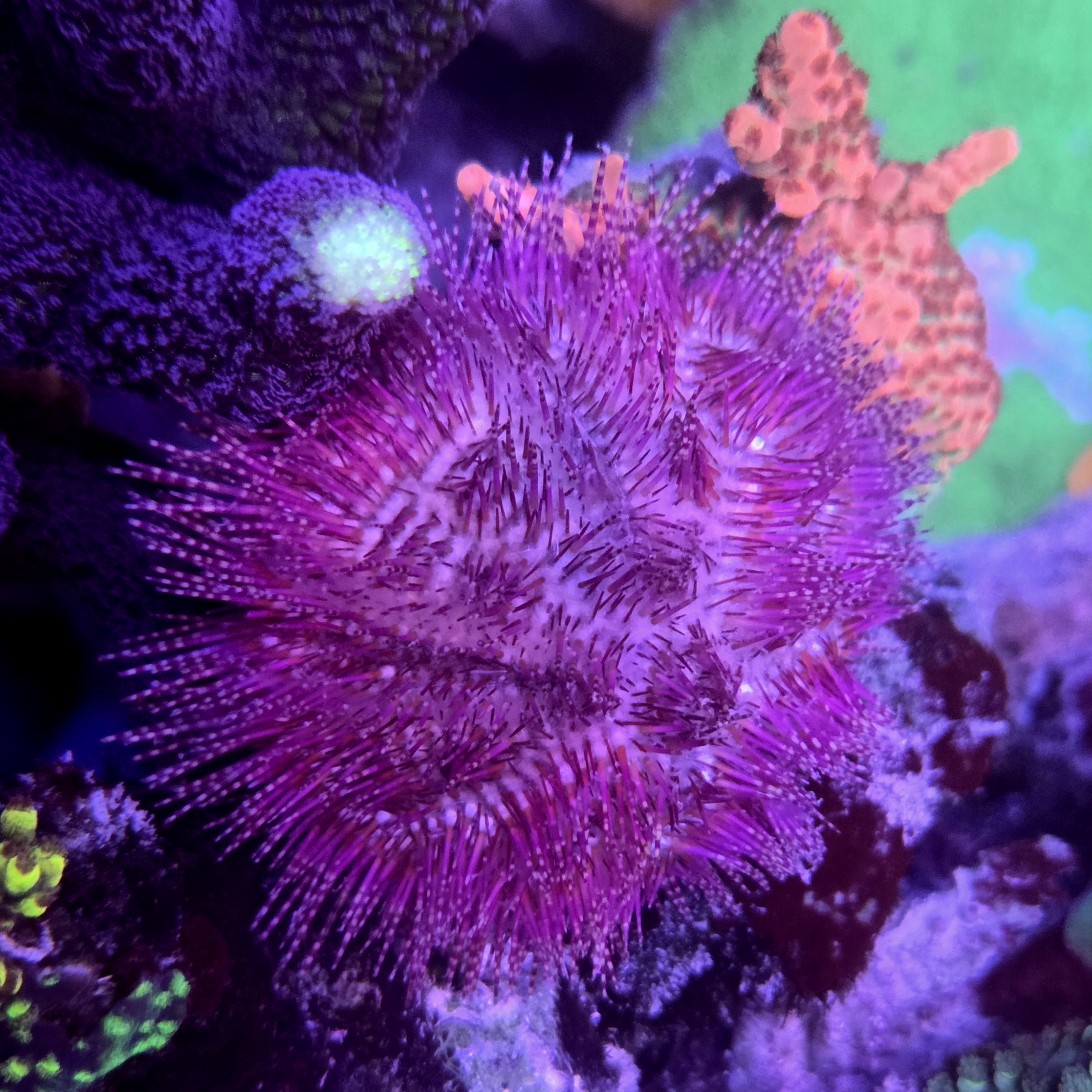
Pincushion Urchin Care Guide for Reef Aquariums
The Pincushion Urchin is a hardworking, reef-safe algae grazer that can add both personality and utility to your saltwater tank. With its rounded body and dense, colorful spines, this urchin spends its nights roaming the rockwork, cleaning up nuisance algae and detritus along the way.
There are several beautiful varieties available to hobbyists, including the classic Pincushion Urchin, as well as more unique color forms like the Orange Hairy Pincushion Urchin and the Purple Tip Pincushion Urchin. Each offers the same basic benefits: excellent algae control and a fascinating nocturnal behavior.
Tank Requirements & Basic Care
While hardy, the Pincushion Urchin does best in stable, mature reef systems with plenty of live rock to graze on. They are sensitive to poor water quality and sudden swings in parameters.
General care recommendations include:
- Tank size: 30+ gallons for a single Pincushion Urchin, larger for multiple specimens.
- Water parameters: Temperature 72–78°F, salinity 1.024–1.026, pH 8.1–8.4, stable alkalinity and calcium.
- Diet: Primarily film algae, coralline algae, and detritus; supplement with dried seaweed (nori) if the tank is very clean.
- Lighting & flow: Moderate to high reef lighting is fine; provide moderate flow so they can move easily.
- Tank maturity: Best introduced after the tank has established biofilm and algae growth.
Because they are invertebrates, Pincushion Urchins are highly sensitive to copper and many medications. Always research treatments carefully before using them in a tank that houses urchins or other inverts.
Behavior, Compatibility & Aquascape Tips
Pincushion Urchins are peaceful and generally safe with corals and fish. Their main risk is accidental, as they can knock over unsecured frags, decorations, or small rocks while they graze.
- Reef-safe: They typically ignore healthy corals, but may graze on coralline algae on your rockwork and back glass.
- Tankmates: Avoid housing them with urchin-eating species such as triggerfish, puffers, and some large wrasses.
- Rockwork: Secure rock structures and coral plugs to prevent tipping as the urchin moves around.
- Camouflage behavior: They often decorate themselves with shells, rubble, or macroalgae for protection, much like the unique Pincushion Urchin Camouflaged varieties.
Tip: If your Pincushion Urchin seems too active on the glass and equipment, it may be running low on natural algae. Offer a small piece of nori near its path a few times per week.
For hobbyists looking to add even more visual interest, the White Pincushion Urchin offers a striking contrast against darker live rock, while still providing the same algae-cleaning benefits.
With proper acclimation, stable water quality, and enough rockwork to explore, the Pincushion Urchin can become a long-lived, highly effective member of your clean-up crew and a favorite talking point for anyone who sees your reef.