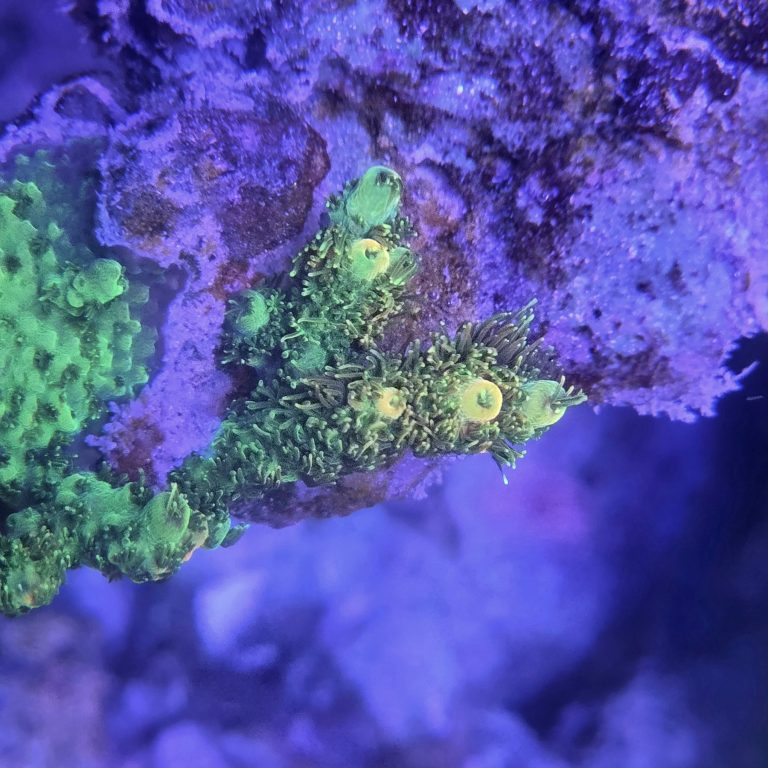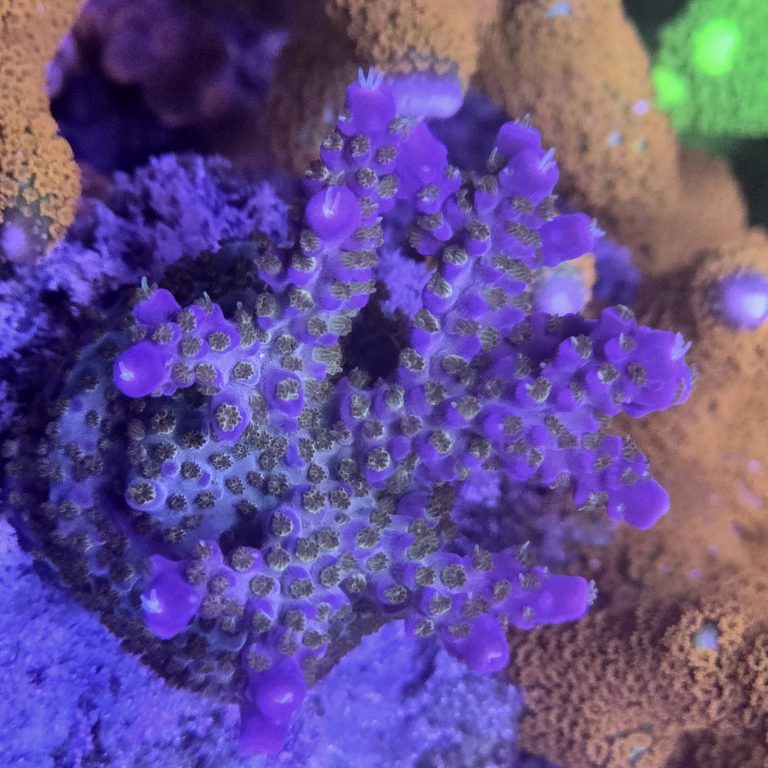
Montipora Sunset
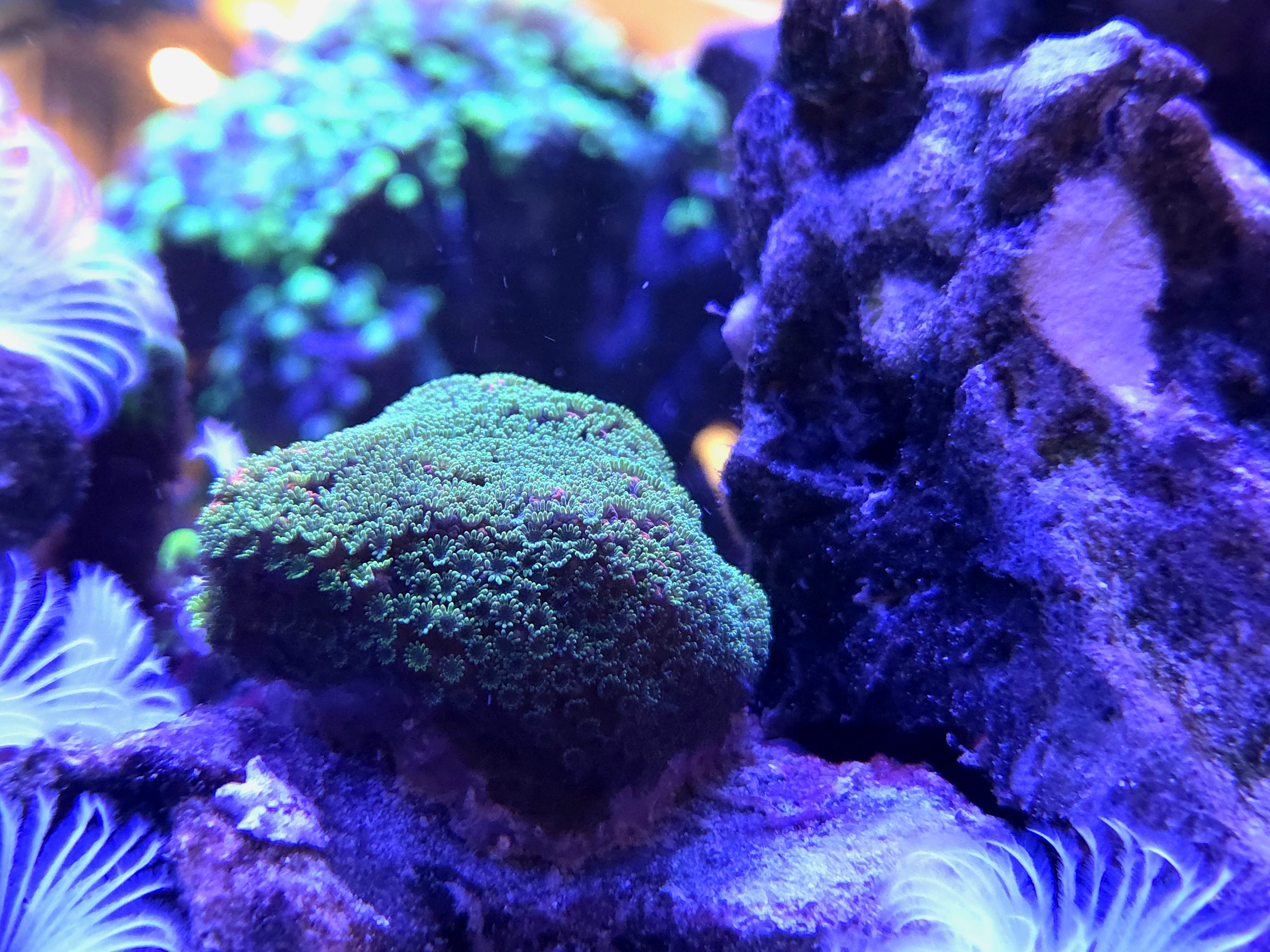
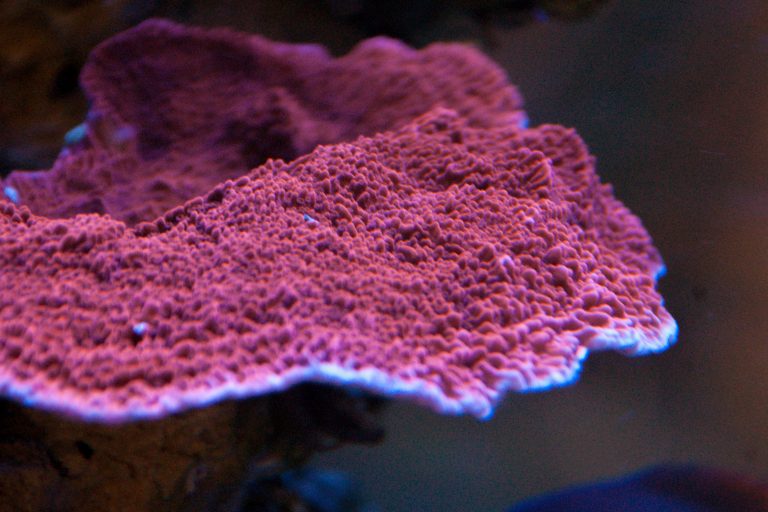
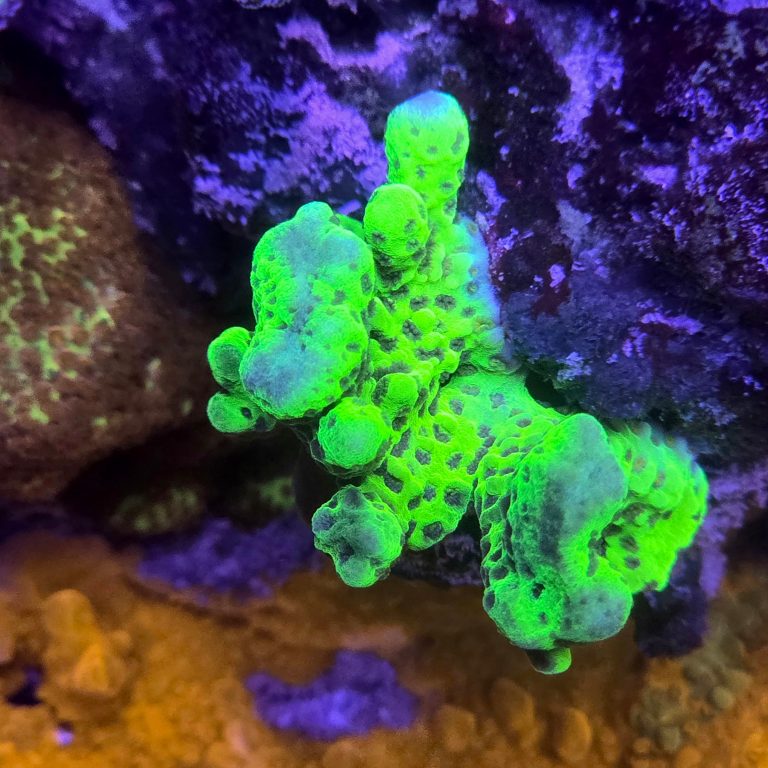
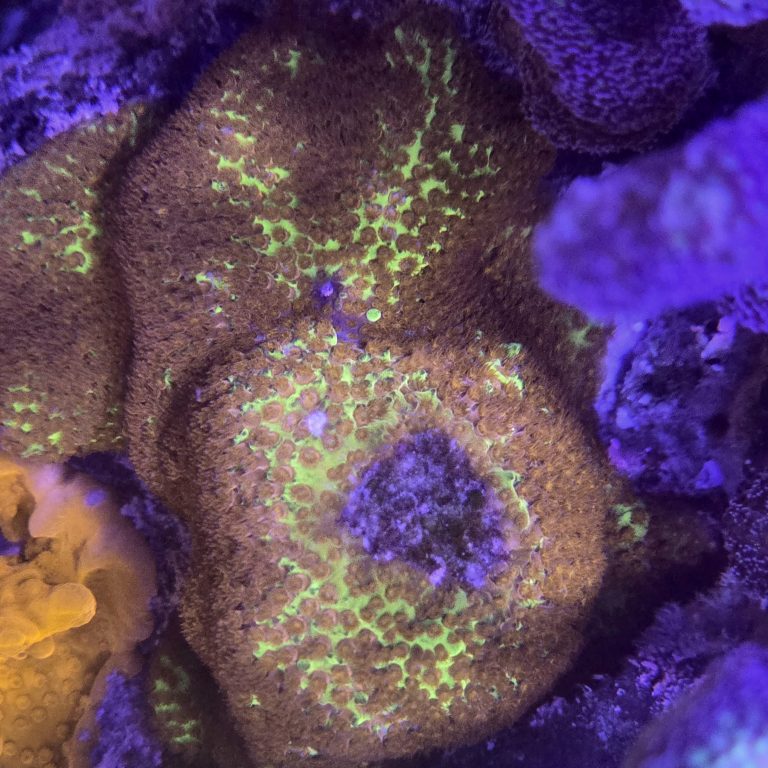
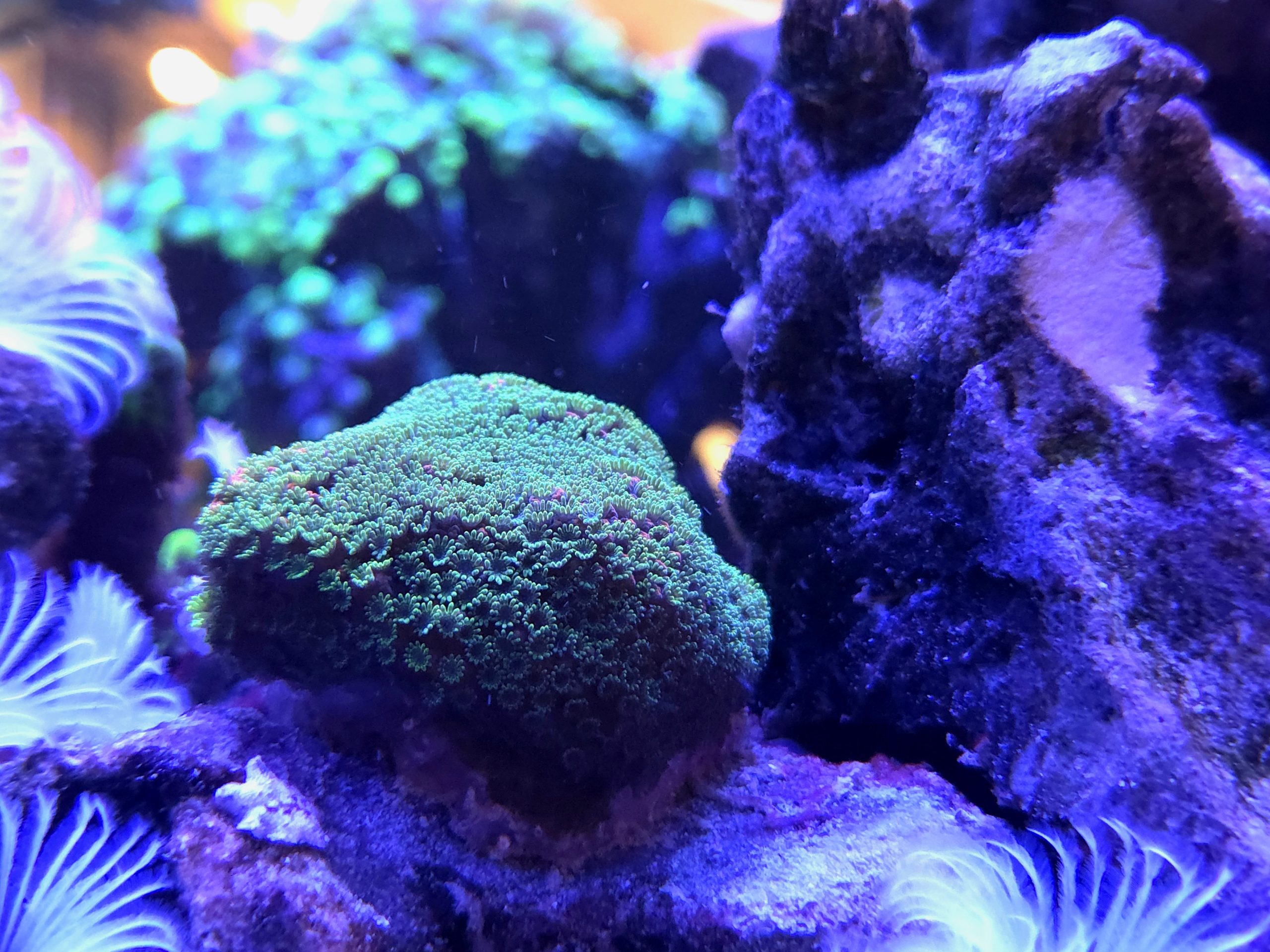
Montipora Sunset is a stunning encrusting SPS coral. Its bright orange base and green polyps stand out. With the right care, it grows fast and plates over rockwork beautifully.
Sunset Montipora Basics and Tank Requirements
Sunset Montipora is an SPS coral, but it is fairly forgiving. It suits intermediate reef keepers who already keep stable parameters. Start with a mature tank that is at least 6 to 8 months old.
Keep salinity between 1.025 and 1.026 specific gravity. Aim for temperature between 24–26°C (75–79°F). Maintain alkalinity at 8–9 dKH, calcium at 420–450 ppm, and magnesium at 1300–1400 ppm. Test these at least weekly. Stability matters more than chasing perfect numbers.
Lighting should be moderate to high. PAR in the 200–300 range works well for most systems. Place the frag mid-level at first. Watch for bleaching or browning. If color fades, adjust slowly by 20–30 PAR at a time.
Flow must be strong and random. Aim for 20–40 times tank turnover per hour. Avoid direct, laminar blasts. Point powerheads across the tank, not straight at the coral. Good flow keeps detritus off the surface and helps prevent tissue loss.
- Use a reliable refractometer for accurate salinity.
- Check alkalinity twice weekly in high-demand SPS tanks.
- Increase light and flow gradually over 1–2 weeks.
Placement, Feeding, Growth, and Troubleshooting
Mount Sunset Montipora on a stable rock with room to spread. It encrusts quickly and can overgrow nearby frags. Leave at least 5 cm (2 inches) from slower corals. Use gel super glue on a clean, dry frag plug or rock surface.
Sunset Montipora relies heavily on light, but feeding helps growth. Dose amino acids 1–2 times per week. Target feed fine powdered coral foods once or twice weekly. Turn off return pumps for 10–15 minutes during feeding. This gives polyps time to capture food.
- Keep nitrate between 5–15 ppm for good color.
- Maintain phosphate around 0.03–0.07 ppm.
- Avoid sudden nutrient drops from aggressive GFO use.
Watch for common problems. Pale tissue often means too much light or too little nutrients. Brown, dull color usually points to low light or high nutrients. Recede from the edges can signal unstable alkalinity or pests like Montipora-eating nudibranchs.
If you suspect pests, remove the frag and inspect at night with a flashlight. Dip in a coral dip for 5–10 minutes and rinse in clean saltwater. Repeat every 4–5 days for several cycles. During recovery, keep parameters rock solid and avoid major changes.
- Quarantine new Montipora frags for 2–4 weeks when possible.
- Log test results to spot trends before problems start.
- Frag healthy edges if a section begins to die back.