Miss Piggy Goniopora
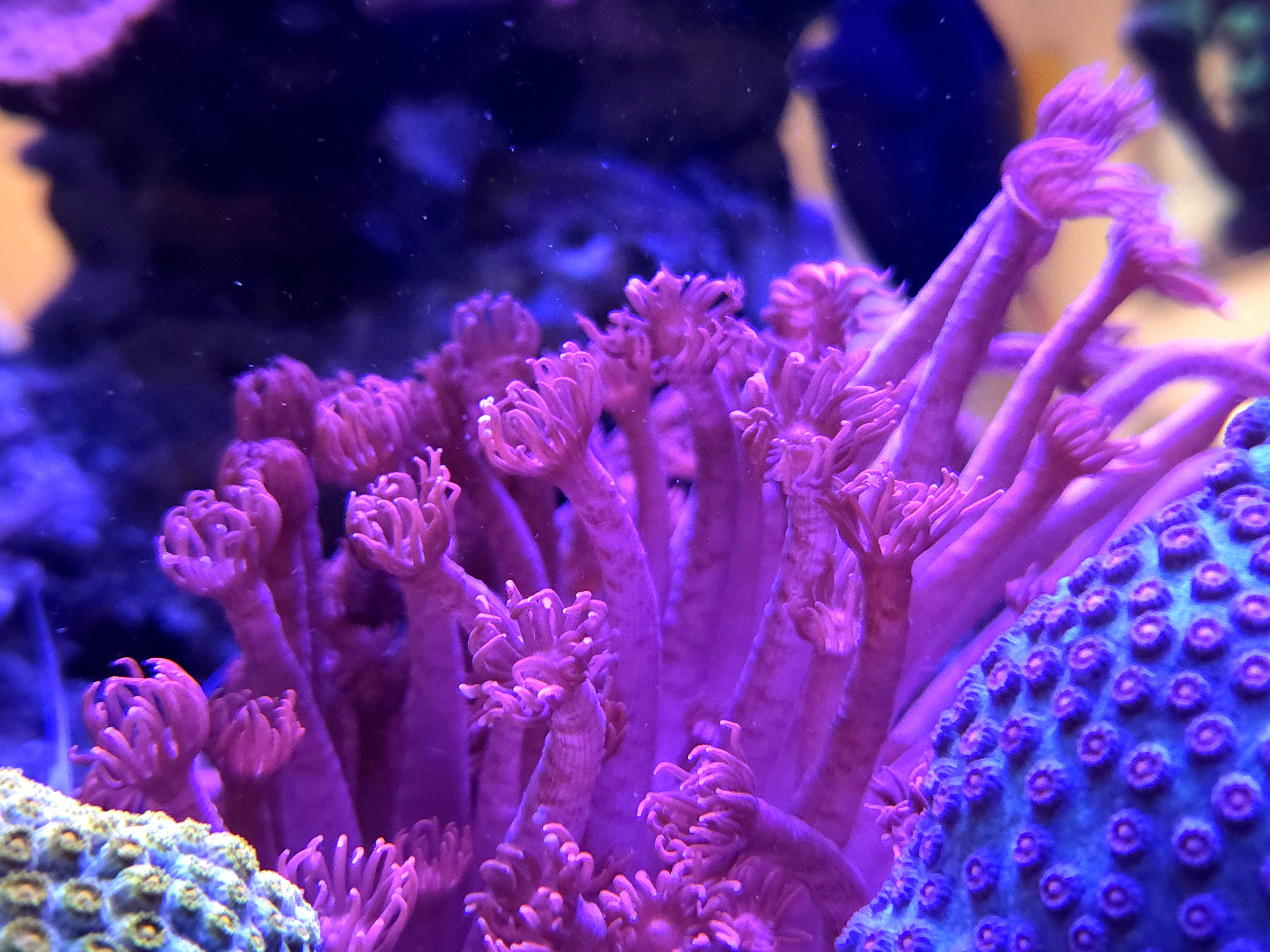
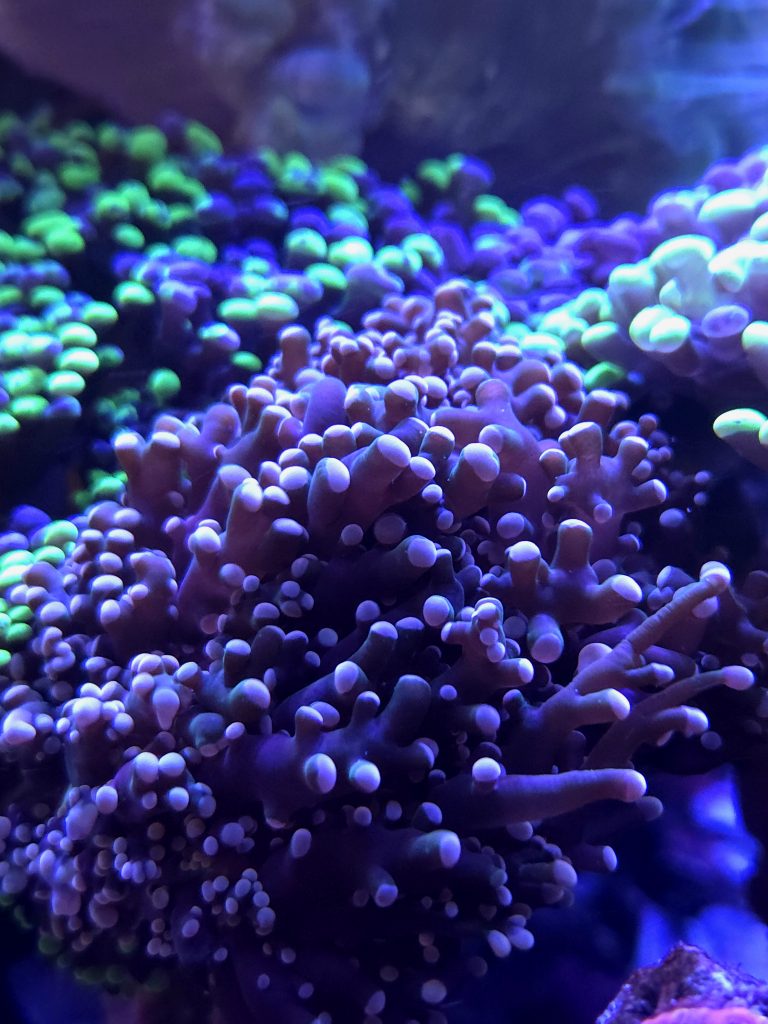
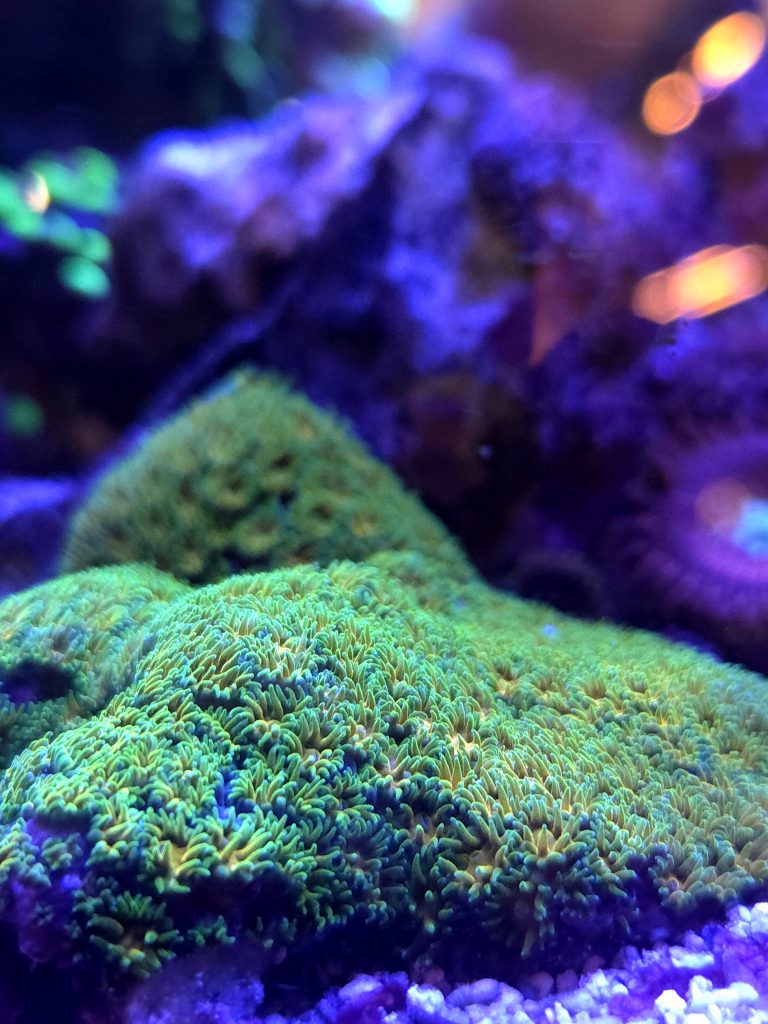
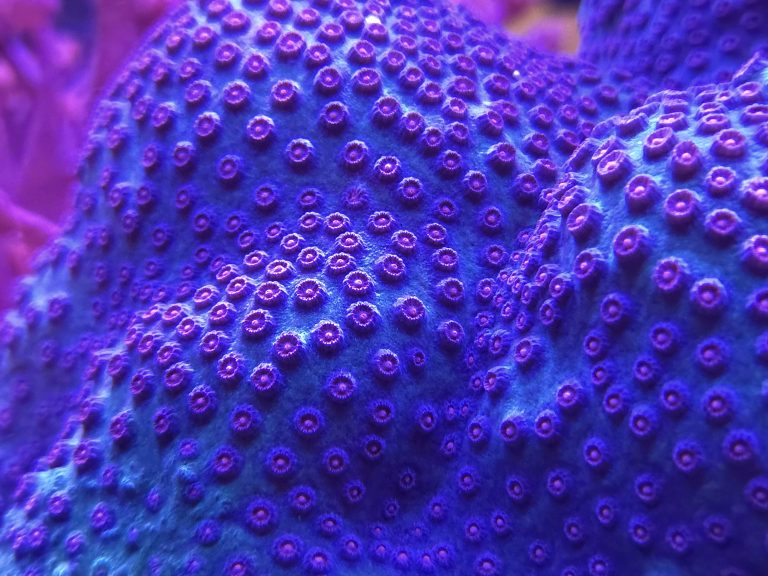
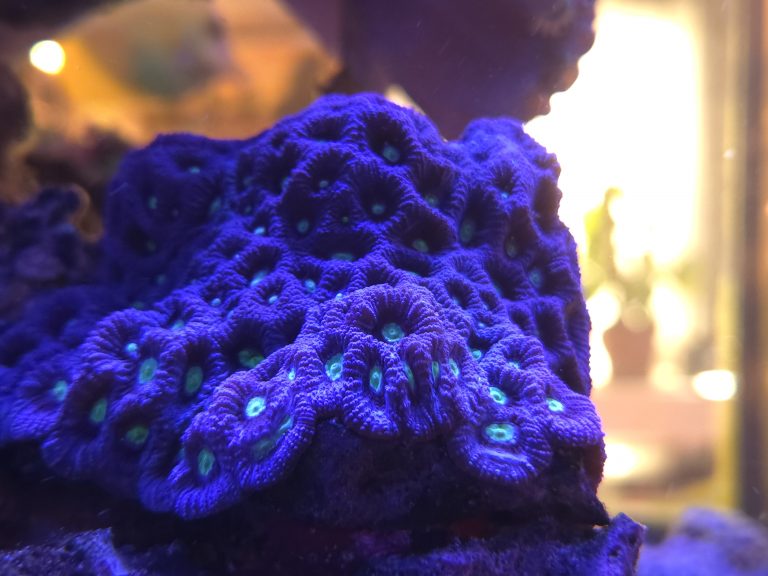
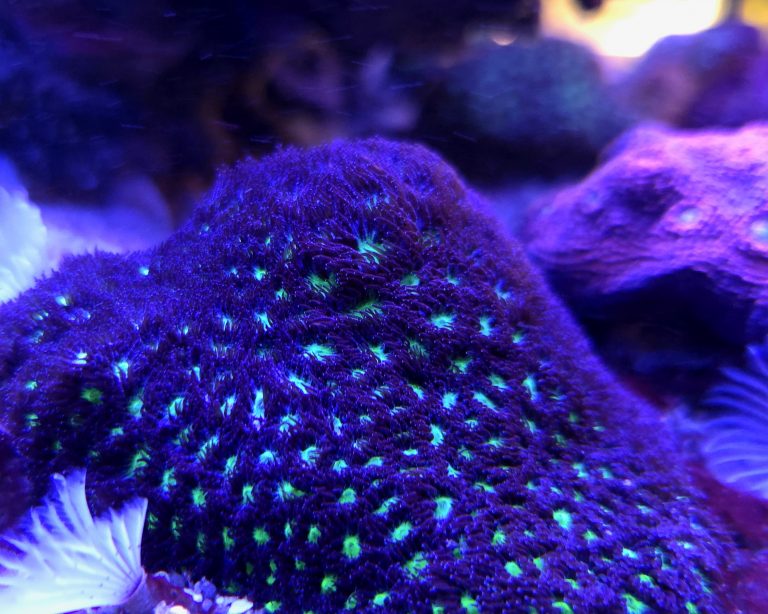
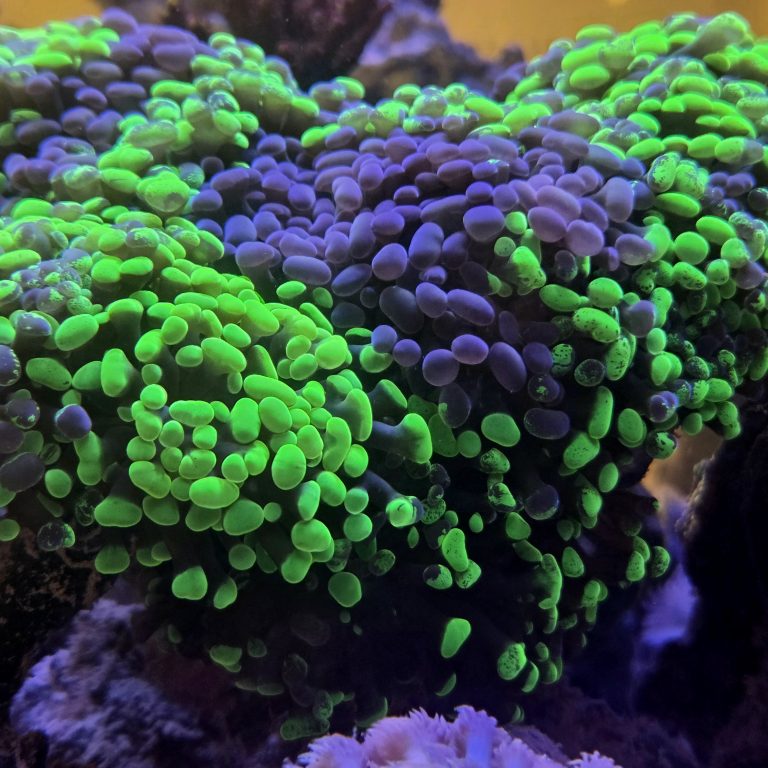
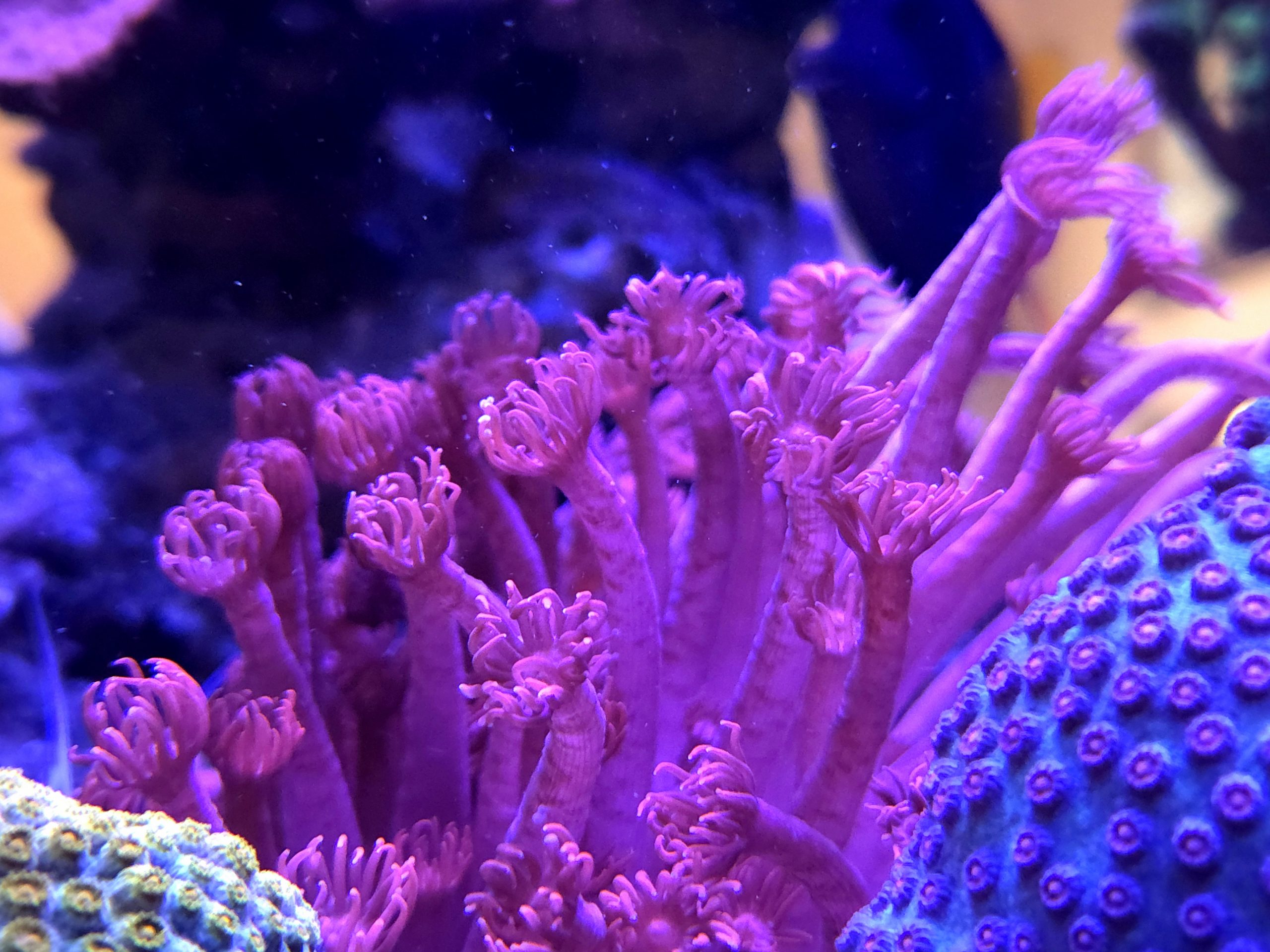
Miss Piggy Goniopora is a colorful, chunky polyp variety of flowerpot coral. It shows bright pinks and greens under reef lighting. With the right care, it can become a stunning centerpiece in your tank.
Miss Piggy Goniopora Care and Placement
Miss Piggy Goniopora prefers moderate, stable conditions. Aim for 78–79°F temperature and 1.025 specific gravity. Keep alkalinity between 8–9 dKH and calcium around 420 ppm. Magnesium should stay near 1350 ppm for best skeletal growth.
Place this coral in low to moderate flow. The polyps should sway gently, not whip around. Strong, direct flow can cause the polyps to retract and damage tissue. Start it on the sand bed or a low rock ledge. Then slowly move it up if needed.
Lighting should be moderate. PAR between 80–150 works well for most Miss Piggy colonies. Too much light can bleach the tissue and fade the colors. Start the coral in lower light and increase PAR over two to three weeks.
- Use a PAR meter if possible for accuracy.
- Keep nitrate between 5–15 ppm for good color.
- Maintain phosphate around 0.03–0.08 ppm.
- Avoid rapid parameter swings during water changes.
Watch the polyps daily. Healthy Miss Piggy Goniopora shows full, puffy extension during the light cycle. If polyps stay closed for more than a day, check flow, lighting, and water quality immediately.
Feeding, Growth, and Troubleshooting
Miss Piggy Goniopora benefits from regular feeding. Target feed 2–3 times per week for best growth. Use fine particulate foods like reef roids, powdered coral foods, or rotifers. Turn off flow pumps for 10–15 minutes while feeding so food can settle on the polyps.
- Use a turkey baster or coral feeder for precise feeding.
- Feed lightly at first to avoid nutrient spikes.
- Rinse frozen foods to reduce excess phosphate.
This coral can be sensitive to sudden changes. Always acclimate new frags slowly. Drip acclimate for 30–45 minutes to match salinity and temperature. Then light acclimate by starting in shaded areas. Increase intensity by 10–15% each week.
Common issues include tissue recession at the base and poor polyp extension. These often come from unstable alkalinity or aggressive neighbors. Keep at least 3–4 inches of space from stinging corals like euphyllia or favias. Run activated carbon to reduce chemical warfare in mixed reefs.
- If polyps shrink, test alkalinity and salinity first.
- Check for pests like nudibranchs or flatworms at night.
- Perform a 10–15% water change if parameters drift.
- Consider an iodine dip if tissue looks damaged.
With stable parameters, gentle flow, and regular feeding, Miss Piggy Goniopora can thrive. It will develop thick, plush polyps and rich coloration. Over time, it can grow into a rounded, eye-catching colony that draws attention in any reef display.
Add to Wishlist