
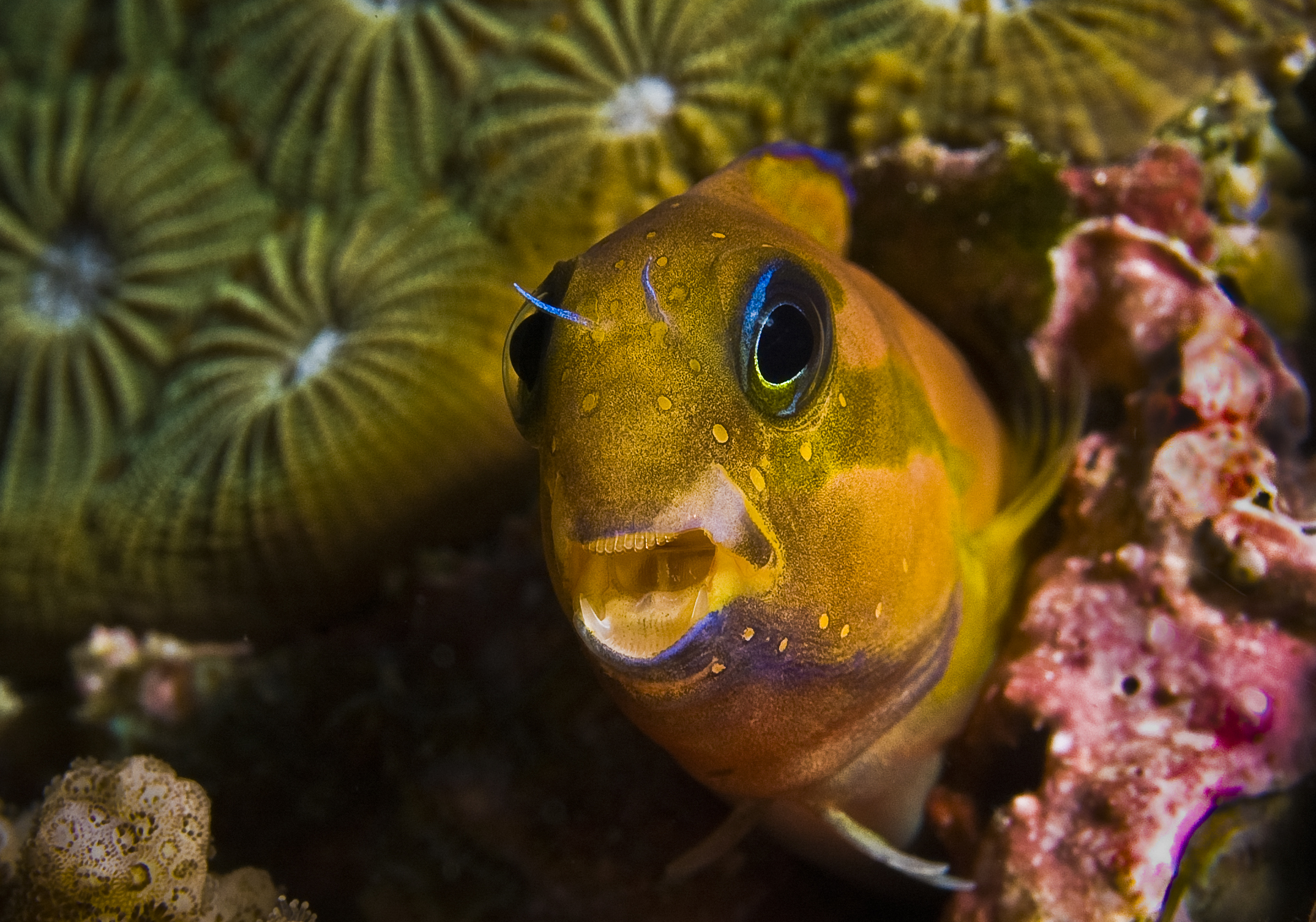
The Midas Blenny (Ecsenius midas) is one of those reef fish that instantly steal the spotlight. With its golden body, curious personality, and constant motion, this blenny adds both color and character to almost any saltwater aquarium. If you’re looking for a hardy, active, and reef-safe fish, the Midas Blenny deserves a serious look.
Natural Behavior & Personality
Unlike many perchers in the blenny family, the Midas Blenny is more of a mid-water swimmer. You’ll often see it hovering in the water column, dipping in and out of rockwork, and occasionally backing into a favorite hole to rest or observe the room.
- Temperament: Generally peaceful, but can be territorial with similar-shaped fish or other blennies.
- Activity level: Very active; brings a lot of movement to the middle of the tank.
- Reef compatibility: Considered reef-safe; not known for nipping corals.
If you enjoy fish with personality, this species delivers. Midas Blennies quickly learn who feeds them and often become bold, front-and-center pets rather than shy rock hiders.
Tank Requirements & Ideal Setup
A single Midas Blenny can thrive in a well-established system of around 40 gallons or larger. The key is providing enough rockwork and visual barriers so the fish can retreat and feel secure.
- Minimum tank size: 40+ gallons for a single adult.
- Aquascape: Plenty of live rock with caves and overhangs to create hiding spots.
- Water parameters: Stable salinity (1.024–1.026), temperature 76–79°F, low nitrates and phosphates.
Because they are active swimmers, Midas Blennies appreciate open areas to dart through. A secure lid is essential—these fish can jump when startled. If you’re planning your first reef tank, you may also want to read our guide on best beginner saltwater fish to see how the Midas compares to other hardy options.
Tank Mates & Compatibility
Midas Blennies mix well with most peaceful community fish, including:
- Clownfish
- Gobies and smaller wrasses
- Dwarf angelfish (with monitoring)
Avoid keeping them with aggressive bullies or multiple blennies in cramped quarters, as competition for hiding spots can create tension. If you’re designing a community with invertebrates, check out our overview of reef-safe invertebrates to round out your cleanup crew.
Feeding the Midas Blenny
In the wild, Midas Blennies are planktivores, picking suspended foods from the water column. In captivity, they adapt well to prepared foods, but variety is crucial.
- High-quality marine pellets and flakes
- Frozen mysis and brine shrimp
- Occasional enriched frozen blends for added nutrition
Tip: Offer small, frequent feedings rather than one large meal. This better matches their natural grazing behavior and keeps them active and satisfied.
While they may sample some algae, don’t rely on algae alone to feed this species. A balanced diet will keep their color vibrant and their body shape full and healthy.
Acclimation & Long-Term Care
Take your time acclimating a new Midas Blenny to avoid stress-related issues. Use a drip acclimation method, dim the lights during introduction, and provide immediate access to rockwork. For more tips on bringing new fish home, see our step-by-step guide to quarantining new aquarium fish.
With stable parameters, a secure aquascape, and regular feeding, Midas Blennies often become long-lived, centerpiece fish. Their combination of bright coloration and interactive behavior makes them a favorite among reef keepers from beginner to advanced.
In summary, if you want a hardy, active, and visually striking addition to your marine tank, the Midas Blenny is an excellent choice. Provide space, hiding spots, and a varied diet, and you’ll be rewarded with a golden, ever-moving companion that brings your reef to life.