
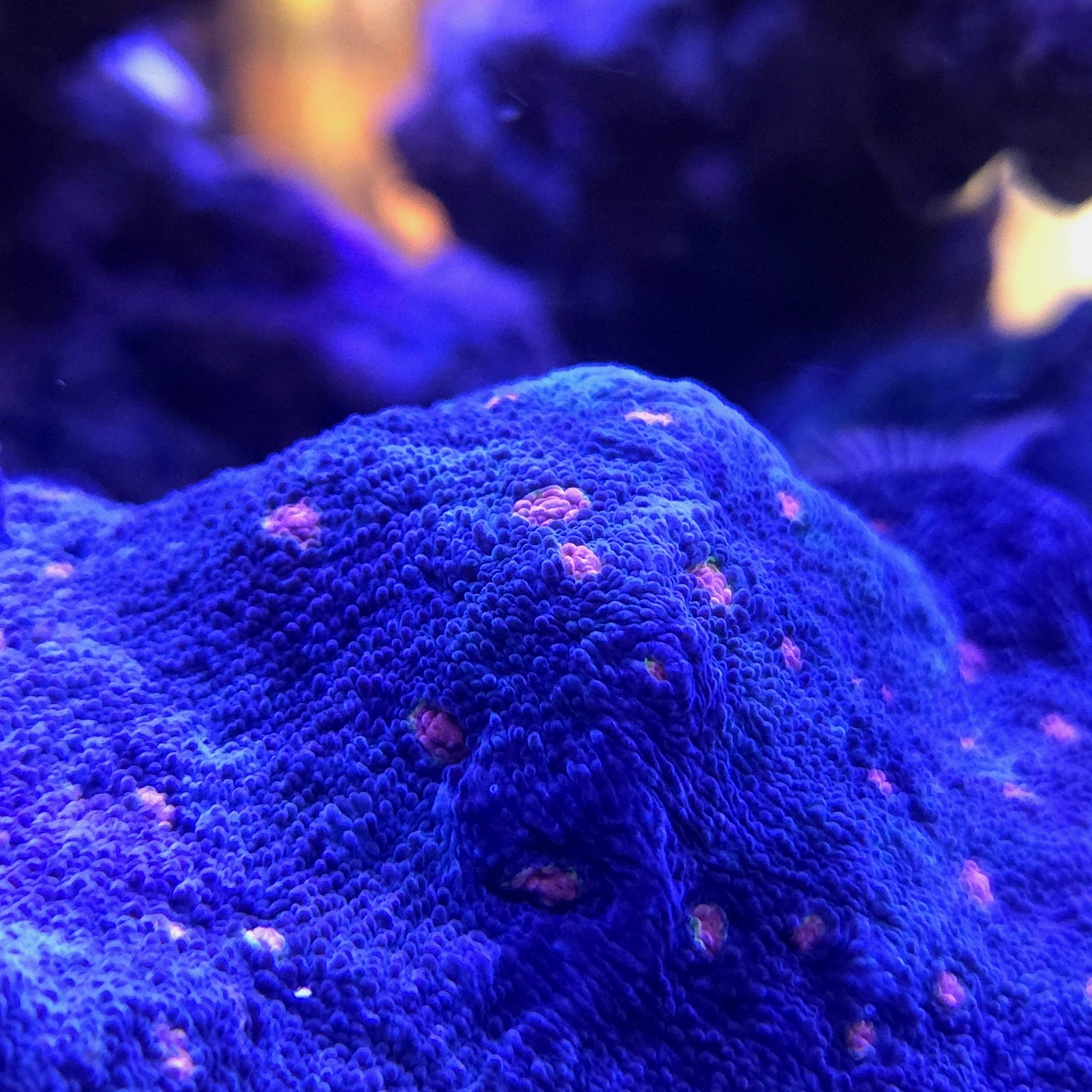
The Miami Chalice is a vibrant, eye-catching chalice coral that can become the centerpiece of a reef tank when given the right care. It’s fairly hardy once settled, but it does best when you pay attention to placement, lighting, and stability.
Placement, Lighting, and Flow
Miami Chalice prefers a stable, lower-light environment with moderate flow. Think of it as a coral that likes comfort over extremes.
- Placement: Start it on the sand bed or a low rock ledge so it can adjust before moving it higher, if needed.
- Lighting: Aim for low to moderate PAR (75–150). Too much light can cause fading or bleaching, especially on freshly imported frags.
- Flow: Moderate, indirect flow works best. You want enough movement to keep detritus off the surface, but not so much that the tissue is whipping around.
Feeding, Growth, and Long-Term Health
While Miami Chalice can survive on light and dissolved nutrients, targeted feeding will noticeably improve color and growth.
- Target feeding: 1–2 times per week, offer small meaty foods (mysis, finely chopped shrimp, or quality coral foods) using a turkey baster or pipette.
- Timing: Feed at night or shortly after lights dim, when feeding tentacles are extended.
- Parameters: Keep alkalinity 8–9 dKH, calcium 420–450 ppm, magnesium 1300–1400 ppm, and nitrates/phosphates low but not zero.
- Space: Miami Chalice can extend sweeper tentacles. Leave a few inches of room from neighboring corals to avoid stings.
Tip: Acclimate Miami Chalice slowly to stronger light. Use a light acclimation mode or place a few layers of mesh over the coral and remove them gradually over 1–2 weeks.
With consistent parameters, gentle light, and regular feeding, your Miami Chalice will reward you with rich color, new eyes, and a steadily expanding colony.