Miami Chalice
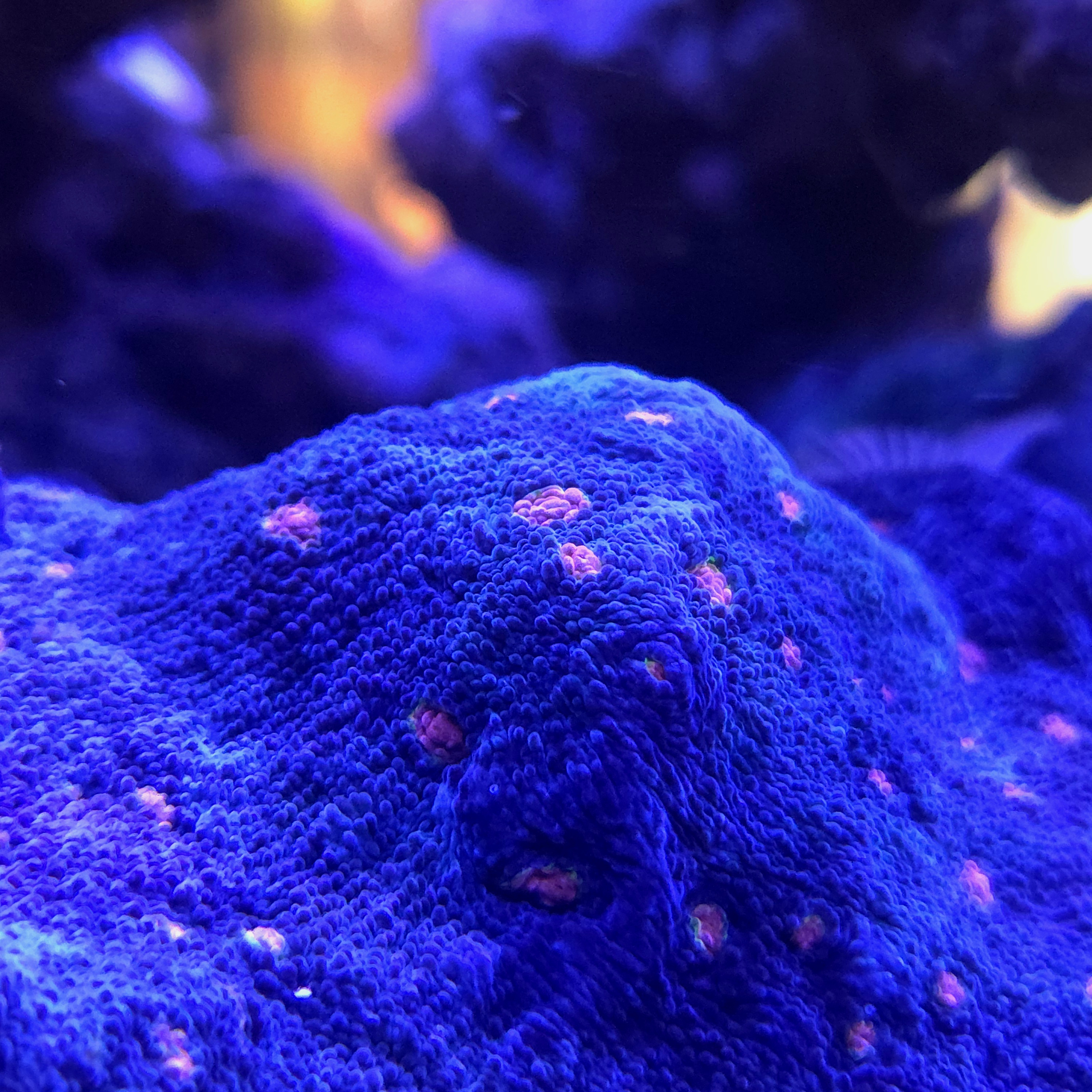
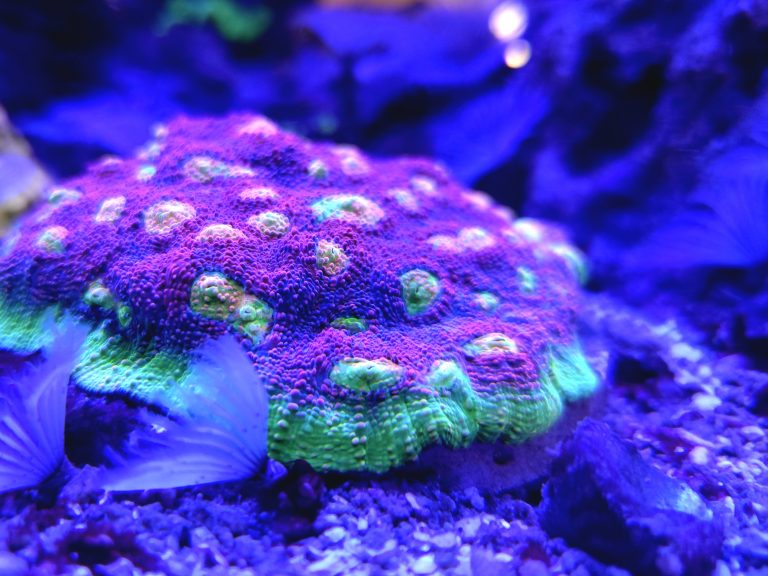
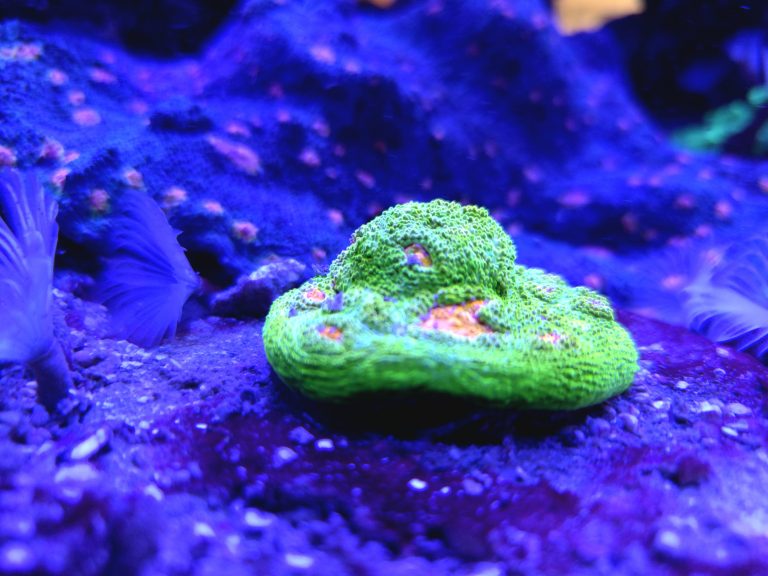
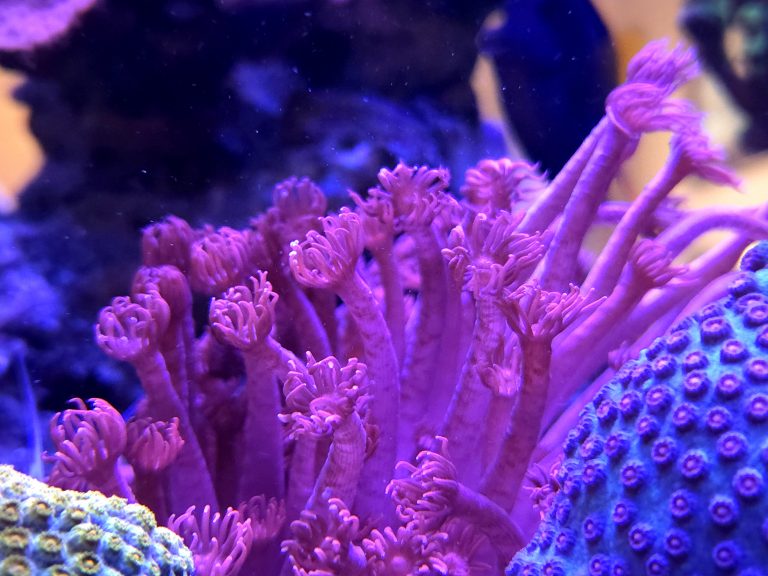
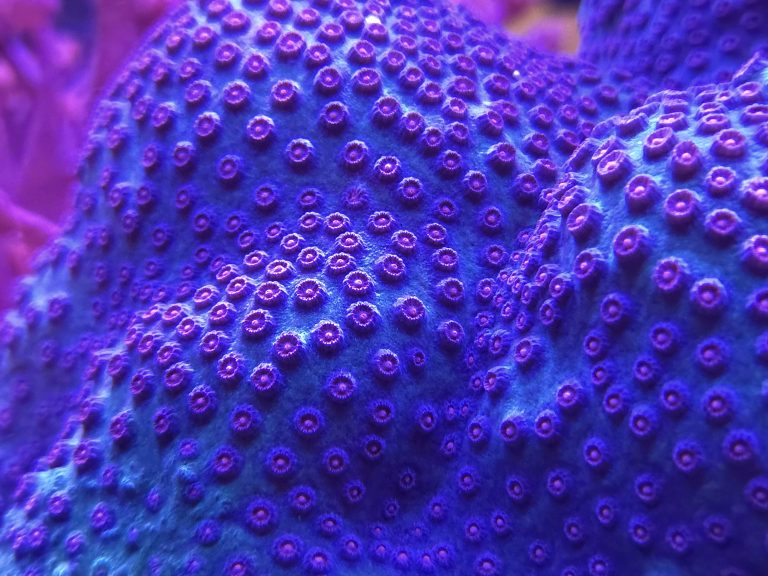
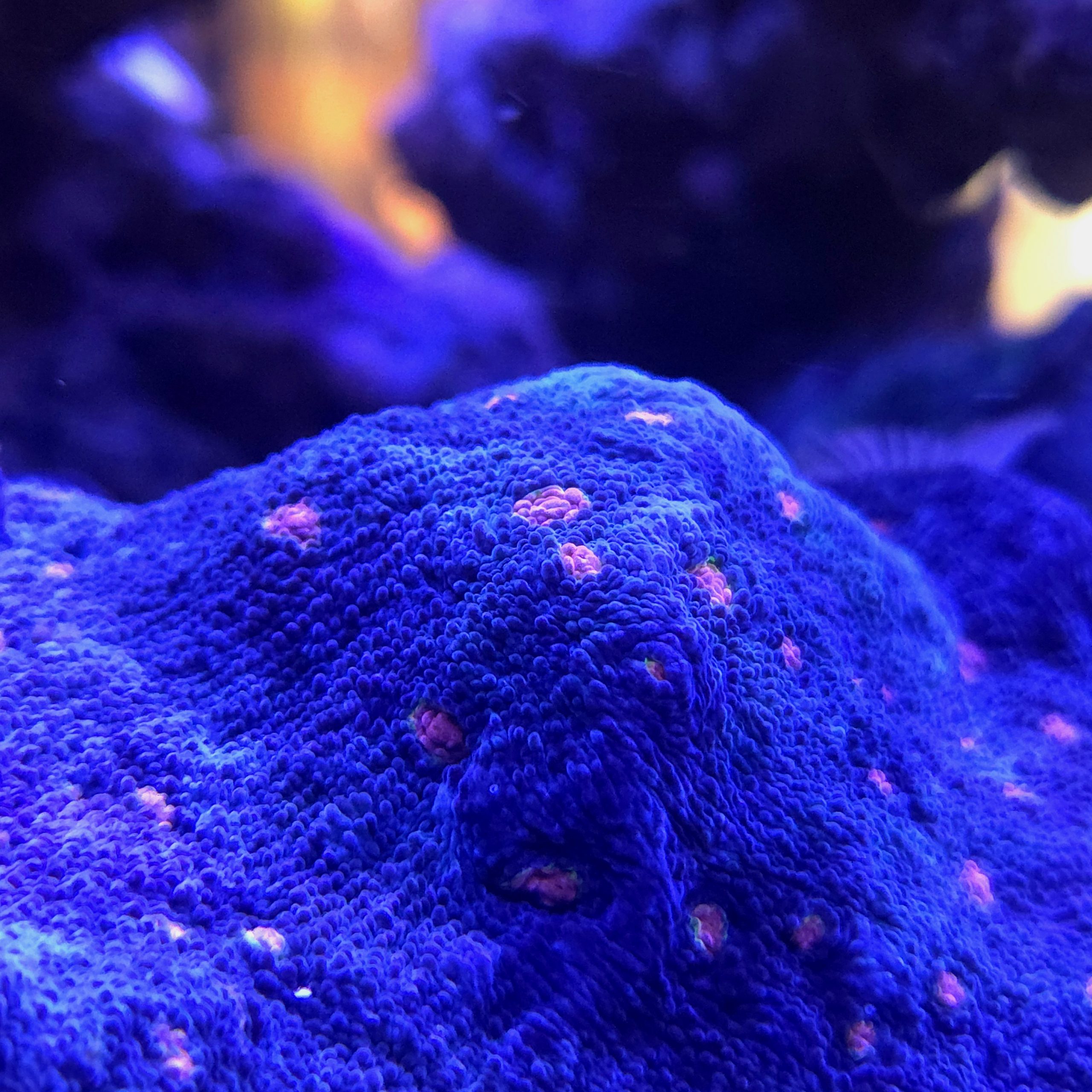
Miami Chalice corals are colorful, eye-catching LPS corals. They offer intense contrast under blue light. With the right care, they can become a bright centerpiece in any reef tank.
Miami Chalice Basics and Placement
Miami Chalice is usually an Echinophyllia or Oxypora type chalice coral. It forms a thin, plating or encrusting skeleton. Eyes and rims often glow neon green, orange, or pink. This coral prefers moderate stability over rapid growth.
Place Miami Chalice low to mid-level in the tank. Start it in lower light and move it slowly. Aim for 50–120 PAR. Too much light can cause bleaching and faded colors. Use a PAR meter if possible. If not, place it in shaded areas under rock ledges or overhangs.
Flow should be low to moderate. Strong, direct flow can tear its thin tissue. Gentle, random flow keeps detritus off the surface. Watch for tissue lifting or exposed skeleton. These are signs of too much flow.
Ideal water parameters are: 77–79°F temperature, 1.025–1.026 salinity, 8–9 dKH alkalinity, 400–450 ppm calcium, and 1300–1400 ppm magnesium. Keep nitrates between 5–15 ppm and phosphates 0.03–0.08 ppm. Miami Chalice dislikes sudden swings more than slightly elevated nutrients.
- Acclimate to light over 2–3 weeks.
- Keep at least 2–3 inches from aggressive corals.
- Use a turkey baster to blow off settled detritus weekly.
Feeding, Growth, and Troubleshooting
Miami Chalice can live on light and dissolved nutrients. However, targeted feeding boosts growth and color. Feed 1–2 times per week. Use small particle foods like reef roids, powdered coral foods, or finely chopped mysis. Turn off flow for 10–15 minutes during feeding.
Place a small cloud of food over the coral. You will see feeding tentacles extend, especially at night. Do not overfeed. Excess food can cause algae on the skeleton. Rinse frozen foods to reduce phosphate input.
Miami Chalice is semi-aggressive. It can send out sweeper tentacles at night. Leave space around the colony. Avoid placing near torches, hammers, or galaxea. These can burn the thin tissue quickly.
- If colors fade, reduce light intensity by 10–20%.
- If tissue recedes, test alkalinity and salinity immediately.
- If algae grows on the rim, gently brush with a soft toothbrush.
Common mistakes include placing the coral too high, giving too much flow, and chasing ultra-low nutrients. Another issue is unstable dosing. If you dose alkalinity and calcium, spread doses through the day. Sudden spikes can cause chalice tissue to peel from the skeleton.
- Quarantine new frags for 2–4 weeks to check for pests.
- Dip new pieces to remove flatworms and nudibranchs.
- Take monthly photos to track growth and color changes.
With stable water, gentle light, and regular feeding, Miami Chalice will reward you. Expect slow but steady growth and intense coloration that pops under blue LEDs.
Add to Wishlist