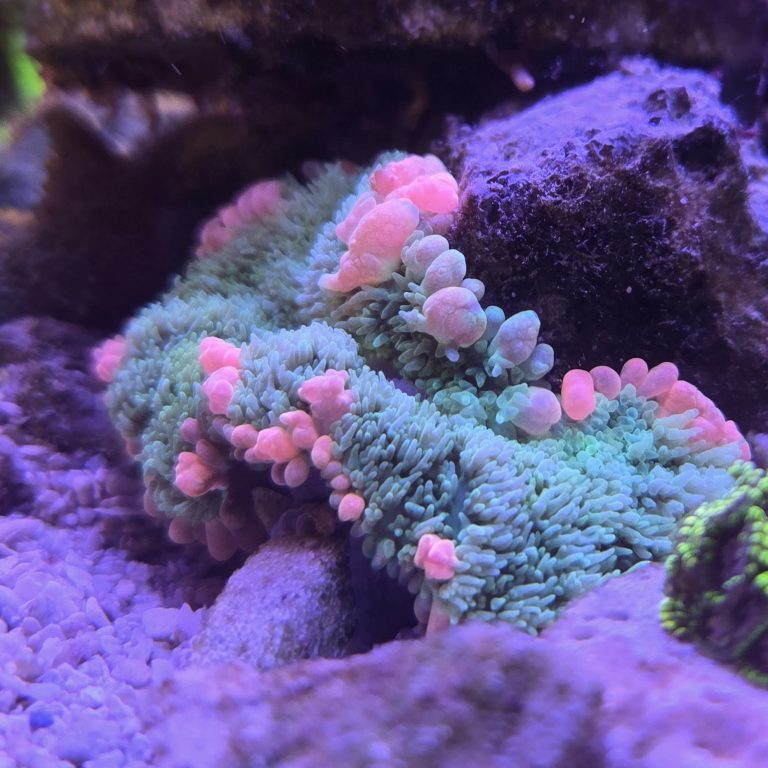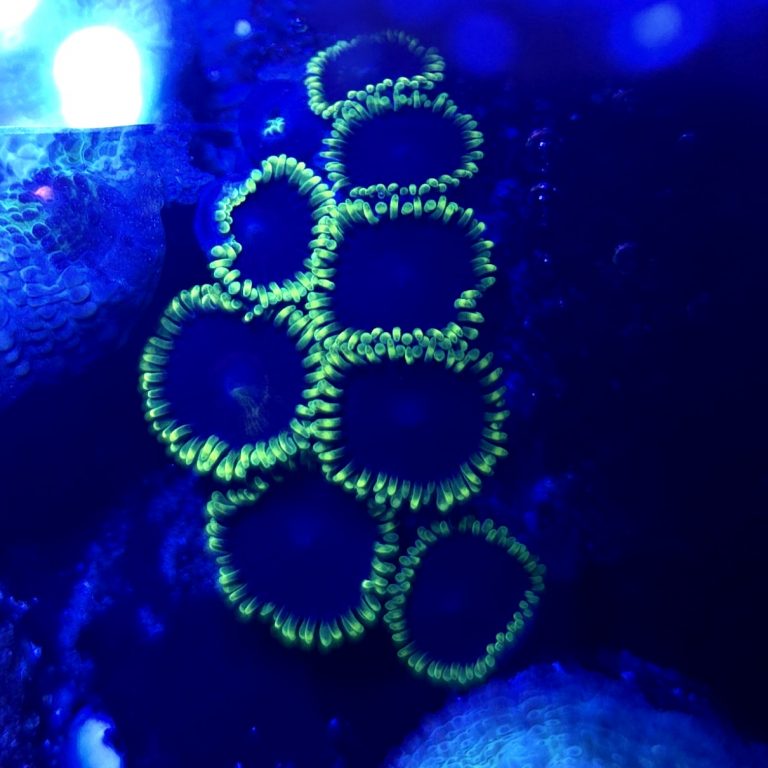
Magicians Zoanthid
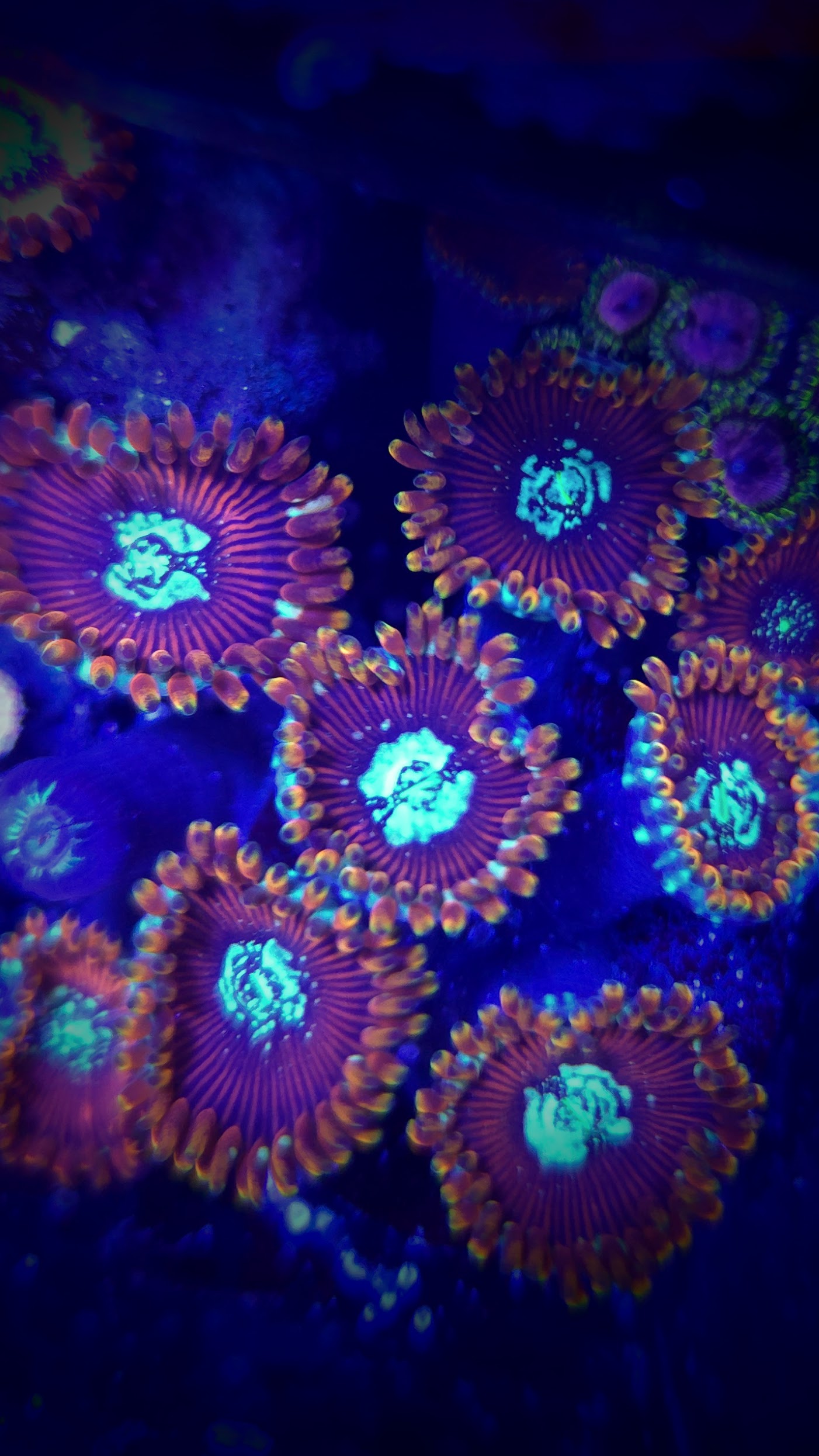
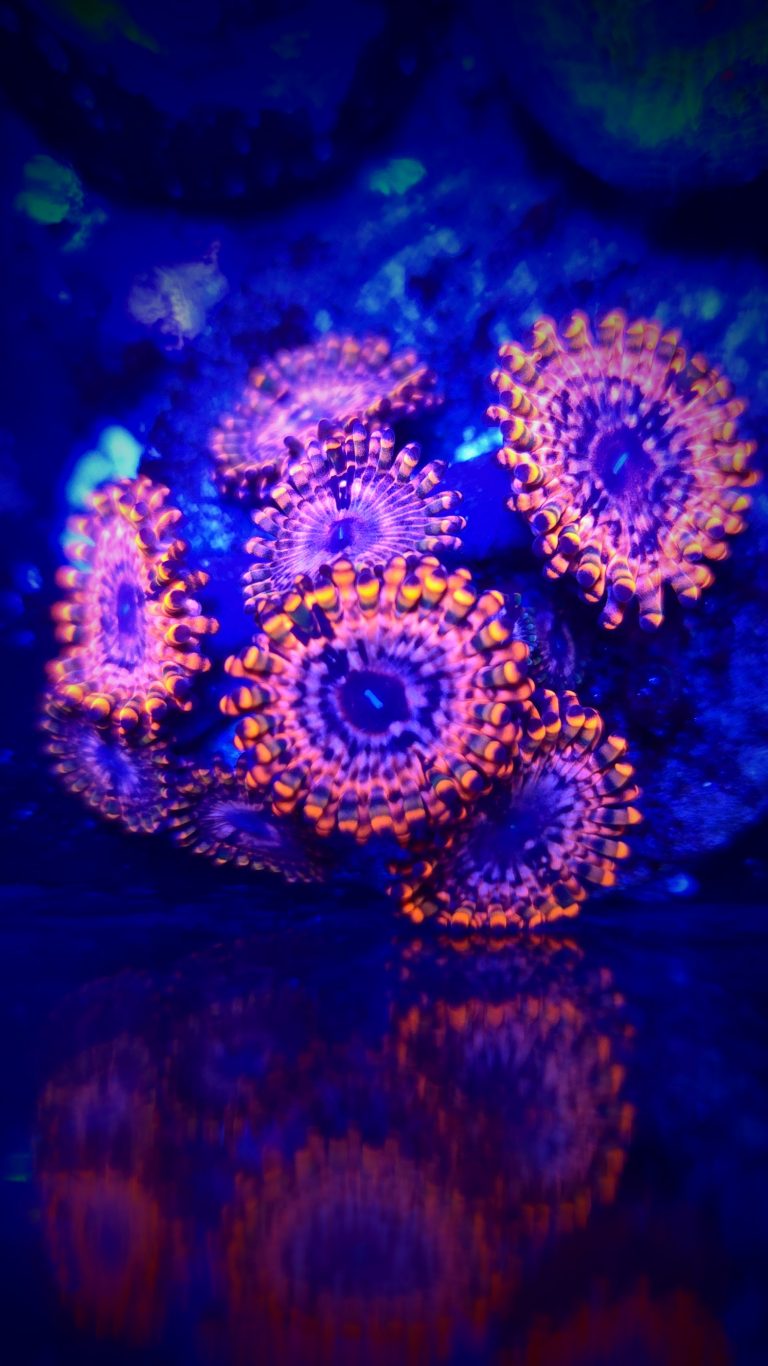
Magicians Zoanthids are colorful, hardy polyps that suit many reef tanks. Their bright red skirts and speckled centers stand out under blue lighting. With the right care, they grow into dense, eye-catching colonies.
Magicians Zoanthid Basics and Ideal Tank Conditions
Magicians Zoas stay small, but they spread quickly on rock. Most polyps reach about 0.25–0.5 inches wide. A small frag of 3–5 polyps can become a 20+ polyp colony within months. Growth speed depends on light, flow, and stability.
They do well in tanks of 10 gallons or larger. A larger system, like 20–40 gallons, offers more stable parameters. Aim for salinity at 1.025 specific gravity. Keep temperature between 77–79°F. Maintain alkalinity around 8–9 dKH, calcium at 400–450 ppm, and magnesium at 1300–1400 ppm.
Magicians prefer moderate light. PAR between 80–150 works for most colonies. Place new frags low on the rockwork at first. Slowly move them higher over 2–3 weeks if colors fade or stretch. Use a blue-heavy spectrum to enhance reds and oranges.
Provide moderate, indirect flow. The polyps should sway gently but not fold over. Avoid direct, blasting flow from a powerhead. This can cause the polyps to stay closed or detach from the plug. Adjust pumps so detritus does not settle around the base of the colony.
- Salinity: 1.025 specific gravity
- Temperature: 77–79°F (25–26°C)
- PAR: 80–150, with blue-heavy lighting
- Flow: Moderate, indirect, with no sand blowing
Placement, Feeding, and Troubleshooting
Start Magicians Zoas on a frag rack or low rock ledge. Watch them for 7–10 days. If they open fully and skirts extend, the spot is likely good. If they stretch upward or look pale, they may need a bit more light. If they shrink or stay closed, move them to lower light or softer flow.
Magicians Zoas can thrive without direct feeding in a nutrient-balanced tank. Nitrate between 5–15 ppm and phosphate around 0.03–0.1 ppm usually works well. Ultra-low nutrients can cause slow growth and smaller polyps. Heavily fed fish often provide enough dissolved organics for zoas.
Target feeding can boost growth. Use a fine coral food or powdered blend. Mix with tank water and gently baste over the colony once or twice a week. Turn off pumps for 10–15 minutes so food can settle. Avoid overfeeding, which can spike nutrients and fuel nuisance algae.
- Feed lightly once or twice weekly for faster growth
- Keep nitrates above 5 ppm for fuller polyps
- Use a turkey baster to blow detritus off colonies weekly
Watch for common problems like closed polyps, melting, or shrinking skirts. Sudden closing often points to pests, irritation, or parameter swings. Check for nudibranchs, sundial snails, or zoa-eating spiders. Dip new frags in a coral dip for 5–10 minutes before adding them to your display.
- Quarantine new zoa frags for 2–4 weeks if possible
- Use coral dips to remove pests and eggs
- Stabilize salinity and temperature before adjusting light or flow
With stable water, moderate light, and simple maintenance, Magicians Zoanthids become an easy showpiece. They are a great choice for both beginners and advanced reef keepers who want bold color and steady growth.
Add to Wishlist