
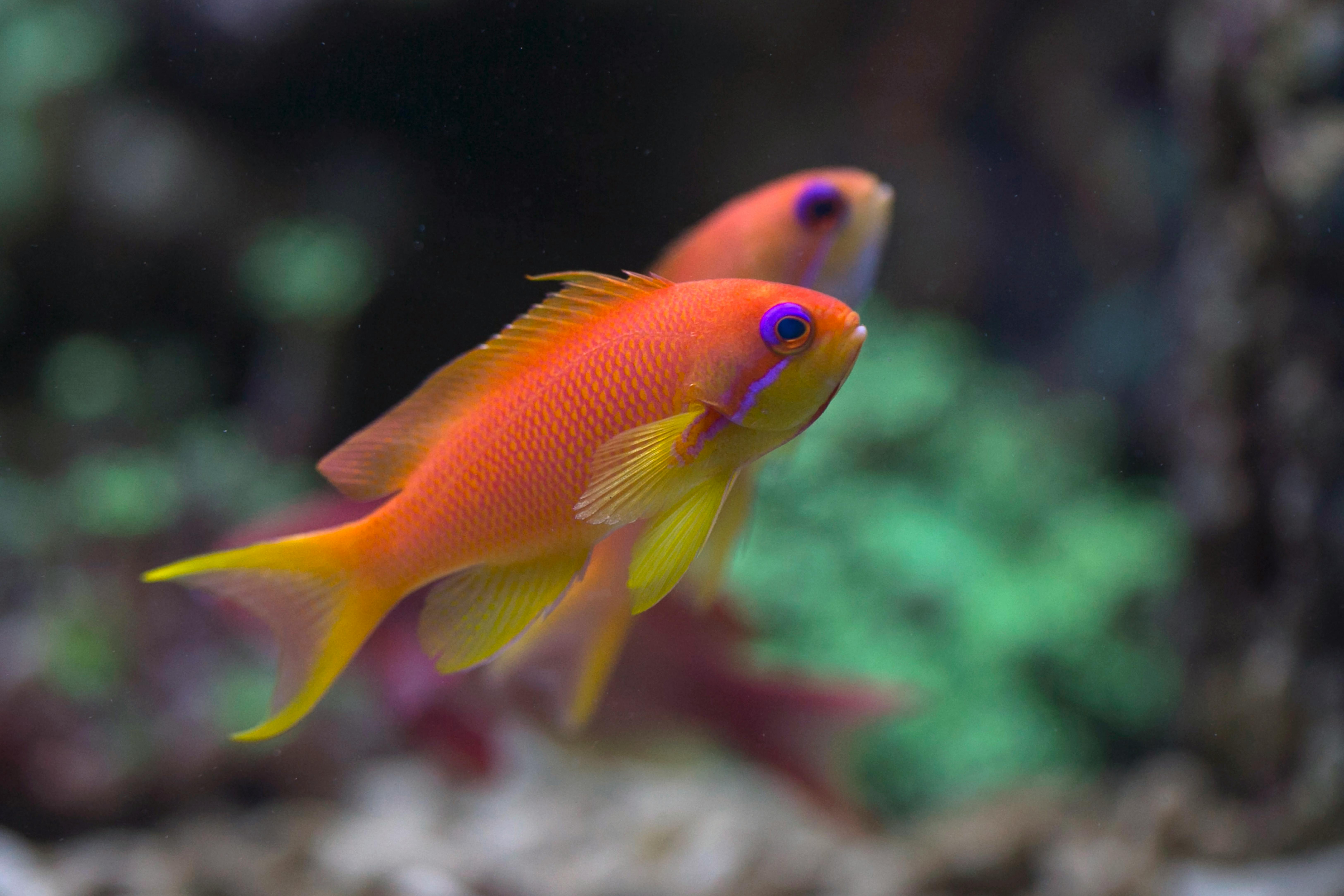
Lyretail anthias (Pseudanthias squamipinnis) are among the most eye-catching and active schooling fish in the reef aquarium hobby. Their constant movement, vivid oranges and purples, and fascinating social behavior make them a favorite in larger marine tanks. With the right setup and care, these fish can thrive for years and become a centerpiece of your display.
Tank Requirements & Ideal Setup
Lyretail anthias are open-water swimmers that appreciate room to move and plenty of places to retreat. A thoughtfully planned system is the foundation of long-term success.
- Minimum tank size: 75 gallons for a small group, with 4-foot length or more for swimming space.
- Aquascape: Create caves, arches, and overhangs so anthias can duck in and out of cover while still having open water above.
- Water parameters: Stable reef conditions – 1.025–1.026 salinity, 76–79°F, pH 8.1–8.4, low nitrates and phosphates.
- Flow & oxygenation: Moderate to strong, indirect flow with high oxygen levels. They come from surge zones and appreciate lively water movement.
If you’re building a tank specifically for anthias and other active swimmers, check out our guide on reef tank aquascaping ideas to design rockwork that balances shelter and open space.
Feeding Lyretail Anthias: Frequent, Varied Meals
One of the most important aspects of lyretail anthias care is feeding. These fish are high-energy planktivores that graze throughout the day in the wild.
- Feeding frequency: Aim for 2–4 small feedings per day rather than one large meal.
- Food types: Finely chopped meaty foods like mysis shrimp, enriched brine shrimp, copepods, and high-quality marine pellets or small granules.
- Pellet training: Start with frozen foods to trigger their appetite, then gradually mix in small pellets until they accept dry food.
Hobbyist tip: Use an automatic feeder with tiny pellet portions to cover mid-day feedings when you’re not home. Just be sure your filtration can handle the extra nutrients.
Because frequent feeding can raise nutrients, strong export is important. A good protein skimmer, regular water changes, and possibly a refugium or media reactor will help maintain water quality. For more on keeping nutrients in check, see our article on building a reef tank maintenance schedule.
Social Behavior, Stocking & Tankmates
Lyretail anthias are social fish with a clear hierarchy. In nature, they live in harems with one dominant male and multiple females.
- Best group structure: One male with 4–8 females works well in larger tanks. Avoid multiple males in tight quarters.
- Sex change: Females can transition into males if the dominant male is removed. This is normal and can be fascinating to observe.
- Tankmates: Peaceful to moderately assertive reef-safe fish such as tangs, wrasses, and clownfish are usually fine. Avoid aggressive bullies that may outcompete them for food.
Lyretail anthias are generally reef-safe and leave corals alone, making them an excellent choice for mixed reefs. Just remember that their constant motion and bright colors will draw attention, so plan your stocking list around them as feature fish. If you’re still planning your livestock, our beginner reef fish stocking guide can help you build a compatible community.
Final Thoughts
Lyretail anthias care comes down to three main points: ample swimming space, frequent high-quality feeding, and a peaceful social environment. When these needs are met, they reward you with natural schooling behavior, vibrant coloration, and nonstop activity. With a bit of planning and consistent maintenance, lyretail anthias can become one of the most captivating and rewarding additions to your reef aquarium.