
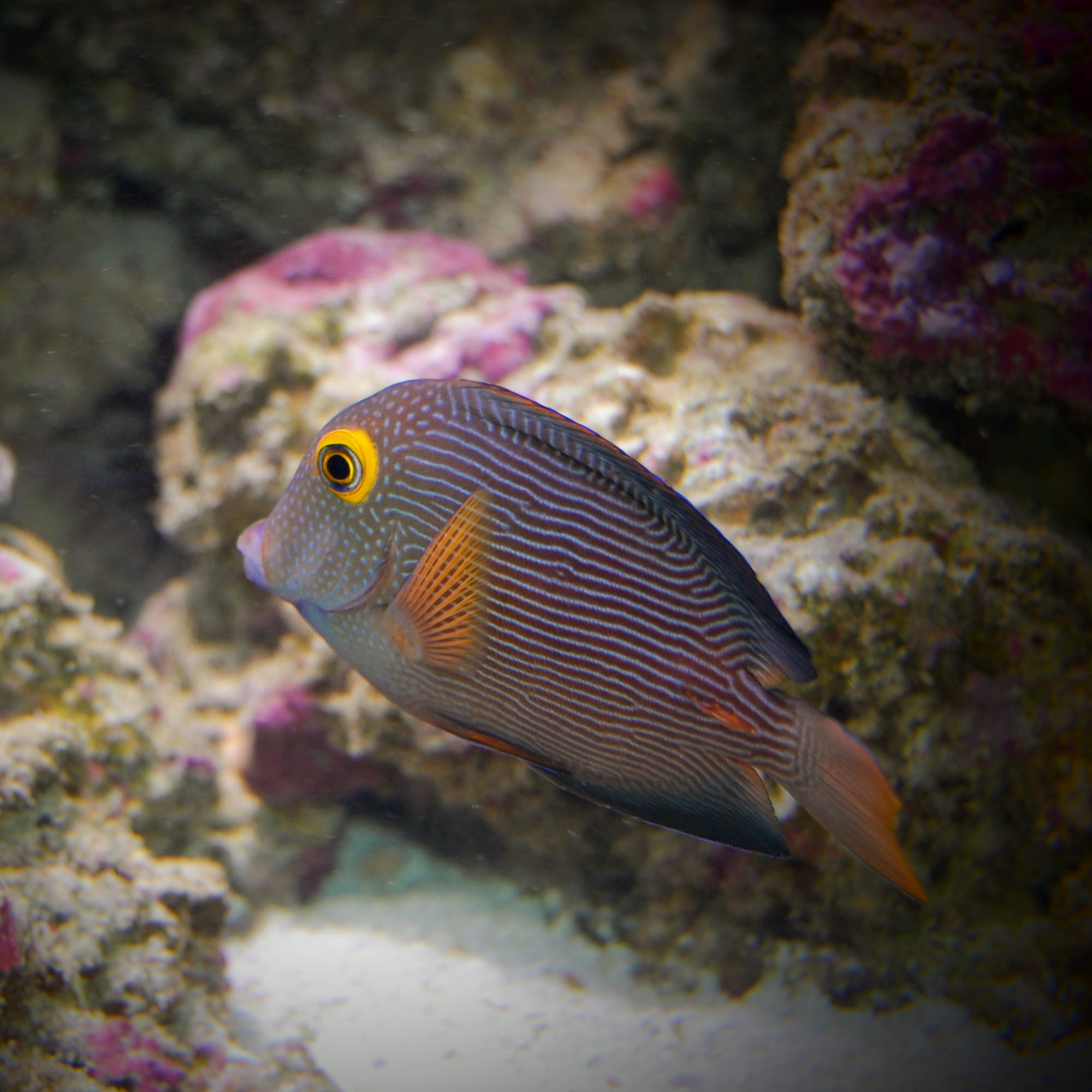
The Kole Tang (Ctenochaetus strigosus), also known as the Yellow Eye Kole Tang or Bristletooth Tang, is a fantastic workhorse for reef aquariums. With its constant grazing, peaceful personality, and modest size compared to other tangs, it’s a favorite for hobbyists who want natural algae control without adding a giant, hyperactive swimmer.
Natural Behavior & Ideal Tank Setup
In the wild, Kole Tangs cruise rocky reefs, scraping film algae and detritus from surfaces all day long. In the home aquarium, they behave much the same—picking at rocks, glass, and even equipment. This makes them especially useful in systems where nuisance film algae can quickly become an eyesore.
For long-term success, aim for:
- Tank size: Minimum 75 gallons, with 4-foot length preferred for swimming room.
- Aquascape: Open rockwork with caves and arches, plus plenty of surface area for grazing.
- Water parameters: Stable reef conditions: 1.025 salinity, 77–79°F, pH 8.1–8.4, low nitrates and phosphates.
- Flow: Moderate to strong, with some calmer zones where the fish can rest.
If you’re still planning your system, be sure to read our guide on reef tank aquascape ideas to create a layout that suits active grazers like the Kole Tang.
Diet, Compatibility & Daily Care
Feeding a Kole Tang
While Kole Tangs are famous for eating film algae, they still need a varied, nutrient-rich diet to stay healthy and colorful. Don’t rely solely on what they find in the tank.
- Offer nori (dried seaweed) on a clip once or twice daily.
- Rotate high-quality herbivore pellets and frozen foods with spirulina.
- Allow natural algae to grow on some surfaces for constant grazing.
Pro tip: If your Kole Tang is shy at first, turn off the flow briefly and feed smaller portions more often. This encourages timid eaters without overloading the tank with nutrients.
Temperament & Tank Mates
Kole Tangs are generally peaceful, especially compared to larger, more aggressive tang species. However, they can be territorial toward other bristletooth tangs or similar-shaped fish.
- Best kept one per tank unless you have a very large system.
- Mix well with clownfish, gobies, wrasses, and most reef-safe fish.
- Introduce them after more timid species have settled, so they don’t dominate new arrivals.
If you’re building a mixed community, our article on peaceful reef fish offers ideas for tank mates that complement a Kole Tang’s personality.
Health, Acclimation & Long-Term Success
Kole Tangs are hardy once established, but like other tangs, they are susceptible to ich and other external parasites, especially during shipping and acclimation.
- Quarantine new arrivals when possible to observe and treat issues early.
- Use a drip acclimation method to minimize stress from rapid parameter changes.
- Maintain excellent water quality and avoid sudden swings in temperature or salinity.
Signs of a happy Kole Tang include constant grazing, smooth and full body shape (not pinched behind the head), clear eyes, and strong, even coloration. If you’re new to marine fish, our beginner’s guide to saltwater fish care basics is a helpful companion resource.
When given space to swim, rockwork to explore, and a steady supply of algae and prepared foods, the Kole Tang becomes a centerpiece utility fish—beautiful, active, and incredibly useful. For reef keepers looking for a manageable tang that earns its keep every day, the Kole Tang is one of the best choices you can make.