
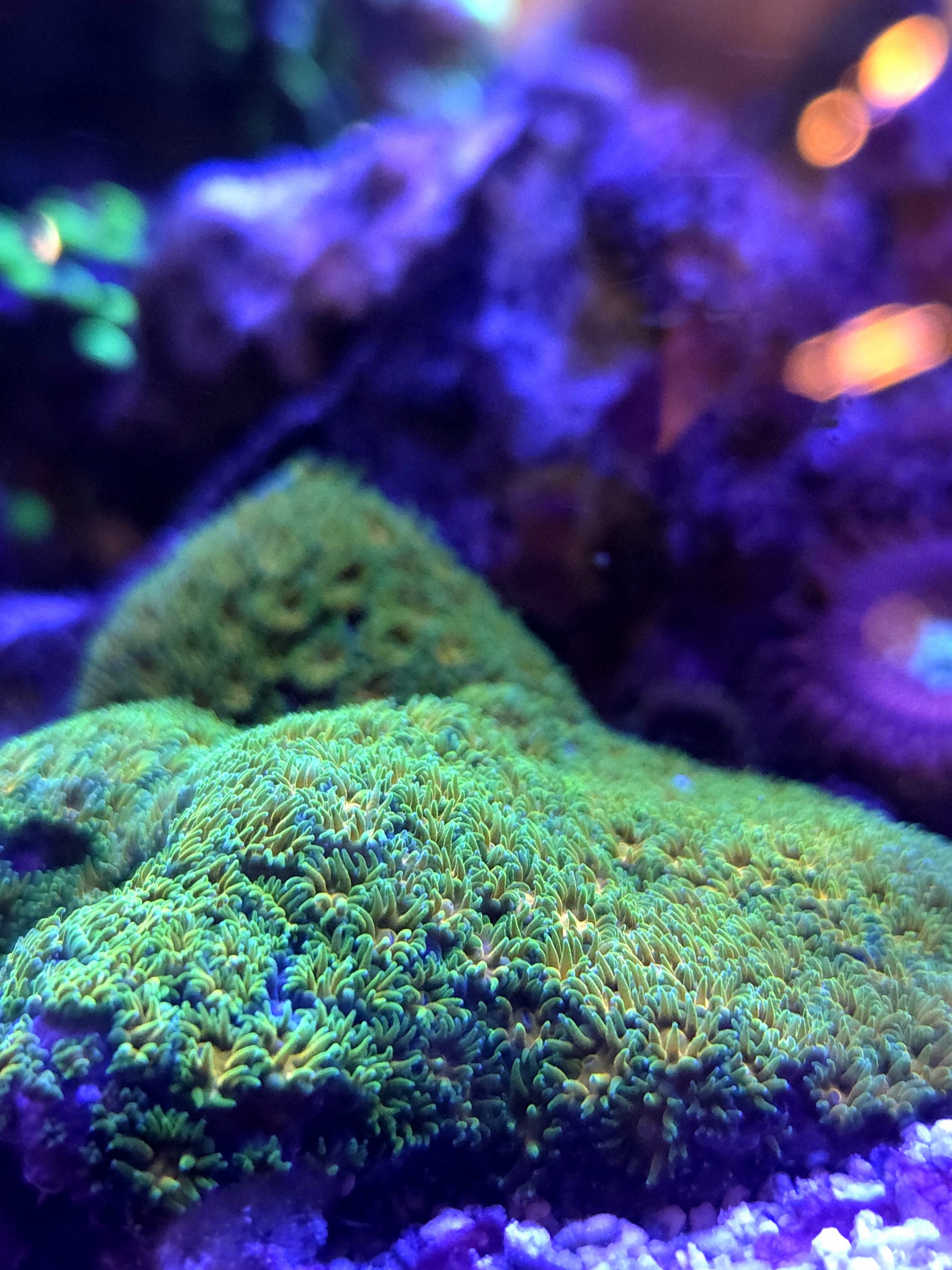
The John Deere Leptastrea is a small-polyp stony (SPS) coral that offers big color without demanding extreme SPS conditions. Its bright green base with yellow polyps really pops, even under moderate lighting, making it a great choice for mixed reefs.
Placement, Lighting & Flow
John Deere Leptastrea is surprisingly forgiving, but placement still matters if you want it to thrive and color up.
- Lighting: Moderate PAR (80–150) is ideal. Too much light can wash out the greens and cause receding edges.
- Placement: Rockwork low to mid-level is perfect. Start in lower light and move it up slowly over 2–3 weeks.
- Flow: Moderate, indirect flow. You want the polyps gently swaying, not blasted—direct jets can cause tissue damage.
Care, Feeding & Growth Tips
While it can survive in basic reef conditions, dialing in a few details will noticeably improve growth and color.
- Parameters: Keep alk 8–9 dKH, calcium 420–450 ppm, magnesium 1300–1400 ppm, and nitrates 5–15 ppm with a bit of detectable phosphate.
- Feeding: Target feed 1–2 times per week with fine particle foods (reef roids, powdered coral foods) after lights out when polyps extend.
- Stability: Avoid rapid swings in alkalinity—this is the most common cause of recession in Leptastrea.
- Pest watch: Inspect for nudibranchs and vermetid snails; both can irritate the tissue and stunt growth.
Quick tip: Mount John Deere Leptastrea on a small rubble piece first. Once it encrusts, you can easily move or re-position the entire colony without stressing the coral.
With stable parameters, moderate light and flow, and occasional feeding, John Deere Leptastrea becomes a hardy, colorful encruster that adds vibrant contrast to any reefscape.