Ice Blue Leptastrea
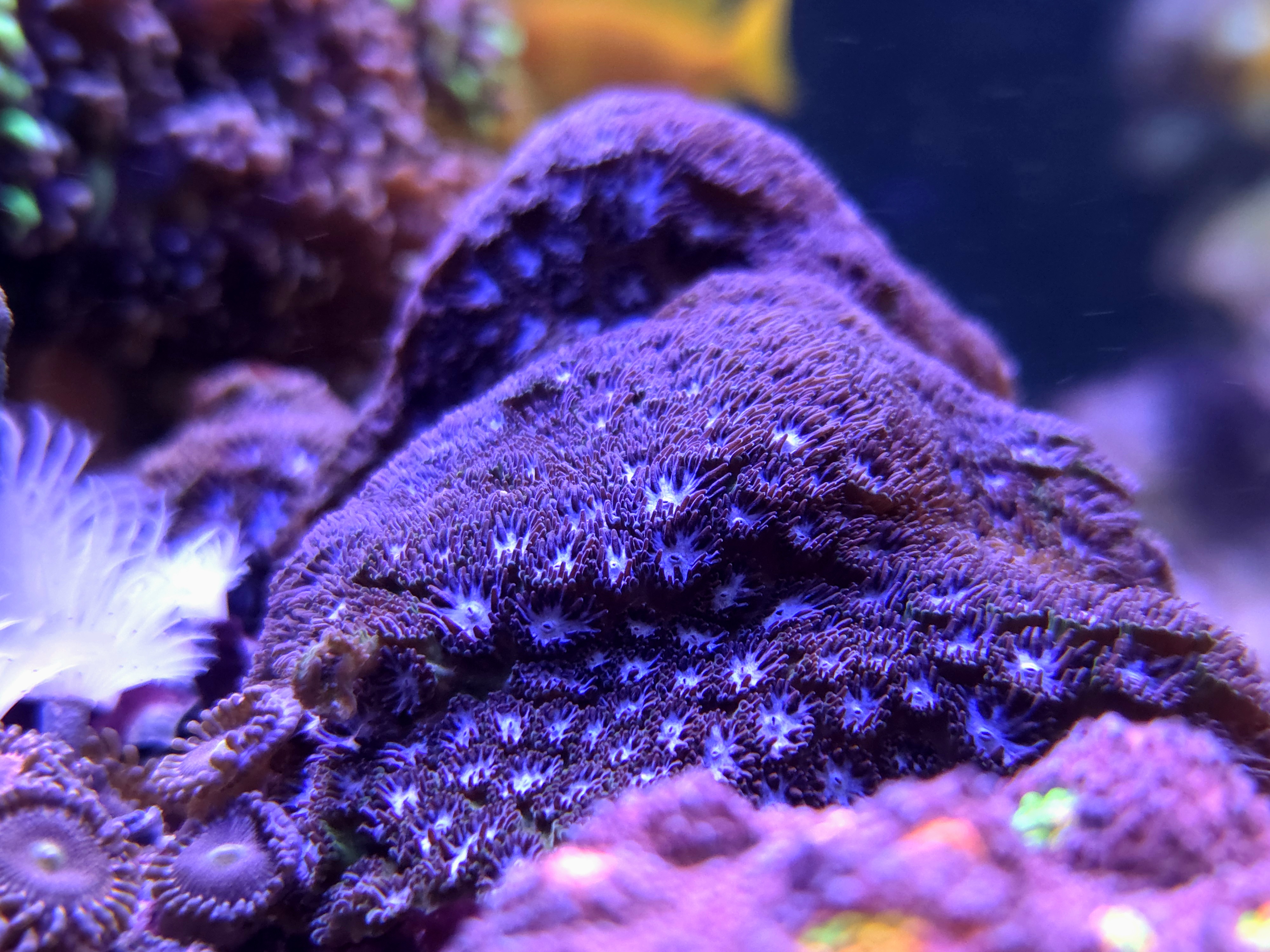
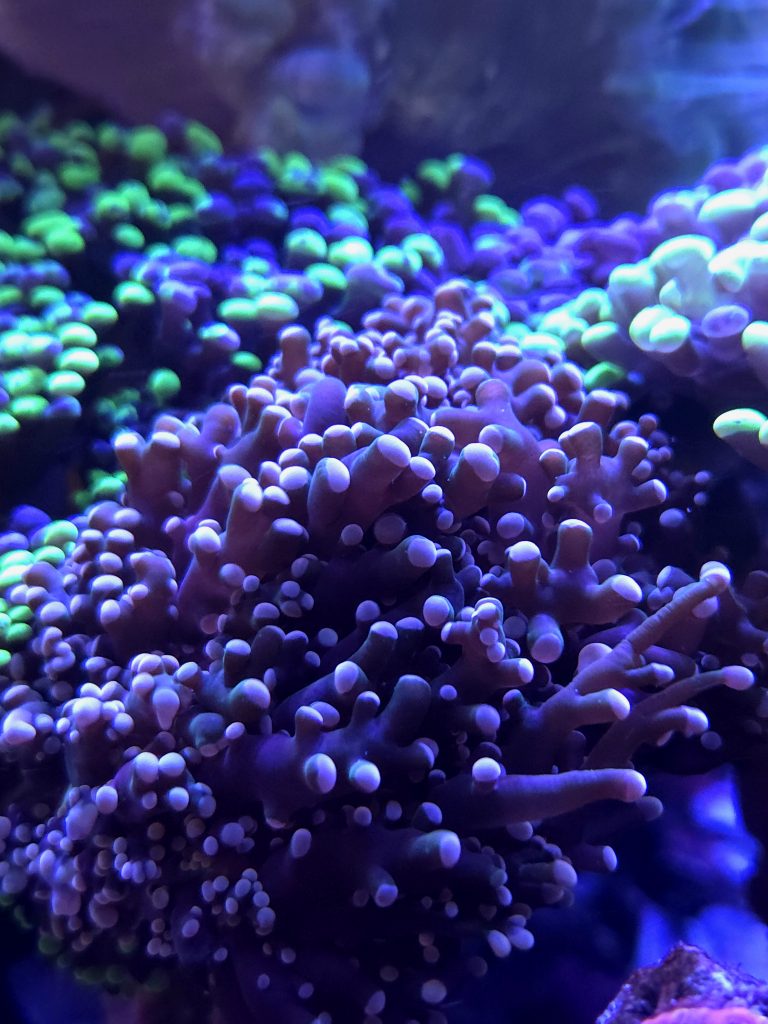
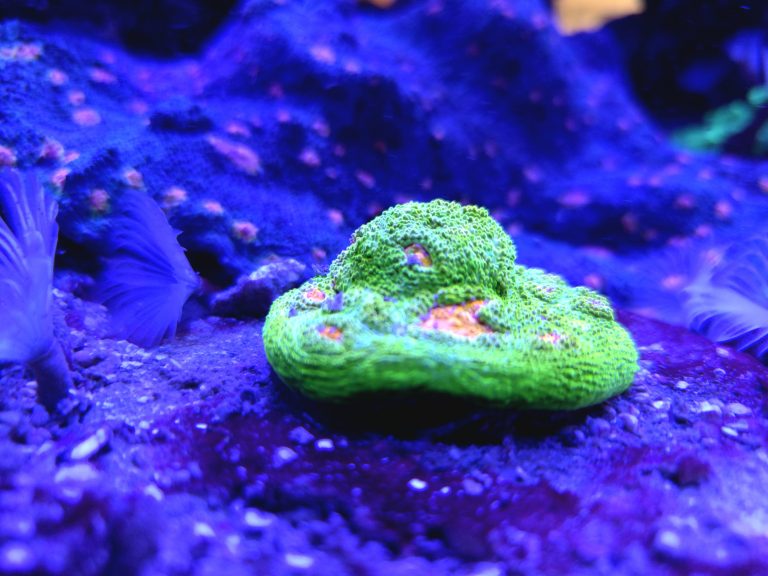
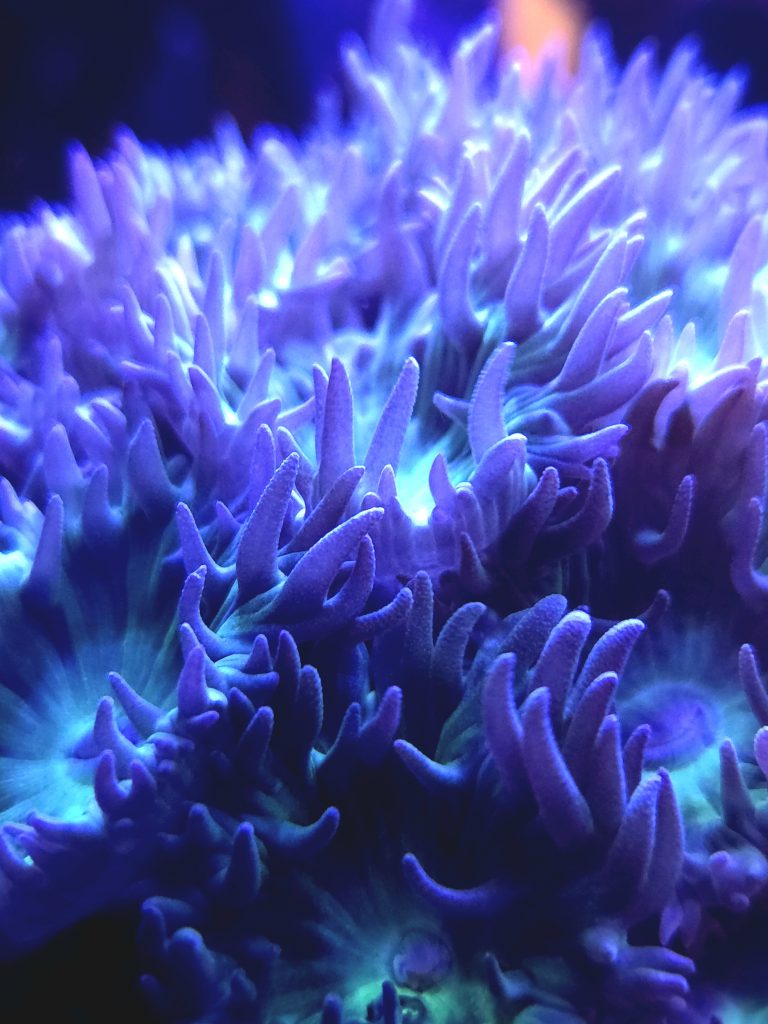
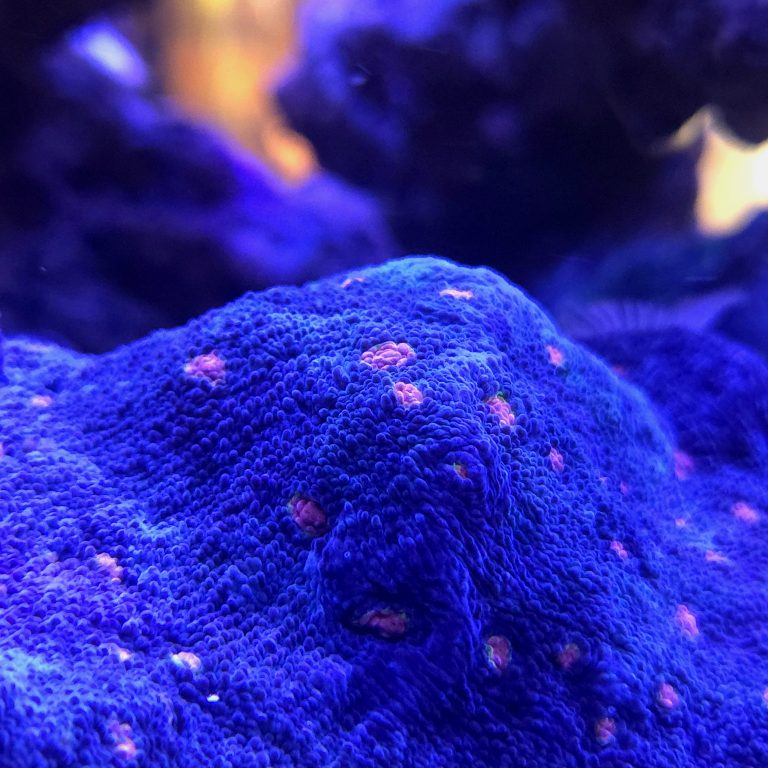
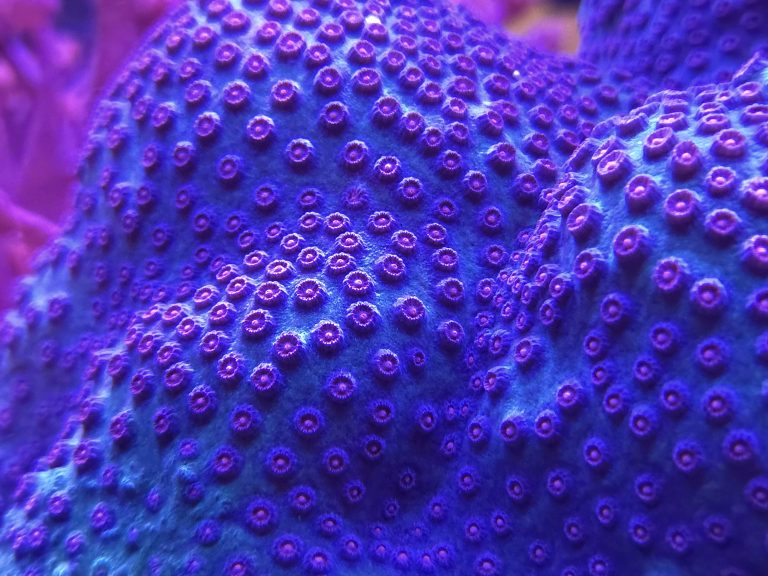
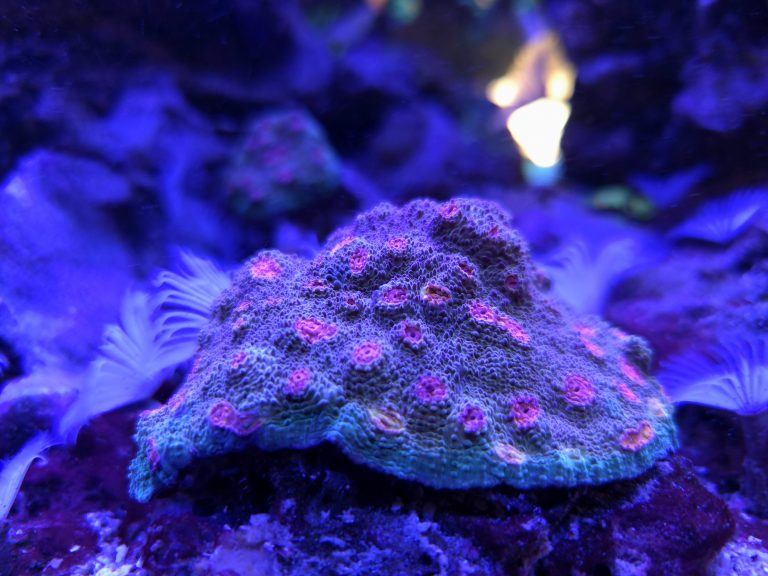
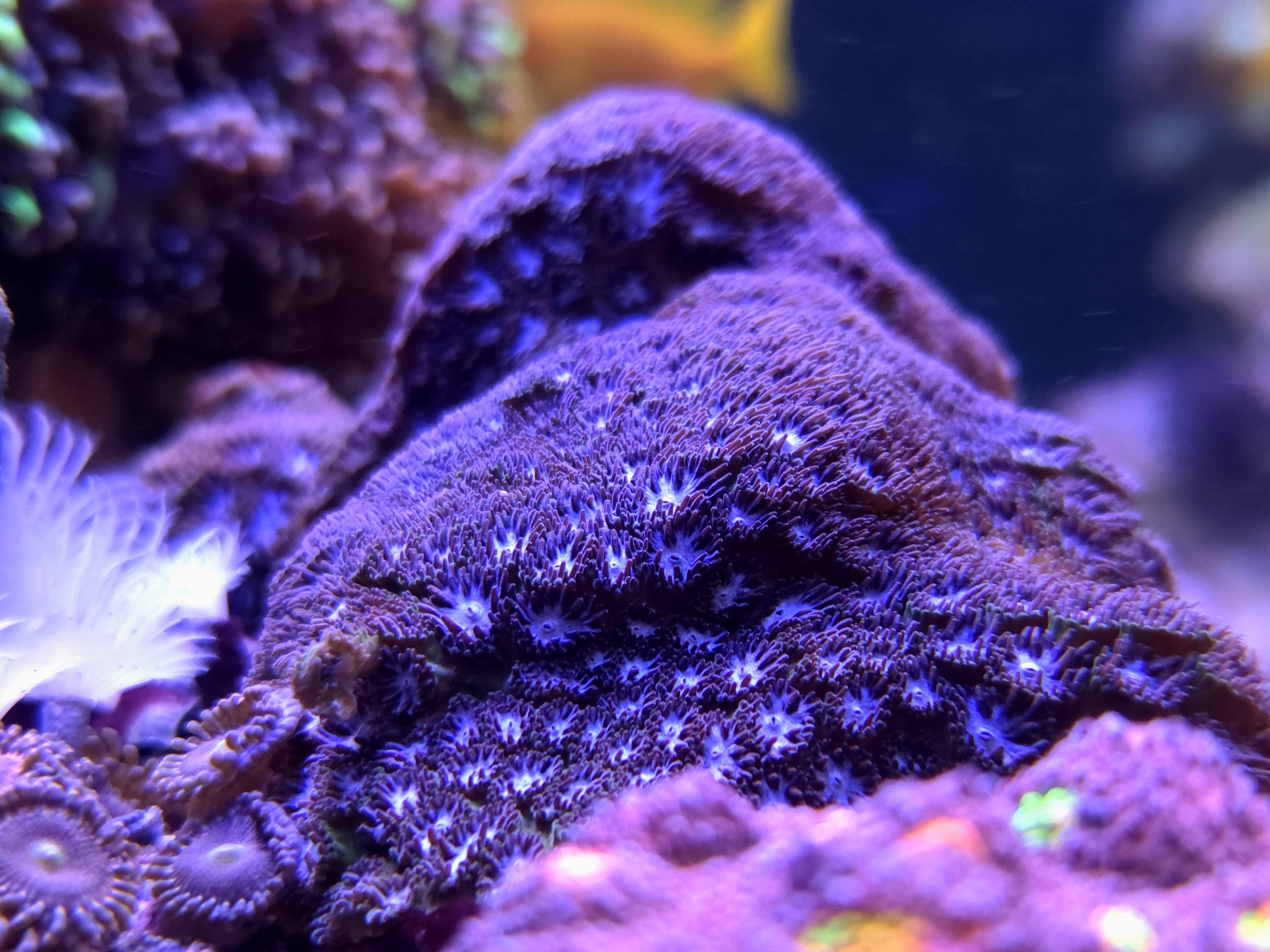
Ice Blue Leptastrea is a hardy, encrusting LPS coral with striking icy blue polyps. It grows into a textured mat, covering rockwork with glowing color. This makes it a great choice for newer reefers who want something bold but forgiving.
Ice Blue Leptastrea Care: Placement, Lighting, and Flow
Start by placing Ice Blue Leptastrea low in the tank. Aim for the sand bed or lower third of the rockwork. This coral prefers moderate to low light. Intense light can cause the polyps to retract and colors to fade.
Target a PAR range of 50–120. Under stronger LEDs, keep it in shaded spots or under overhangs. If you move it higher, do so slowly over 2–3 weeks. Raise it a few inches at a time to avoid bleaching.
Provide moderate, indirect flow. The polyps should sway gently, not fold over. Too much direct flow can cause tissue recession along the edges. Too little flow allows detritus to collect on the colony and can lead to algae growth.
- Ideal temperature: 24–26°C (75–79°F)
- Salinity: 1.025–1.026 specific gravity
- Alkalinity: 8–9.5 dKH, stable daily
- Calcium: 400–440 ppm
- Magnesium: 1300–1400 ppm
Stability is more important than perfect numbers. Avoid swings over 0.5 dKH per day. Test weekly in smaller tanks, and adjust dosing slowly.
Feeding, Growth, and Troubleshooting
Ice Blue Leptastrea will survive on light and nutrients, but feeding boosts growth and color. Target feed 1–2 times per week at night when polyps extend. Use a pipette or turkey baster to gently blow food over the colony.
- Offer small particle foods like reef roids or powdered coral foods.
- Add finely chopped mysis or brine shrimp for larger polyps.
- Turn off return pumps for 10–15 minutes during feeding.
Keep nutrients in a moderate range. Aim for nitrate between 5–15 ppm and phosphate 0.03–0.1 ppm. Ultra-low nutrients can cause pale colors and slow growth. Very high nutrients can invite nuisance algae on the skeleton.
Leptastrea can be mildly aggressive. It has short sweeper tentacles that extend at night. Leave at least 2–3 cm of space from delicate neighbors like acans or favias. It usually loses to very aggressive LPS, so avoid direct contact with euphyllia and chalices.
- If tissue recedes, check for sudden light or flow changes.
- Inspect for pests like nudibranchs or vermetid snails near the base.
- Blow off detritus weekly with a small powerhead or baster.
- Frag dying edges with a Dremel or bone cutters to save healthy sections.
For fragging, cut through the skeleton just outside the polyp ring. Mount frags on small plugs or rubble using gel super glue. Place new frags in lower light and gentle flow for the first week. With stable parameters and simple care, Ice Blue Leptastrea can quickly carpet your rockwork with cool, icy blue texture.
Add to Wishlist