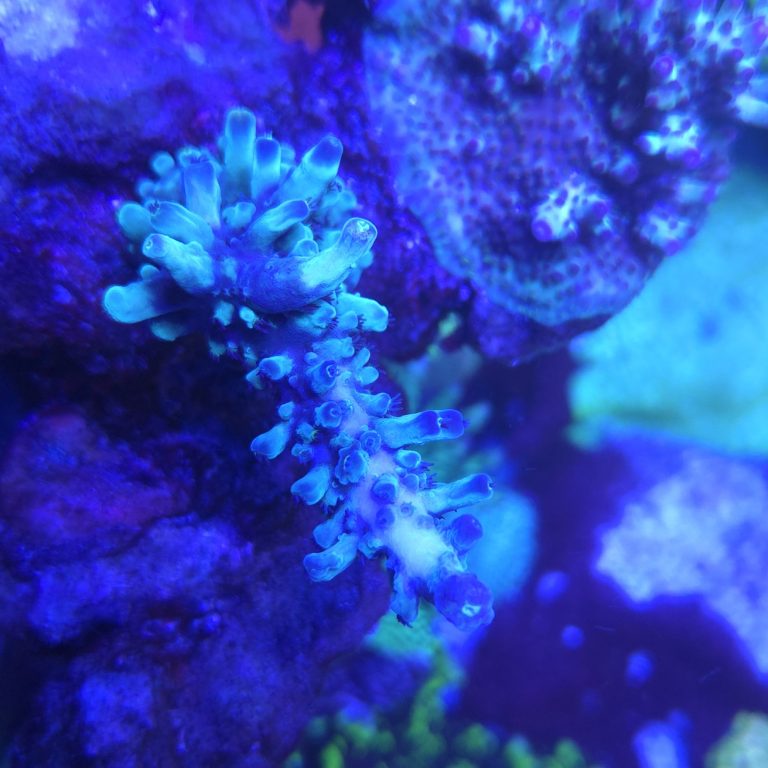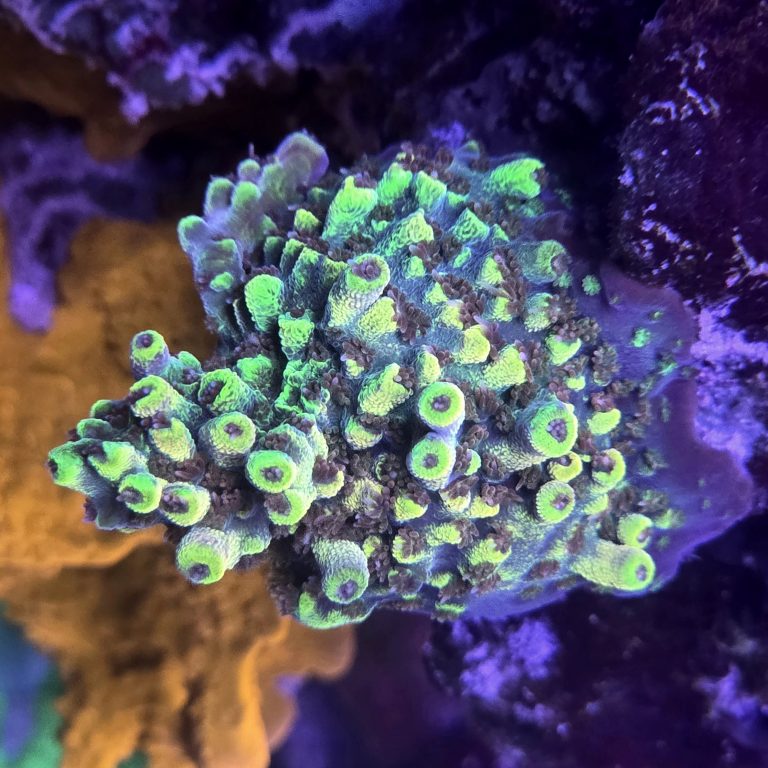
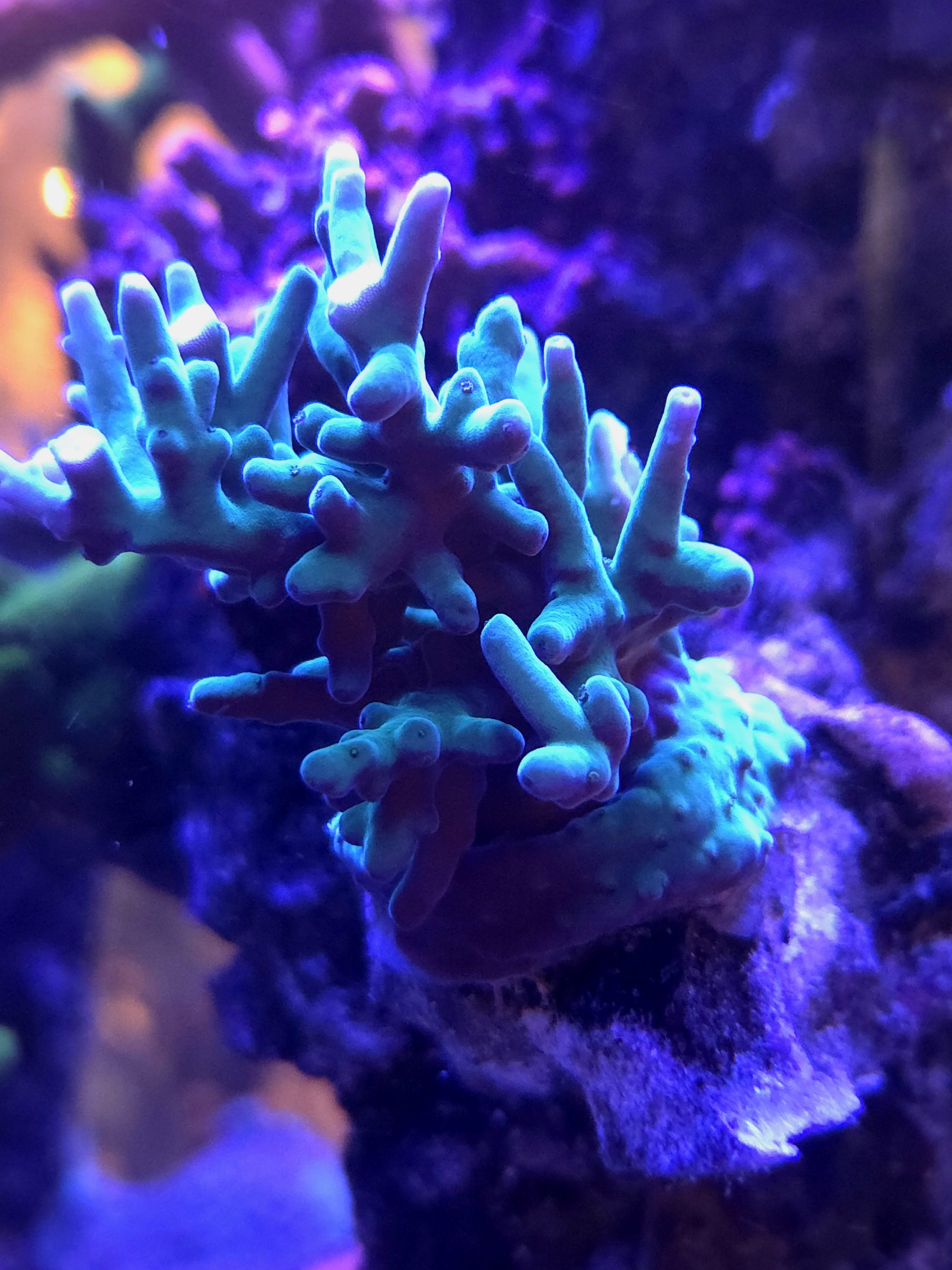
Hawkins Echinata Acropora
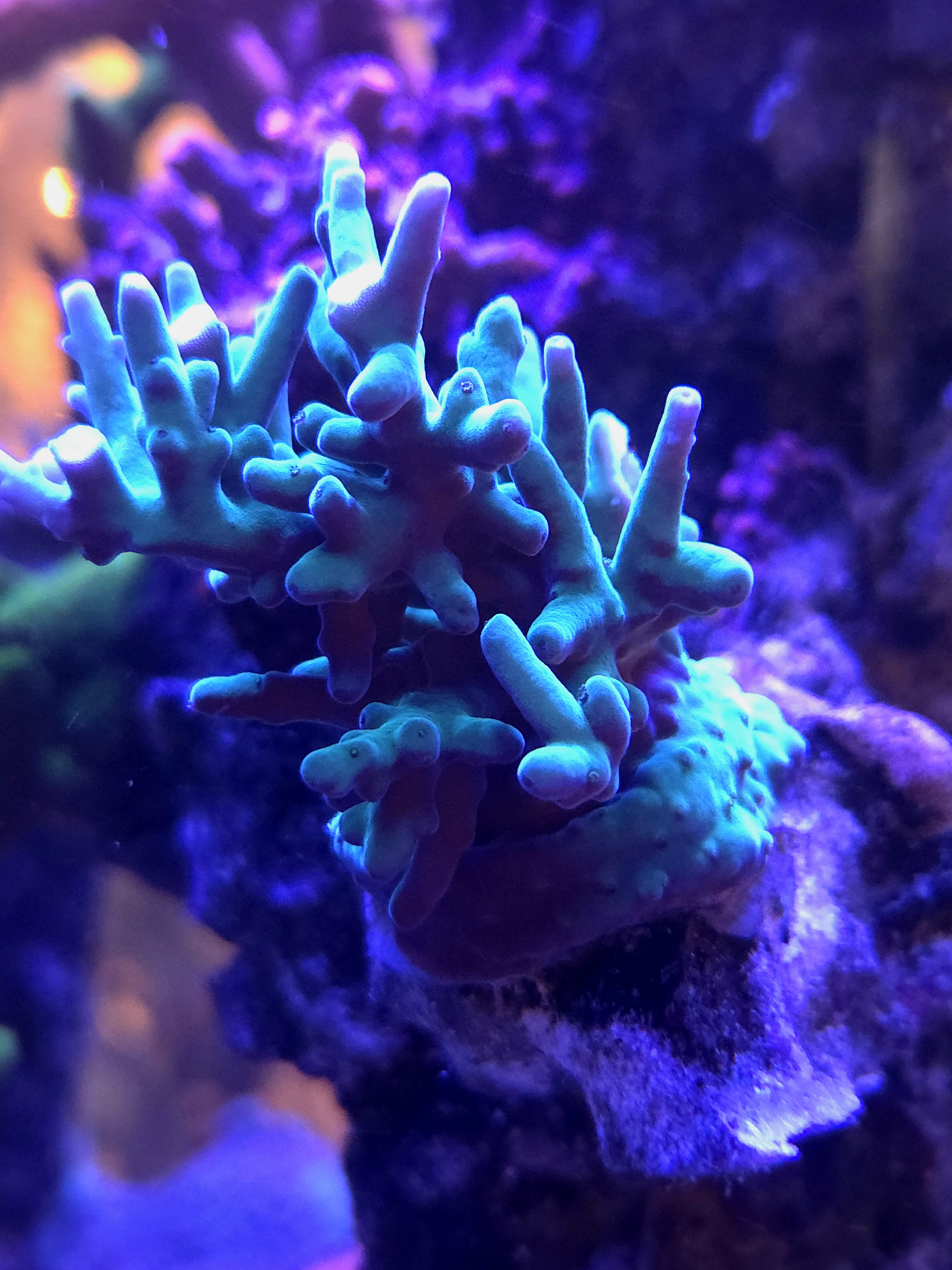
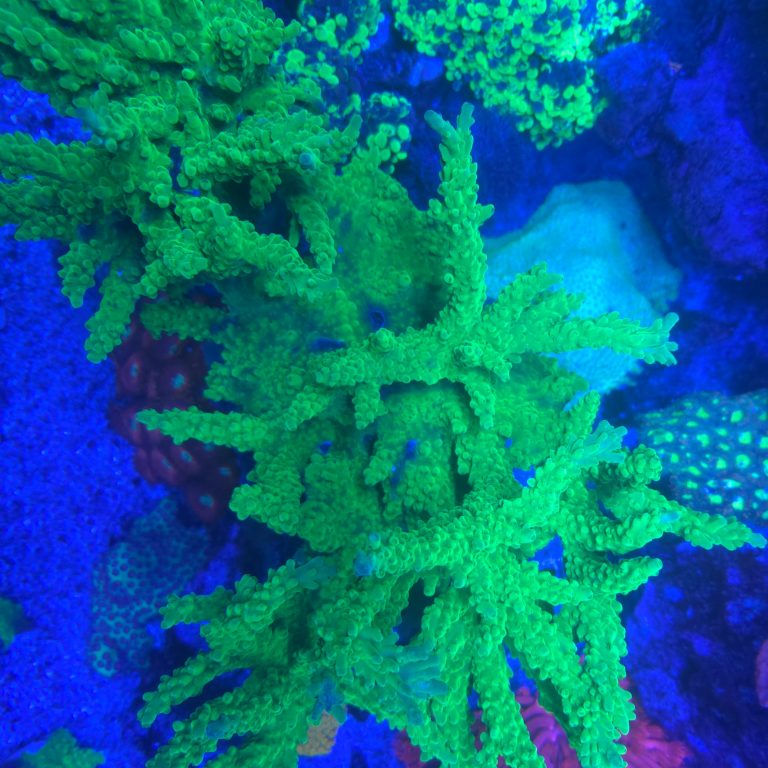
Hawkins Echinata Acropora is a stunning SPS coral with intense blue and teal tones. It can be demanding, but rewards stable systems with fast growth and vivid color. With the right care, this coral can become a centerpiece in your reef.
Hawkins Echinata Basics and Placement
Hawkins Echinata is an Acropora with thin, delicate branches. It prefers high light and strong, random flow. This coral does best in mature systems over one year old. Avoid adding it to tanks that still swing in alkalinity or nutrients.
Target PAR between 250 and 350 at the coral’s level. Use a PAR meter if possible. Place new frags lower, around 150 PAR, and move them up slowly. Increase light every 5–7 days to avoid bleaching.
Provide strong, turbulent flow rather than direct blasting. Aim for 30–50 times display volume in total circulation. Use alternating gyres or random pulse modes. Avoid dead spots around the base, or tissue can recede.
- Start frags on a frag rack to test light and flow.
- Keep 3–4 inches space from other aggressive SPS.
- Secure frags with gel super glue to prevent falls.
Watch polyp extension as a daily indicator. Good extension usually means the coral likes its placement. Retracted polyps for more than a day signal stress.
Water Parameters, Feeding, and Troubleshooting
Hawkins Echinata needs very stable parameters. Keep alkalinity between 8.0 and 9.0 dKH. Avoid swings greater than 0.3 dKH per day. Maintain calcium at 420–450 ppm and magnesium at 1300–1400 ppm. Salinity should stay at 1.025–1.026 specific gravity.
Hawkins prefers low but not zero nutrients. Aim for 2–10 ppm nitrate and 0.02–0.08 ppm phosphate. Ultra-low nutrients can cause pale tissue and slow growth. Overfeeding, however, can brown the coral and fuel algae.
- Test alkalinity at least three times per week.
- Use dosing pumps for two-part or kalkwasser.
- Change 10–15% water every 1–2 weeks.
Feeding is optional but helpful. Broadcast feed a fine SPS food 1–2 times per week. Turn off return pumps for 10–15 minutes while feeding. Do not overfeed, as excess food raises nutrients quickly.
Common problems include tip burn, base STN, and color loss. Tip burn often comes from sudden alkalinity or light increases. Base recession usually points to low flow or pests. Check for Acropora-eating flatworms and red bugs regularly.
- Quarantine all new Acropora frags for 30–45 days.
- Dip new pieces with an SPS-safe coral dip.
- Keep a log of test results to catch trends early.
With patience, stable parameters, and gradual changes, Hawkins Echinata can thrive. Its electric blue branches will signal a healthy, mature reef system.
Add to Wishlist