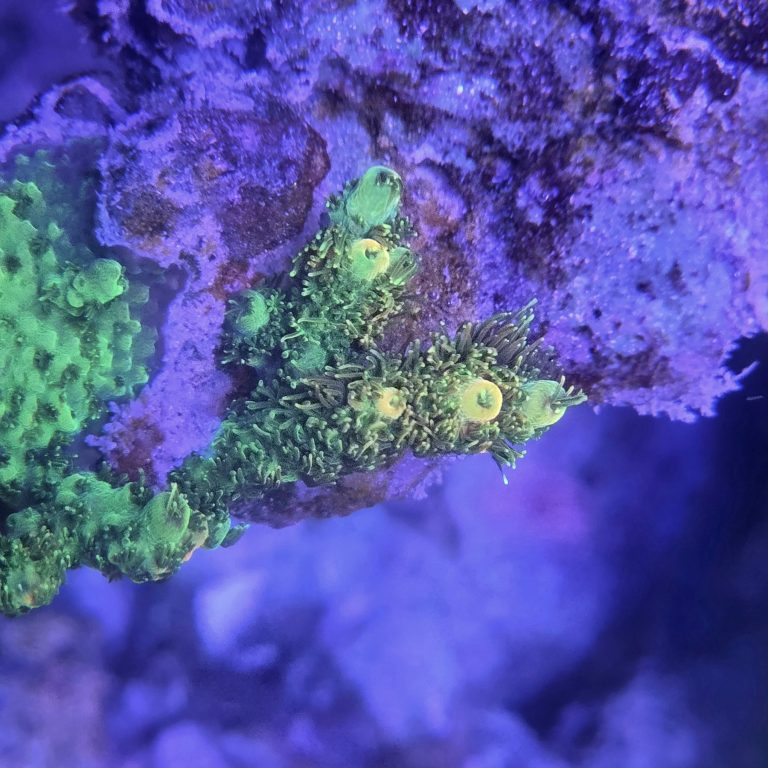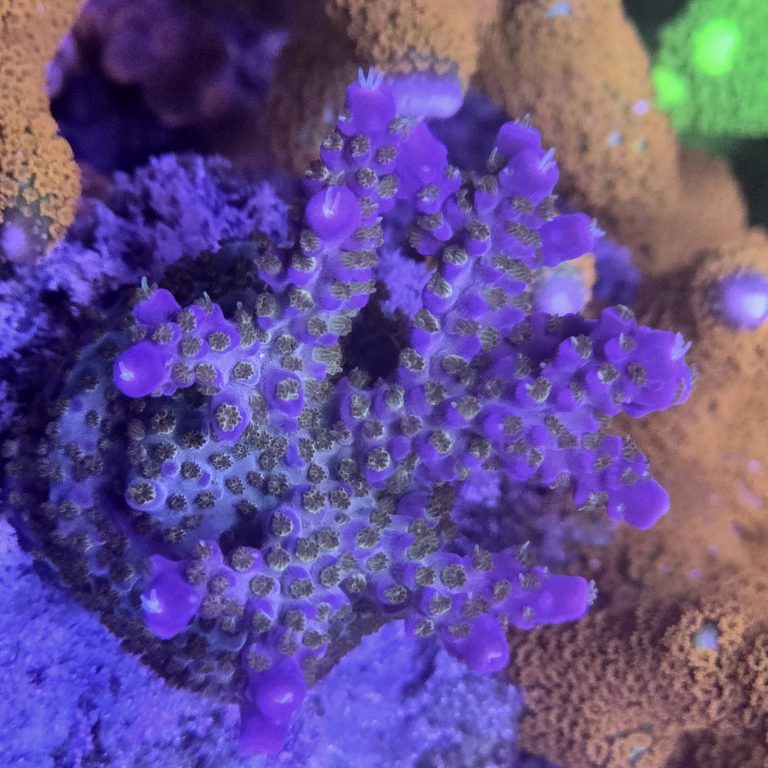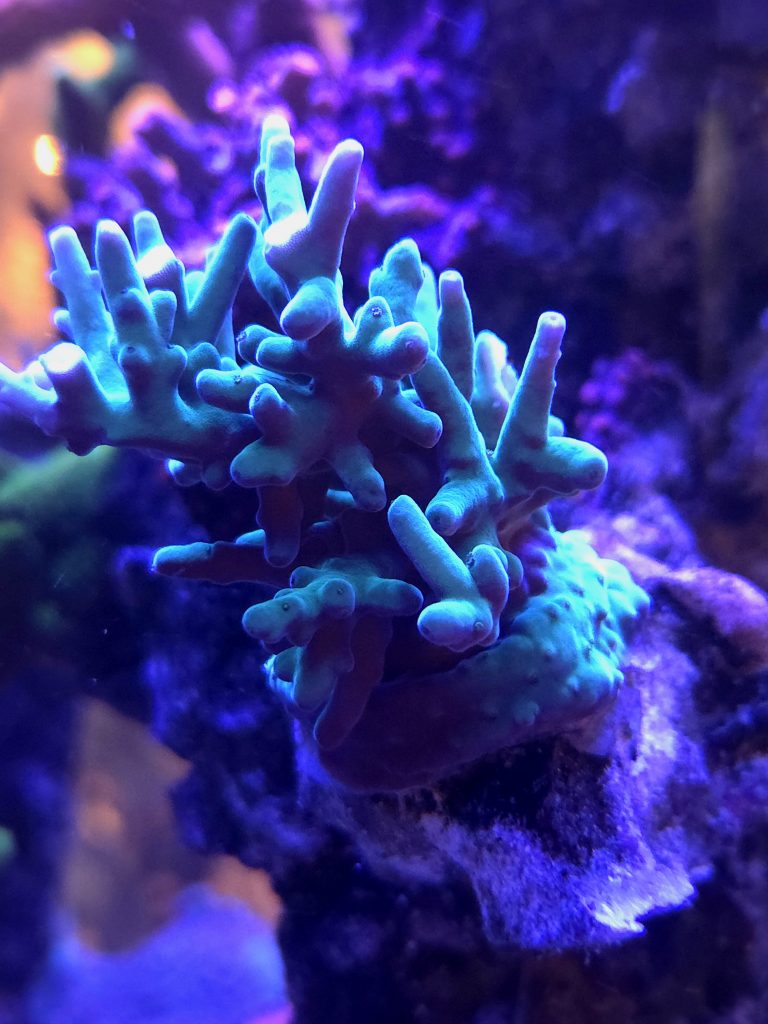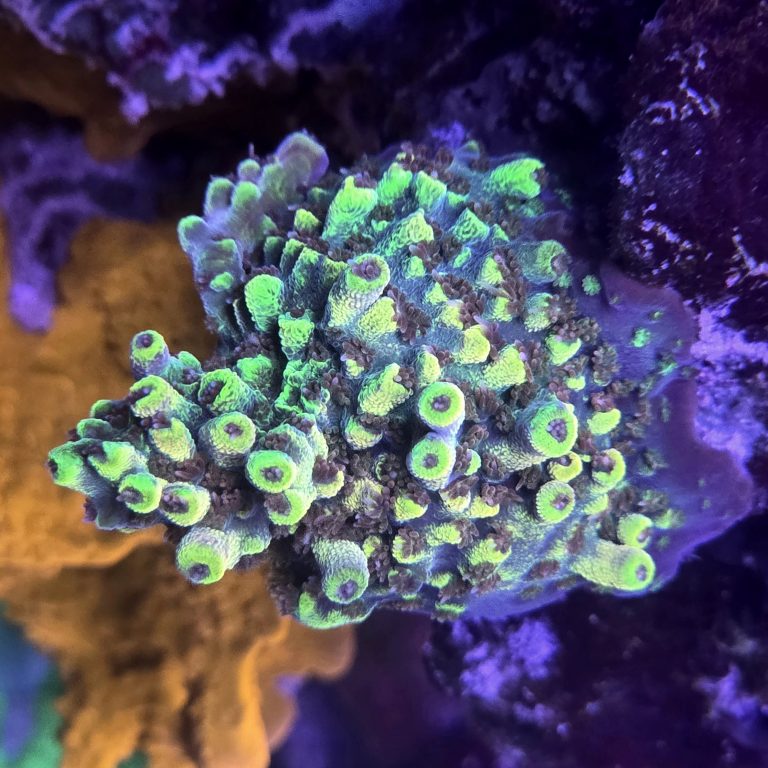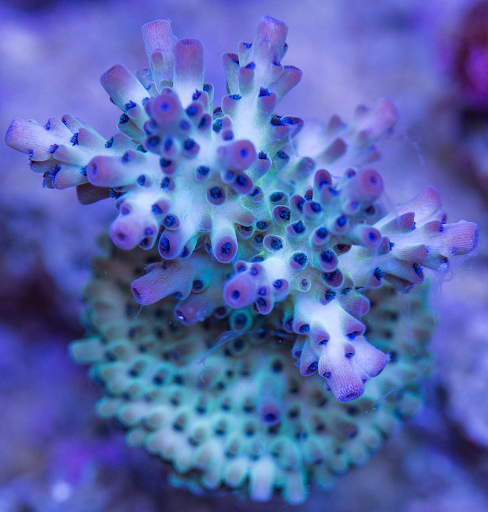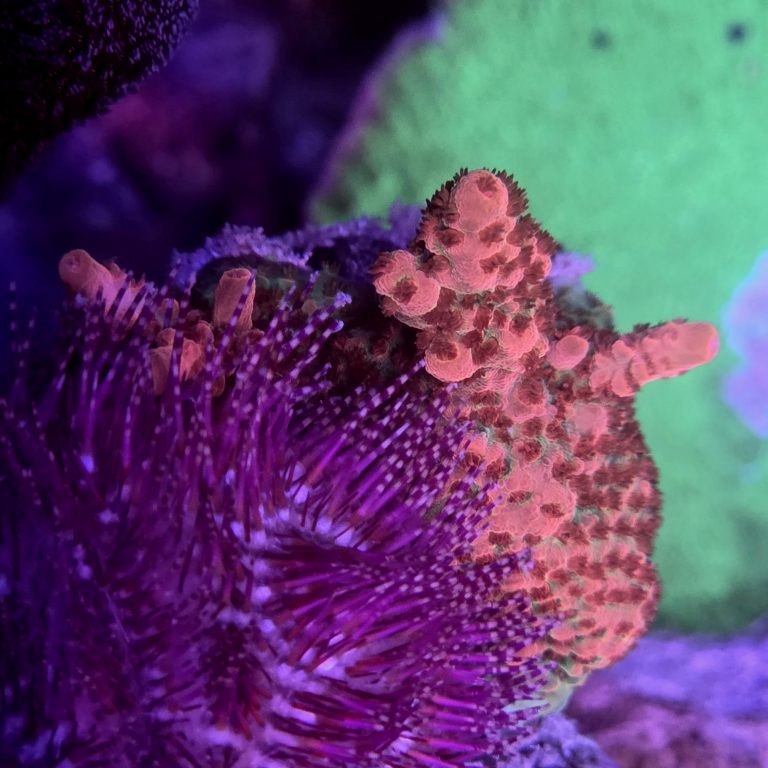
Green Montipora Digitata
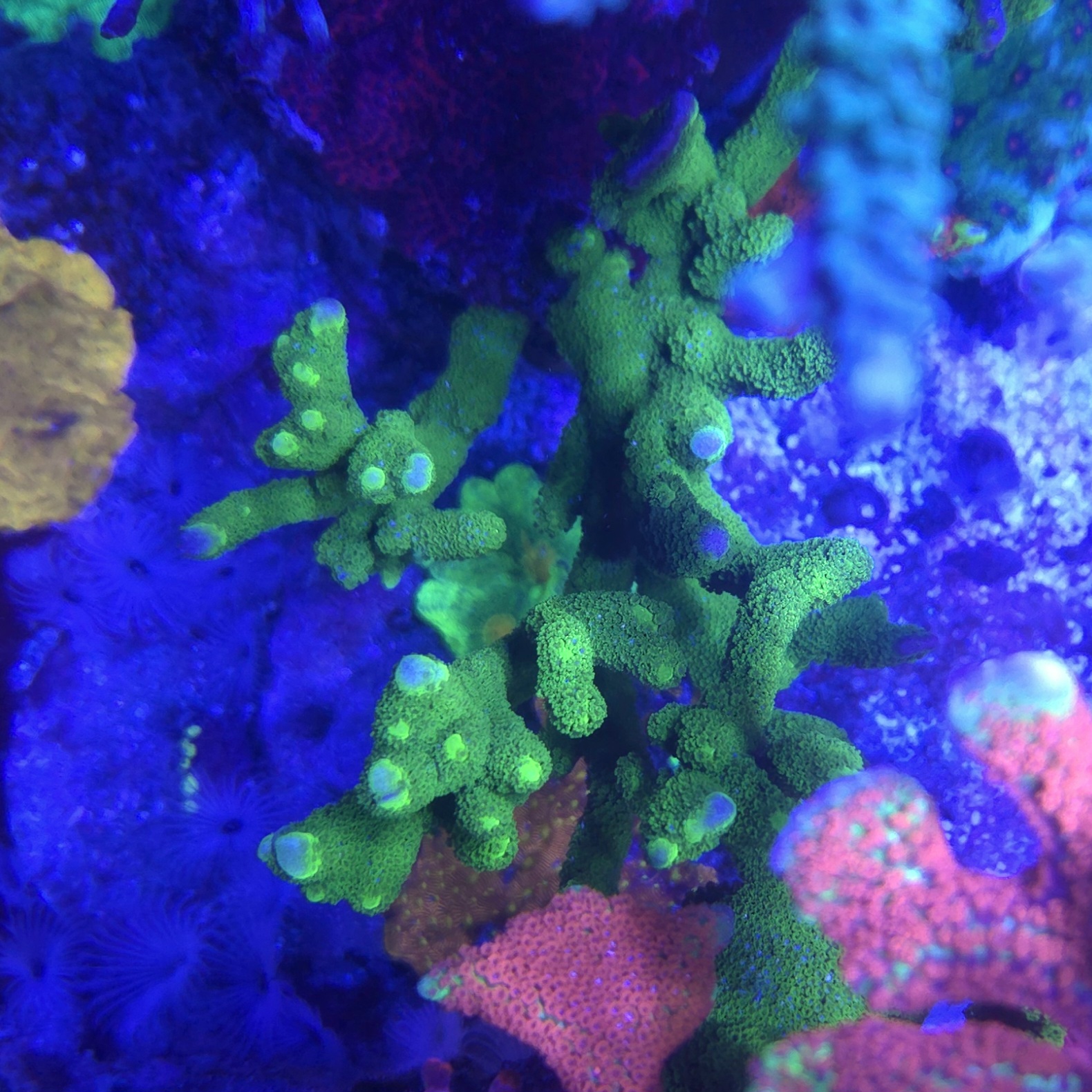
Green Montipora digitata is a great starter SPS coral. It grows fast, looks bright, and forgives small mistakes. With stable water and good light, it can become a stunning branching centerpiece.
Green Montipora Digitata Care Basics
Green digitata prefers strong, stable lighting. LED, T5, or metal halide all work well. Aim for PAR between 200 and 350 at the coral’s level. Place new frags lower first, then move them up slowly over two to three weeks.
Water quality is critical. Keep temperature between 24–26°C (75–79°F). Salinity should stay at 1.025–1.026 specific gravity. Maintain alkalinity around 8–9 dKH, calcium at 420–450 ppm, and magnesium near 1300–1400 ppm. Test weekly until you know your tank’s usage rate.
Flow should be moderate to strong and random. Avoid direct, constant blasts from a powerhead. The polyps should sway, not whip. Too little flow leads to detritus buildup and algae on the branches. Too much direct flow can cause tissue recession on the tips.
Feeding is simple. Most digitata corals get what they need from light and dissolved nutrients. Keep nitrate between 5–15 ppm and phosphate between 0.03–0.08 ppm. Do not chase zero nutrients. Pale color and slow growth often mean your water is too clean.
- Acclimate to light over 14–21 days to avoid bleaching.
- Use a reliable refractometer for accurate salinity readings.
- Clean powerheads monthly to maintain strong, random flow.
Placement, Growth, and Troubleshooting Tips
Place green Montipora digitata high on the rockwork for best color. Leave space around the frag for branching growth. It can shade corals below as it grows. Plan for at least 10–15 cm of vertical and horizontal space.
This coral encrusts first, then sends up branches. You can frag easily with bone cutters once branches reach 3–4 cm. Glue new frags to small plugs or rubble. Mount them in areas with similar light and flow. This helps them recover faster.
Watch for common issues. Brown, dull color usually means low light or high nutrients. Very pale tissue often points to too much light or low nutrients. Tissue loss at the base can indicate pests, detritus buildup, or unstable alkalinity. Check parameters before making big changes.
- Inspect for pests like nudibranchs and flatworms during weekly maintenance.
- Use coral dips on all new frags before adding them to the display.
- Log test results to spot slow parameter swings over time.
For best long-term growth, keep a steady maintenance routine. Perform 10–15% water changes every one to two weeks. Dose alkalinity and calcium daily or use an auto doser. Avoid sudden changes larger than 0.5 dKH per day. Consistency keeps Montipora digitata happy and growing.
- Check alkalinity at the same time of day for consistent readings.
- Trim branches that grow too close to other SPS to prevent shading.
- Share frags with local reefers as a backup in case of tank problems.