
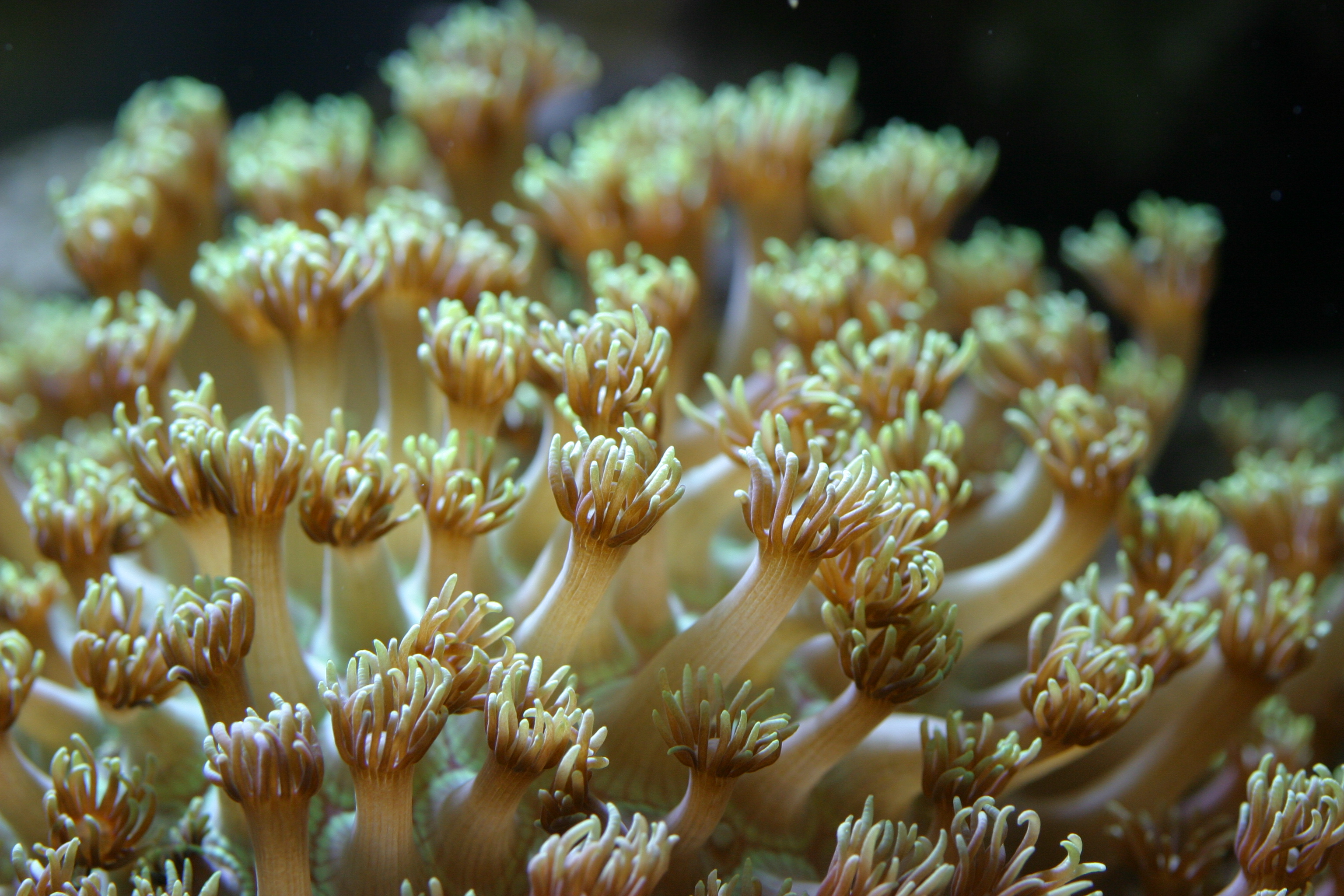
Peter Young Cho, MD, CC BY-SA 3.0, via Wikimedia Commons

Goniopora coral, often called “flowerpot coral,” is one of the most eye-catching LPS (large polyp stony) corals you can add to a reef tank. With its long, waving polyps and bright colors, it quickly becomes a focal point in any display. However, Goniopora has a reputation for being challenging, so understanding its needs is key to keeping it thriving long-term.
Goniopora Coral Care: Lighting, Flow, and Placement
Goniopora comes from a variety of reef zones, so different varieties can have slightly different preferences. In general, aim for moderate lighting and gentle, indirect flow.
- Lighting: Moderate PAR (80–150) is usually ideal. Too much light can cause bleaching, while too little can lead to slow decline.
- Flow: Low to moderate, with a gentle sway. The polyps should move like seagrass in a breeze, not whip back and forth.
- Placement: Start on the sand bed or lower rockwork and observe its response over a week or two before moving it higher.
If you’re still getting your reef dialed in, you may want to first review your general beginner reef tank setup to ensure your system is stable enough for more demanding corals.
Water Parameters and Feeding for Long-Term Success
Stable, clean water is crucial for Goniopora. They are less forgiving of swings than many other LPS corals.
- Temperature: 24–26°C (75–79°F)
- Salinity: 1.025–1.026 SG
- Alkalinity: 8–9.5 dKH
- Calcium: 420–450 ppm
- Magnesium: 1300–1400 ppm
- Nitrate: 5–15 ppm
- Phosphate: 0.03–0.1 ppm
Unlike some other LPS, Goniopora benefits greatly from targeted feeding. Many aquarists report improved polyp extension and growth when they feed 2–3 times per week.
- Use fine particulate foods such as powdered coral foods or rotifers.
- Turn off or reduce flow during feeding so more food lands on the polyps.
- Use a pipette or turkey baster to gently broadcast food over the colony.
Tip: Feed your fish first, then your Goniopora. Well-fed fish are less likely to steal food directly from the coral’s polyps.
For more on balancing nutrients for sensitive corals, check out our guide to LPS coral care.
Common Problems and Practical Hobbyist Tips
Goniopora can decline slowly, so early detection is important. Watch for these warning signs:
- Reduced polyp extension: Often caused by too much flow, aggressive neighbors, or unstable parameters.
- Tissue recession at the base: Can indicate poor water quality or persistent irritation from sand or nearby corals.
- Bleaching or paling: Usually from excessive light or a sudden change in intensity.
Practical tips for success:
- Acclimate slowly to new lighting using a ramp-up schedule on your LEDs.
- Keep stinging corals (like some Euphyllia and aggressive soft corals) a safe distance away.
- Maintain a regular testing routine and small, consistent water changes.
- Introduce Goniopora after your tank has matured for at least 6–9 months.
If you’re choosing tank mates, our article on best reef-safe fish can help you avoid species that might nip at long polyps.
With the right approach, Goniopora coral can be more than just a short-lived showpiece. By providing moderate light, gentle flow, stable parameters, and regular feeding, you can enjoy its flowing, flower-like polyps for years. Take your time, observe closely, and adjust slowly—your Goniopora will reward your patience with stunning movement and color in your reef aquarium.