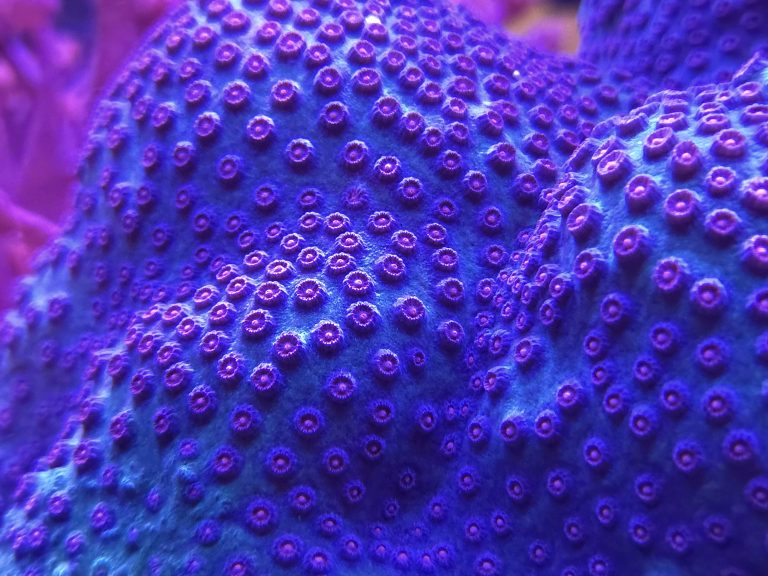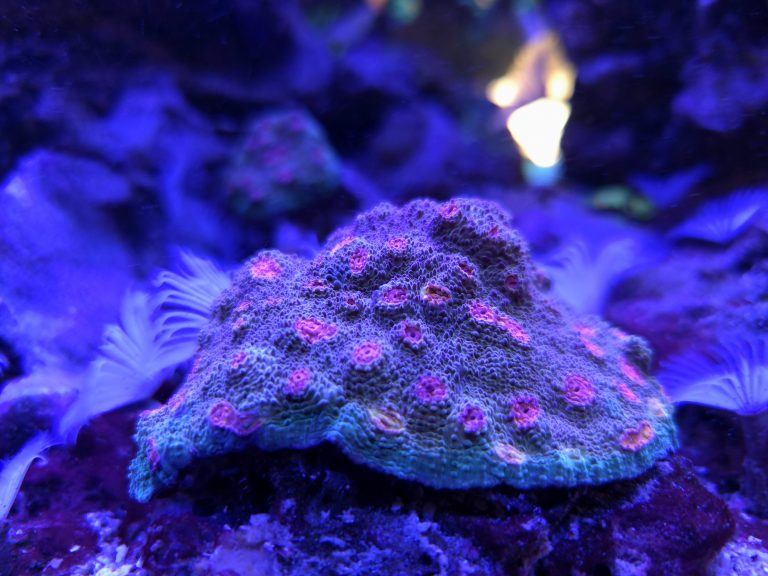
Emerald Lakes Leptastrea
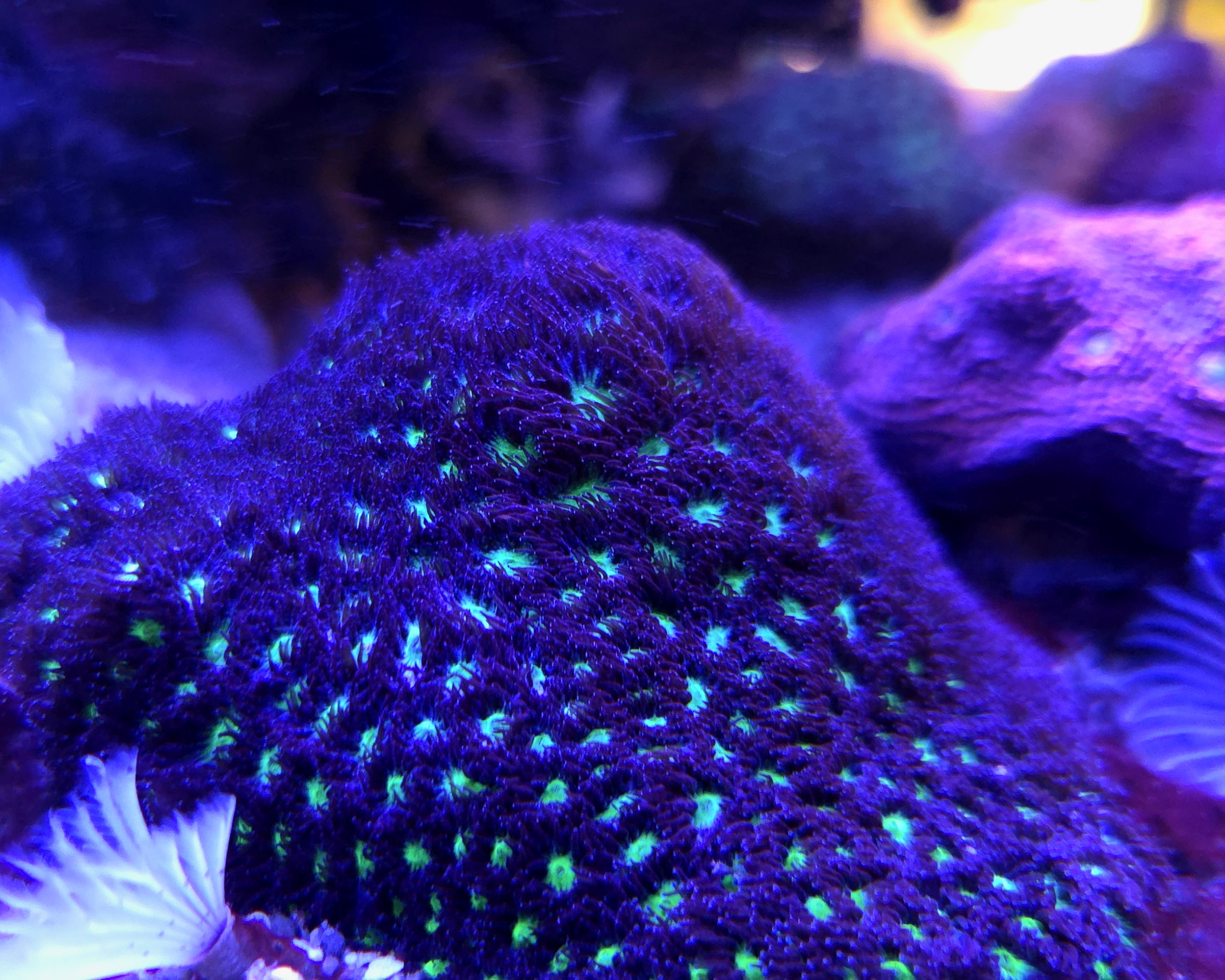
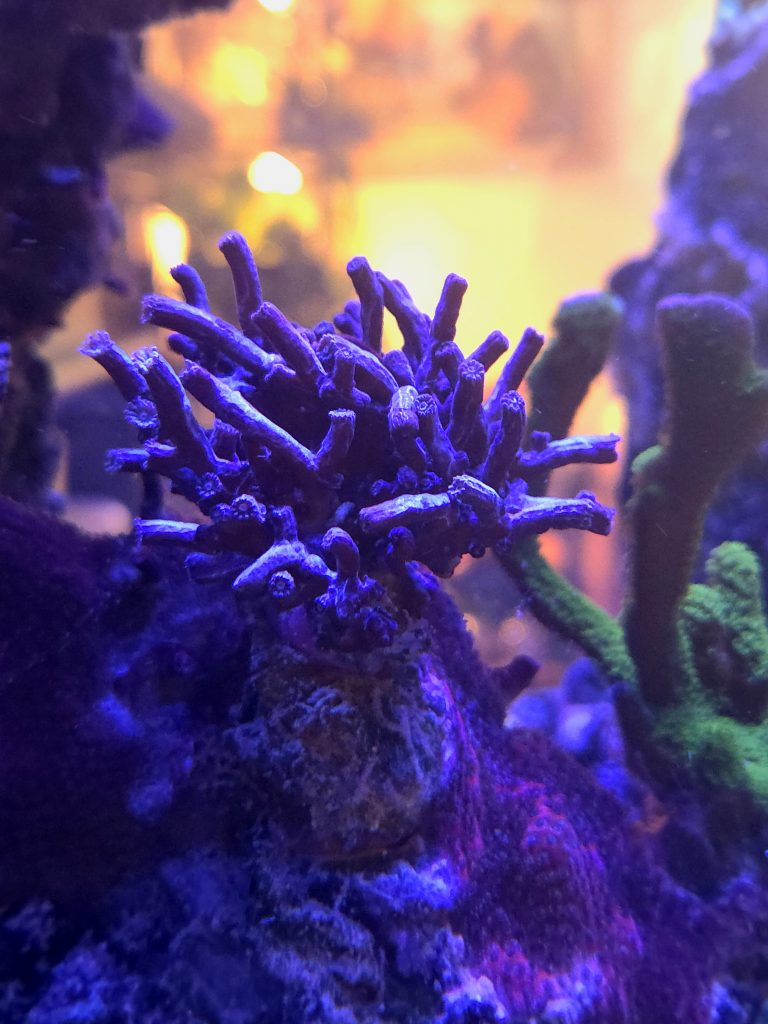
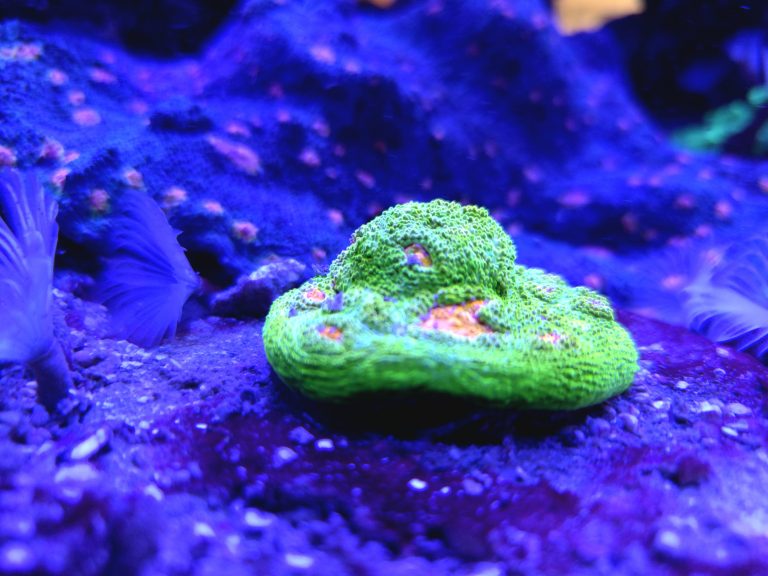
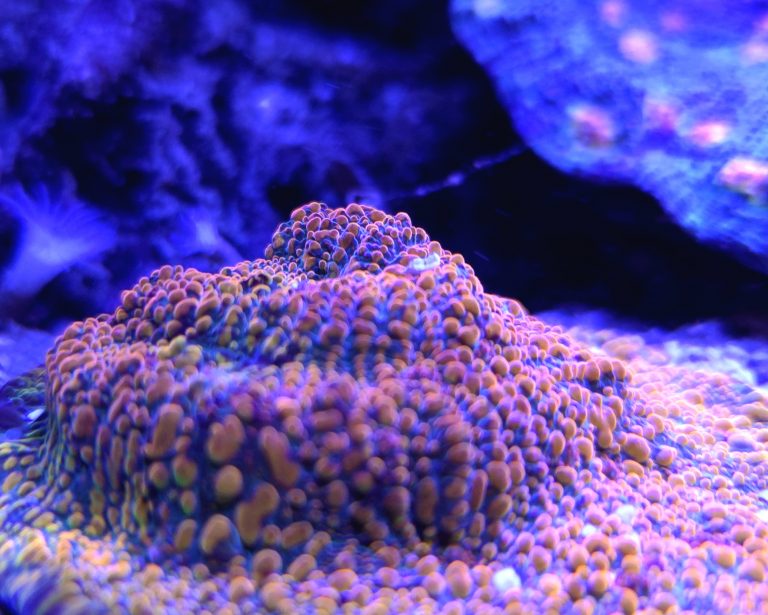
Emerald Lakes Leptastrea is a hardy, encrusting LPS coral with glowing green eyes. It forms tight colonies that creep over rock. This makes it perfect for filling bare spots and hiding frag plugs.
Emerald Lakes Leptastrea Care and Placement
Leptastrea prefers moderate light. Aim for 80–150 PAR for best color and growth. Stronger light can wash out the green and cause tissue recession. Start the frag low on the rock and move it up slowly over 2–3 weeks.
Flow should be moderate and indirect. You want steady movement across the polyps, not blasting. Too much flow keeps the polyps closed. Too little flow allows detritus to collect on the surface. Adjust powerheads until the polyps gently sway.
Target these water parameters for stable growth:
- Temperature: 77–79°F (25–26°C)
- Salinity: 1.025–1.026 specific gravity
- Alkalinity: 8–9.5 dKH
- Calcium: 420–450 ppm
- Magnesium: 1300–1400 ppm
- Nitrate: 5–15 ppm, Phosphate: 0.03–0.08 ppm
Place Emerald Lakes Leptastrea on stable rock, not shifting sand. It will slowly encrust and form a mat. Leave 1–2 inches of space from delicate neighbors. Its sweeper tentacles are short, but it can still sting soft corals that touch it.
- Acclimate under low light for the first week.
- Use a frag rack to test light levels safely.
- Keep alk swings under 0.5 dKH per day.
Feeding, Growth, and Troubleshooting
Emerald Lakes Leptastrea gains energy from light and food. It responds well to small, meaty foods. Target feed at night when polyps extend more fully. Use a turkey baster or pipette and turn off flow for 10–15 minutes.
- Offer reef roids or similar powdered coral foods twice per week.
- Feed finely chopped mysis or enriched brine once weekly.
- Do not overfeed; watch for film algae growth.
Growth is slow to moderate. A healthy frag can double in size within 6–12 months. Keep nutrients stable and avoid major changes. Sudden drops in nitrate or phosphate often cause pale tissue and poor polyp extension.
Watch for these common issues:
- Receding edges: usually from too much light or unstable alkalinity.
- Brown film or cyano on the colony: flow is too low or nutrients are high.
- Polyps closed for days: check for nearby stinging corals or pest crabs.
For fragging, use bone cutters or a diamond saw to cut between polyp clusters. Wear eye protection and rinse the frag in clean tank water. Glue new pieces to small rubble and place them in low light and moderate flow. With patience and stable conditions, Emerald Lakes Leptastrea becomes a bright, easy centerpiece on your reef rockwork.
Add to Wishlist