
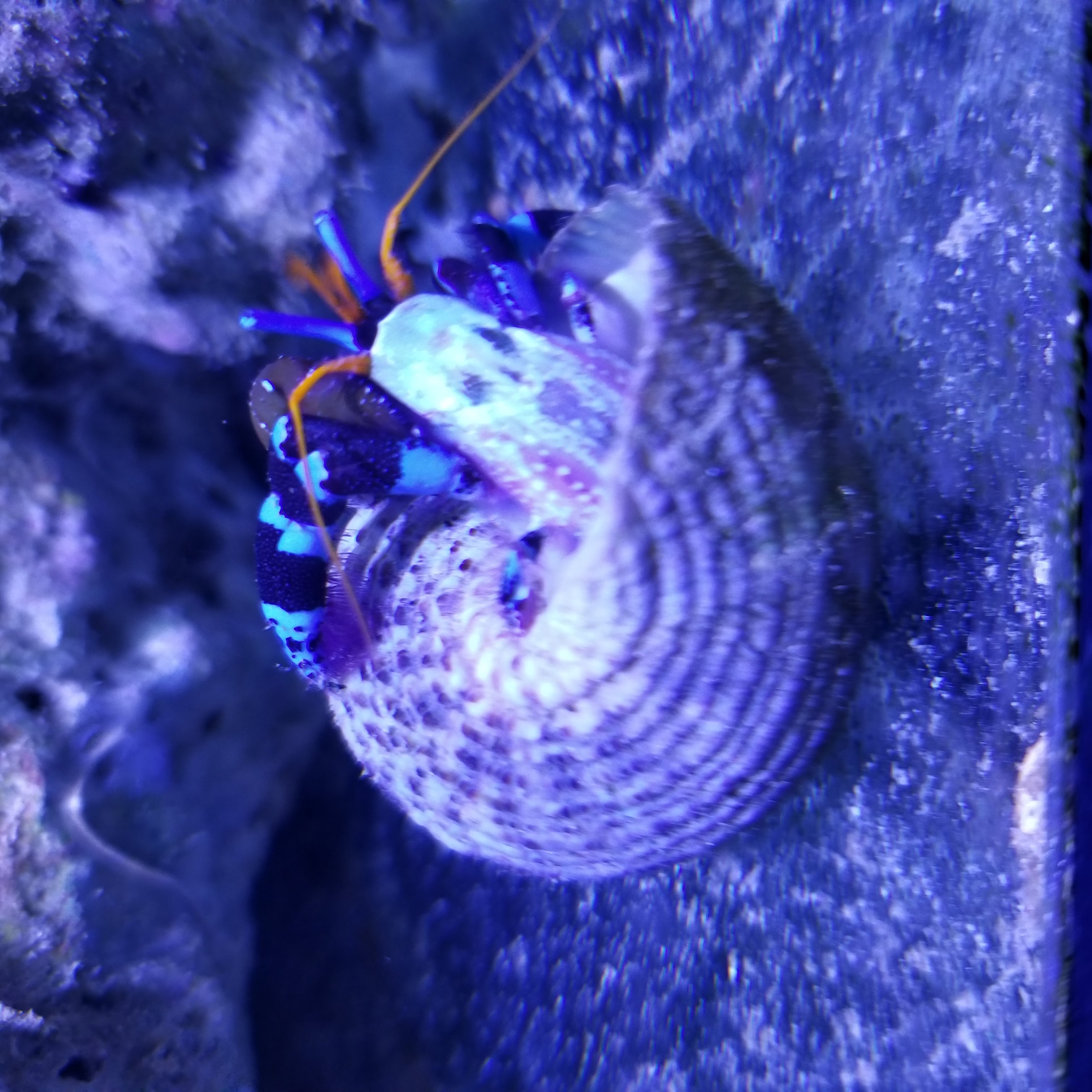
Electric Blue Hermit Crab: Care Guide for a Vibrant Reef Cleaner
The Electric Blue Hermit Crab (Calcinus elegans) is a striking saltwater invertebrate known for its vivid cobalt legs and contrasting orange antennae. Beyond its looks, this hardy crab is a valuable member of many clean-up crews, helping control algae and leftover food in marine aquariums.
Electric Blue Hermit Crab Overview
This species originates from Indo-Pacific reefs and stays relatively small, usually around 1–1.5 inches in body size. They’re active, highly visible, and often roam the rockwork all day in search of food.
- Scientific name: Calcinus elegans
- Common names: Electric Blue Hermit Crab, Blue Leg Hermit (not to be confused with Caribbean blue legs)
- Temperament: Semi-aggressive, opportunistic
- Reef safe: With caution (mainly as a clean-up crew member)
- Typical lifespan: 2–4+ years with good care
Tank Requirements & Basic Care
Electric Blue Hermit Crabs are fairly forgiving, but they still need stable, reef-like conditions. They do best in established systems with plenty of live rock and natural biofilm.
Ideal Water Parameters
- Temperature: 72–78°F (22–26°C)
- Salinity: 1.024–1.026 specific gravity
- pH: 8.1–8.4
- Alkalinity: 8–11 dKH
- Ammonia & Nitrite: 0 ppm; Nitrate: <10–20 ppm
Use a high-quality reef salt and perform regular water changes to keep parameters stable. Good flow and oxygenation are important, as these crabs are active and constantly moving.
Diet & Feeding
While they’re often sold as algae eaters, Electric Blue Hermit Crabs are omnivores and will happily consume a variety of foods:
- Film and hair algae on rocks and glass
- Leftover fish food and pellets
- Meaty bits like mysis shrimp or clam
- Specialized invertebrate or herbivore pellets
Supplement their diet if your tank is very clean or lightly stocked. Target feeding a small pellet or piece of frozen food a few times per week keeps them well-fed and less likely to bother tank mates.
Compatibility, Shells & Reef Safety Tips
Electric Blue Hermit Crabs are popular additions to reef clean-up crews, but they are still opportunistic scavengers. Planning their tank mates and environment reduces potential issues.
Providing Extra Shells
One of the most important care tips is to offer a selection of empty shells. As they grow, they’ll need larger homes, and if none are available they may fight snails or other hermits for theirs.
- Offer 3–5 spare shells per crab in various sizes
- Use smooth, marine-safe snail shells (turbo, trochus, cerith, etc.)
- Replace or add shells periodically as the crabs grow
Well-fed Electric Blue Hermit Crabs with plenty of spare shells are far less likely to harass snails and other inverts.
Tank Mates & Reef Considerations
- Generally compatible with peaceful reef fish, snails, and shrimp
- May pick at very weak or dying animals, including corals
- Avoid housing with aggressive crabs or predatory wrasses that may target them
- Best kept in moderate numbers; avoid overcrowding your clean-up crew
For a deeper look at building a balanced clean-up crew, check out our guide to reef clean-up crew planning. If you’re pairing hermits with snails, our saltwater snail care guide covers ideal species and stocking tips.
When introduced thoughtfully, the Electric Blue Hermit Crab can be both a showpiece and a hard-working member of your reef system, adding bold color and constant activity while helping keep nuisance algae and detritus under control.
Ready to add more color and utility to your tank? Visit our saltwater invertebrate care section for additional stocking ideas and compatibility tips.