
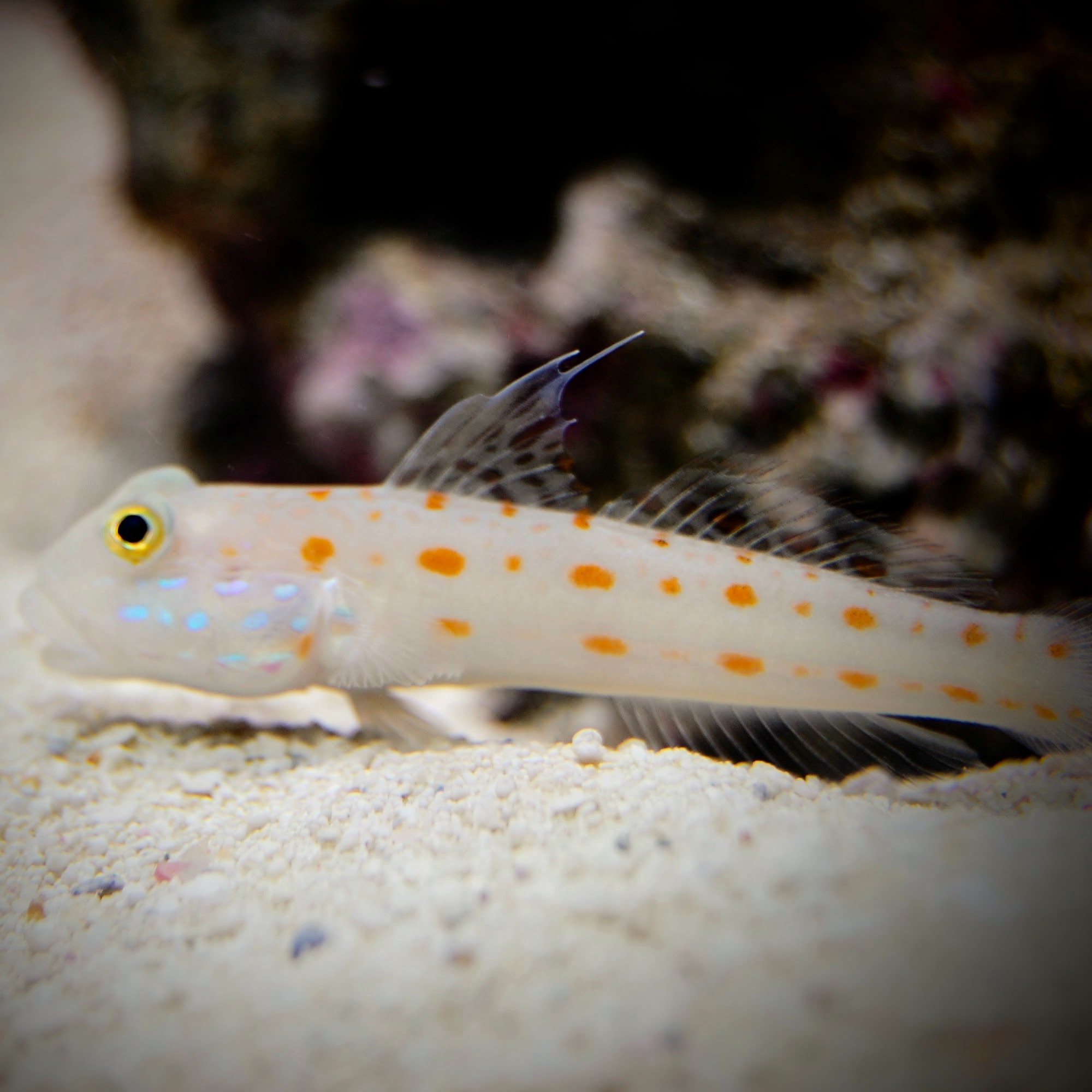
The Diamond Goby (Valenciennea puellaris) is a favorite among reef keepers for its nonstop sand-sifting and quirky personality. This hardworking fish keeps your substrate sparkling while adding motion and character to the lower areas of your tank. If you’re battling dirty sand or just want a more active bottom-dweller, the Diamond Goby is a fantastic choice.
Diamond Goby Basics: Size, Temperament & Tank Requirements
Diamond Gobies are peaceful, hardy fish that adapt well to most established marine aquariums.
- Adult size: 5–6 inches
- Temperament: Peaceful, can be territorial with similar gobies
- Minimum tank size: 40 gallons (larger is better)
- Reef-safe: Yes, with caution around very delicate inverts on the sand
They do best in tanks with:
- A mature sandbed (at least 2–3 inches deep)
- Plenty of live rock for shelter and burrow support
- Moderate flow so food and detritus settle into the sand
If you’re planning your first saltwater setup, make sure to read our Beginner Saltwater Tank Guide so your system is stable before adding a Diamond Goby.
Natural Sand-Sifter: Diet, Behavior & Burrow Life
The Diamond Goby’s signature behavior is constant sand-sifting. You’ll see it scooping up mouthfuls of substrate, filtering out edible bits, and expelling clean sand through its gills or mouth. This helps keep the sandbed oxygenated and reduces detritus buildup.
Feeding the Diamond Goby
In the wild, they feed on tiny worms, pods, and leftover food in the sand. In captivity, they need:
- Frozen foods: Mysis shrimp, enriched brine, finely chopped seafood
- Meaty pellets: Small sinking pellets designed for carnivores
- Live foods (optional): Copepods and live baby brine for new arrivals
Target feeding with a turkey baster near their burrow can help ensure they get enough nutrition, especially in newer tanks where the sandbed isn’t rich in life yet.
Pro tip: Don’t rely solely on the sandbed to feed your Diamond Goby. Supplement with regular feedings, particularly in tanks under one year old.
Burrows, Jumping & Compatibility
Diamond Gobies are expert diggers and will create burrows under rocks and caves. To keep them safe:
- Place rockwork directly on the glass or a sturdy base before adding sand.
- Use a tight-fitting lid or mesh top—these gobies are known jumpers.
- Avoid housing with aggressive bottom-dwellers that may outcompete or harass them.
They usually ignore corals, making them a solid choice for mixed reefs. Just be prepared for occasional sand storms as they spit sand onto lower rock structures and corals. Our guide on aquascaping your reef tank includes layout tips that help minimize sand being tossed onto your coral.
Choosing, Acclimating & Long-Term Care
When selecting a Diamond Goby, look for a fish with:
- A full, rounded belly (not pinched or sunken)
- Clear eyes and intact fins
- Active sand-sifting or at least alert behavior on the tank bottom
Acclimate slowly using a drip method, and keep lights dim during introduction to reduce stress. Provide multiple caves and overhangs so the goby can claim a safe space quickly.
With stable water parameters, a covered tank, and consistent feeding, Diamond Gobies can thrive for years. They’re a rewarding addition that improves both the look and health of your sandbed. If you’re planning a full cleanup crew, don’t miss our Saltwater Cleanup Crew Guide for more sandbed partners that work well alongside a Diamond Goby.
In short, the Diamond Goby is a hard-working, personality-filled fish that brings life to the lower half of your aquarium while helping keep your substrate clean. For many reef keepers, once they’ve owned one, a tank never feels complete without that constant, cheerful sand-sifting action.