
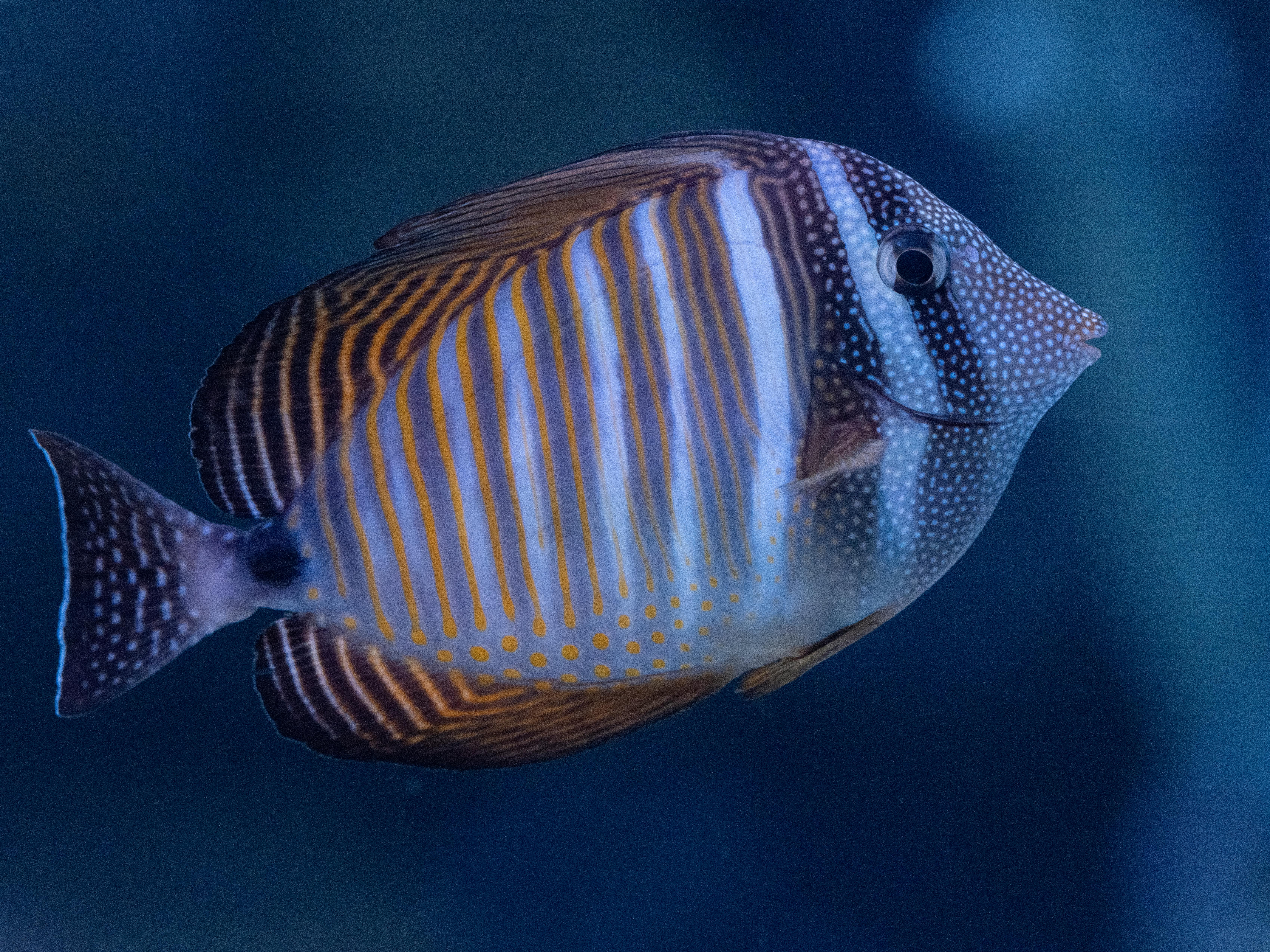
The Desjardini Sailfin Tang (Zebrasoma desjardinii) is a bold, beautiful, and hardworking herbivore that can quickly become the centerpiece of a large reef or fish-only system. With its dramatic dorsal and anal fins, intricate patterning, and tireless algae-grazing habits, this tang is both eye-catching and incredibly useful in a well-planned marine aquarium.
Desjardini Sailfin Tang Care & Tank Requirements
Desjardini Sailfin Tangs grow large—often 10–15 inches in captivity—so long-term housing must be planned from day one. This is not a fish for compact displays or temporary “grow out” setups.
Tank Size & Aquascape
- Minimum tank size: 180 gallons (6-foot tank) for an adult; more is better.
- Swimming room: Leave open lanes at the front and back of the rockwork for continuous cruising.
- Rockwork: Create arches and ledges for grazing and retreat, but avoid tight, cluttered layouts.
Strong, stable water parameters are essential. Aim for:
- Temperature: 76–79°F
- Salinity: 1.025–1.026
- pH: 8.1–8.4
- High oxygenation and strong, varied flow
Pro tip: Introduce the Desjardini Sailfin Tang after more peaceful tankmates are established to reduce stress and territorial behavior.
Diet, Behavior & Compatibility
In the wild, this tang spends its day grazing on film algae and seaweed. In the aquarium, a rich, plant-based diet keeps them healthy and vibrant.
Feeding the Desjardini Sailfin Tang
- Offer nori sheets (dried seaweed) daily using a veggie clip.
- Rotate high-quality herbivore pellets and frozen foods with spirulina.
- Allow access to natural algae on rocks and glass; don’t over-scrub every surface.
Supplement with occasional meaty foods (mysis, enriched brine) but keep the focus on greens to prevent obesity and digestive issues.
Temperament & Tankmates
Desjardini Sailfin Tangs are generally peaceful toward other species but can be very assertive with similar-shaped tangs, especially other Zebrasoma. To minimize aggression:
- Avoid housing with other Sailfin Tangs or very similar tang species in smaller systems.
- If mixing tangs, add them at the same time and provide ample hiding spots.
- Choose tankmates like wrasses, anthias, clownfish, and peaceful angelfish that won’t compete for the same niche.
If you’re planning a broader community, you might also enjoy our guides on Yellow Tang care and building a balanced system in our reef tank stocking guide.
Health, Acclimation & Long-Term Success
Like most tangs, the Desjardini Sailfin is susceptible to marine ich and other external parasites, particularly when stressed.
- Quarantine new arrivals for 2–4 weeks before adding them to your display.
- Use a drip acclimation method to avoid osmotic shock.
- Maintain excellent water quality and avoid rapid swings in salinity or temperature.
Watch for clamped fins, rapid breathing, or loss of appetite—these can be early warning signs of illness. A varied, vitamin-enriched diet and low-stress environment go a long way toward keeping this species robust. For more system-wide stability tips, see our reef tank maintenance schedule.
When given the right space, diet, and tankmates, the Desjardini Sailfin Tang can live for many years, becoming a confident, interactive resident that constantly patrols the rockwork. With thoughtful planning and consistent care, this striking tang will reward you with both beauty and utility as a centerpiece algae grazer in your marine aquarium.