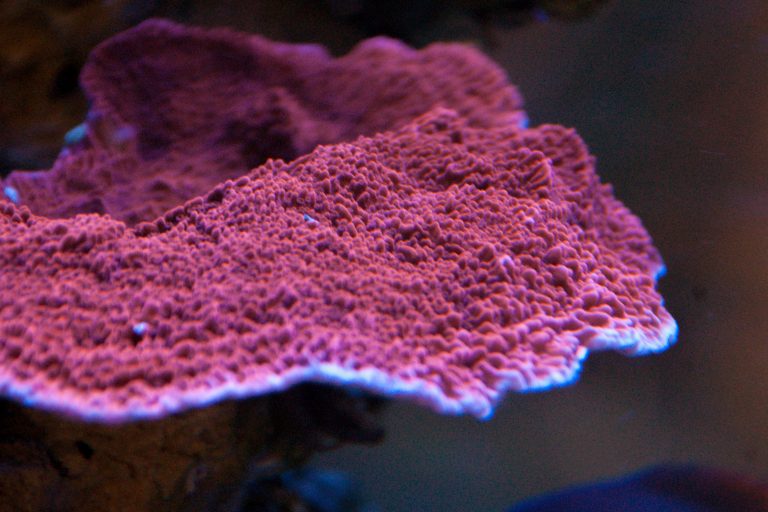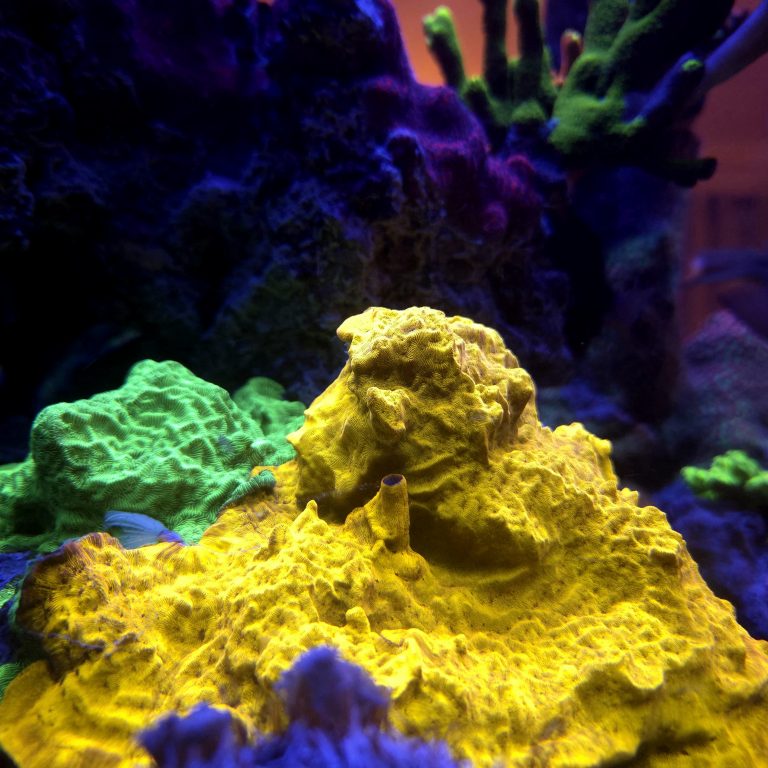
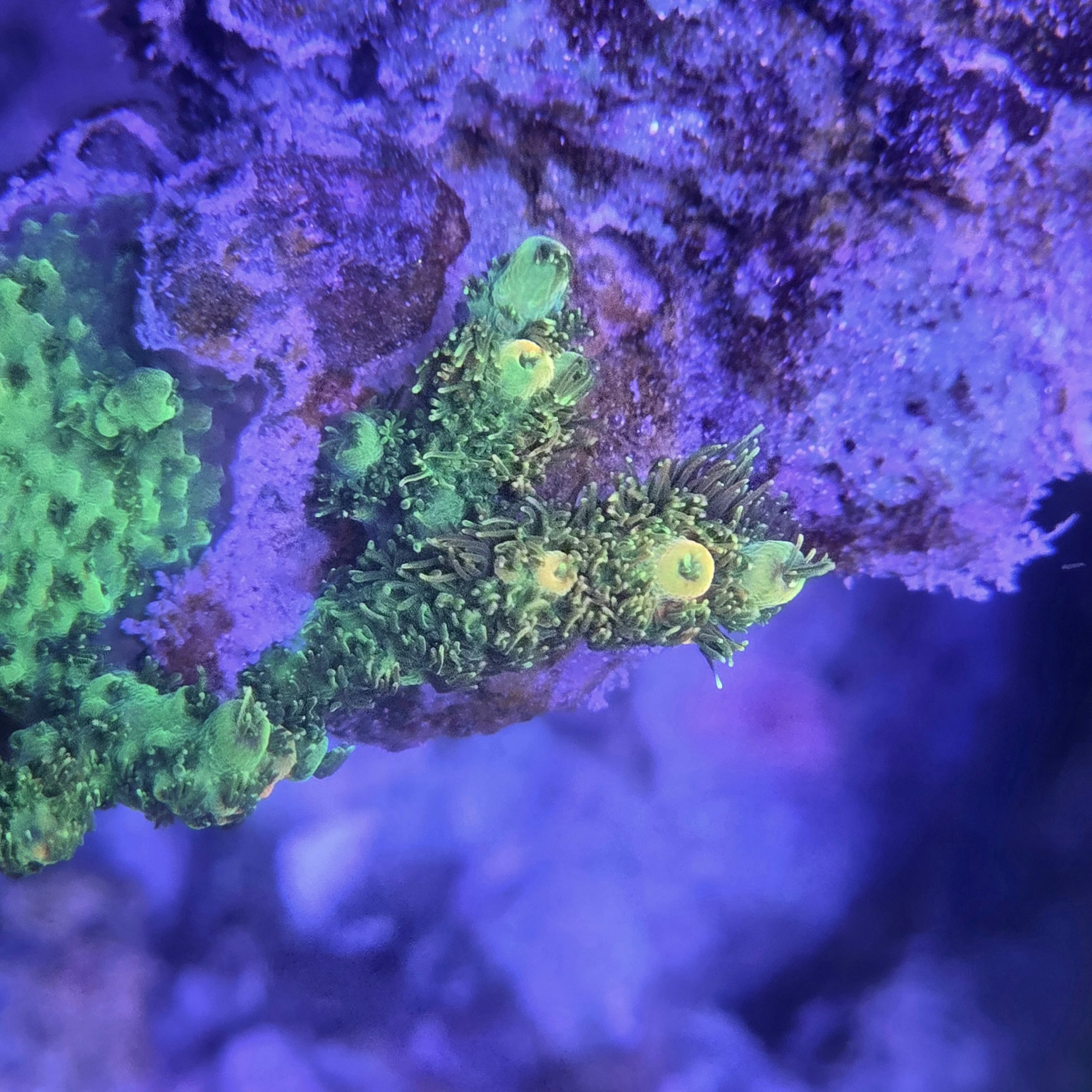
Cornbreds Lemon Sour Millepora Acropora
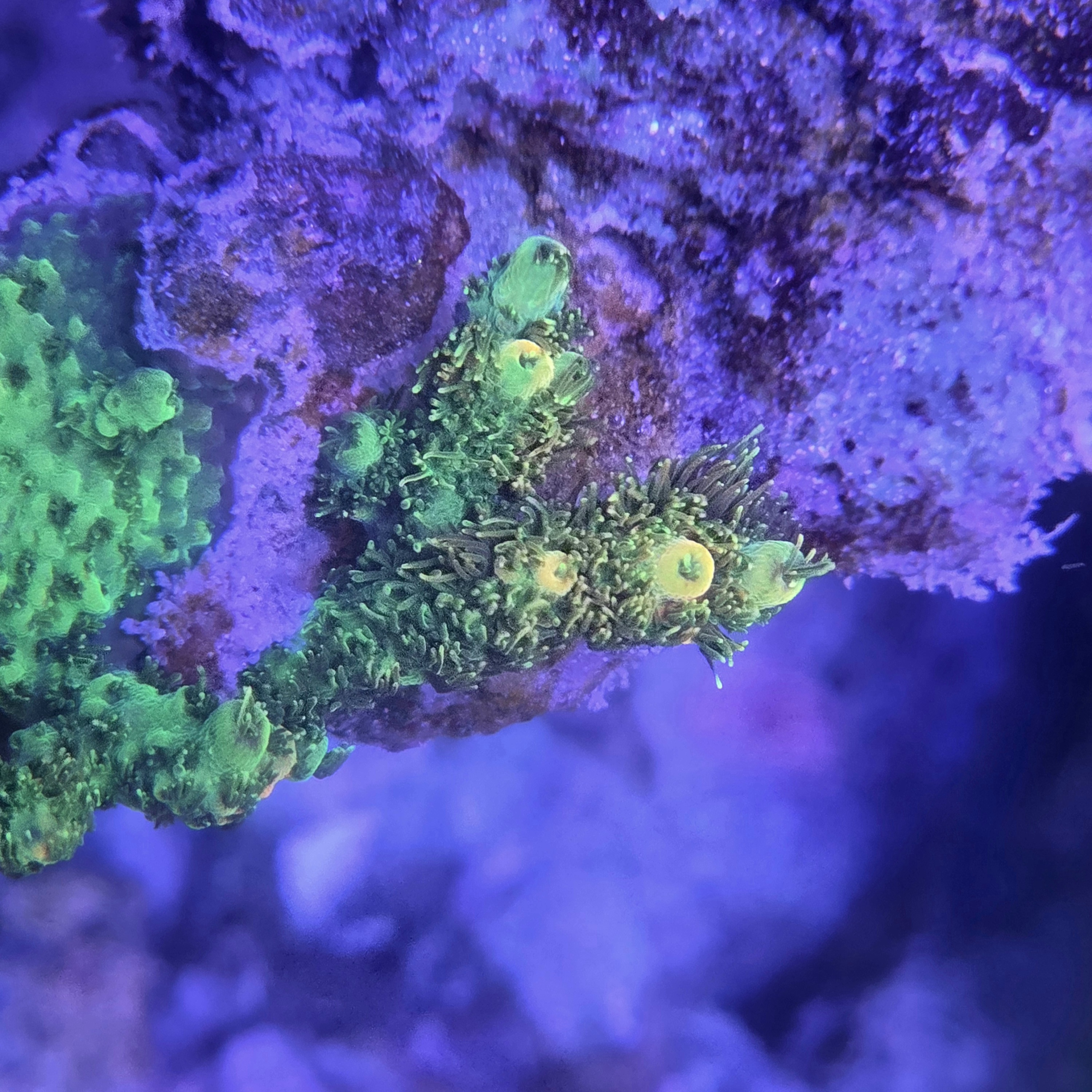
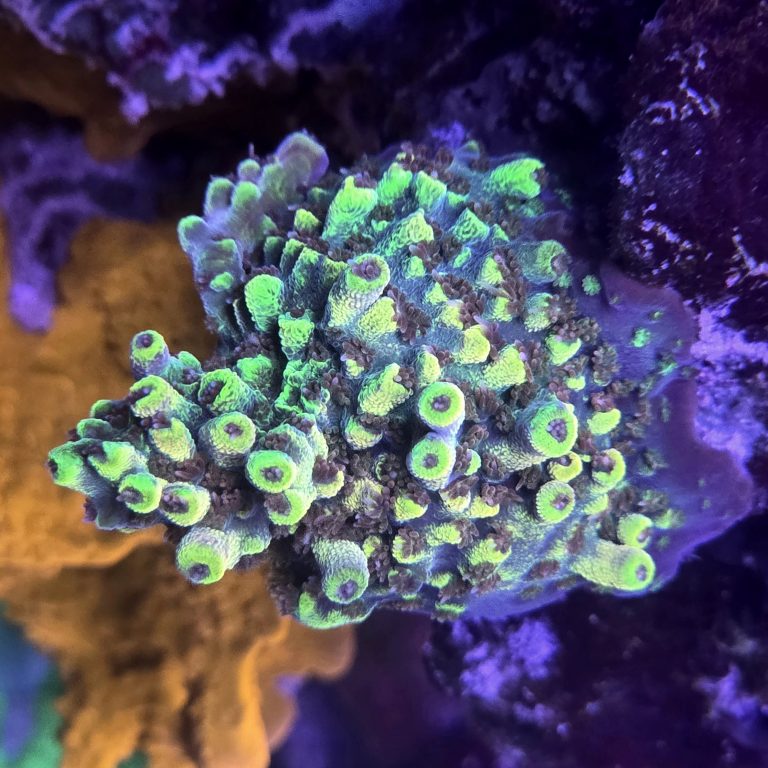
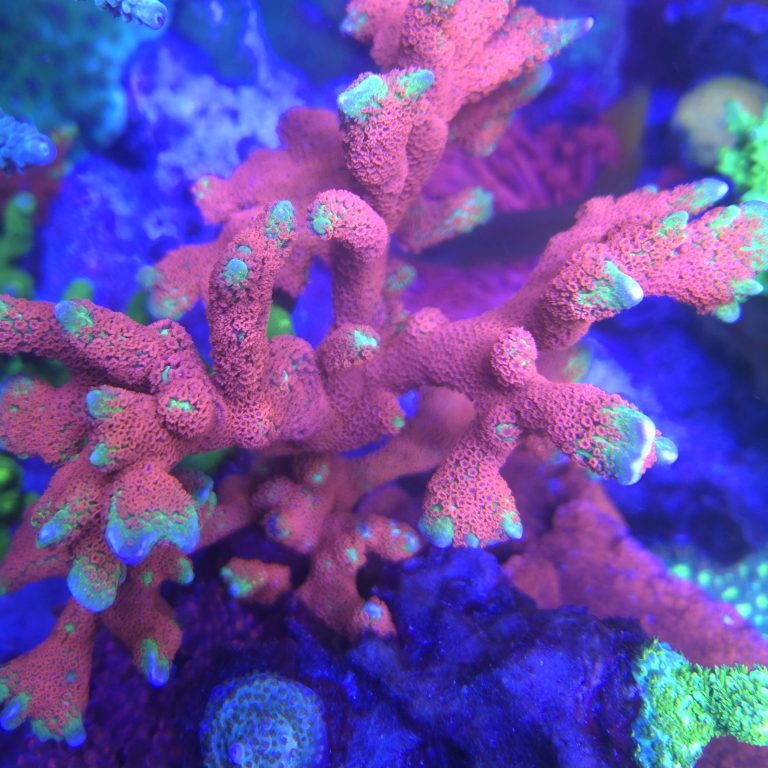
Cornbreds Lemon Sour Millepora is a standout Acropora for bright, modern reef tanks. Its neon yellow branches and contrasting polyps can glow under blue LEDs. With the right care, this millepora grows fast and forms a dense, fuzzy colony.
Understanding Cornbreds Lemon Sour Millepora
This coral is an Acropora millepora variant known for intense yellow coloration. It shows best color under strong blue spectrum lighting. Expect short, thick branches with tight, bushy polyps. The coral looks almost “hairy” when fully extended.
Target PAR is 250–350 at the frag level. Place it in the upper half of the tank. Start lower, around 200 PAR, and increase over 2–3 weeks. Use a PAR meter if possible. Sudden jumps in light can cause bleaching.
Water movement should be strong and random. Aim for 30–50 times tank turnover per hour. Use at least two wavemakers. Point flow across the coral, not directly at it. You want constant polyp movement, not tissue peeling.
- Ideal temperature: 77–79°F (25–26°C)
- Salinity: 1.025–1.026 specific gravity
- Alkalinity: 8–9 dKH, stable within 0.2 daily
- Calcium: 420–450 ppm
- Magnesium: 1300–1400 ppm
Stability matters more than chasing numbers. Test alkalinity at least three times per week. Dose two-part or a calcium reactor to keep levels steady. Sudden swings often dull color and slow growth.
Placement, Feeding, and Troubleshooting
Mount the frag on a solid rock ledge with super glue gel. Keep at least 2–3 inches from other SPS. Milleporas can sting or be stung by neighbors. Leave room for branching growth over the next 6–12 months.
This coral mainly relies on light, but light feeding helps. Target feed once or twice weekly. Use fine particle foods like reef roids or powdered coral blends. Turn off flow for 10–15 minutes while feeding. Resume strong flow after.
- Nitrate: 5–15 ppm for good color
- Phosphate: 0.03–0.08 ppm
- Avoid “zero nutrient” systems
- Run carbon lightly to keep water clear
Common problems include pale tips, browned tissue, and recession at the base. Pale tips often mean too much light or too little nutrients. Brown color usually indicates high nutrients or weak light. Base recession can signal unstable alkalinity or pests like Acropora-eating flatworms.
- Dip all new frags for 5–10 minutes before adding
- Inspect weekly for bite marks or missing tissue
- Use an auto top-off to keep salinity stable
- Perform 10–15% water changes every 1–2 weeks
- Log test results to spot trends early
With strong light, high flow, and stable parameters, Cornbreds Lemon Sour Millepora can become a bright centerpiece. Plan your rockwork and flow around its future size. This coral rewards patience with vivid color and impressive growth.
Add to Wishlist