
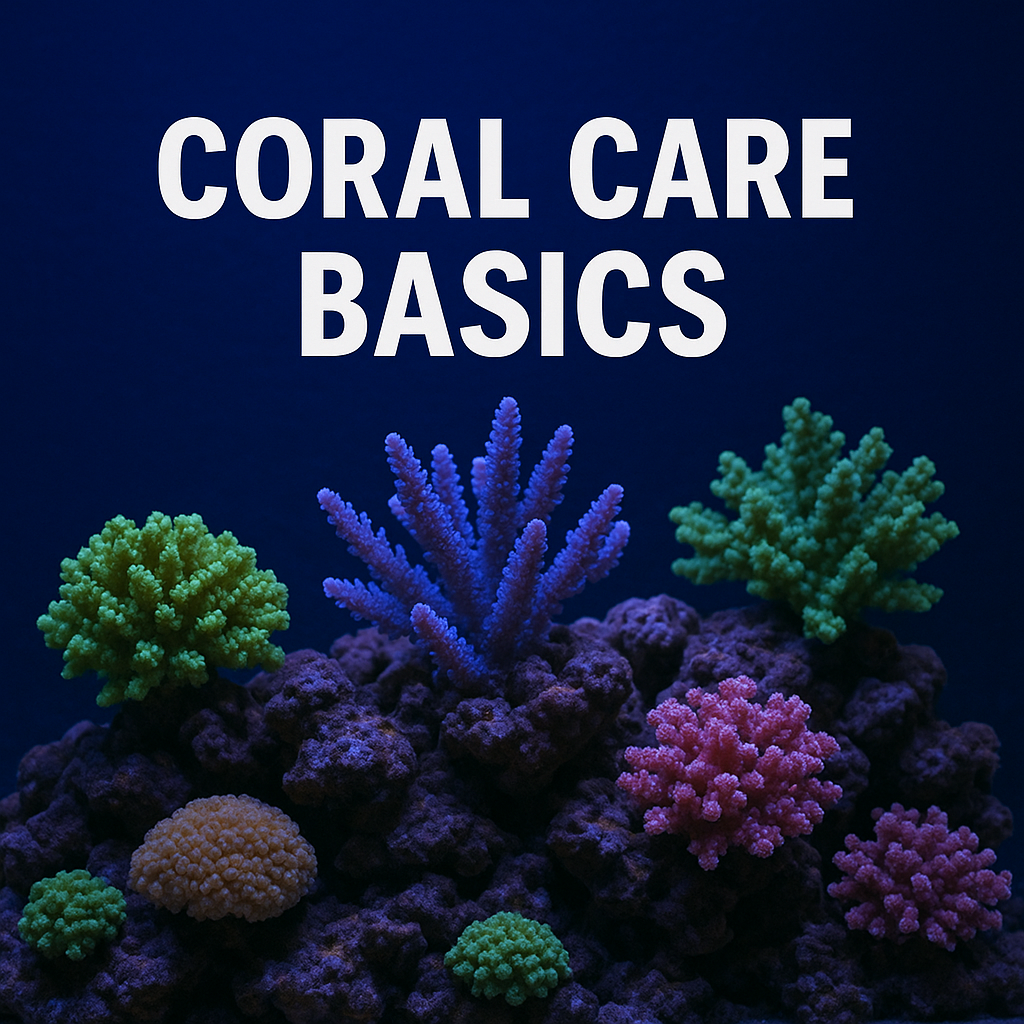
Corals are the living jewels of a reef aquarium, but they also tend to be the most sensitive animals in your tank. Understanding coral care basics will help you keep them healthy, colorful, and growing steadily for years. This guide walks through the essential elements: water quality, lighting, flow, and feeding—plus a few practical tips you can use right away.
Dialing In Water Parameters for Corals
Stable, clean water is the foundation of coral health. Before adding your first coral, make sure your tank is fully cycled and that you can consistently maintain these key parameters:
- Salinity: 1.024–1.026 specific gravity
- Temperature: 76–79°F (24–26°C)
- Alkalinity: 8–10 dKH
- Calcium: 400–450 ppm
- Magnesium: 1250–1350 ppm
- Nitrate: 2–15 ppm (not zero, but not excessive)
- Phosphate: 0.02–0.10 ppm
Corals respond more to stability than to chasing a perfect number. Quick swings in salinity, alkalinity, or temperature can cause tissue recession, bleaching, or slow decline.
Tip: Test weekly and log your results. Small, frequent adjustments are safer than big corrections. If you’re new to testing, check out our Beginner Water Testing Guide for step-by-step help.
Lighting and Flow: Giving Corals What They Need
Most corals host symbiotic algae that use light to produce energy. Too little light and they starve; too much and they bleach. The ideal range depends on the type of coral:
- Soft corals & many LPS: Moderate light, lower in the tank
- Most LPS & hardy SPS: Moderate–high light, mid to upper rockwork
- Light-demanding SPS: High, stable light near the top
Always acclimate new corals to your lighting. Start them in lower light or use a dimming schedule, then gradually increase intensity over 1–2 weeks.
Flow is just as important as light. Good water movement:
- Brings food and oxygen to coral tissues
- Removes waste and detritus
- Helps prevent dead spots and nuisance algae
Aim for random, indirect flow. Corals should sway gently rather than being blasted. If tissue is peeling or skeleton is exposed, the flow may be too strong in that spot.
Tip: Use multiple smaller powerheads aimed across the tank instead of one strong jet. For layout ideas, see our Aquascape and Flow Layout Ideas.
Feeding, Placement, and Everyday Coral Care
Many corals gain a lot of energy from light, but targeted feeding can boost growth and color. Offer small, appropriate foods 1–3 times per week depending on your nutrient levels:
- Soft corals: Benefit from fine particle foods and dissolved nutrients
- LPS corals: Often enjoy meaty foods like mysis or specialized coral foods
- SPS corals: Prefer very fine particle foods and stable, low-nutrient water
Careful placement is another coral care basic that’s easy to overlook. When adding a new coral:
- Start in a lower light, lower flow area and move it up slowly.
- Give stinging corals (like some LPS) extra buffer space from neighbors.
- Watch for signs of stress: retracted polyps, tissue loss, or bleaching.
Routine maintenance ties everything together:
- Perform regular water changes to replenish trace elements.
- Clean pumps and overflows so flow remains consistent.
- Inspect corals weekly for pests or early signs of disease.
As you gain experience, you can explore more advanced topics like dosing, coral propagation, and species-specific care. When you’re ready to move beyond the basics, our Intermediate Coral Keeping Guide dives deeper into growth strategies and troubleshooting.
Caring for corals is a rewarding part of the reef aquarium hobby. By focusing on stable water parameters, appropriate light and flow, sensible feeding, and careful placement, you’ll create an environment where your corals can thrive and your reef can truly come to life.