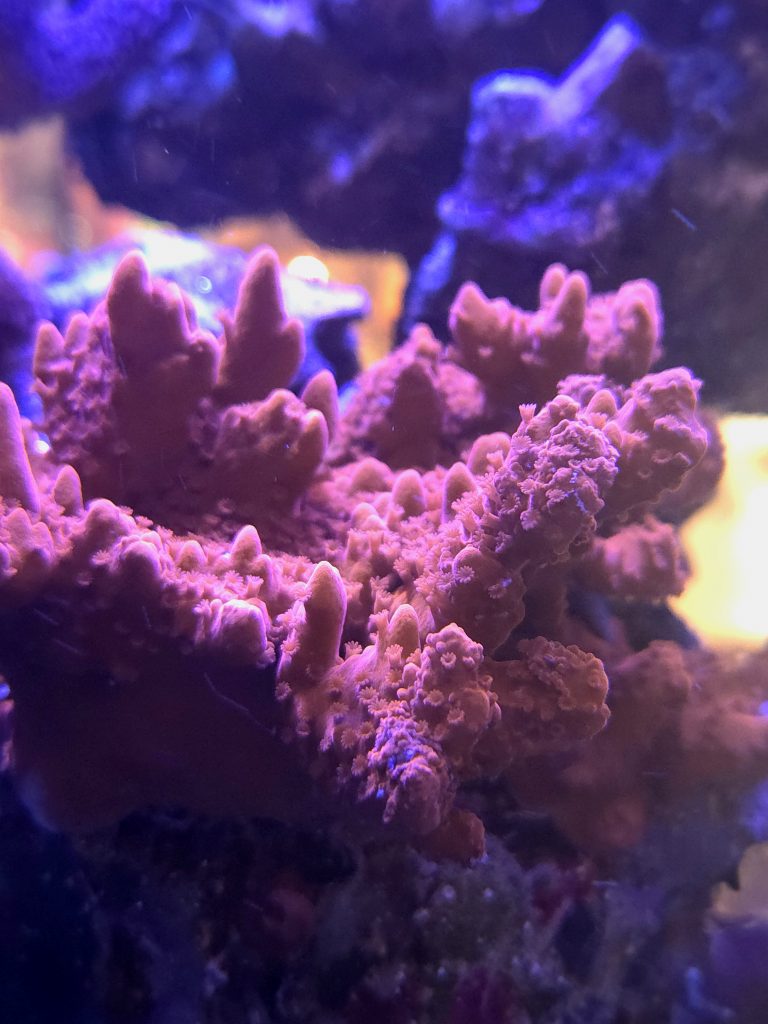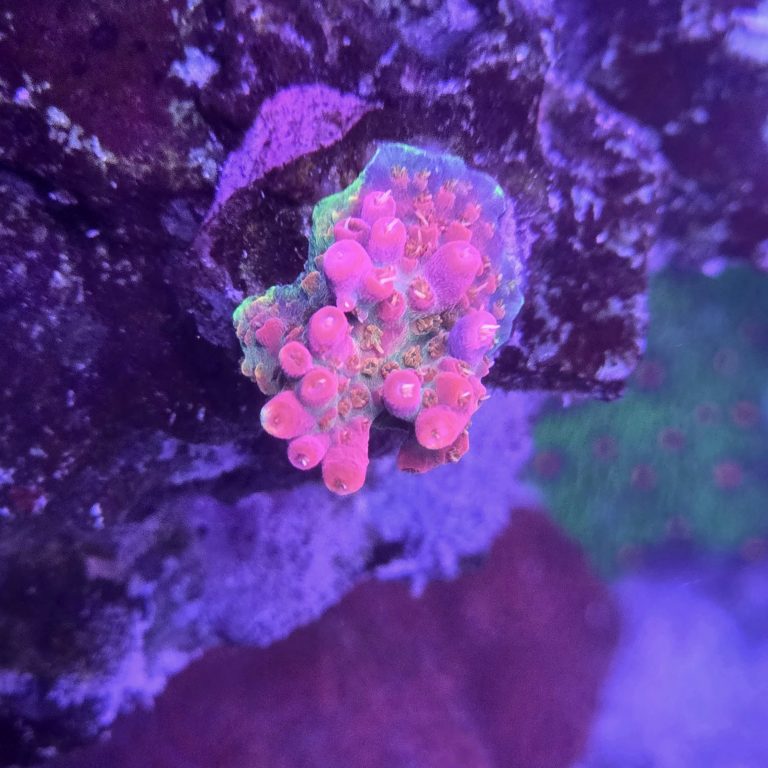
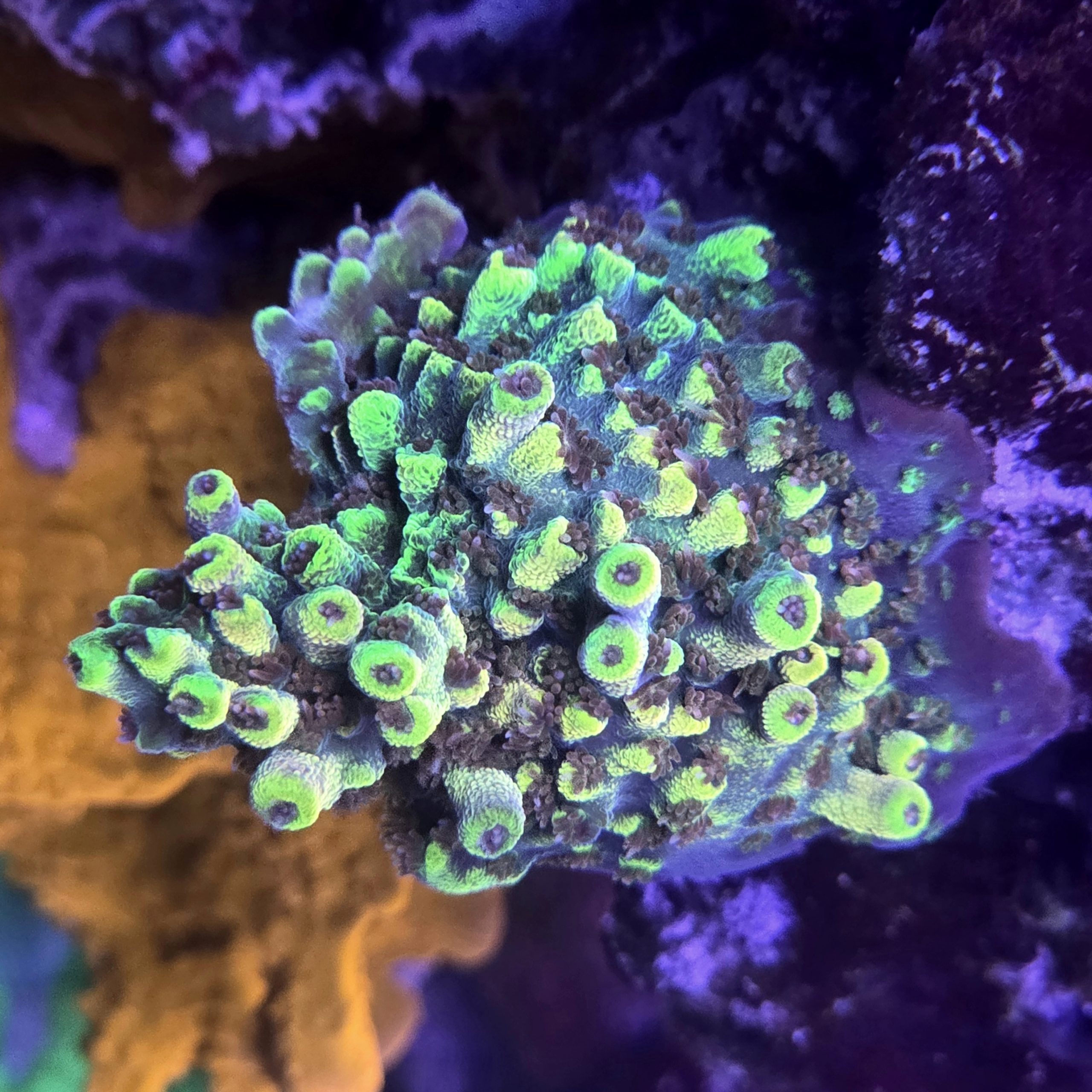
Cornbreds RRs Pink Floyd Acropora
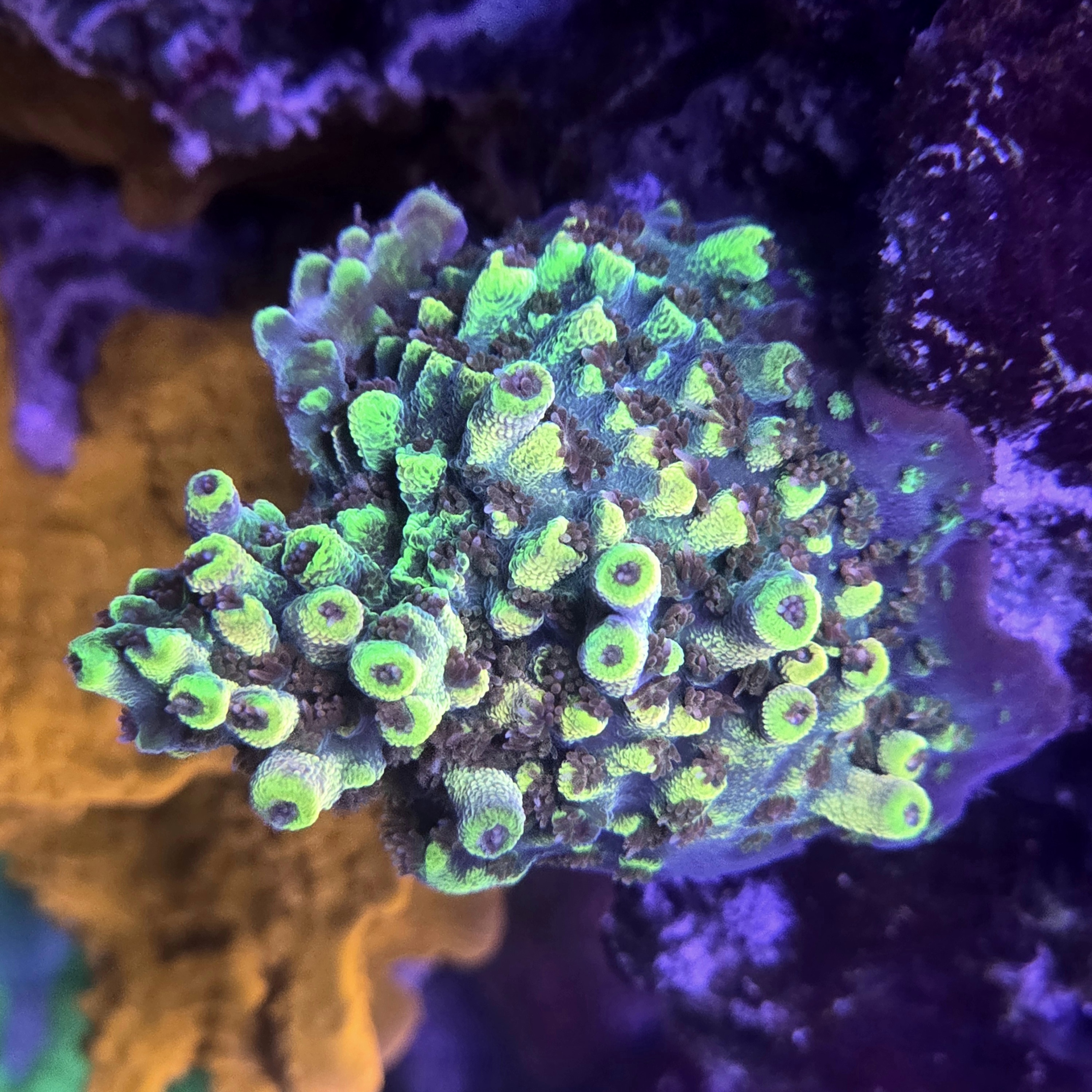
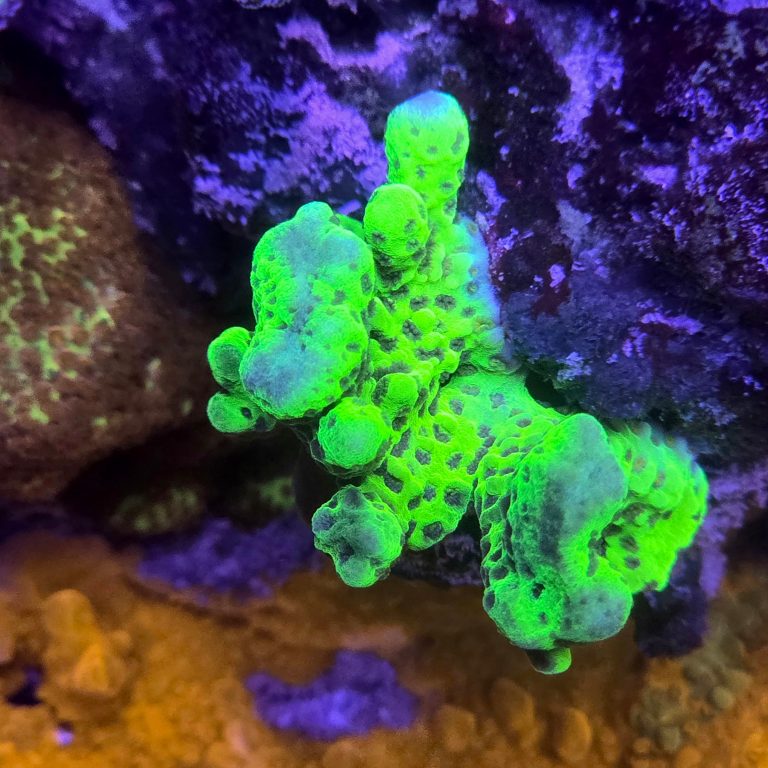
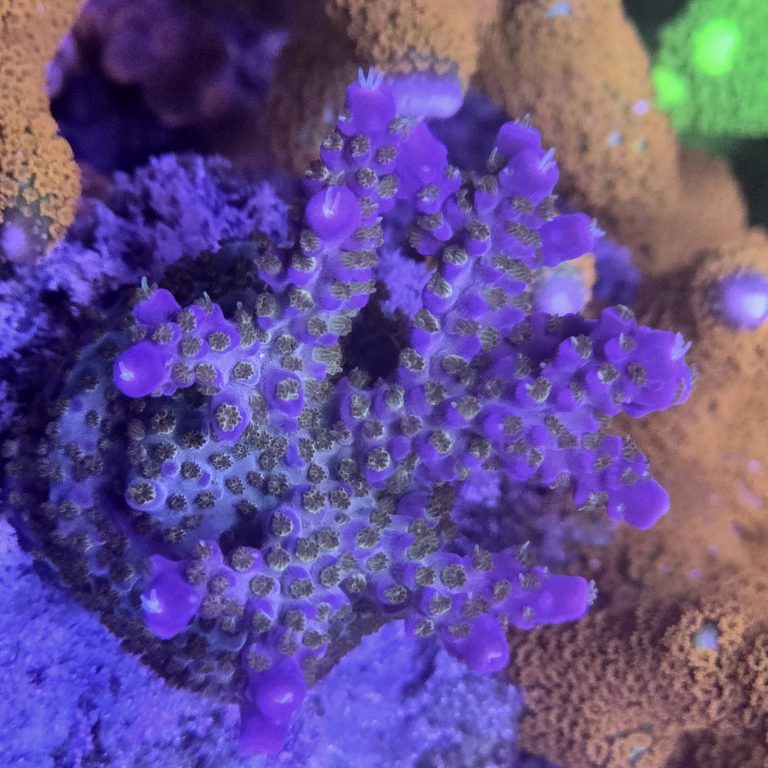
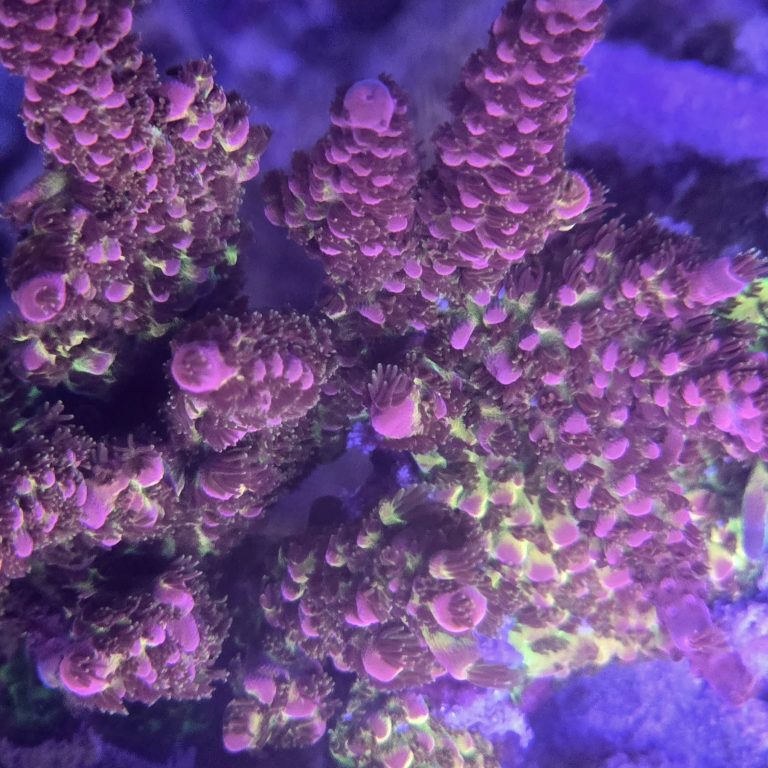
CB RR Pink Floyd Acropora is a legendary SPS coral. It glows neon yellow with intense pink and red highlights. With the right care, it becomes a true centerpiece in any modern reef tank.
CB RR Pink Floyd Basics and Ideal Conditions
This coral is a fast-growing Acropora when conditions are stable. It prefers strong lighting and high, random flow. In unstable tanks, it can quickly lose color or tissue. Plan your system around stability first, speed later.
Target PAR between 300 and 400 at the colony. Use a PAR meter or borrow one from a local club. Start new frags at 200 PAR on a frag rack. Then raise them 2 to 3 inches every 7 to 10 days. Watch for bleaching or pale tips and slow down if needed.
Keep alkalinity between 8.0 and 8.5 dKH. Aim for calcium at 420 to 450 ppm and magnesium at 1300 to 1400 ppm. Nitrates should sit around 5 to 15 ppm. Phosphate between 0.03 and 0.08 ppm works well. Avoid sudden swings over perfect numbers. This coral hates rapid changes more than slightly off targets.
Flow should be strong and chaotic. Use at least two wavemakers in a 75-gallon or larger tank. Point them toward the glass, not directly at the coral. Polyps should sway quickly, not fold over. Dead spots around the base often lead to tissue recession.
- Target PAR: 300–400 at final placement
- Alkalinity: 8.0–8.5 dKH, change <0.3 dKH per day
- Nitrate: 5–15 ppm, Phosphate: 0.03–0.08 ppm
- Temperature: 77–79°F, with <1°F daily swing
Placement, Feeding, and Troubleshooting Color
Place CB RR Pink Floyd high on the rockwork. Give it room to branch out 4 to 6 inches in all directions. Avoid shading from larger colonies or overgrown Montipora plates. Glue frags on clean, stable rock, not loose rubble.
Acropora get most energy from light, but feeding helps growth. Dose amino acids 2 to 3 times per week. Start with half the recommended dose. Watch for film algae or cloudy water and reduce if needed. You can also broadcast feed fine coral foods once or twice weekly.
- Acclimate frags with a 10–15 minute dip in a coral-safe solution
- Inspect for red bugs, flatworms, and bite marks before adding
- Quarantine high-end pieces in a separate frag tank if possible
Faded yellow usually means low PAR or high nutrients. Slowly increase light by 5–10% over two weeks. Check nitrate and phosphate with reliable test kits. Brown or dull colors often point to elevated nutrients or low flow. Increase flow patterns and adjust filtration gradually.
White tips can be healthy growth or early burning. Healthy tips stay smooth with good polyp extension. Burnt tips look rough with receding tissue. If you see burning, test alkalinity immediately. Many reefers see issues when alk jumps above 9 dKH quickly. Adjust dosing so daily swings stay very small.
- Test alkalinity at the same time each day for one week
- Log PAR, nutrients, and any color changes in a journal
- Make only one change at a time and wait 7 days to judge
With patience, stable parameters, and careful lighting, CB RR Pink Floyd can thrive. Give it time to adjust, avoid chasing numbers, and it will reward you with electric color and impressive growth.
Add to Wishlist