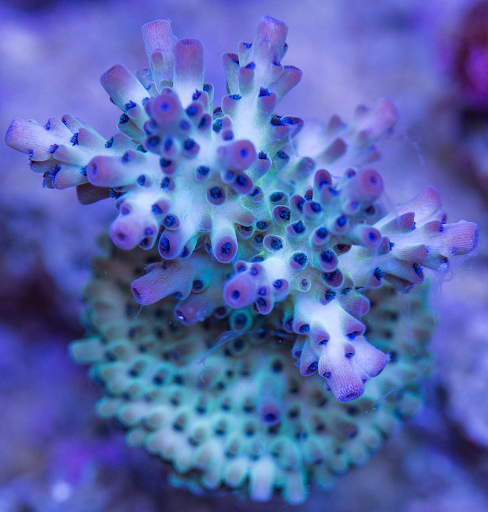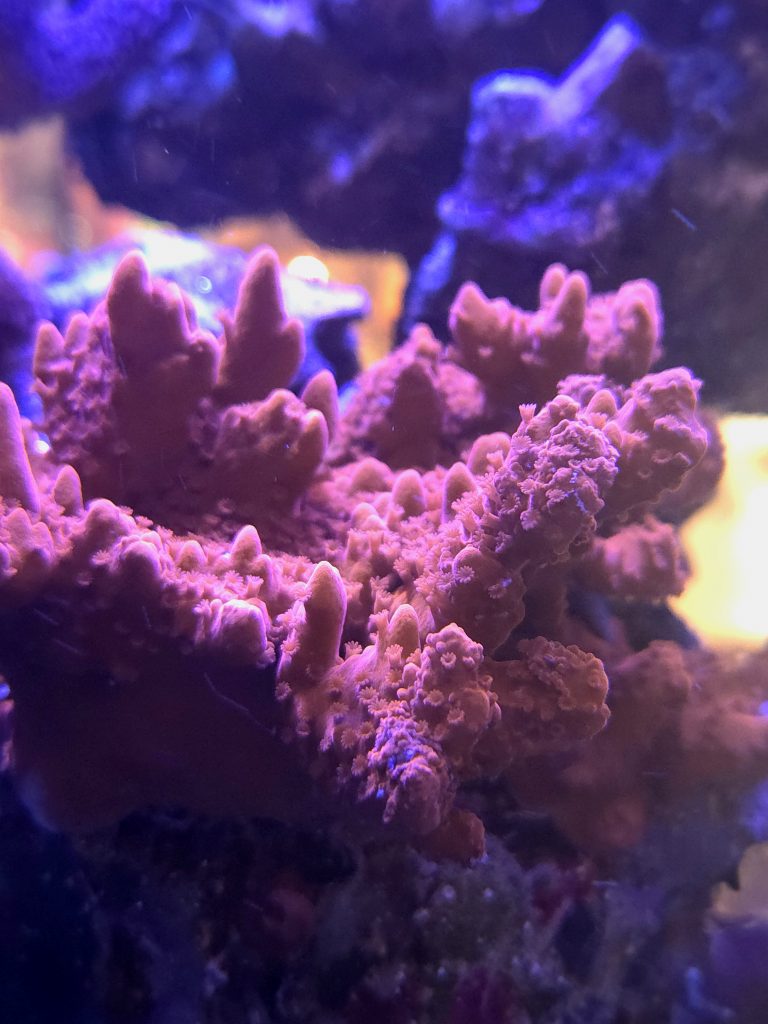
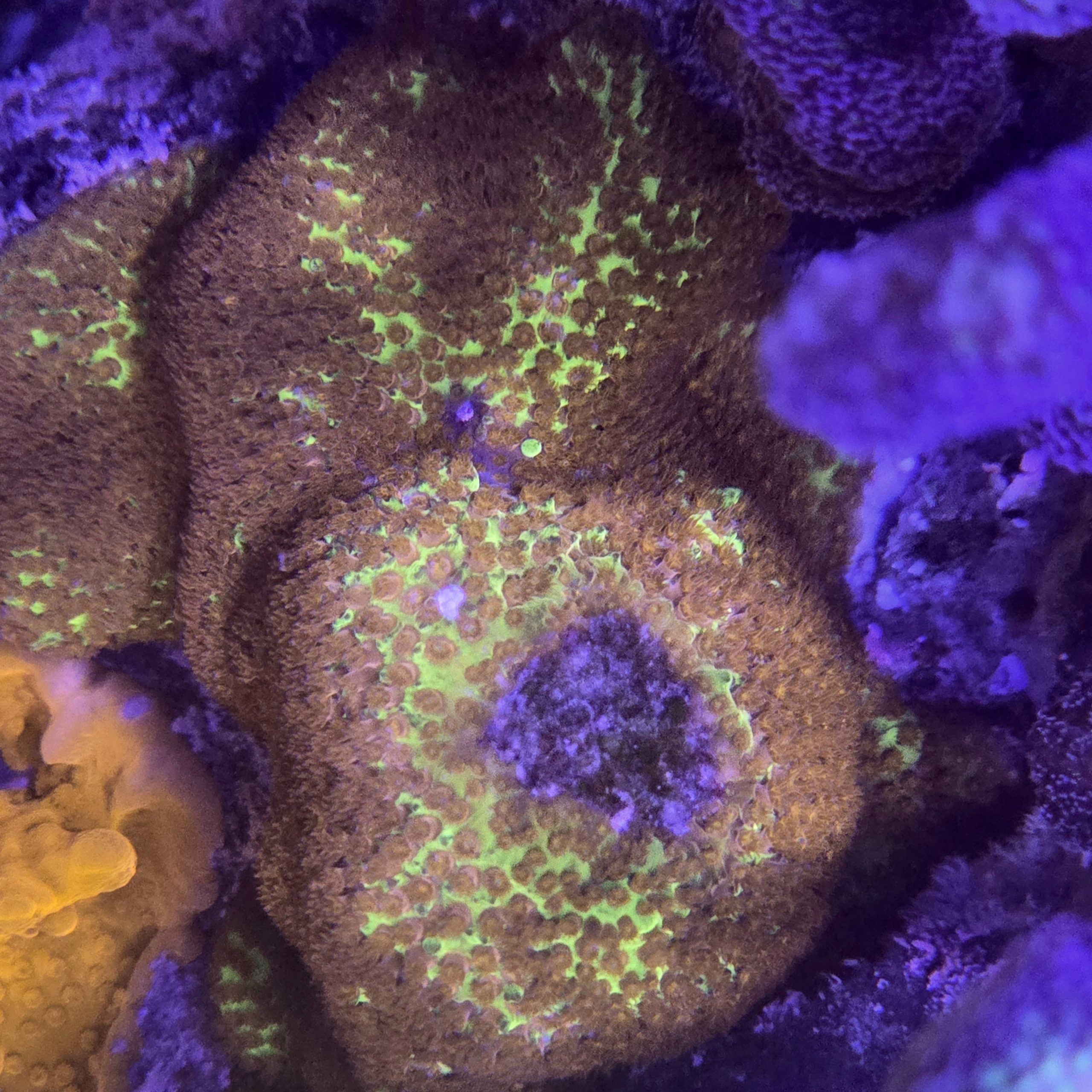
Burning Banana Stylocoeniella
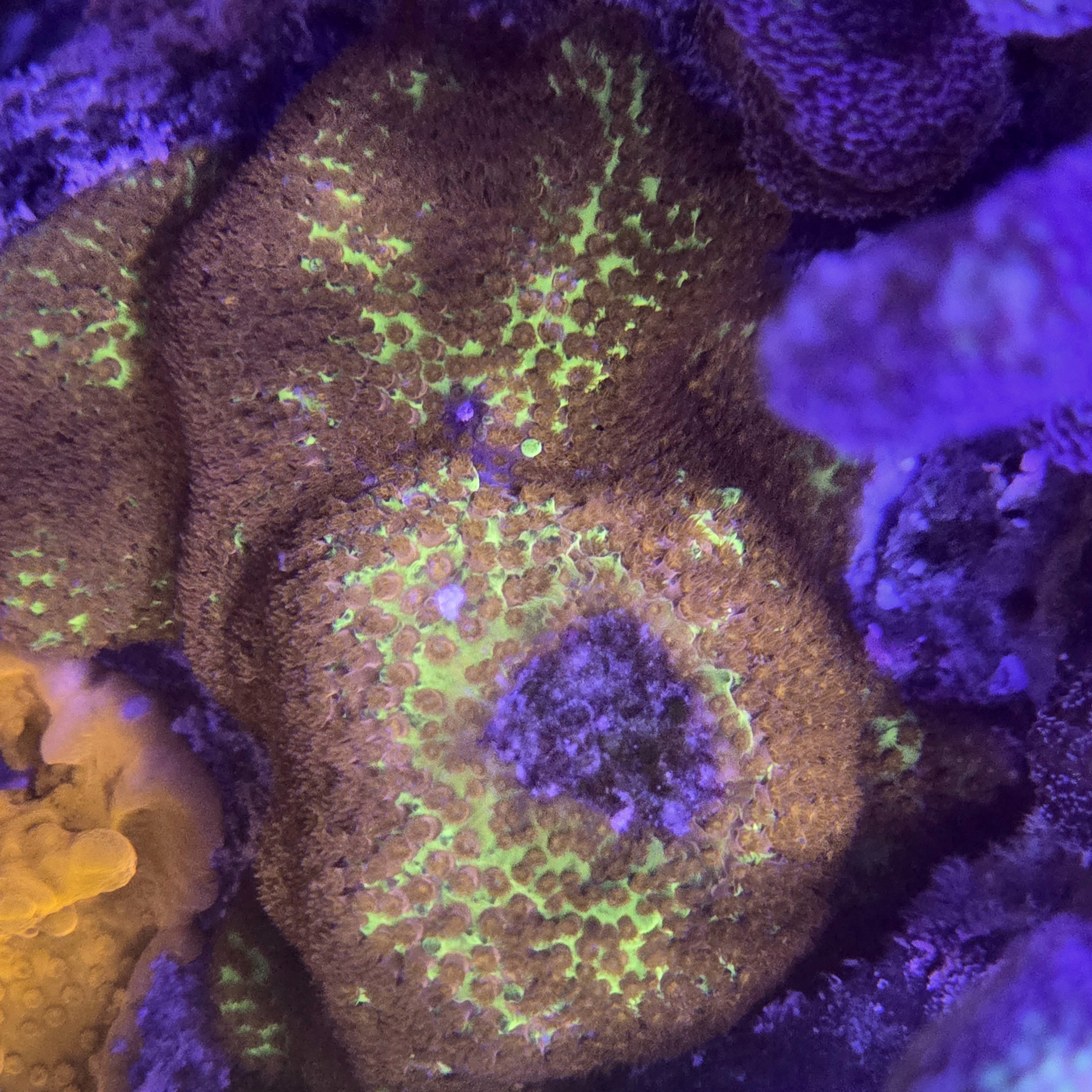
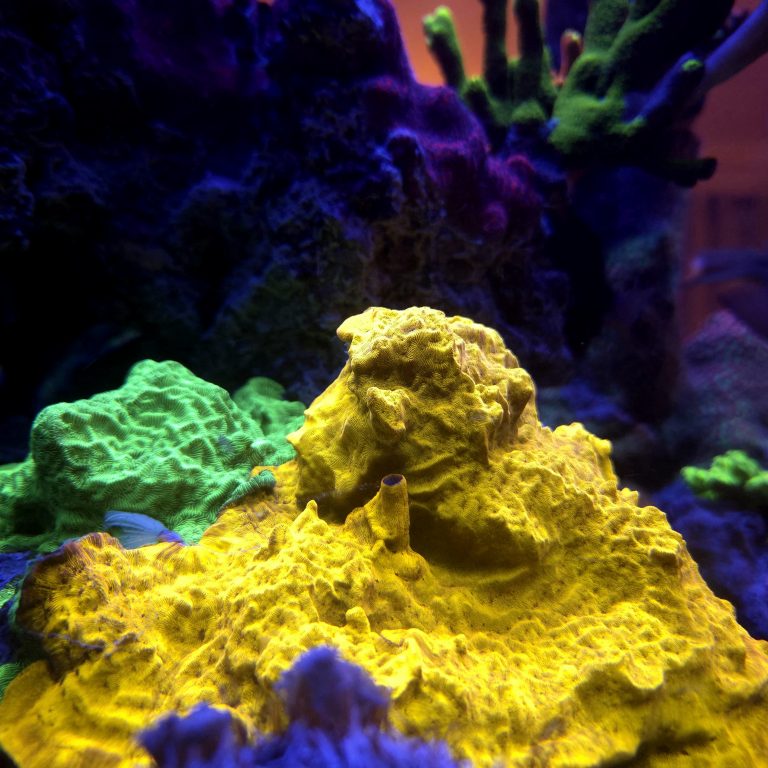
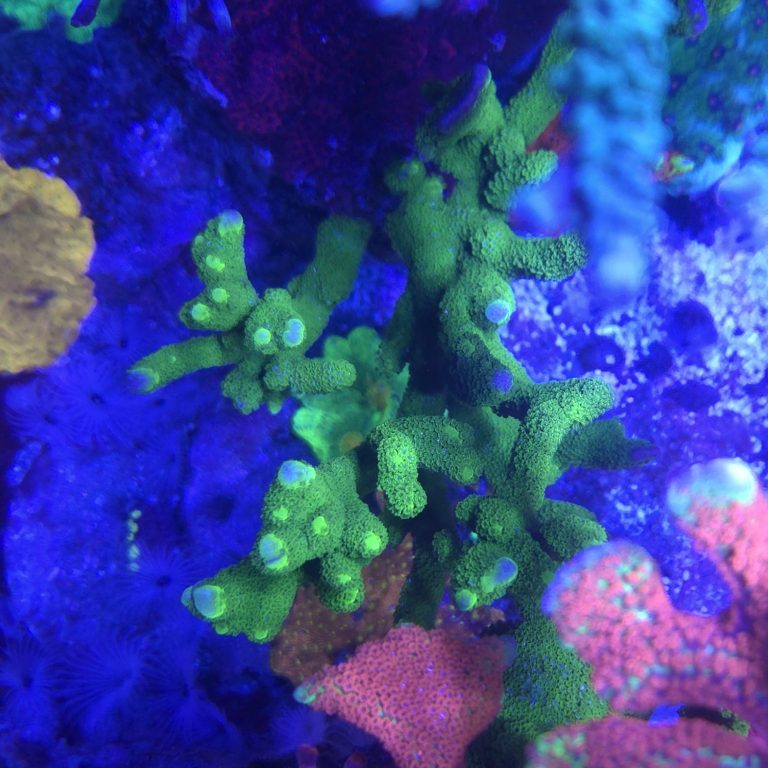
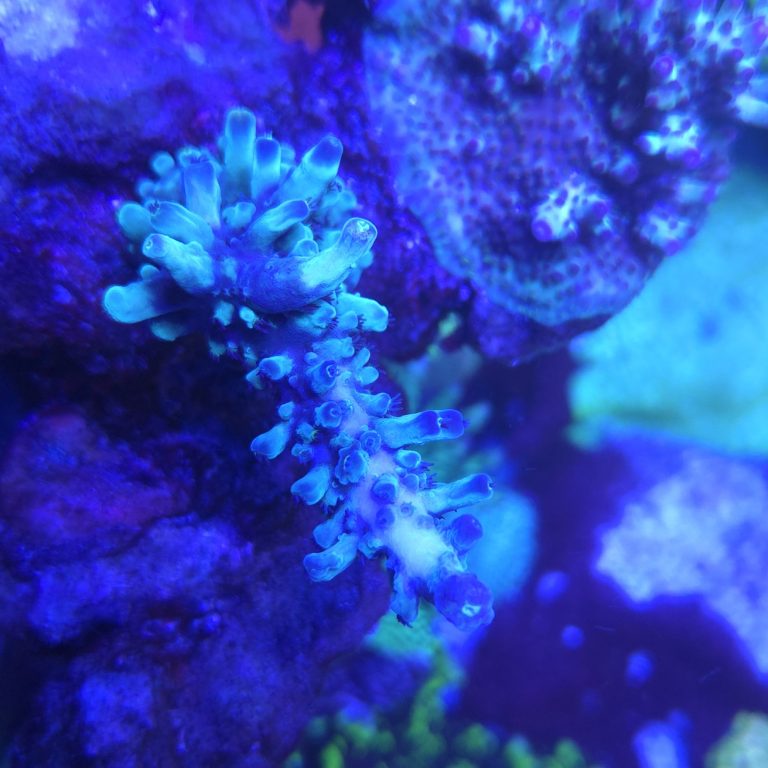
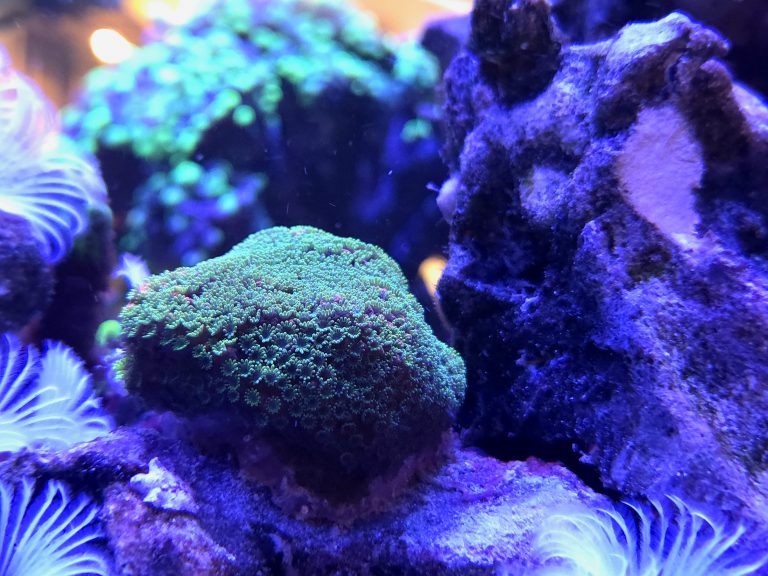
Burning Banana Stylocoeniella is a small-polyp encrusting coral with wild neon color. It shows bright yellow-green branches with deep red polyps. With the right care, it forms a glowing crust over rock and frag plugs.
Burning Banana Stylocoeniella Care and Placement
This coral prefers moderate to high light. Aim for 150–250 PAR for best color. Start lower, around 120 PAR, then increase slowly over two to three weeks. Sudden strong light can cause bleaching and tissue loss.
Flow should be moderate to strong and random. Use a wavemaker on a pulse or reef mode. You want the polyps to sway but not fold over. Avoid direct, laminar flow that blasts the tissue. Place the frag on stable rock where it can encrust outward.
Keep water parameters stable and clean. Target these ranges for long-term success:
- Temperature: 77–79°F (25–26°C)
- Salinity: 1.025–1.026 specific gravity
- Alkalinity: 8–9 dKH
- Calcium: 420–450 ppm
- Magnesium: 1300–1400 ppm
- Nitrate: 5–15 ppm, Phosphate: 0.03–0.08 ppm
Acclimate new frags slowly. Drip acclimate for 30–45 minutes. Match temperature and salinity closely. Use a coral dip to remove pests like flatworms or nudibranchs. Rinse in clean saltwater before placing in the display.
- Start the frag on a low rock ledge, then move higher if color fades.
- Glue the plug firmly so crabs and snails cannot knock it over.
- Leave 1–2 inches of space from aggressive LPS sweepers.
Feeding, Growth, and Troubleshooting
Burning Banana Stylocoeniella gains most energy from light and dissolved nutrients. Direct feeding is optional but helpful. Once or twice a week, broadcast feed fine coral foods. Turn off return pumps for 15–20 minutes so food stays in the display. Do not overfeed, or nutrients will spike.
This coral encrusts before building height. Growth may seem slow at first. Watch for a widening base and new polyps along the edge. Stable alkalinity and calcium are critical. Test at least twice weekly in younger tanks. Use a doser once consumption becomes steady.
- If color turns pale, reduce light by 20% and check nitrate and phosphate.
- If tissue recedes from the edges, test alkalinity for sudden swings.
- If polyps stay closed, inspect for pests and nearby stinging corals.
Common mistakes include placing the coral in too much light too quickly. Another issue is running nutrients too low. Ultra-clean water can cause the coral to starve. Aim for moderate nutrients instead of zero readings. In small tanks, perform 10–15% weekly water changes. This keeps trace elements balanced and helps maintain that intense Burning Banana glow.
Add to Wishlist