Bubble Coral
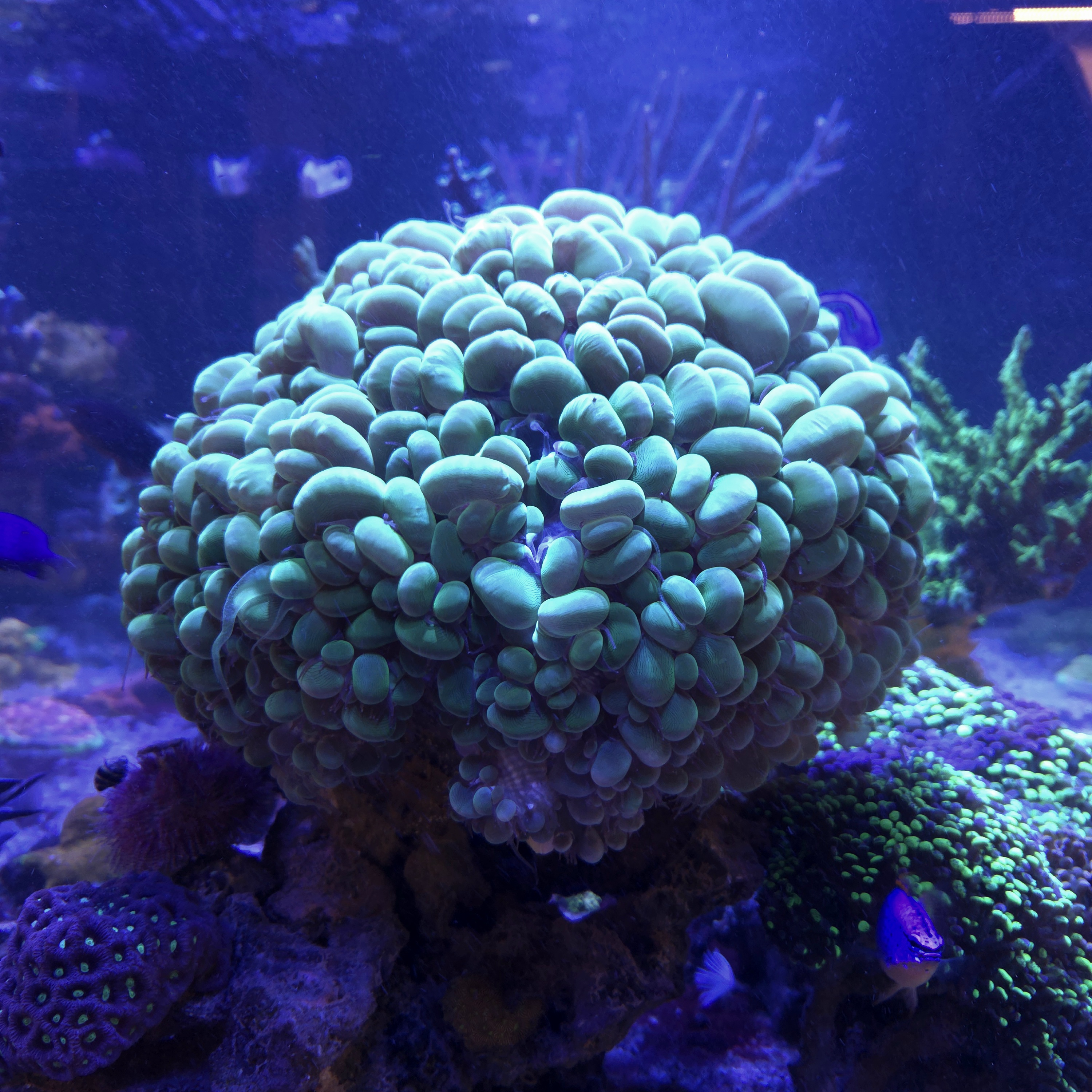
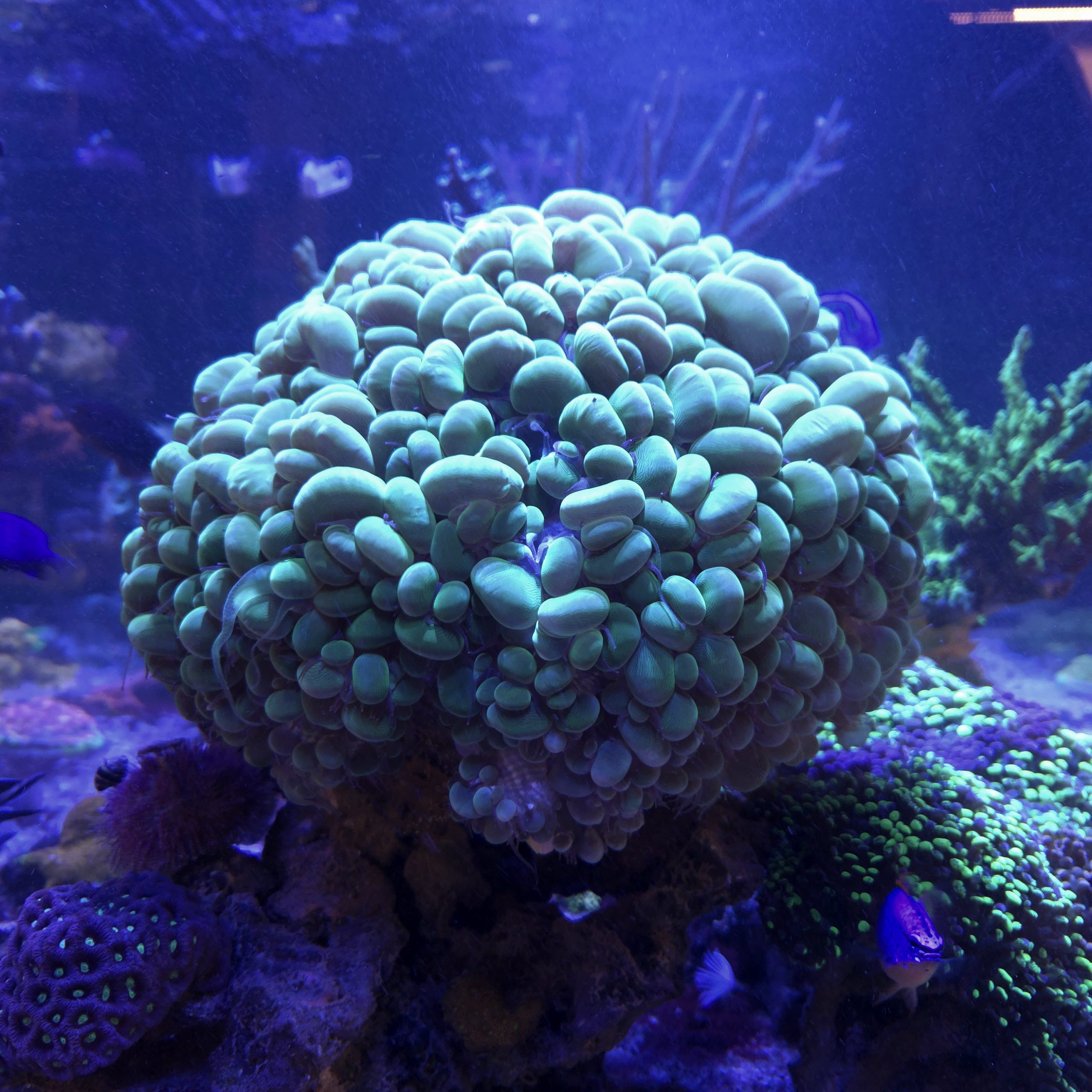
Bubble coral is a striking, inflatable LPS coral that can dominate a rock ledge. It looks soft and gentle, but its care needs respect. With the right placement and flow, bubble coral can thrive for many years.
Bubble Coral Basics and Care Requirements
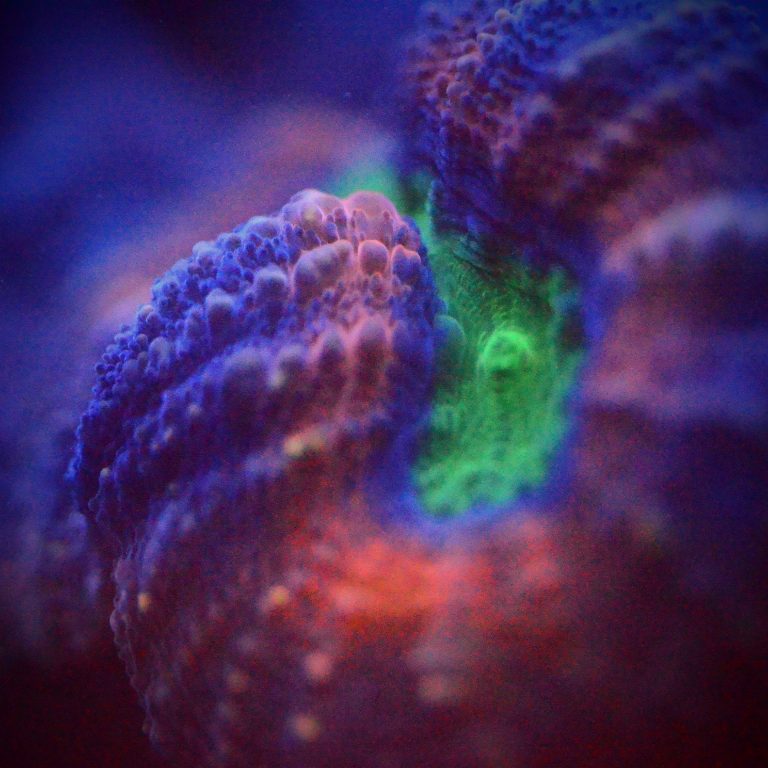
Bubble coral usually comes as Plerogyra sinuosa or Plerogyra simplex. Both have large, grape-like bubbles during the day. At night, the bubbles deflate and long feeding tentacles extend. These tentacles can sting nearby corals.
Give bubble coral plenty of personal space. Leave at least 6–8 inches between it and other corals. Its sweeper tentacles can easily burn zoas, acans, and SPS frags. Place it on a separate rock island if possible.
Target these water parameters for best results:
- Temperature: 24–26°C (75–79°F)
- Salinity: 1.025–1.026 specific gravity
- Alkalinity: 8–9.5 dKH, Calcium: 400–450 ppm, Magnesium: 1300–1400 ppm
Lighting should be moderate and indirect. PAR around 80–120 is usually ideal. Avoid placing bubble coral directly under high-intensity LEDs. Start it on the sand bed or lower rock and slowly move it up if needed.
Flow must be gentle and random. The bubbles should sway slowly, not whip around. Strong, direct flow can tear the tissue and expose skeleton. That damage often leads to brown jelly infections.
- Aim powerheads away from the coral, not at it.
- Use pulse or random flow modes instead of constant streams.
- Watch for deflated or ripped bubbles as a warning sign.
Feeding, Placement, and Troubleshooting
Bubble coral is photosynthetic but benefits from regular feeding. Target feed 2–3 times per week. Use small meaty foods like mysis shrimp, chopped krill, or reef roids paste. Turn off flow for 10–15 minutes while feeding so food stays on the tentacles.
Feed in the evening when tentacles extend. Gently place food on the bubbles or visible mouths. Avoid oversized chunks that sit and rot. Remove uneaten food after 20 minutes to keep nutrients low.
- Use a turkey baster or coral feeder for precise feeding.
- Rinse frozen foods to reduce phosphate.
- Keep nitrate between 5–15 ppm and phosphate 0.03–0.1 ppm.
Placement is critical for long-term success. Many hobbyists keep bubble coral on the sand in a low-flow corner. This protects the tissue from sharp rock edges. If placing on rock, make sure no skeleton touches bare glass or other rock points.
Watch for these common problems:
- Tissue recession: Often from too much flow or unstable alkalinity.
- Brown jelly disease: Cloudy brown slime on tissue; immediately siphon and frag healthy parts.
- Bleaching: Usually from sudden light increase; lower PAR and acclimate slowly.
When moving bubble coral, always support it from the skeleton. Never grab the inflated bubbles. If you must expose it to air, gently shake it underwater first to release trapped air. With stable parameters, careful placement, and gentle flow, bubble coral can become a showpiece in your reef.
Add to Wishlist