
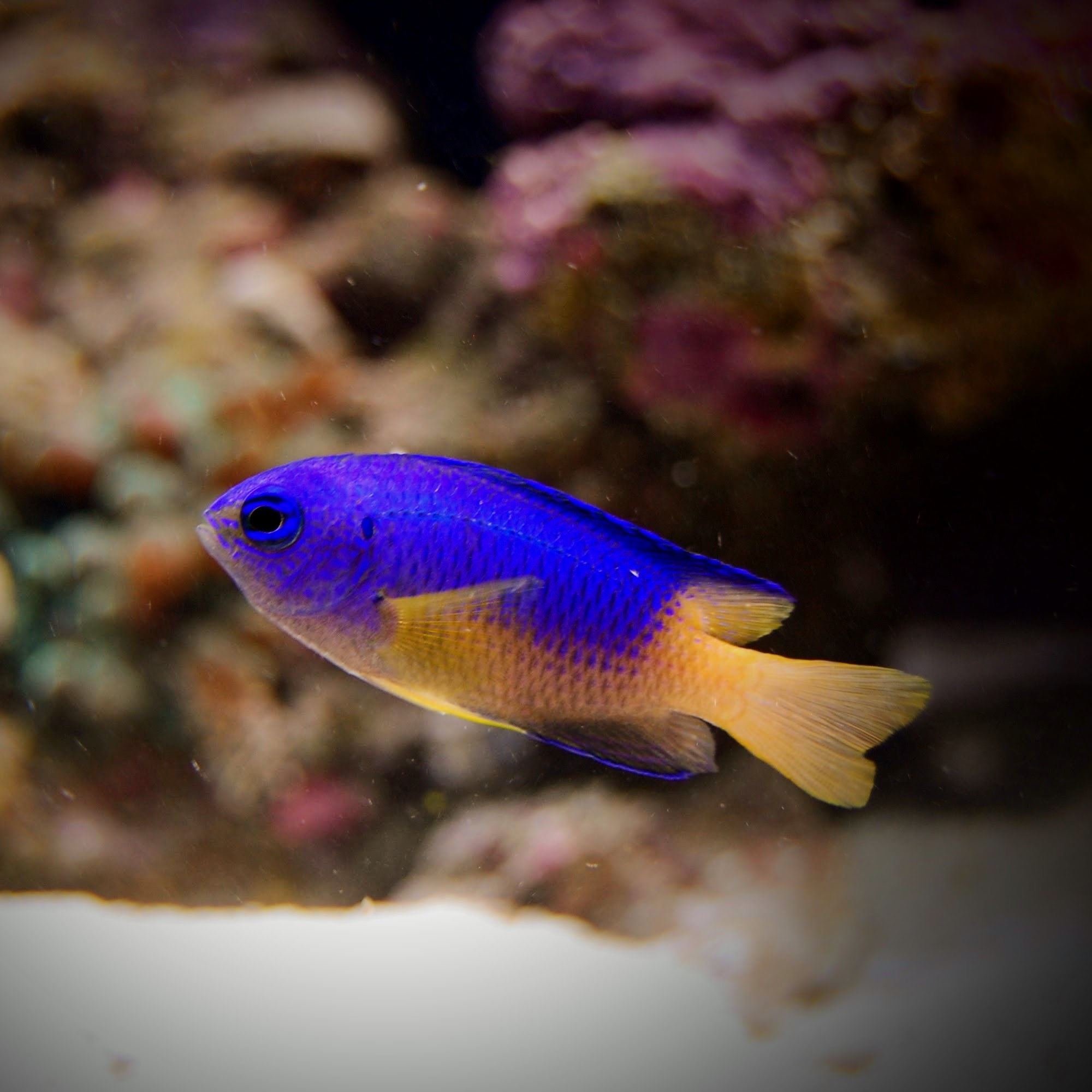
The Blue and Gold Damselfish (Pomacentrus coelestis) is a tiny spark of color that can transform a saltwater aquarium. With an electric blue body and bright yellow belly and tail, this hardy fish is popular among beginners and experienced reef keepers alike. Understanding its care, behavior, and compatibility will help you enjoy its beauty without unwanted aggression or stress in the tank.
Natural Behavior & Personality
Like many damselfish, the Blue and Gold Damselfish is bold, active, and highly visible. They spend much of their time darting in and out of rockwork, picking at tiny foods in the water column, and defending a chosen territory.
- Temperament: Semi-aggressive, especially toward smaller or similarly shaped fish.
- Activity level: Very active, often in the open water near rock structures.
- Best for: Community marine tanks where tank mates can handle a bit of attitude.
They can be kept singly or in small groups, but groups should only be attempted in larger aquariums with ample rockwork and hiding spots. In smaller spaces, one dominant individual may harass weaker fish relentlessly.
Pro tip: Add Blue and Gold Damselfish later in your stocking plan. Introducing them last helps reduce territorial bullying toward more peaceful species.
Tank Requirements & Care
The good news is that Pomacentrus coelestis is tough and adaptable, making it suitable for newer hobbyists who already understand basic marine water chemistry. They thrive in both fish-only and reef aquariums.
Tank Size & Aquascape
While they stay small (around 2.5–3 inches), they appreciate space to roam and defend territory.
- Minimum tank size: 20–30 gallons for a single specimen.
- Rockwork: Provide caves, ledges, and branching structures so fish can claim their own zones.
- Flow & lighting: Moderate flow and standard reef lighting are ideal.
If you enjoy planning rock structures, you may also like our guide to aquascaping with live rock for stability and flow, which pairs perfectly with active species like damselfish.
Water Parameters
- Temperature: 24–27°C (75–81°F)
- Salinity: 1.023–1.026 specific gravity
- pH: 8.0–8.4
- Ammonia/Nitrite: 0 ppm; Nitrate: <20 ppm
Stable parameters are far more important than chasing exact numbers. Regular water changes and a reliable protein skimmer will keep this species comfortable and healthy.
Diet, Compatibility & Stocking Tips
The Blue and Gold Damselfish is an eager feeder and rarely picky once settled.
Feeding
- High-quality marine pellets or flakes as a staple.
- Supplement with frozen foods such as mysis shrimp and finely chopped seafood.
- Offer small meals 1–2 times daily to reduce aggression caused by hunger.
They adapt well to reef systems and are generally safe with corals and other invertebrates. For ideas on pairing them with colorful corals, see our article on beginner-friendly soft corals for new reef tanks.
Tank Mates & Aggression Management
Choose tank mates that are either:
- Slightly larger and confident (e.g., many wrasses, dwarf angelfish).
- Peaceful but fast enough to avoid conflict.
Avoid housing them with very timid nano fish that may be bullied. In community setups, plan your stocking order and territories carefully. Our saltwater fish stocking order guide offers a step-by-step approach to minimize aggression in new tanks.
With thoughtful planning, the Blue and Gold Damselfish can be a long-lived, brilliant highlight in your aquarium. Its hardy nature, intense coloration, and constant activity make it a rewarding addition—as long as you respect its territorial streak and provide the space and structure it needs. When kept with compatible tank mates and stable water conditions, Pomacentrus coelestis delivers years of color and motion in even modest-sized marine systems.