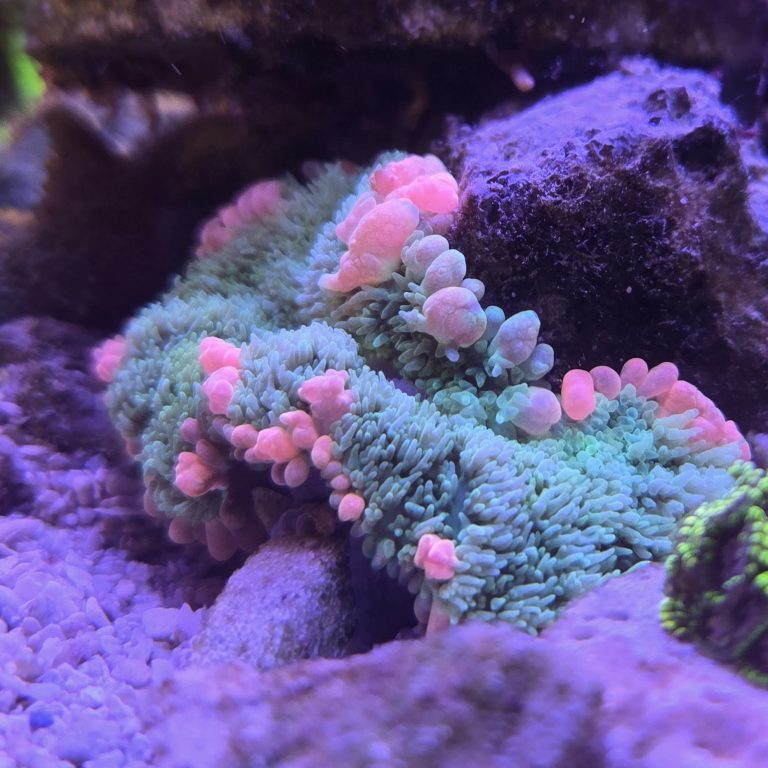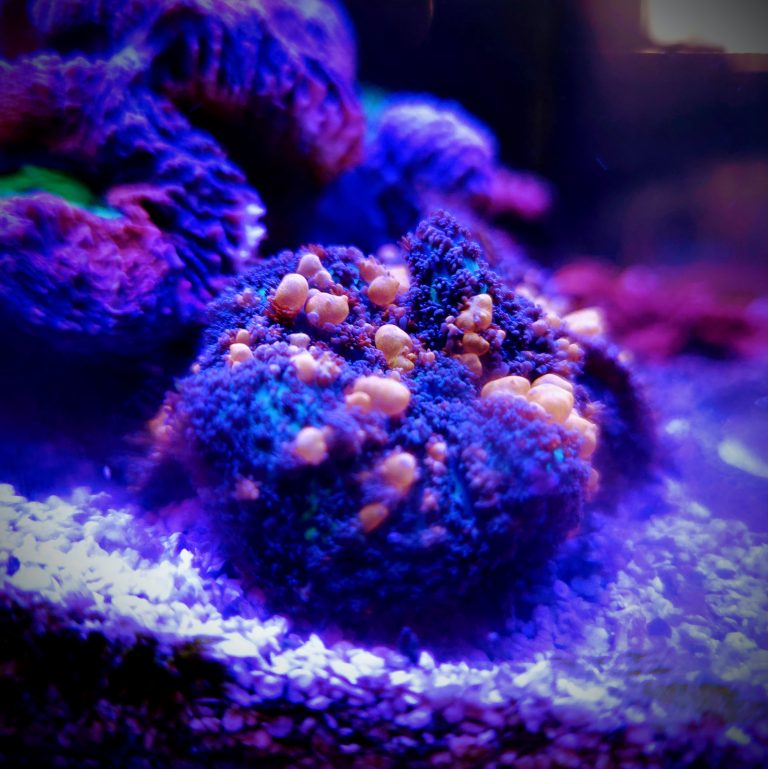
Agave Zoanthids
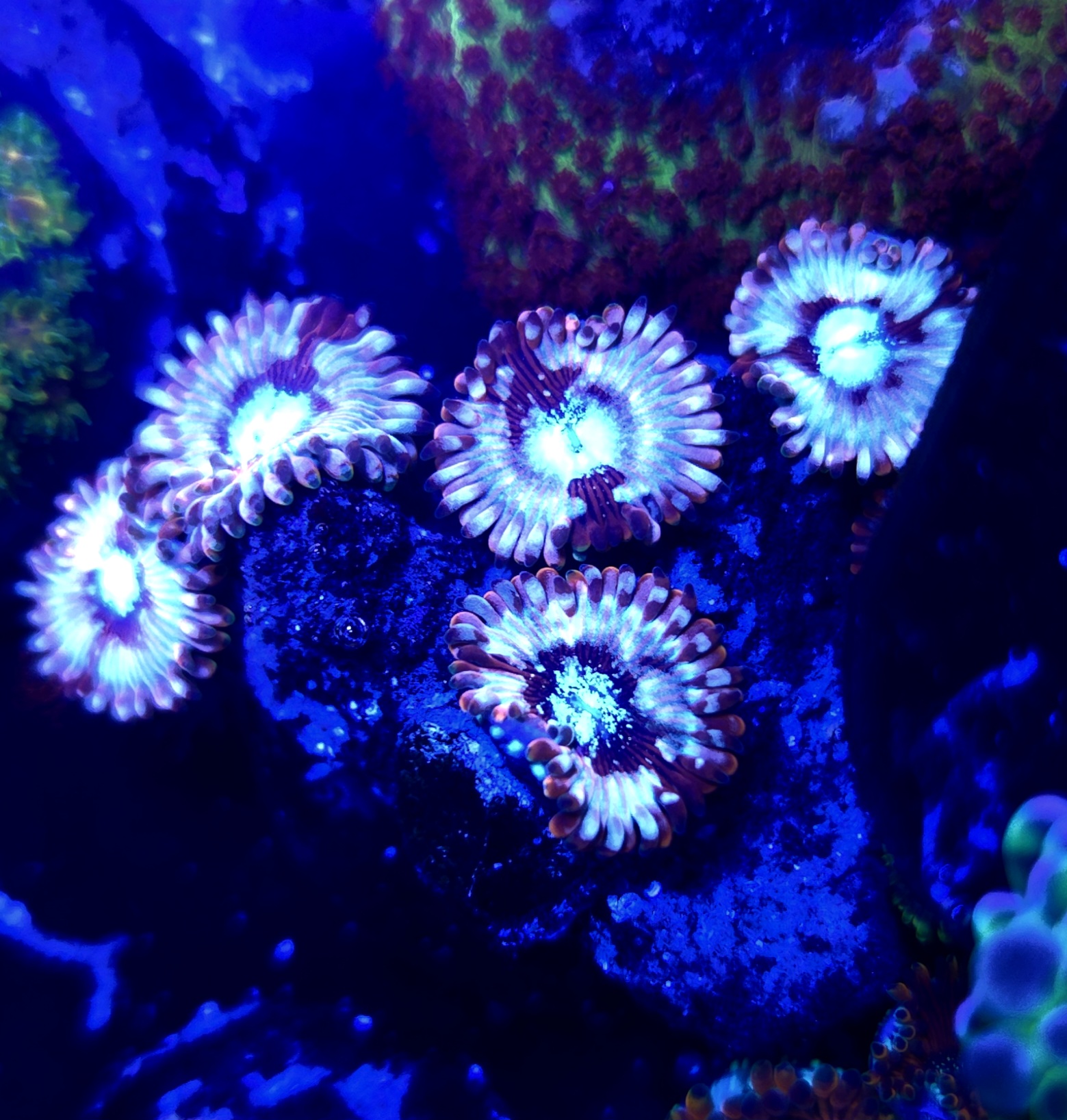
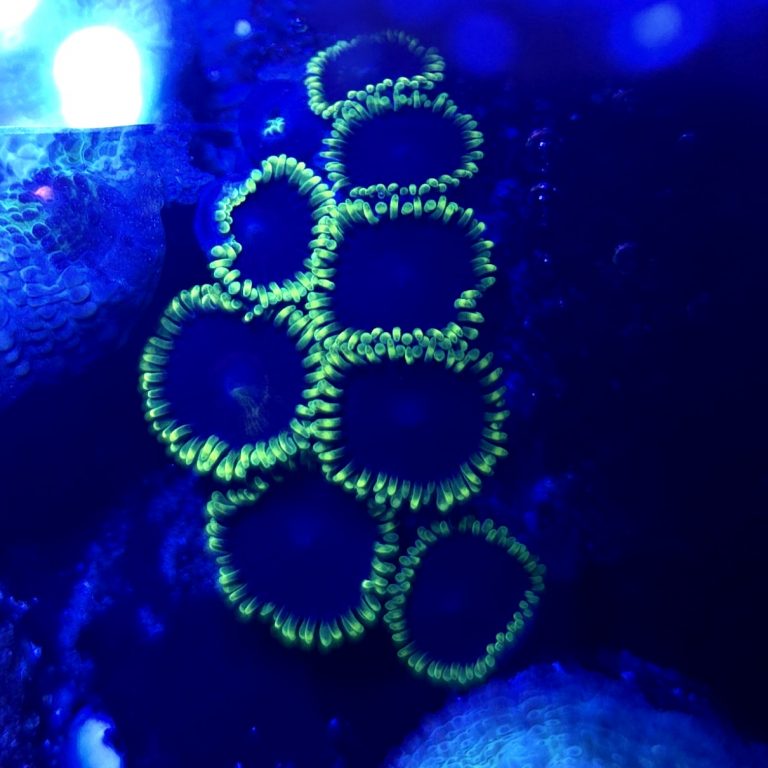
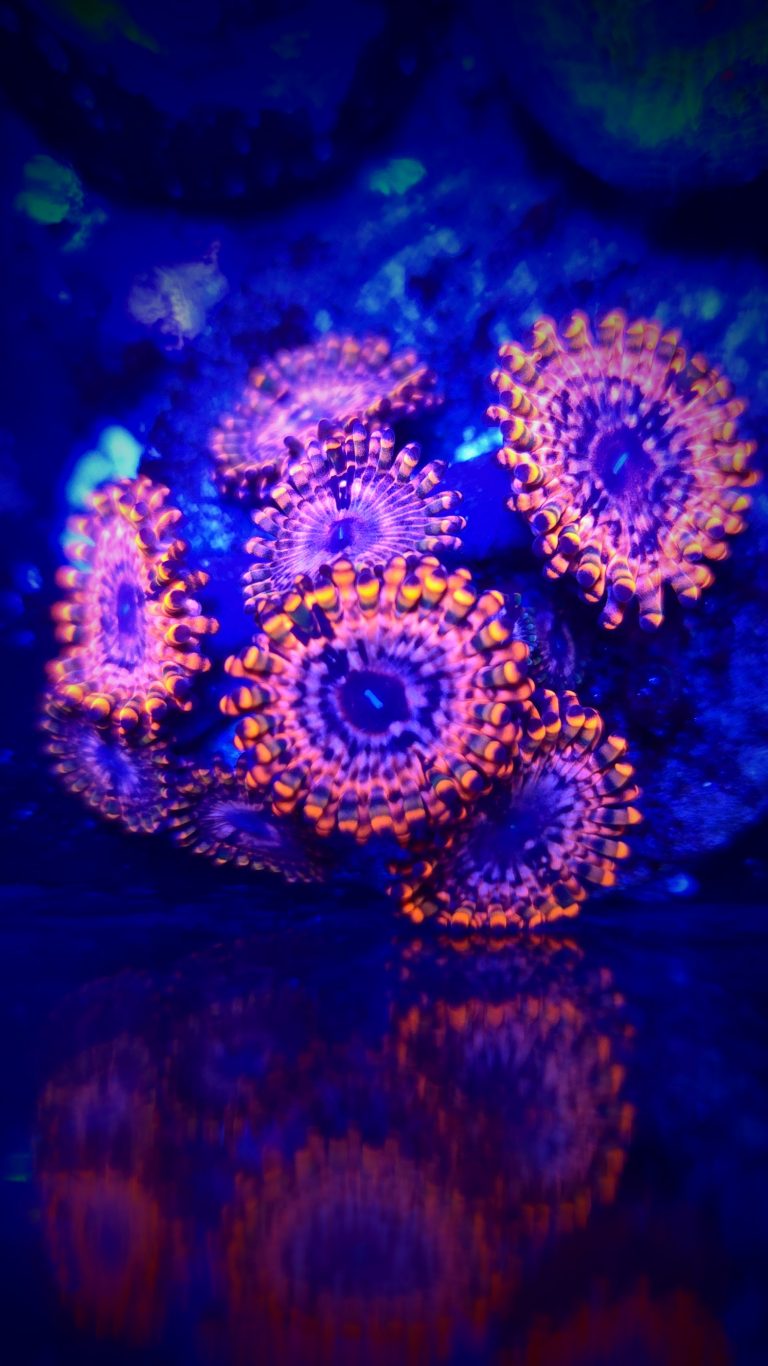
Agave Zoanthids are bold, eye-catching polyps that stand out in any reef. Their bright green centers and dark skirts create a strong contrast. They are also hardy, which makes them a great choice for many hobbyists.
Agave Zoanthids Care: Light, Flow, and Placement
Agave Zoas prefer moderate light. Aim for PAR between 80 and 150 at the frag. Too much light can cause the colors to wash out. Too little light can lead to stretching and smaller polyps.
Place new frags low on the rockwork at first. Let them adjust for 1 to 2 weeks. If colors look dull, slowly move them higher. Make changes in small steps every 5 to 7 days. Watch the polyps closely after each move.
Provide moderate, indirect flow. The skirts should sway gently but not fold over. Strong, direct flow can cause the polyps to close. It can also make them detach from the plug. Low flow can allow detritus to settle and irritate the colony.
Stable water parameters are crucial. Keep temperature between 76–78°F. Salinity should stay at 1.025–1.026 specific gravity. Maintain alkalinity at 8–9 dKH, calcium at 420–450 ppm, and magnesium around 1300–1400 ppm. Test weekly and avoid sudden swings.
- Target PAR: 80–150 for best color and growth
- Temperature: 76–78°F with minimal daily swings
- Salinity: 1.025–1.026 specific gravity, checked with a calibrated refractometer
Feeding, Growth, and Troubleshooting Agave Zoas
Agave Zoanthids obtain energy from light, but feeding helps growth. Offer small particle foods 1–2 times per week. Use reef roids, fine powdered coral food, or smashed mysis. Turn off flow, gently target feed, then restore flow after 10–15 minutes.
Healthy Agave Zoas will slowly spread and form a mat. Expect new heads every few weeks in a stable tank. To frag them, use a sharp scalpel and cut through the mat, not the polyp. Always wear gloves and eye protection. Zoanthids can contain palytoxin, which is dangerous if mishandled.
- Feed lightly to avoid nutrient spikes and algae blooms
- Run carbon if you keep many zoas and palys together
- Use protective gear when cutting or scrubbing zoas
Watch for common problems. Closed polyps for more than two days signal stress. Check for pests like nudibranchs, sundial snails, and zoa-eating spiders. Dip new frags in a coral dip for 5–10 minutes before adding them. Rinse in clean saltwater after dipping.
If polyps stretch upward, increase light slightly. If they shrink and fade, reduce light intensity. Perform 10–15% water changes weekly to keep nutrients balanced. Keep nitrates between 5–15 ppm and phosphates around 0.03–0.08 ppm. These levels support color without fueling heavy algae growth.
- Quarantine new zoa frags for 2–4 weeks when possible
- Inspect at night with a flashlight for hidden pests
- Remove nuisance algae near the colony with a soft brush