
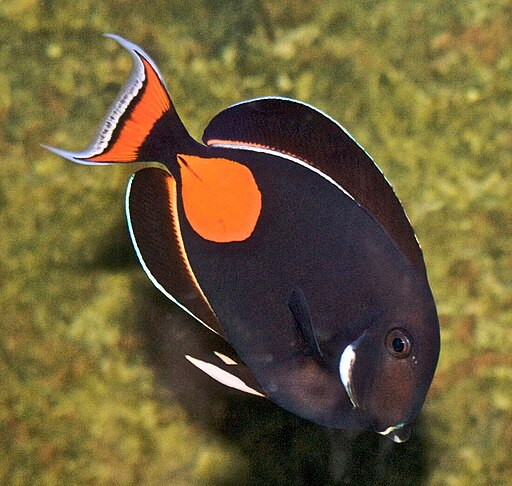
The Achilles Tang (Acanthurus achilles) is one of the most striking and challenging surgeonfish in the saltwater hobby. With its jet-black body, vivid orange teardrop at the tail, and electric blue highlights, this fish is a true showpiece. However, its beauty comes with specific care requirements that only prepared reef keepers should attempt.
Achilles Tang Care Requirements
The Achilles Tang is highly active and demands pristine water quality. It is best suited for experienced aquarists who already maintain stable, mature reef systems.
Tank Size & Environment
Because Achilles Tangs are powerful, constant swimmers, they need ample horizontal space and strong, variable water flow.
- Minimum tank size: 180 gallons (680 L) or larger
- Aquascape: Open swimming lanes with rockwork islands and caves
- Flow: High, turbulent flow to mimic surge zones on the reef crest
- Lighting: Moderate to high, especially in reef systems with SPS corals
Stable parameters are essential. Keep temperature around 76–79°F (24–26°C), salinity at 1.025–1.026, and maintain low nutrients without stripping the water completely of available food sources.
Pro tip: Introduce an Achilles Tang only into a mature tank with established rock, microfauna, and algae growth. Newly set up systems are much riskier for this species.
Diet & Feeding
In the wild, Achilles Tangs graze constantly on filamentous algae in high-energy surf zones. Replicating this behavior in captivity is key to long-term success.
- Offer nori (dried seaweed) on a clip daily
- Rotate quality marine algae pellets and herbivore flakes
- Supplement with frozen foods like mysis and enriched brine for variety
- Soak foods in vitamins and garlic to support immune health
Frequent, smaller feedings (3–4 times per day) help mimic natural grazing and reduce stress. For more ideas on building a balanced feeding routine, check out our guide on reef fish nutrition.
Temperament, Tankmates & Disease Concerns
Behavior & Compatibility
Achilles Tangs can be territorial, especially toward other surgeonfish with a similar body shape or coloration. Plan your stocking order and tankmates carefully:
- Add the Achilles Tang later in the stocking order to reduce aggression
- Avoid keeping it with similar Acanthurus species in smaller systems
- Pair with peaceful community fish, wrasses, and reef-safe species
- Provide multiple hiding spots to break line of sight and diffuse tension
If you’re still planning your system, our overview of best tangs for reef tanks can help you decide whether the Achilles is right for your setup.
Health, Acclimation & Quarantine
The Achilles Tang is notorious for being prone to marine ich and other external parasites. Stress from shipping, poor acclimation, or unstable water parameters can quickly lead to disease outbreaks.
- Always quarantine new specimens and observe closely for several weeks
- Use drip acclimation to minimize osmotic shock
- Provide high oxygenation and strong flow from day one
- Keep a UV sterilizer on the display system to reduce parasite load
Because Achilles Tangs are sensitive, they’re often a better choice for hobbyists who already have experience keeping other demanding species. If you’re newer to surgeonfish, you may want to start with hardier options discussed in our beginner reef fish guide.
Is the Achilles Tang Right for Your Reef?
The Achilles Tang can be the centerpiece of a large, high-energy reef aquarium, but it demands commitment. A spacious tank, aggressive flow, stable parameters, and a strict feeding and quarantine routine are non-negotiable. For prepared aquarists, this species rewards the effort with constant motion, vivid coloration, and a truly iconic presence in the display.
If you’re willing to meet its needs and plan your system around it, the Achilles Tang can transform a mature reef into a dynamic, living slice of the surf zone.