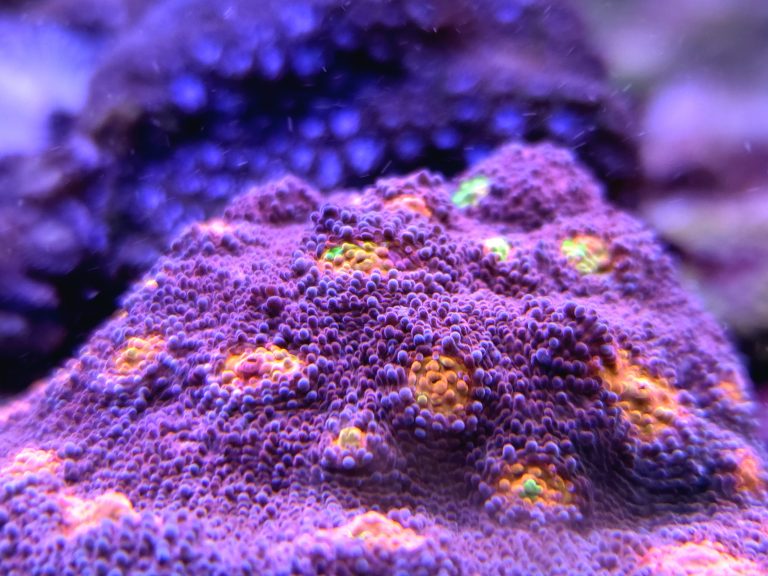
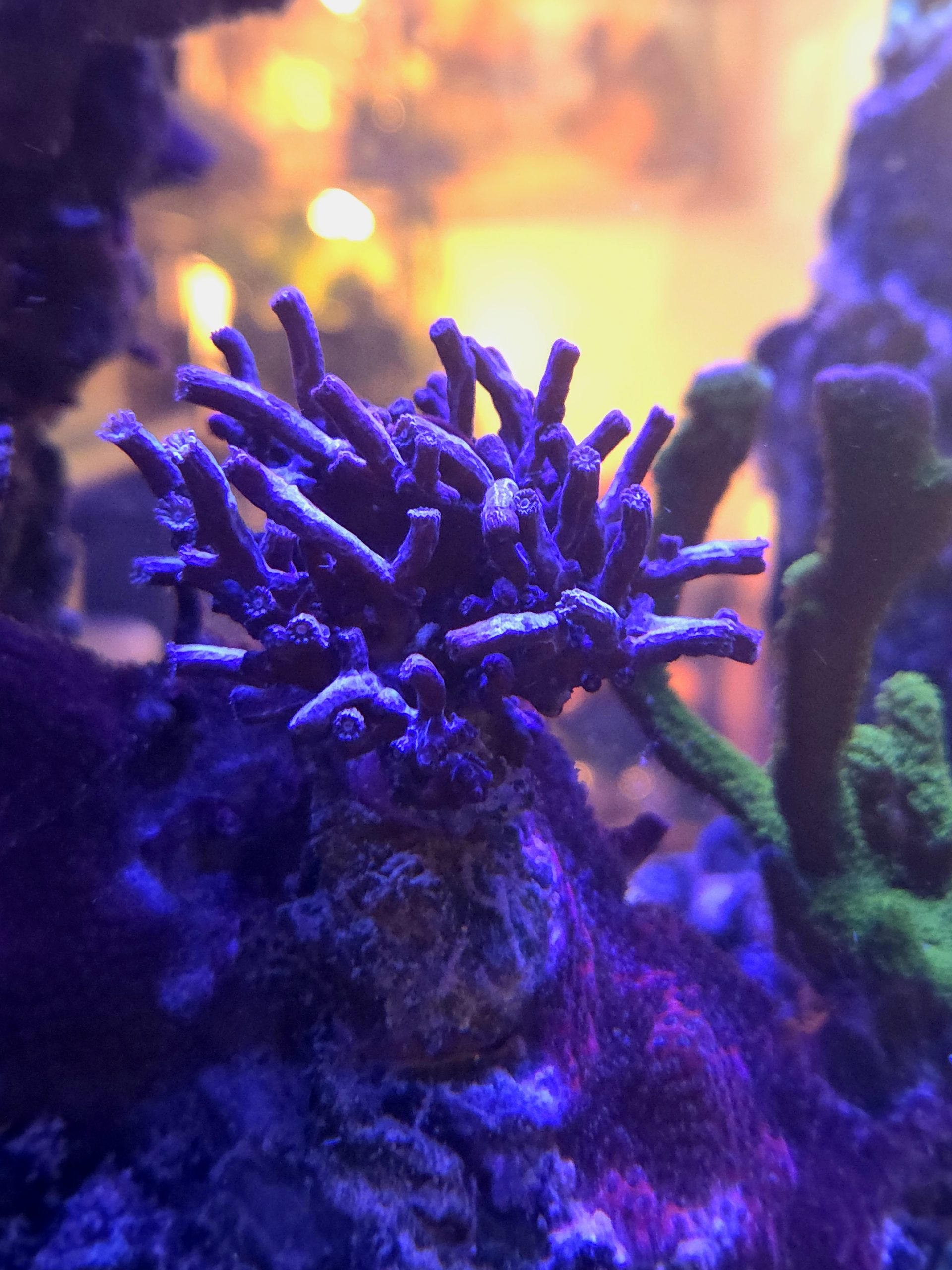
Achilles Branching Cyphastrea
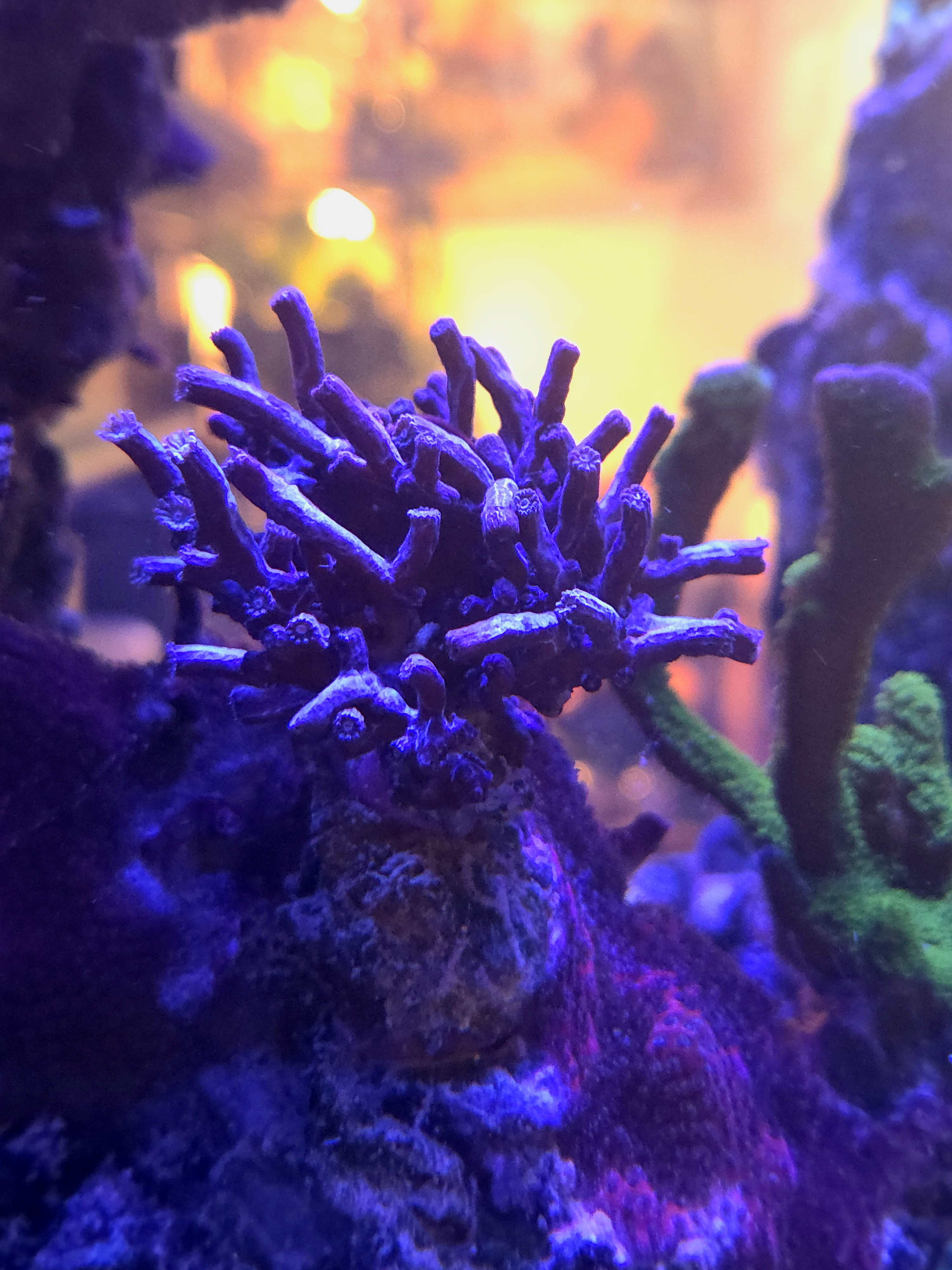
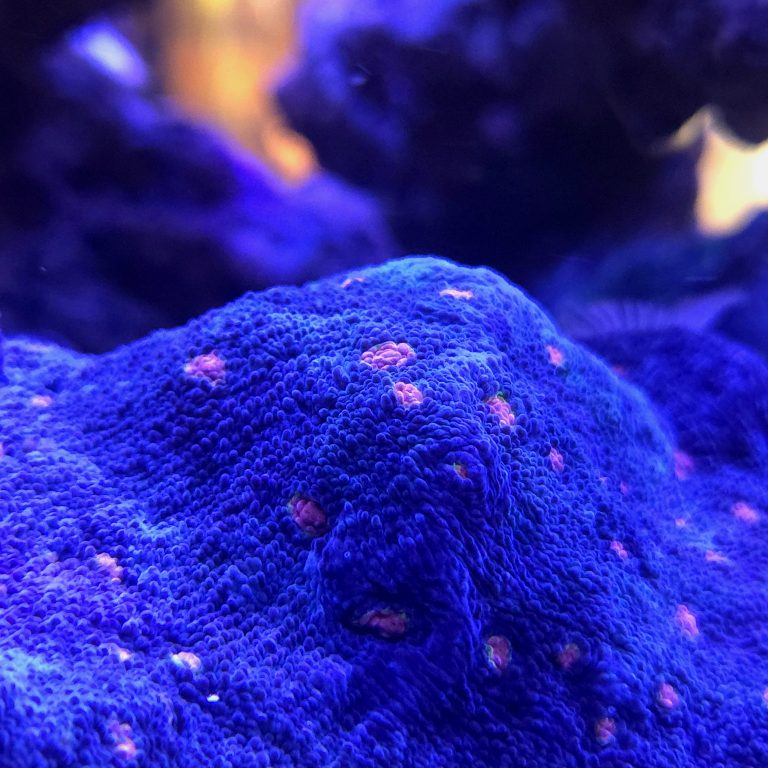
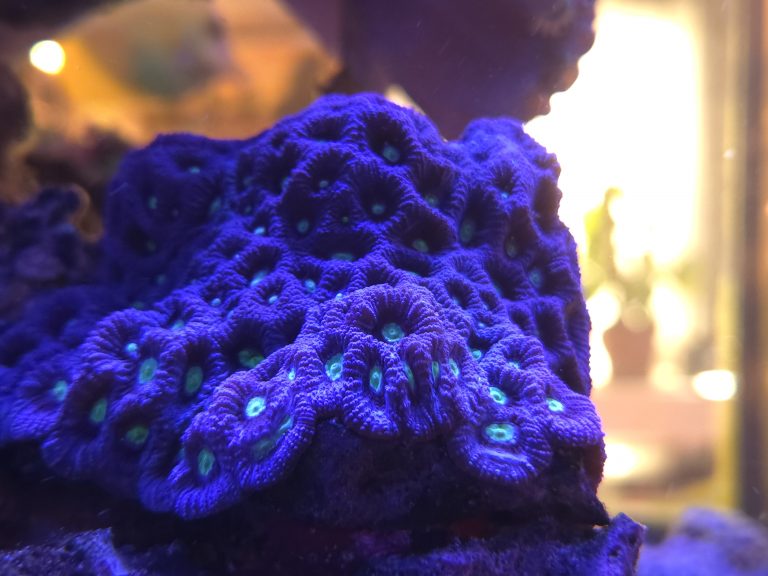
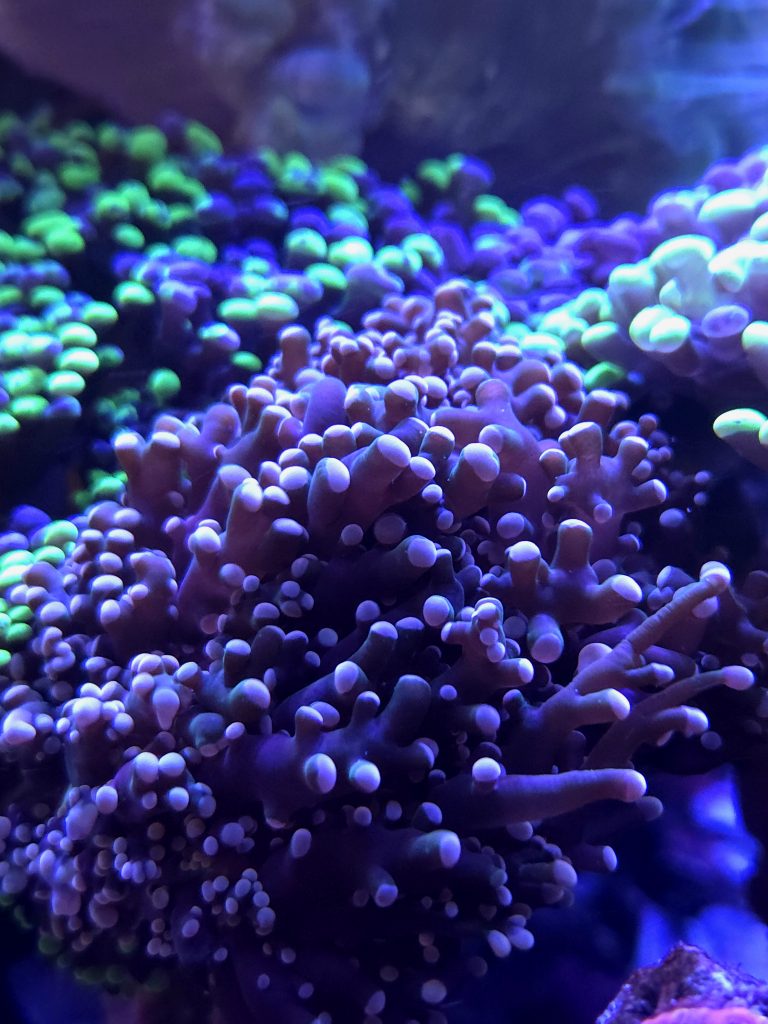
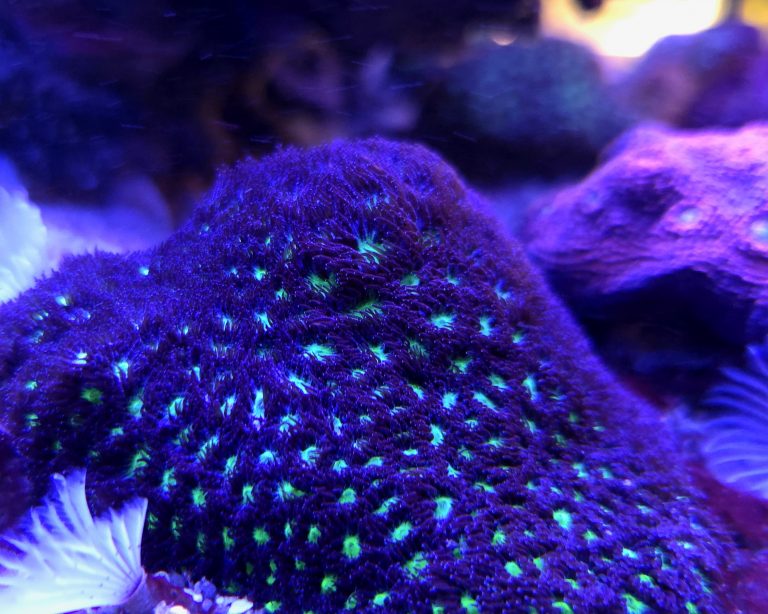
Achilles Branching Cyphastrea is a hardy, encrusting SPS coral with a unique branching growth form. It shows bright contrasting polyps that glow under blue light. This makes it a great choice for mixed reef tanks.
Achilles Branching Cyphastrea Care and Placement
This coral prefers low to moderate light. Aim for 50–120 PAR at the colony. Too much light can cause tissue recession and color loss. Start it in a shaded area and slowly move it brighter if needed.
Flow should be moderate and indirect. Strong, direct flow can strip tissue from the branches. Gentle, random movement keeps detritus off the base and polyps. Use alternating flow patterns from wavemakers for best results.
Stable water chemistry is critical. Target these parameters:
- Temperature: 24–26°C (75–79°F)
- Salinity: 1.025–1.026 specific gravity
- Alkalinity: 8–9.5 dKH
- Calcium: 420–450 ppm
- Magnesium: 1300–1400 ppm
- Nitrate: 5–15 ppm; Phosphate: 0.03–0.08 ppm
Place Achilles Branching Cyphastrea on stable rockwork. Epoxy or super glue gel works well for mounting. Give it at least 3–5 cm of space from aggressive neighbors. It grows as an encrusting base with short branches, so plan for horizontal spread.
Use these quick placement tips:
- Start on the lower half of the aquascape.
- Avoid direct light from powerful LEDs at first.
- Keep away from torches, hammers, and sweeper tentacles.
Feeding, Growth, and Troubleshooting
Achilles Branching Cyphastrea contains zooxanthellae and gains energy from light. It also benefits from targeted feeding. Offer fine particle foods 1–2 times per week. Use reef roids, powdered plankton, or 0.5 mm coral pellets.
Turn off return and wavemakers during feeding. Gently baste food over the colony with a pipette. Leave pumps off for 10–15 minutes so polyps can grab particles. Do not overfeed, as excess food can raise nutrients quickly.
Healthy colonies show full polyp extension and strong color. You should see new growth edges at the base and branch tips. Under blue lighting, polyps should fluoresce clearly. Growth can be slow at first, then speed up once established.
Watch for these common problems:
- Pale tissue: often from too much light or low nitrate. Reduce PAR and feed a bit more.
- Receding base: usually from unstable alkalinity. Test dKH every 2–3 days until stable.
- Brown, dull color: often from very high nutrients. Increase export and reduce feeding.
Fragging Achilles Branching Cyphastrea is simple. Use bone cutters to clip small branches with some base. Glue frags to ceramic plugs or rubble. Allow at least 2–3 weeks for recovery before moving them higher in the tank. With stable parameters and patient placement, this coral becomes a colorful, forgiving showpiece for any reef.
Add to Wishlist