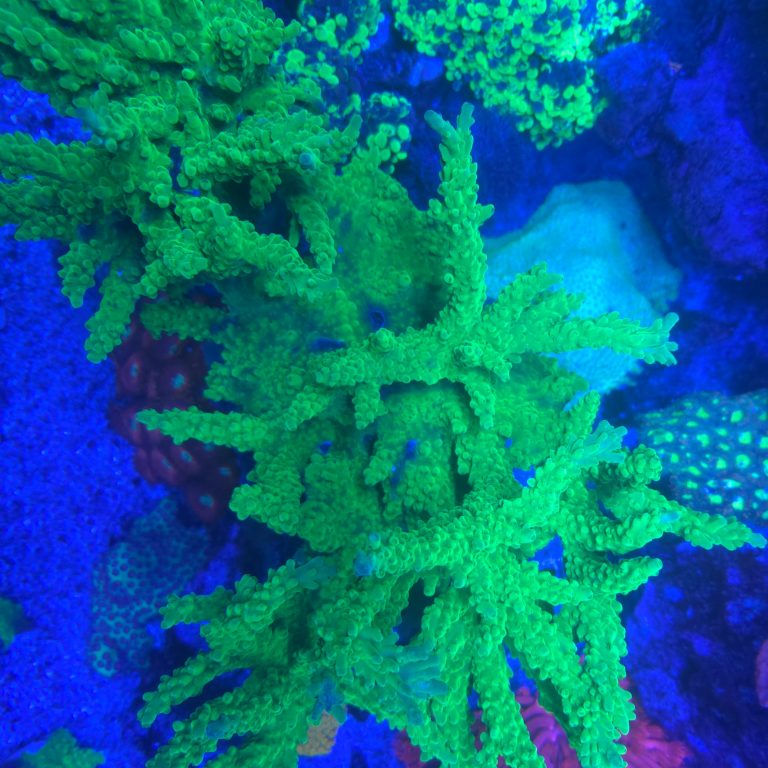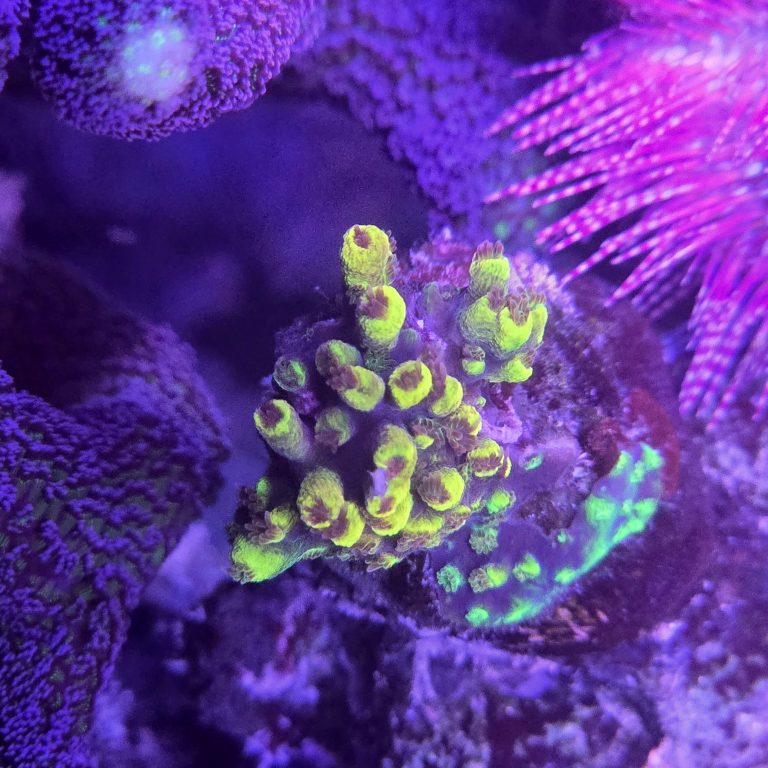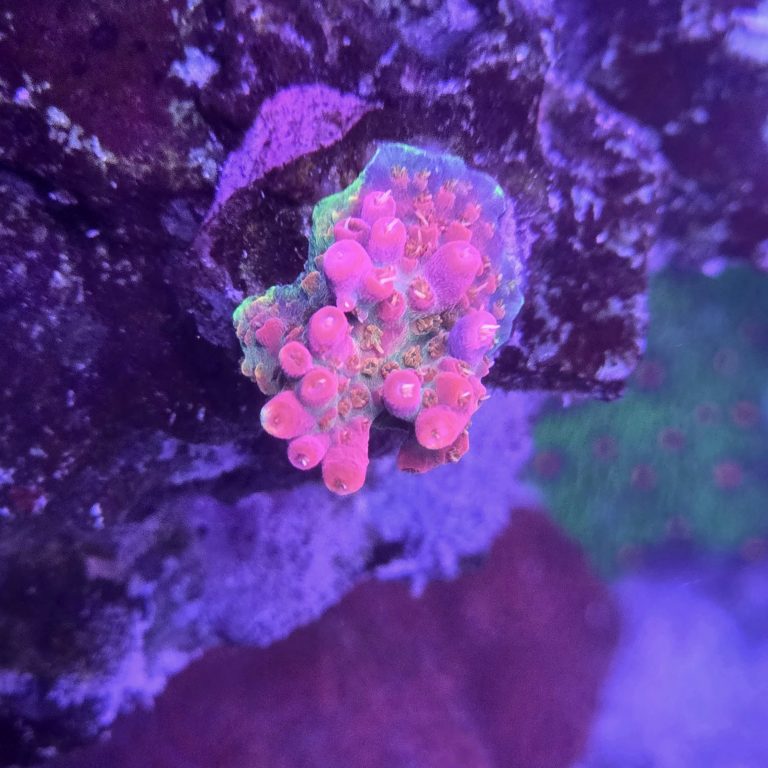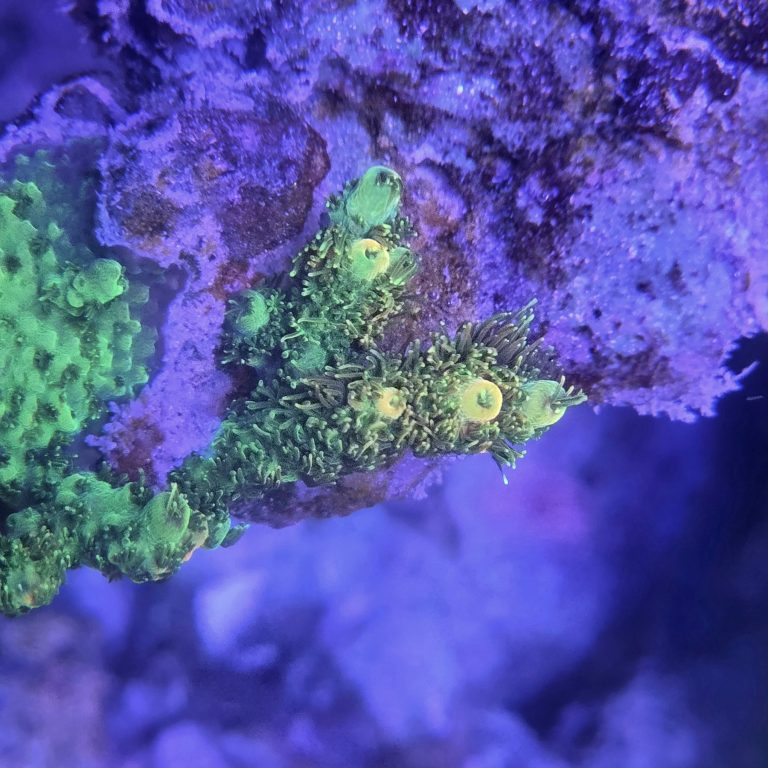
ARC Fireworks Acropora
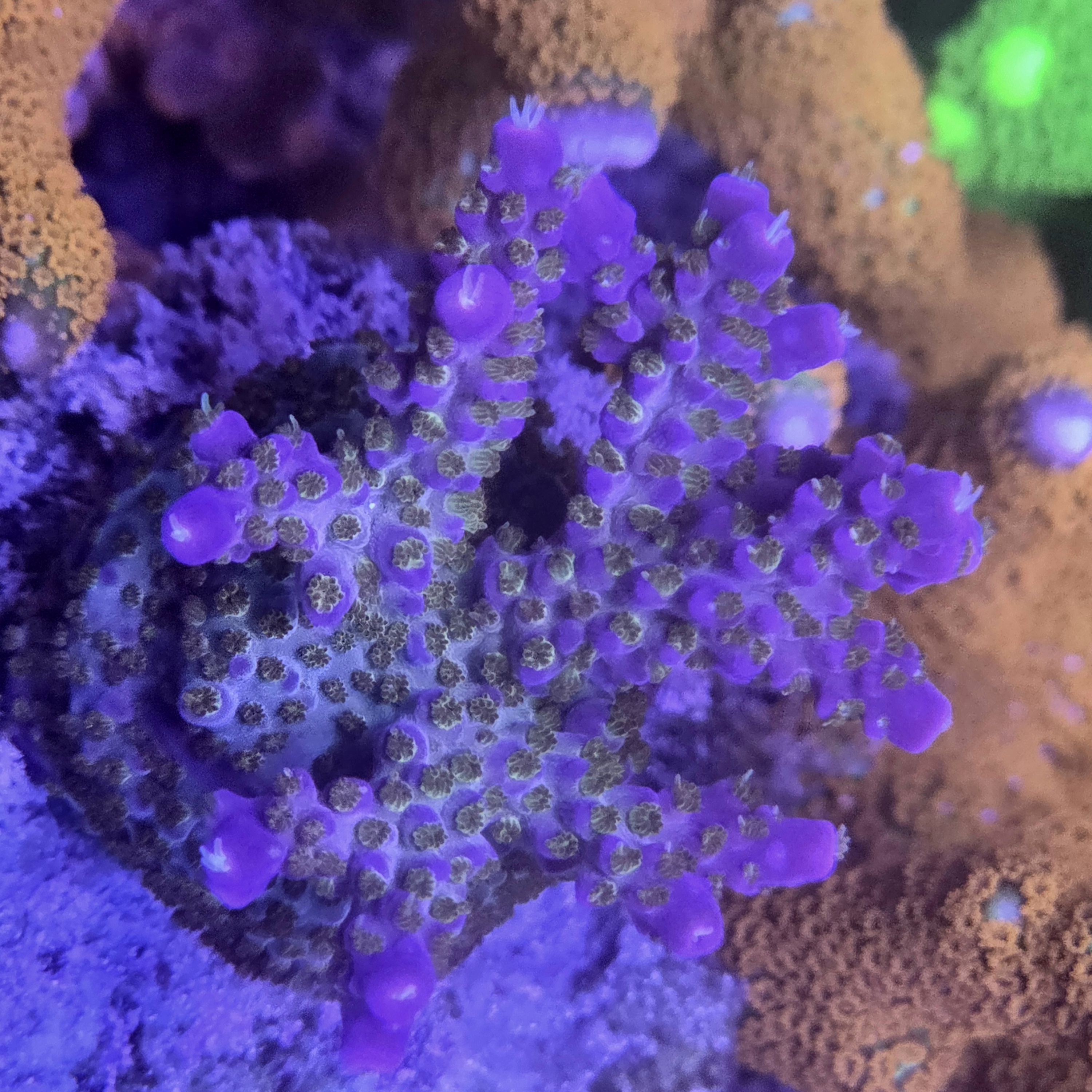
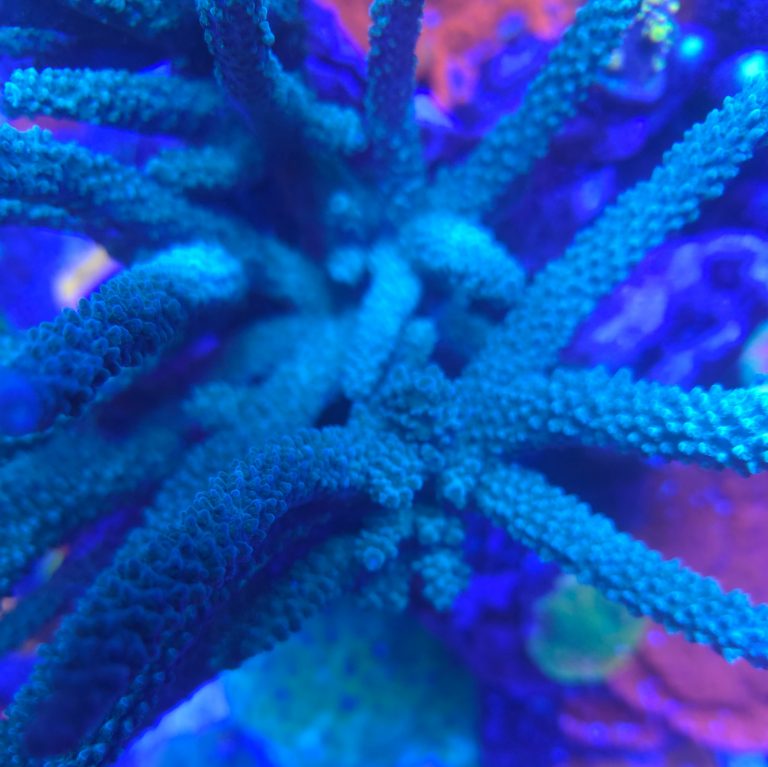
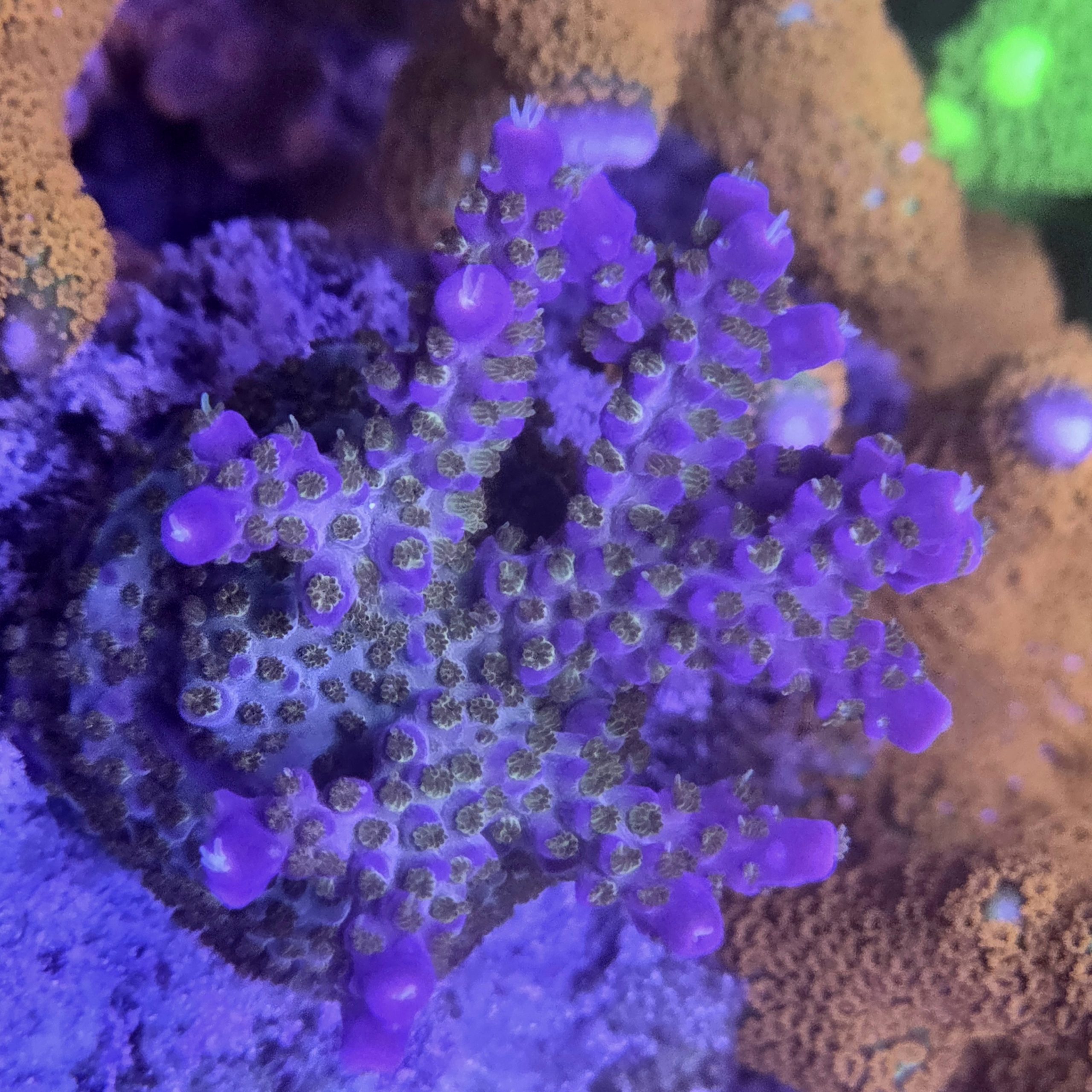
ARC Fireworks Acropora is a standout SPS coral for modern reef tanks. Its glowing tips and branching structure can become a true centerpiece. With the right care, it grows fast and colors up beautifully.
ARC Fireworks Acropora Care and Requirements
This Acropora prefers strong, stable conditions. Rapid swings in parameters will cause stress and tissue loss. Aim for a mature system that has been running at least 8–12 months. Avoid adding it to a brand-new tank.
Target the following parameters for best color and growth:
- Temperature: 77–79°F (25–26°C)
- Salinity: 1.025–1.026 specific gravity
- Alkalinity: 8–9 dKH, stable within 0.2 dKH daily
- Calcium: 420–450 ppm
- Magnesium: 1300–1400 ppm
- Nitrate: 5–15 ppm; Phosphate: 0.03–0.08 ppm
ARC Fireworks loves strong light. Place it in the upper third of the tank. PAR between 250 and 350 works well under LED, T5, or hybrid lighting. Always acclimate to higher light. Start lower and raise the frag over 2–3 weeks.
Provide moderate to strong, random flow. Use at least two wavemakers to avoid dead spots. The coral should sway gently, not whip violently. Direct, constant flow can strip tissue from the tips. Aim the pumps to cross in front of the colony instead.
For placement, glue the frag on a stable rock with room to branch. Keep at least 2–3 inches from other SPS. ARC Fireworks can shade neighbors as it grows. Plan for vertical and outward growth when choosing the spot.
- Test alkalinity 3–4 times per week at first.
- Use an auto top-off to keep salinity stable.
- Set a dosing schedule for calcium and alkalinity.
Feeding, Growth, and Troubleshooting ARC Fireworks
This coral gets most energy from light, but feeding helps. Target feed once or twice weekly. Use fine particle foods like reef roids, powdered plankton, or coral blends. Turn off flow for 10–15 minutes so food can settle.
Keep nutrients low but not zero. Ultra-low nitrate and phosphate often cause pale colors. If your test kits read zero, feed fish a bit more. You can also reduce mechanical filtration slightly. Watch for algae and adjust slowly.
ARC Fireworks can grow quickly in stable systems. As it grows, demand for calcium and alkalinity rises. You may need to upgrade from manual dosing to a dosing pump or calcium reactor. Test regularly and adjust doses in small steps.
- Frag branches with bone cutters when colonies touch the surface.
- Mount new frags on clean plugs and dip before placing.
- Trade extra frags with local reefers to diversify your collection.
Common issues include burnt tips, base recession, and color loss. Burnt tips usually mean alkalinity is too high for your nutrients. Lower alkalinity slowly to around 8–8.5 dKH. Base recession often points to unstable parameters or pests. Inspect for Acropora-eating flatworms and red bugs. Dip new pieces in a coral dip for 5–10 minutes before adding.
If color fades, check PAR and nutrients. Increase PAR gradually if light is low. If PAR is already high, raise nutrients into the recommended range. Make only one change at a time. Give the coral 2–3 weeks to respond before adjusting again.
- Quarantine new Acropora frags for 2–4 weeks when possible.
- Keep a log of test results and any changes you make.
- Use a PAR meter, even borrowed, to confirm light levels.