
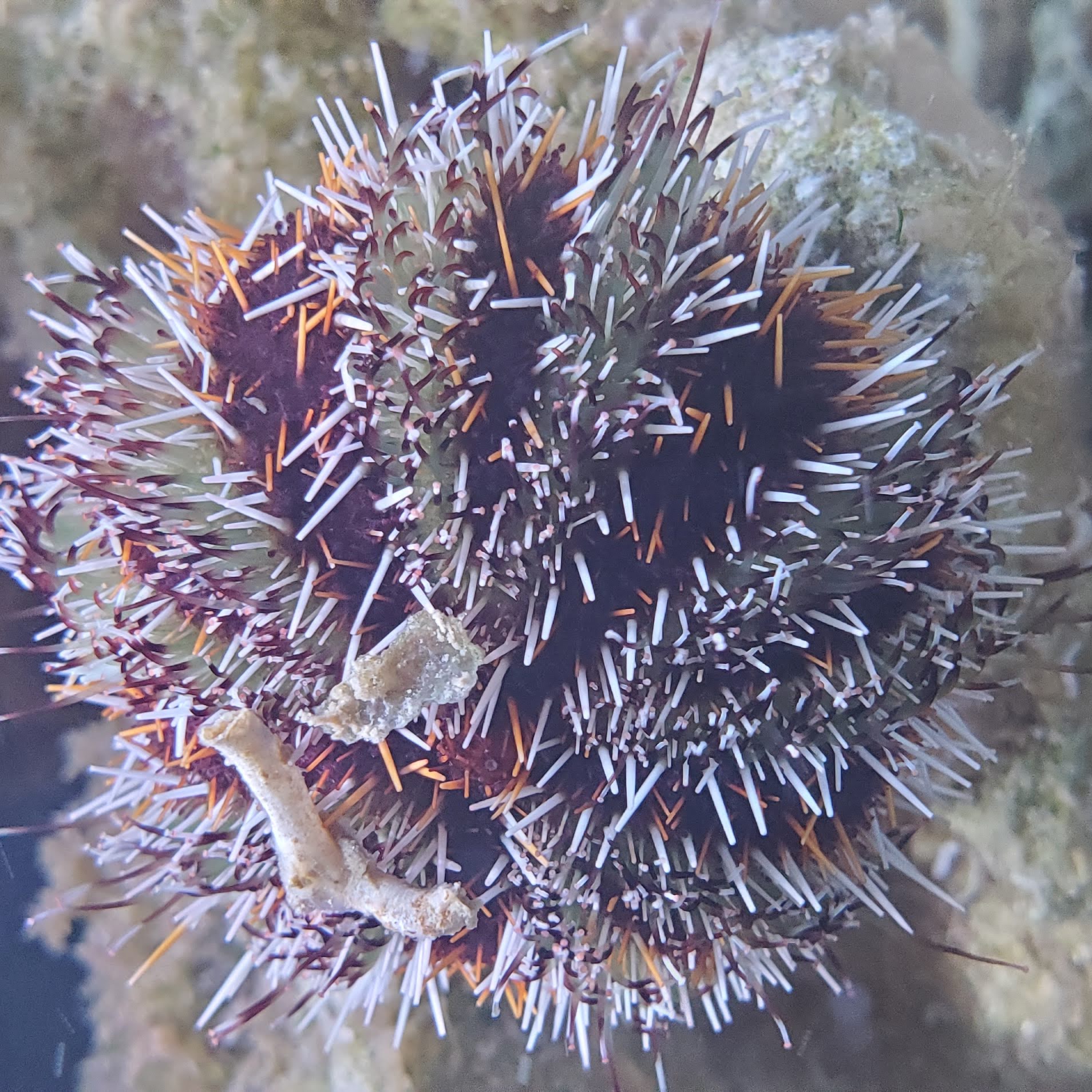
Orange Hairy Pincushion Urchin Care Guide for Reef Aquariums
The Orange Hairy Pincushion Urchin is a colorful, quirky invertebrate that adds both personality and utility to a saltwater tank. With its fuzzy spines and habit of carrying bits of rock or algae, this urchin is a fantastic choice for hobbyists looking for a natural clean-up crew member that stands out.
Orange Hairy Pincushion Urchin Overview
This urchin (commonly a Pseudoboletia or similar species) is known for its bright orange coloration and bristly, hair-like spines. It’s generally peaceful, reef-safe with caution, and spends its time grazing on algae and biofilm.
- Scientific group: Echinoidea (sea urchins)
- Temperament: Peaceful, mostly nocturnal grazer
- Reef compatibility: Generally safe, but may move loose items
- Difficulty: Moderate; needs stable, mature systems
Always add an Orange Hairy Pincushion Urchin to a mature aquarium with plenty of live rock and natural algae growth. Young, sterile systems rarely provide enough food.
Tank Requirements & Diet
While hardy once established, this urchin is sensitive to rapid changes in water parameters. A well-maintained reef tank is essential for long-term success.
Recommended Tank Parameters
- Tank size: 30+ gallons with ample rockwork
- Temperature: 72–78°F (22–26°C)
- Salinity: 1.024–1.026 specific gravity
- pH: 8.1–8.4
- Nitrate: < 15 ppm; Phosphate: < 0.1 ppm
The Orange Hairy Pincushion Urchin is primarily an herbivore, grazing on:
- Film algae on rock and glass
- Short hair algae and diatoms
- Coralline algae (light scraping in some systems)
If your tank is very clean, you may need to supplement its diet:
- Offer dried nori (seaweed) secured to a rock or clip
- Provide algae-based sinking pellets or wafers
- Target-feed occasionally at night near its hiding spot
For more on preparing a stable environment, see our guide on setting up a reef tank for beginners.
Behavior, Compatibility & Handling Tips
The Orange Hairy Pincushion Urchin is generally peaceful, but it interacts with its surroundings in ways that can surprise new keepers.
Behavior & Compatibility
- May carry shells, rubble, or macroalgae on its spines as camouflage
- Can accidentally knock over unsecured corals or rockwork
- Best with peaceful fish and invertebrates; avoid urchin-eating wrasses, triggers, and puffers
- Safe with most corals if well-fed, though occasional nipping can occur in nutrient-poor tanks
To keep your aquascape safe, make sure rock structures and coral plugs are firmly secured. Our article on coral placement and securing techniques offers practical ideas for preventing topples.
Acclimation & Handling
- Use a slow drip acclimation over 45–60 minutes to avoid shock
- Never expose the urchin to air for long periods; keep it submerged during transfers
- Handle gently by the shell (test) if needed, avoiding pressure on the spines
- Ensure stable calcium and alkalinity to support its skeleton
With proper care, the Orange Hairy Pincushion Urchin becomes a hardworking, eye-catching member of your clean-up crew. For additional stocking ideas, check out our reef clean-up crew guide to build a balanced, effective team of invertebrates.