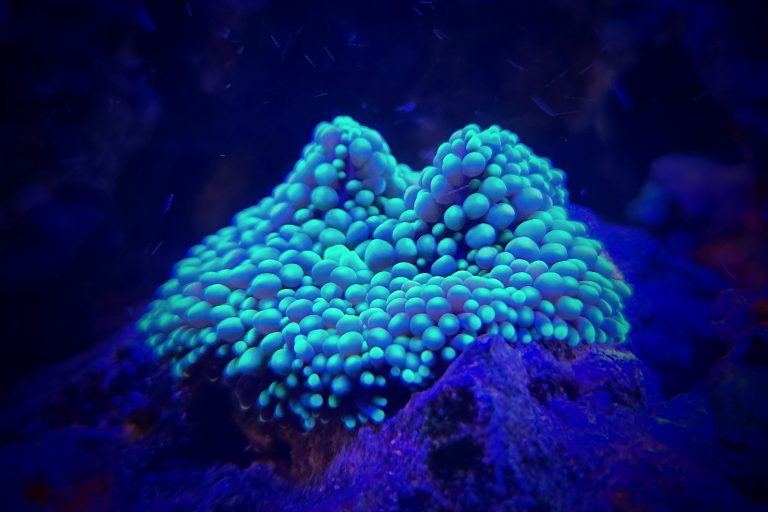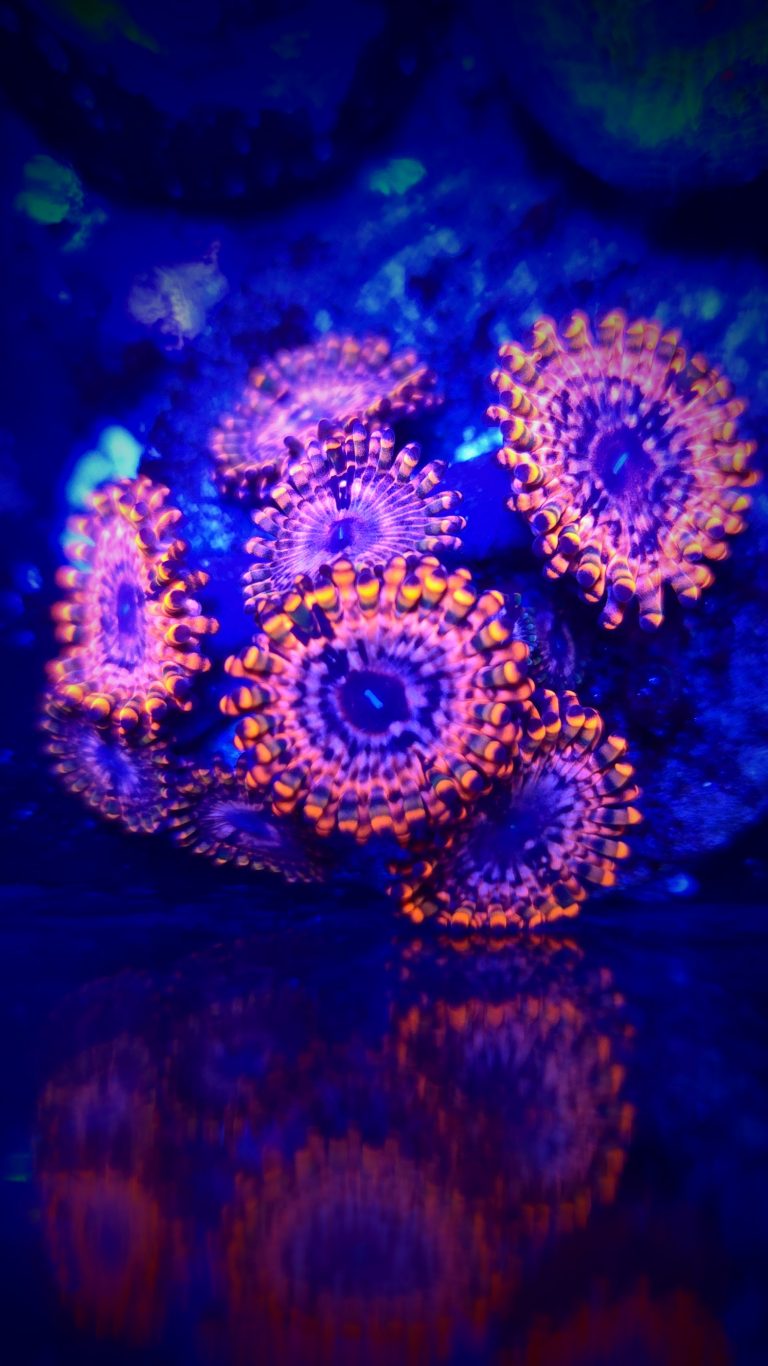
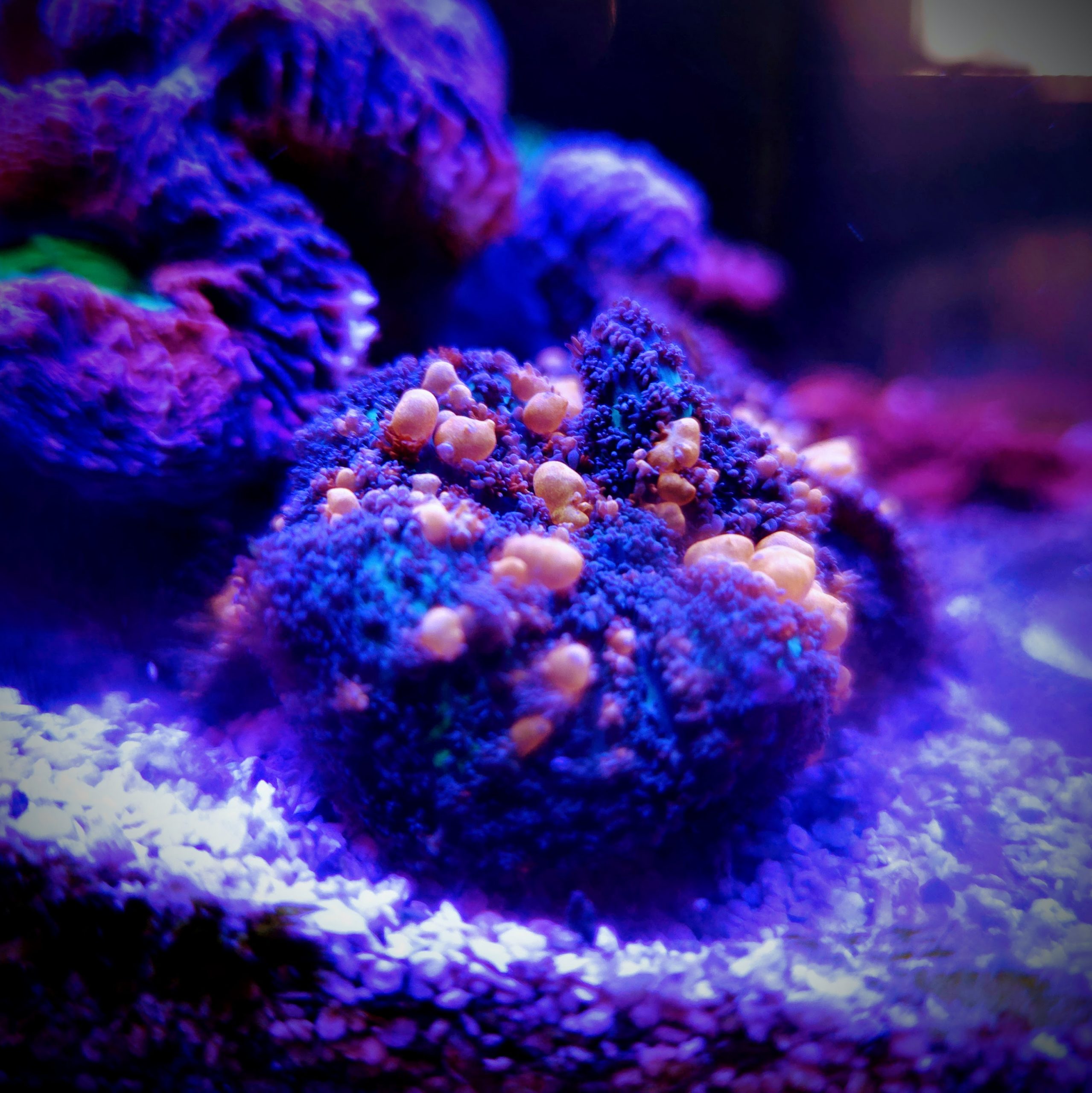
Sunkist Bounce Mushroom
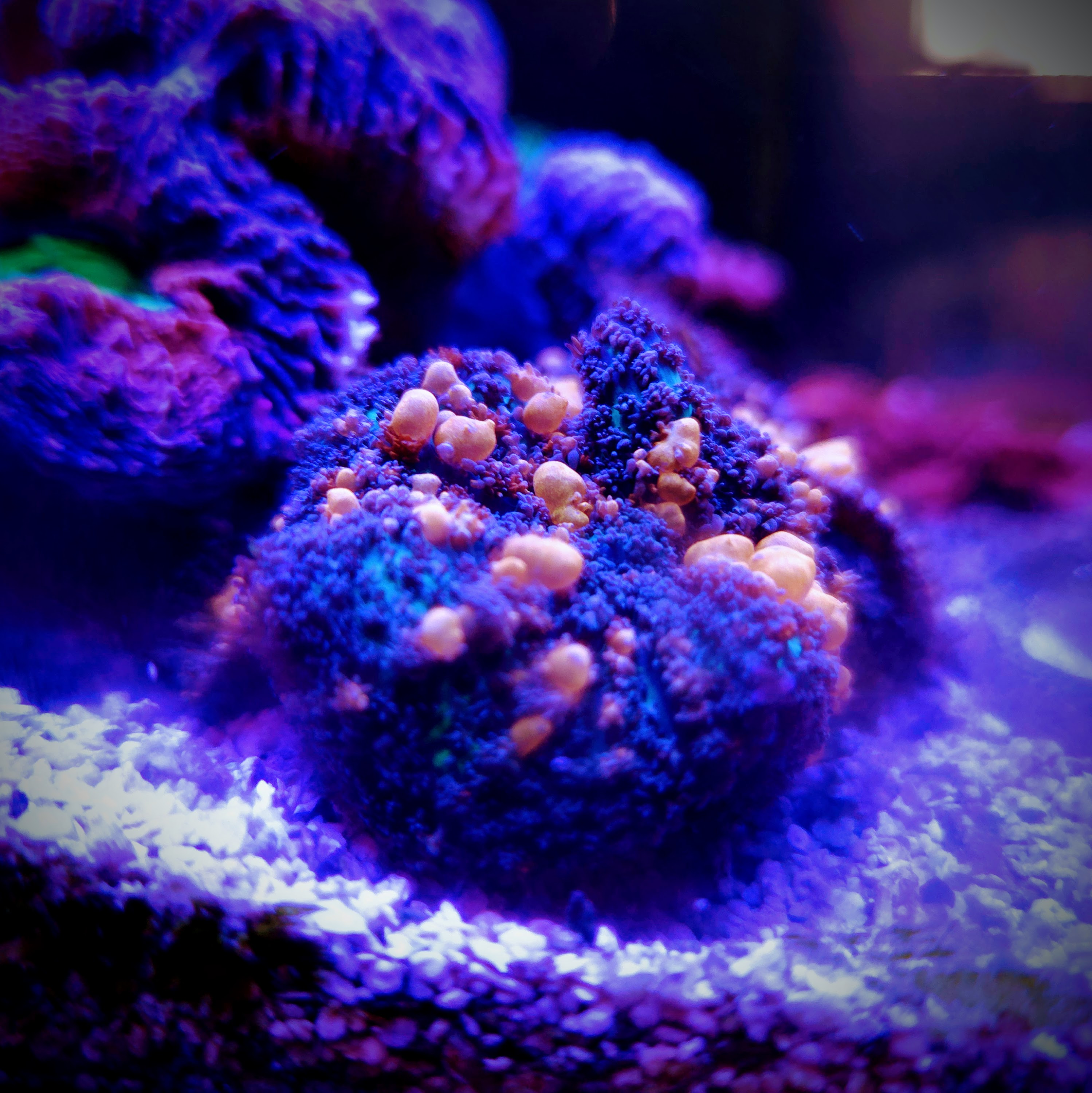
The Sunkist Bounce Mushroom is a stunning and pricey coral. It rewards careful, stable care. With the right placement and parameters, it can thrive and grow new bounces over time.
Understanding the Sunkist Bounce Mushroom
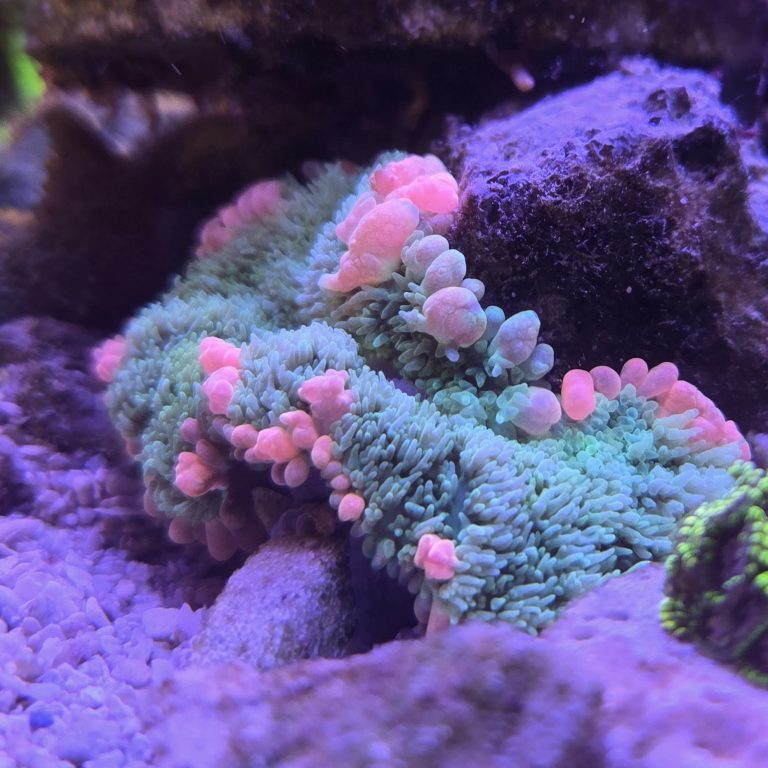
The Sunkist Bounce Mushroom is a type of Rhodactis mushroom coral. It is known for its bright orange bubbles or “bounces.” These inflated vesicles form on the oral disc and tentacles. Good color and bounce size depend on light, flow, and stability.
Most hobbyists keep Sunkist Bounce in low to moderate light. Aim for 80–150 PAR. Too much light can shrink the bubbles and bleach the coral. Start it in a shaded area on the rockwork. Then slowly move it brighter over 2–3 weeks if needed.
Provide low, indirect flow. Strong, direct flow can cause the coral to stay closed. It may detach and float around the tank. Place it on a stable rock ledge or small island. Many keep it on a separate “mushroom rock” to control spreading.
Keep water parameters very stable. Target 1.025 salinity, 78–79°F, and pH 8.1–8.4. Maintain alkalinity at 8–9 dKH, calcium 420–450 ppm, and magnesium 1300–1400 ppm. Avoid big swings. Test weekly and adjust slowly.
- Ideal PAR: 80–150, with a gentle ramp-up if increasing light.
- Temperature: 78–79°F with less than 1°F daily swing.
- Nitrate: 5–15 ppm; phosphate: 0.03–0.08 ppm.
Care, Feeding, and Troubleshooting
The Sunkist Bounce Mushroom can live on light and nutrients alone. However, light feeding can boost growth. Offer tiny coral foods once or twice per week. Use reef roids, powdered foods, or very small mysis. Turn off flow for 10–15 minutes so food settles.
Do not overfeed. Heavy feeding can foul the water and cause algae. Feed a piece about the size of a match head per coral. Observe the coral’s response. A happy Sunkist Bounce inflates, shows rich color, and slowly expands over months.
- Target feed with a pipette or turkey baster.
- Rinse frozen foods to reduce excess nutrients.
- Resume gentle flow after the coral grabs the food.
Watch for common problems. Bleaching often means too much light or rapid changes. Move the coral to lower light and reduce intensity by 10–15%. A shrunken, wrinkled mushroom can signal low nutrients, unstable alkalinity, or pest irritation.
Keep aggressive corals away. Avoid direct contact with torches, hammers, and acans. Leave at least 3–4 inches of space. Use a coral dip before adding new pieces to reduce pests. Run carbon if you keep many soft corals to limit chemical warfare.
- Quarantine new frags for 2–4 weeks when possible.
- Perform 10–15% water changes every 1–2 weeks.
- Use a frag rack or island rock to control growth and ease fragging.