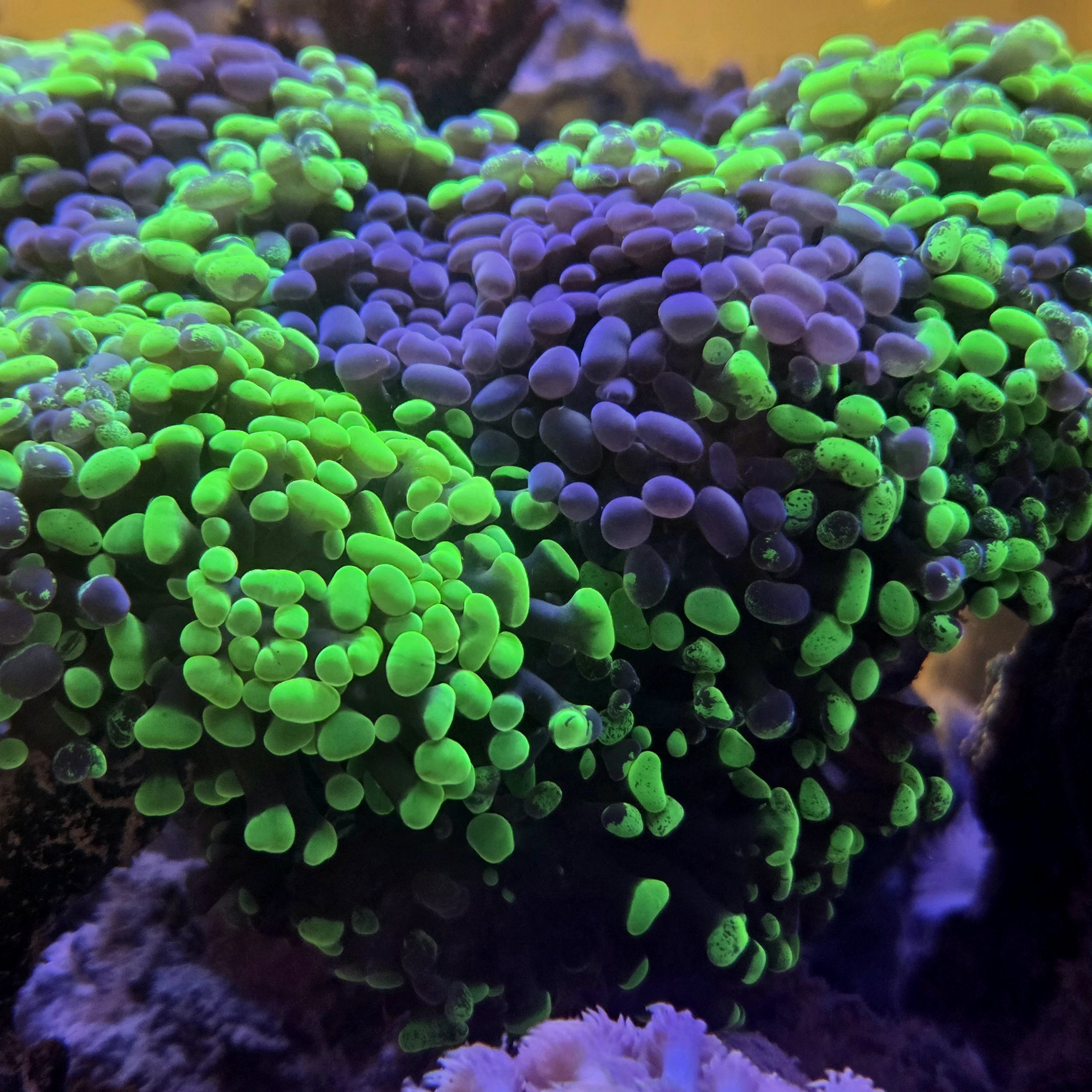
Splatter Hammer Coral
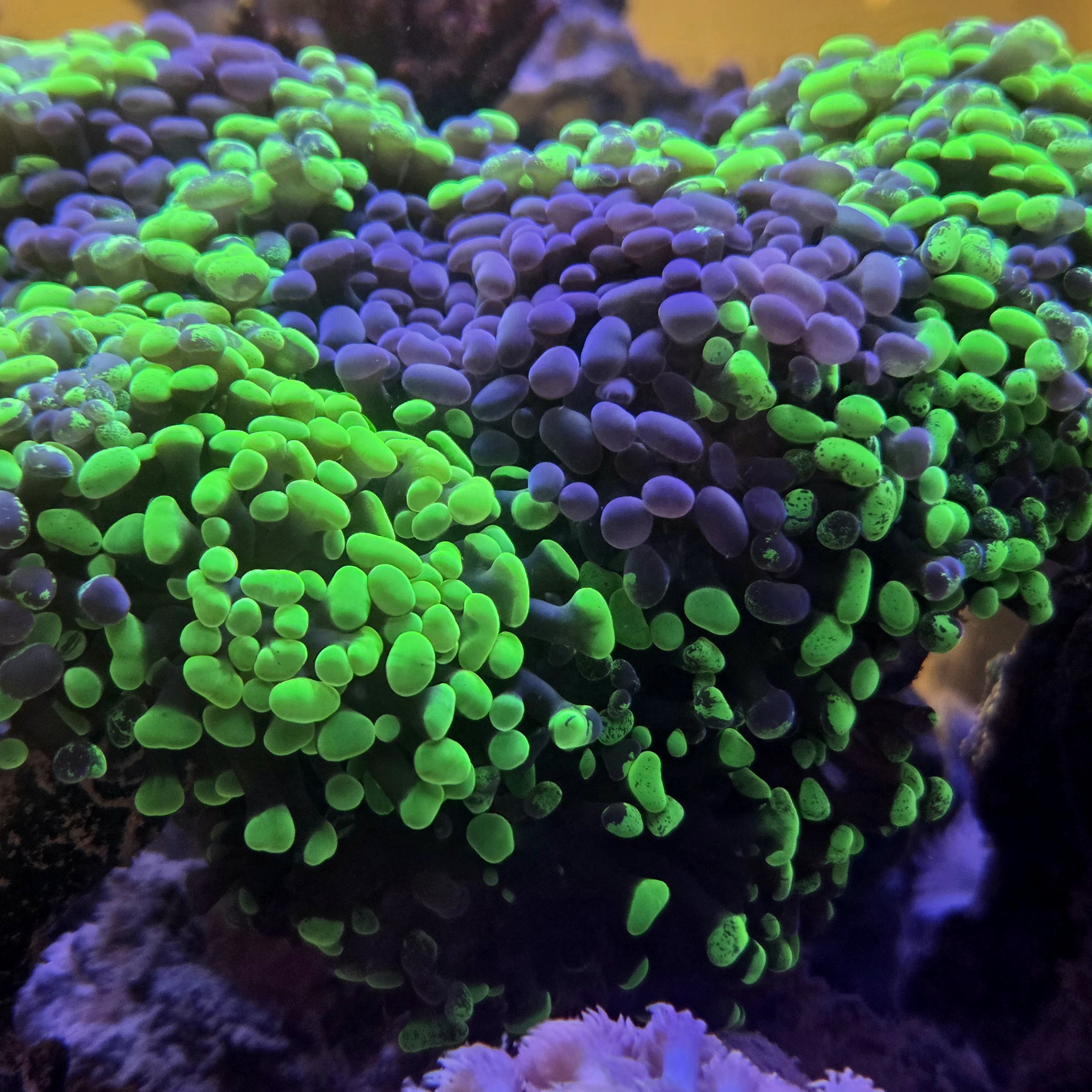
Splatter hammer coral is a favorite in mixed reefs. Its colorful tentacles and branching heads add motion and texture. With the right care, it grows steadily and becomes a standout centerpiece.
Understanding Splatter Hammer Coral
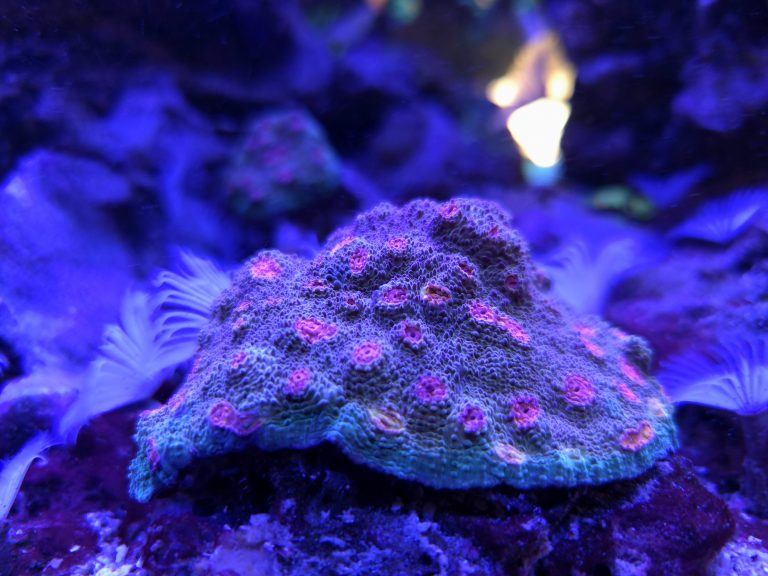
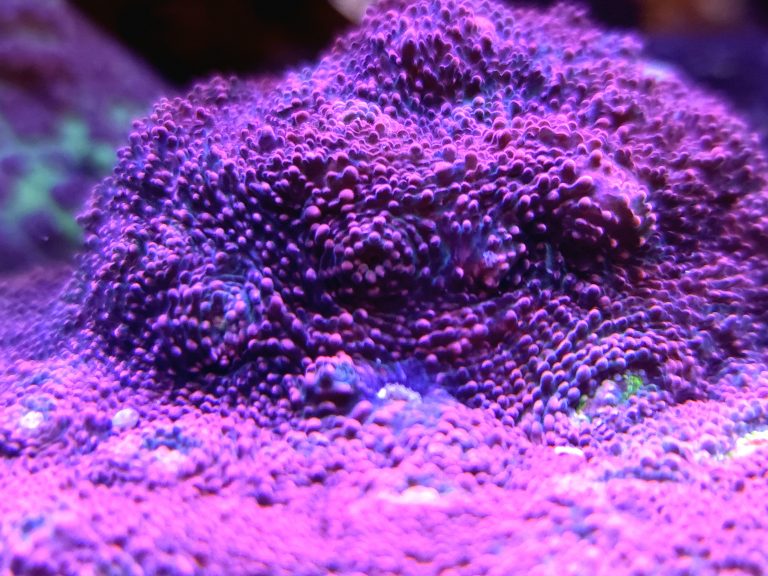
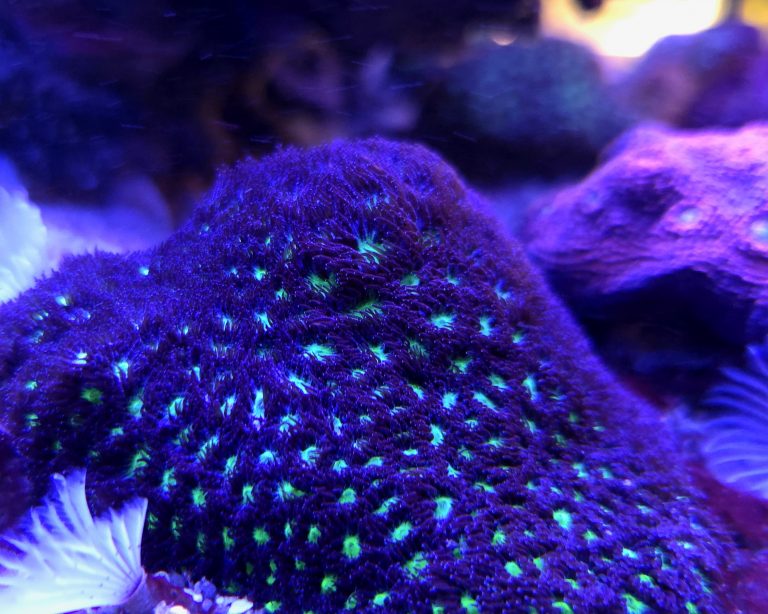
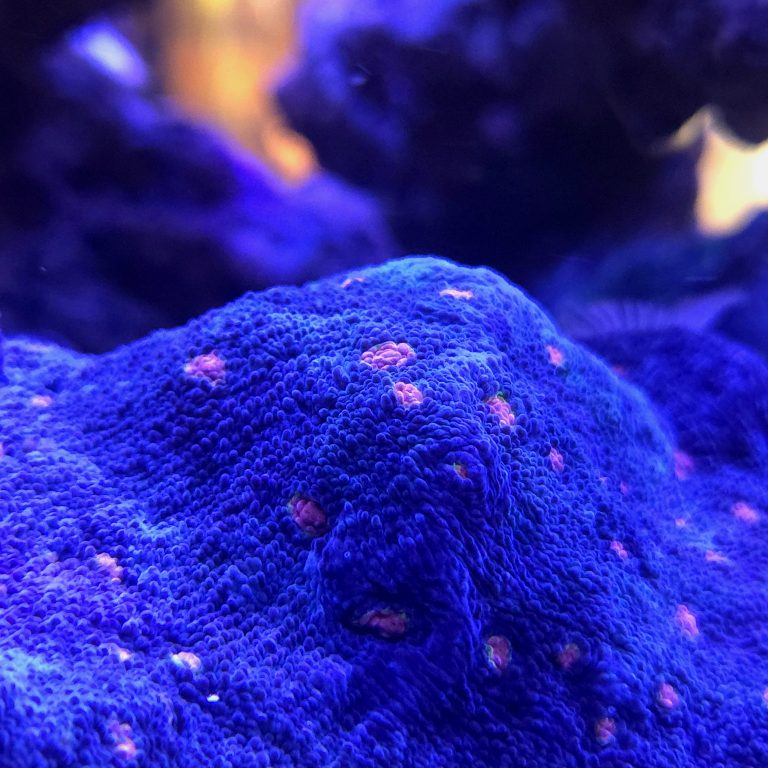
Splatter hammer is a type of Euphyllia coral. It has thick, branching skeletons and hammer-shaped tips. The “splatter” pattern shows as bright streaks and spots on the tentacles. Colors often include green, teal, gold, and purple.
Place this coral in the lower to middle part of the tank. Aim for moderate light and gentle to moderate flow. PAR between 80–150 works well for most colonies. Too much light can cause bleaching or retraction.
Stable water parameters are critical. Keep temperature between 24–26°C (75–79°F). Maintain salinity at 1.025–1.026 specific gravity. Aim for alkalinity of 8–9.5 dKH, calcium 420–450 ppm, and magnesium 1300–1400 ppm. Nitrates around 5–15 ppm and phosphates 0.03–0.1 ppm usually give good color and growth.
Use these quick placement tips:
- Start corals on a frag rack or sand bed to light-acclimate.
- Increase light intensity by 5–10% every 4–5 days.
- Watch for tissue pulling back from the skeleton as a stress sign.
Care, Feeding, and Common Problems
Splatter hammer coral is semi-aggressive. It has sweeper tentacles that extend at night. Leave at least 7–10 cm (3–4 inches) of space from other corals. Keep it away from delicate SPS and zoas.
Flow should be indirect and random. Tentacles should sway gently, not whip. Strong, direct flow can tear tissue. Use a wavemaker on a pulsing or random mode. Adjust until the polyps move smoothly without folding over.
This coral gains much of its energy from light. Still, it responds well to targeted feeding. Offer small meaty foods once or twice per week. Good options include mysis shrimp, finely chopped krill, and reef roids. Turn off pumps for 10–15 minutes while feeding to reduce waste.
- Target feed at night when tentacles are extended.
- Use a pipette or turkey baster for precise feeding.
- Remove uneaten food to avoid nutrient spikes.
Watch for common issues. Brown jelly disease appears as brown, slimy tissue. If you see it, frag away the healthy heads. Dip the coral in iodine or a reef-safe coral dip. Improve flow and siphon any loose tissue.
Here are quick troubleshooting checks:
- Polyps not extending: test alkalinity, check for sudden light or flow changes.
- Tissue receding from the base: verify calcium, magnesium, and salinity stability.
- Faded colors: increase nutrients slightly and reduce light intensity by 10–15%.
With consistent parameters, gentle flow, and careful placement, splatter hammer coral can thrive for years. It will branch, bud new heads, and become a bright, dynamic feature in your reef tank.
Add to Wishlist