
Rose Bubbletip Anemone
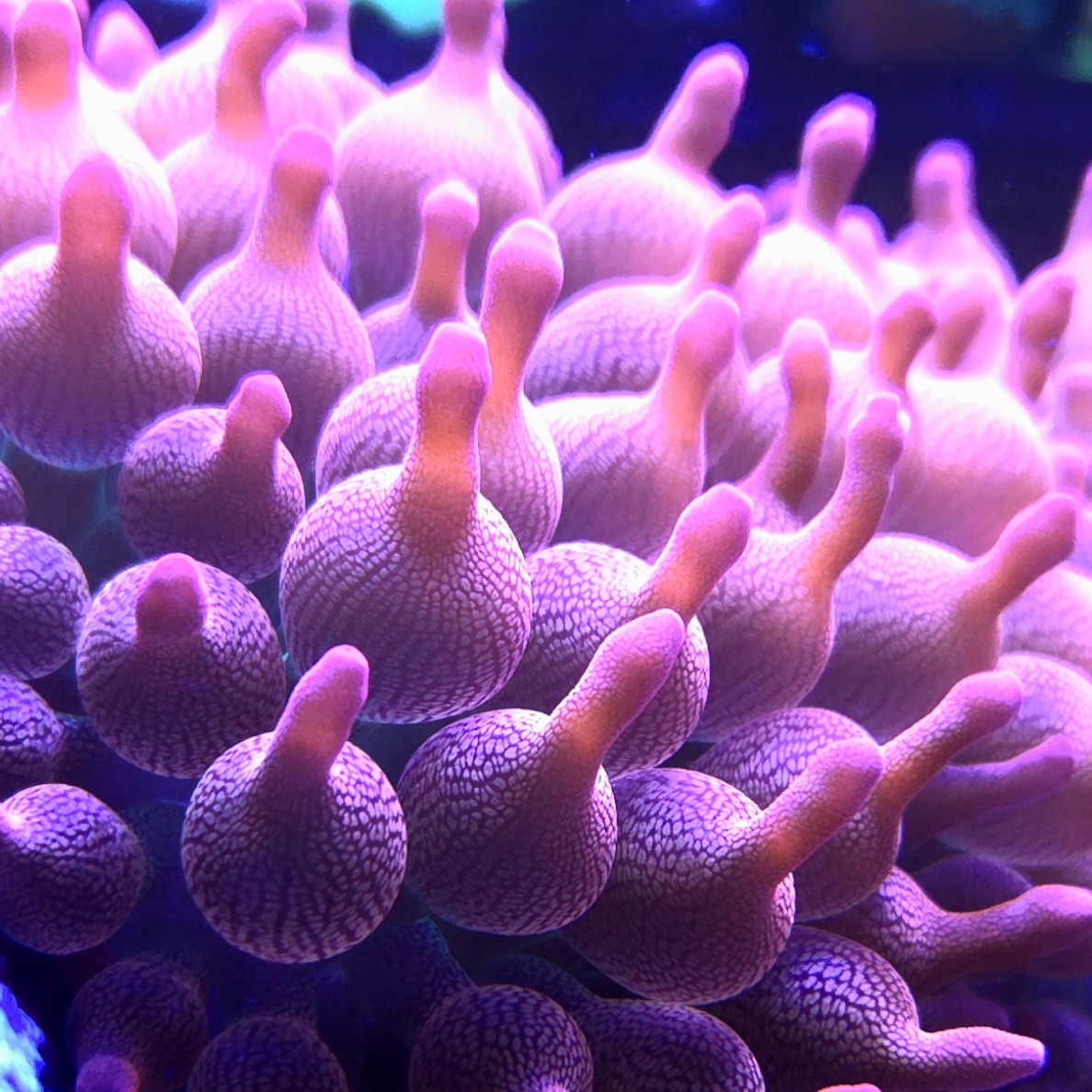
Few reef creatures draw attention like a rose bubble tip anemone close up. Those inflated pink bubbles, glowing tips, and flowing tentacles can become the centerpiece of your reef. With the right care, they are hardy, colorful, and fascinating to watch.
Seeing Your Rose Bubble Tip Anemone Close Up
A healthy rose bubble tip anemone (RBTA) looks full and inflated. The tentacles form round bubbles under strong light. Colors range from soft rose to deep red. Under blue LEDs, the tips often glow neon.
Place your RBTA where you can view it from the front and slightly above. This angle shows the mouth, tentacle bubbles, and foot. Avoid tucking it behind large rock walls. Leave a clear line of sight so you can inspect it daily.
Stable water helps keep that close-up view beautiful. Aim for 1.025 specific gravity, 78–80°F, and 8–9 dKH. Keep nitrate between 5–15 ppm and phosphate around 0.03–0.1 ppm. Test weekly at first. Sudden swings cause shrinking, gaping mouths, and loss of bubbles.
Lighting is critical. RBTA usually thrive under medium to high PAR, around 150–250 at their final spot. Start lower and increase slowly over 2–3 weeks. Watch the tentacles. Strong color and tight bubbles often mean they are happy with the light.
- Use a PAR meter or rental if possible.
- Set a 9–10 hour main photoperiod.
- Avoid sudden 20–30% light jumps in one day.
Placement, Feeding, and Troubleshooting Up Close
Give your RBTA a solid rock with crevices for its foot. The foot should disappear into a crack or hole. This anchors the anemone and helps it feel secure. Avoid sharp rock edges that can tear tissue.
Keep at least 4–6 inches of space from corals. The tentacles can sting and burn neighbors. When viewed close up, look for clean, intact tips and a closed, tight mouth. A gaping mouth or stringy guts are warning signs.
- Use a small powerhead for gentle, random flow.
- Avoid direct jet flow on the anemone.
- Cover pump intakes with foam guards or mesh.
Feed small, frequent meals instead of large chunks. Offer 1 cm pieces of mysis, silversides, or shrimp once or twice a week. Use tongs and place food on the tentacles. If food falls off repeatedly, the anemone may be stressed.
Common mistakes include adding an RBTA to a young tank under six months old, using unstable lighting schedules, and chasing it with constant re-placement. Let it choose its spot. If it wanders, check parameters, flow, and light before moving rockwork.
- If the anemone shrinks for several days, test ammonia and nitrate immediately.
- If it climbs the glass, light or flow may be too low on the rocks.
- If color fades, increase feeding and check PAR levels.
By watching your rose bubble tip anemone close up every day, you learn its normal look and behavior. Small changes stand out quickly. That close attention is the key to long-term success and stunning reef photos.
Add to Wishlist