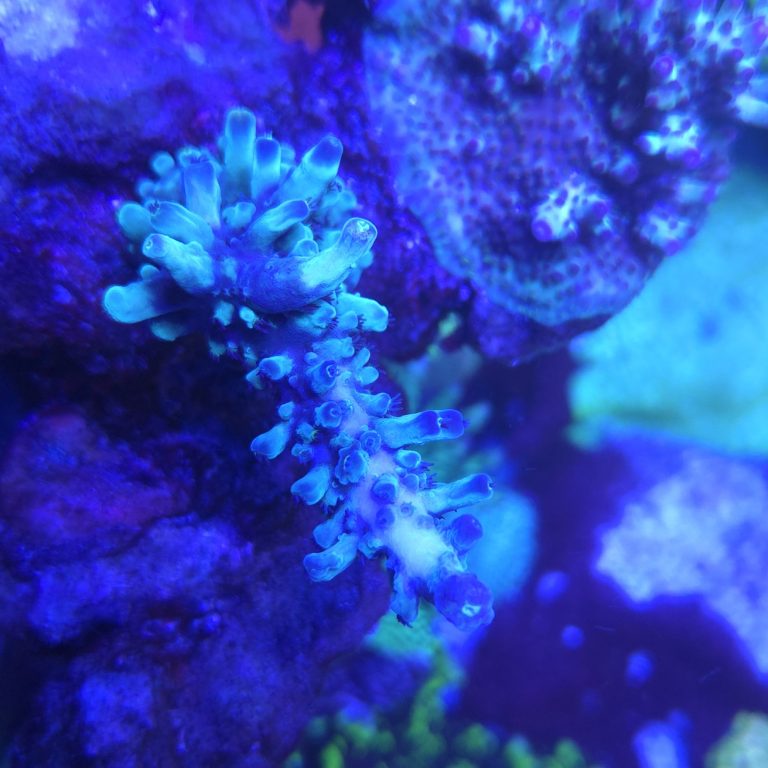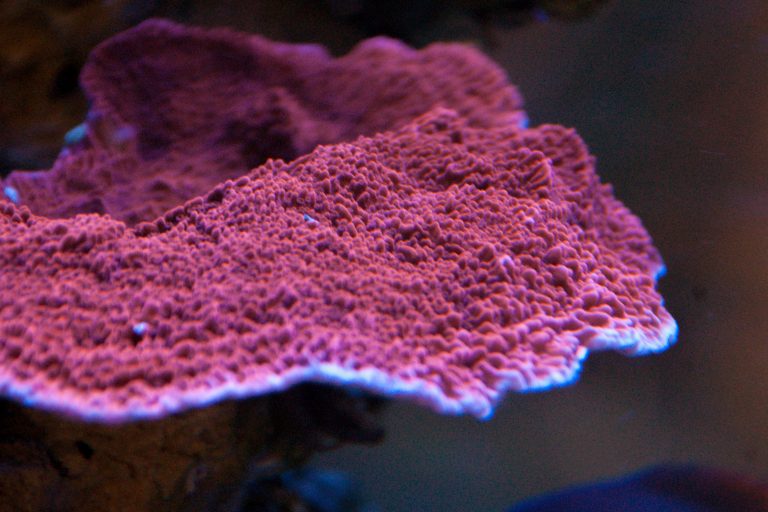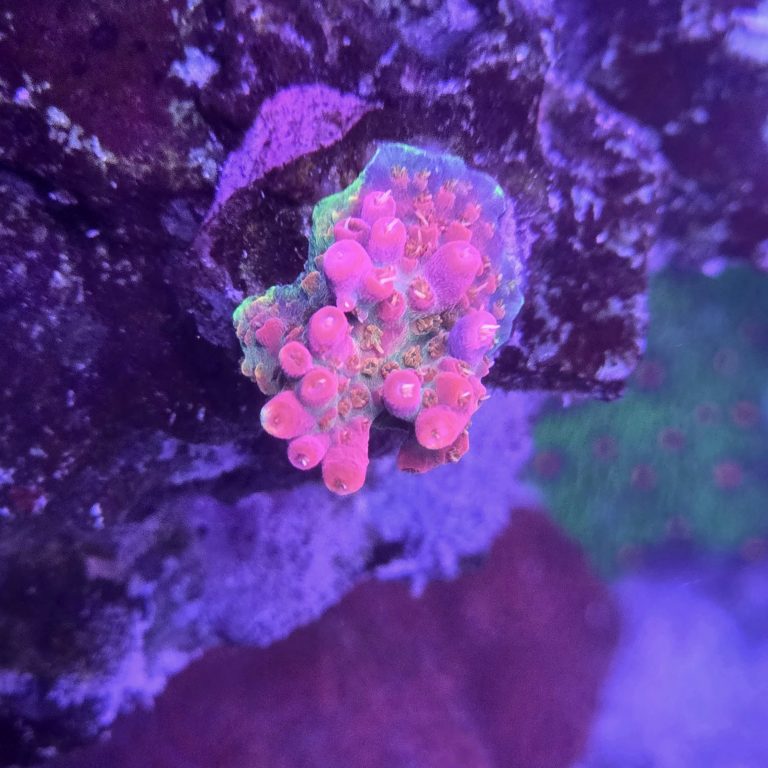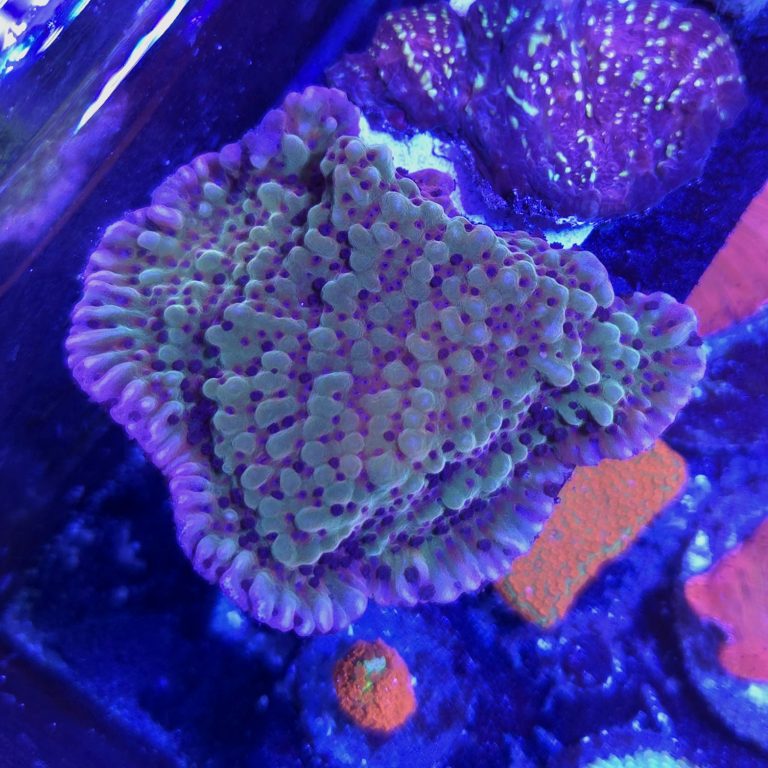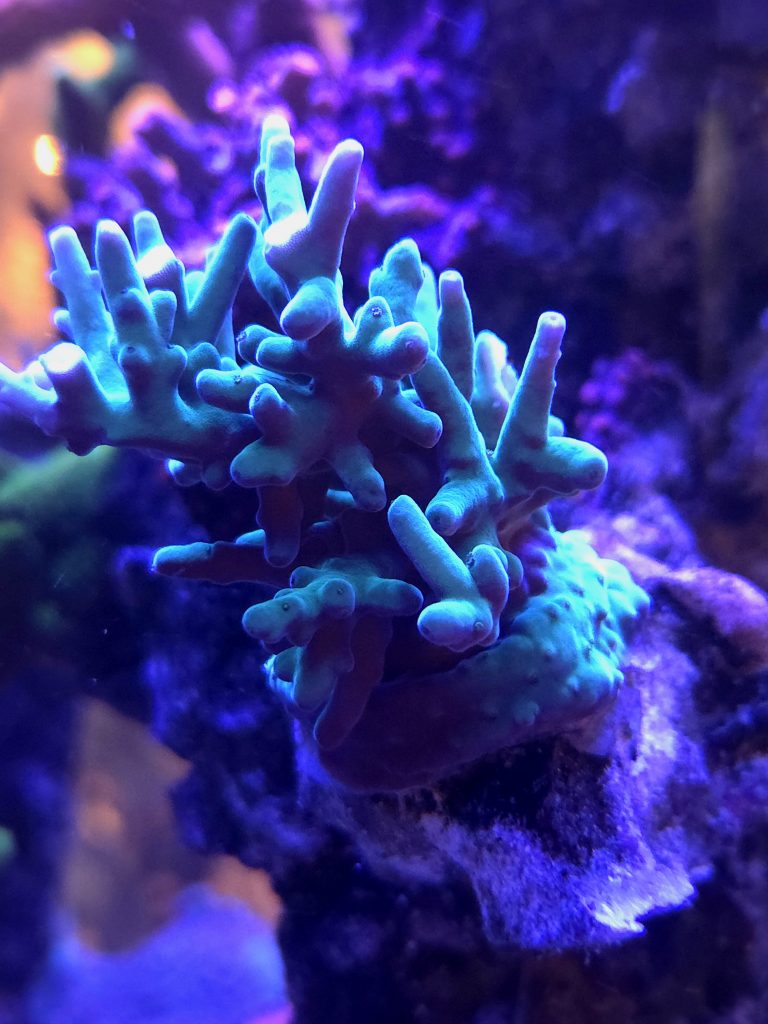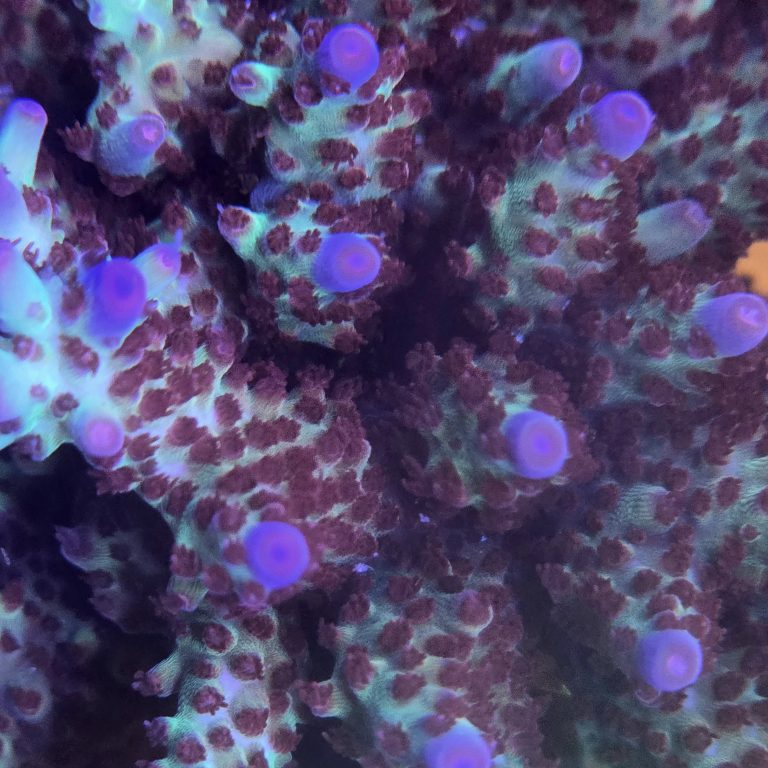
Radioactive Acropora Tortuosa
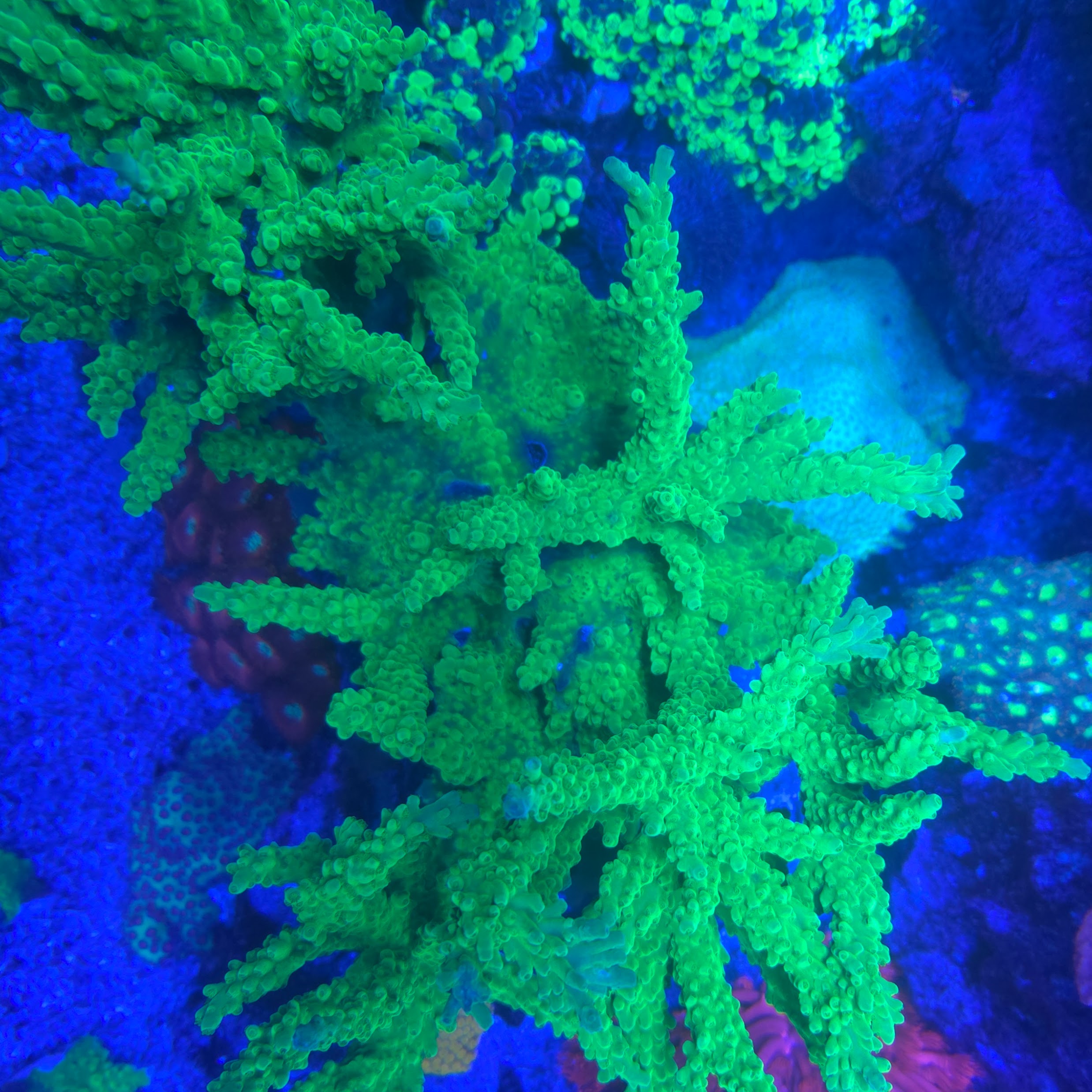
Radioactive Acropora tortuosa is a stunning highlighter-green SPS coral. It glows under blue LEDs and quickly becomes a showpiece. It also demands stable, clean water and strong lighting. With the right care, this coral grows into twisted, branching towers.
Understanding Radioactive Acropora Tortuosa
This coral prefers bright, intense light. Aim for 250–350 PAR at the top of the colony. Use a mix of blue and white LEDs, with a strong blue channel. Many reefers run 14K–20K color temperature for best glow.
Place the frag high on your rockwork. Start it slightly lower for the first week. Then move it up slowly. Sudden jumps in PAR can cause bleaching. Increase light by 10–15% per week until you reach your target.
Flow should be strong and random. Use two opposing wavemakers if possible. Aim for 30–40 times tank turnover per hour. Avoid direct, laminar jets on the coral. You want the polyps to sway, not slam.
- Target PAR: 250–350 at the coral
- Temperature: 24–26°C (75–79°F)
- Salinity: 1.025–1.026 specific gravity
- pH: 8.1–8.4, stable
Keep alkalinity between 8–9 dKH. Calcium should sit around 420–450 ppm. Magnesium near 1300–1400 ppm. Test these at least twice per week in young systems. Daily swings stress Acropora and cause tissue loss.
Placement, Feeding, and Troubleshooting
Mount Radioactive tortuosa on a solid, stable plug or rock. Use reef-safe super glue gel. Give it room to grow upward and outward. Avoid placing it too close to aggressive LPS corals. Stinging sweeper tentacles can damage delicate tissue.
- Leave 5–7 cm clearance from neighboring corals
- Ensure no shadowing from larger colonies
- Angle the frag so branches get even light and flow
This coral relies mainly on light, but feeding helps growth. Dose amino acids 2–3 times per week. Target feed fine coral foods, like reef roids, once or twice weekly. Turn off flow for 10–15 minutes when feeding. Skim slightly wet to remove excess nutrients afterward.
Watch your nutrients closely. Nitrate should stay around 5–15 ppm. Phosphate between 0.03–0.08 ppm. Ultra-low nutrients can pale the coral. High nutrients can brown it out and encourage algae.
- If tips burn or recede, check for alkalinity spikes.
- If color fades, test PAR and nutrients the same day.
- If polyps stay closed, inspect for pests like red bugs or Acropora-eating flatworms.
Quarantine new frags for 4–6 weeks when possible. Dip them in an SPS-safe coral dip for 5–10 minutes. Inspect with a magnifying glass. This step protects your display from devastating pests and keeps your Radioactive tortuosa thriving long term.
Add to Wishlist