
John Deere Leptastrea: A Colorful, Hardy Coral for Your Reef Tank
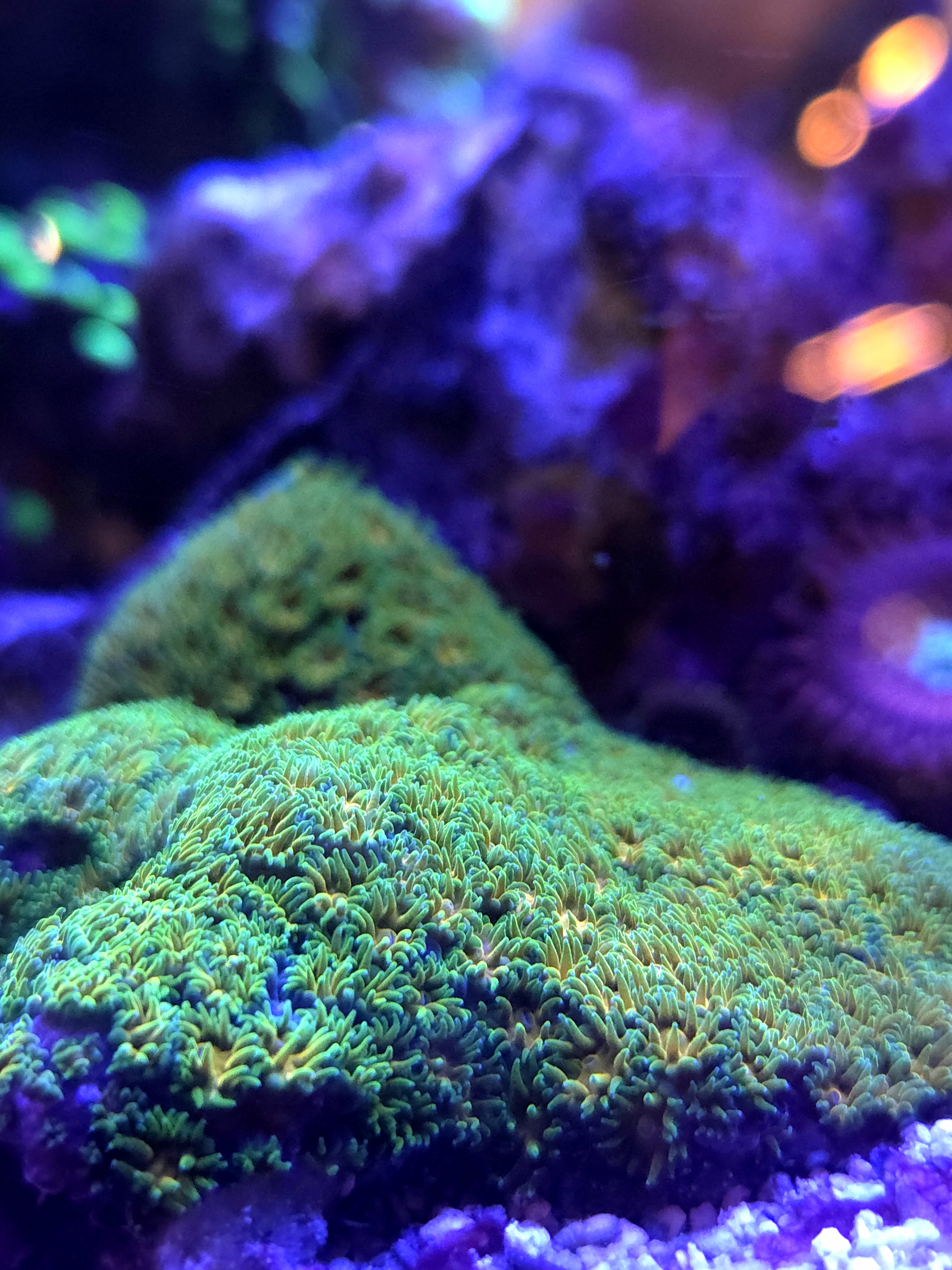
The John Deere Leptastrea is a standout LPS coral known for its vivid green and yellow coloration that resembles the classic tractor brand. Compact, hardy, and eye-catching, it’s an excellent choice for hobbyists who want a bright pop of color without demanding SPS-level care.
Identification & Natural Behavior
John Deere Leptastrea forms encrusting colonies that gradually cover rockwork, plugs, or small structures. Its small polyps extend during the day and night, giving it a fuzzy, textured appearance.
Common traits include:
- Bright green base with yellow to golden oral discs
- Small, tightly packed polyps
- Encrusting growth pattern that hugs the surface
- Moderate growth rate under stable conditions
Unlike many high-end SPS corals, John Deere Leptastrea tolerates a wider range of conditions, making it ideal for mixed reefs and newer systems that are still maturing.
Tank Requirements & Placement Tips
To keep your John Deere Leptastrea thriving, focus on stability over perfection. It will adapt well as long as swings in parameters are minimized.
Water Parameters
- Temperature: 76–79°F (24–26°C)
- Salinity: 1.025–1.026 SG
- Alkalinity: 8–9.5 dKH
- Calcium: 400–450 ppm
- Magnesium: 1300–1400 ppm
- Nitrates: 5–15 ppm
- Phosphates: 0.03–0.08 ppm
Lighting & Flow
- Lighting: Low to moderate PAR (60–150). Too much light can wash out its colors.
- Placement: Lower to mid-level rockwork, or shaded areas in high-intensity LED setups.
- Flow: Low to moderate, indirect flow. Strong, direct flow may cause the polyps to stay retracted.
Tip: Start your John Deere Leptastrea in lower light and gradually move it brighter over 1–2 weeks. Watch for signs of stress like receding tissue or loss of fluorescence.
Feeding, Growth, and Compatibility
While it can survive on light and dissolved nutrients alone, targeted feeding will boost growth and coloration.
Feeding
- Offer small particle foods such as reef roids, powdered coral foods, or finely minced meaty foods.
- Feed 1–2 times per week with pumps turned off for 10–15 minutes.
- Observe polyp extension during evening hours for best feeding response.
Tankmates & Coral Placement
- Compatible with most peaceful reef fish and invertebrates.
- Keep a few inches of space from aggressive LPS with long sweeper tentacles.
- Monitor for encroachment on slower-growing neighbors as it spreads across rock.
For more guidance on balancing nutrients and coral health, explore our article on reef nutrient management. If you’re planning a mixed reef, you may also like our beginner-friendly LPS coral guide and our overview of encrusting corals for nano and large tanks.
With its bold coloration, modest care requirements, and encrusting growth, John Deere Leptastrea is a rewarding coral that can bring long-lasting color and texture to almost any saltwater aquarium.