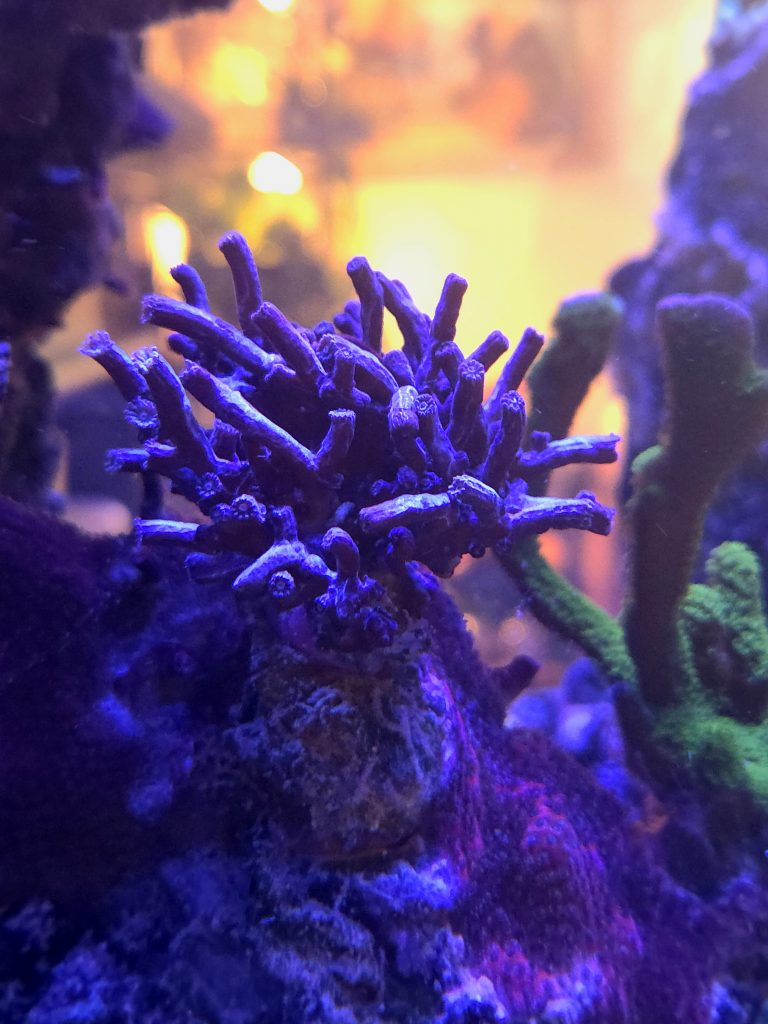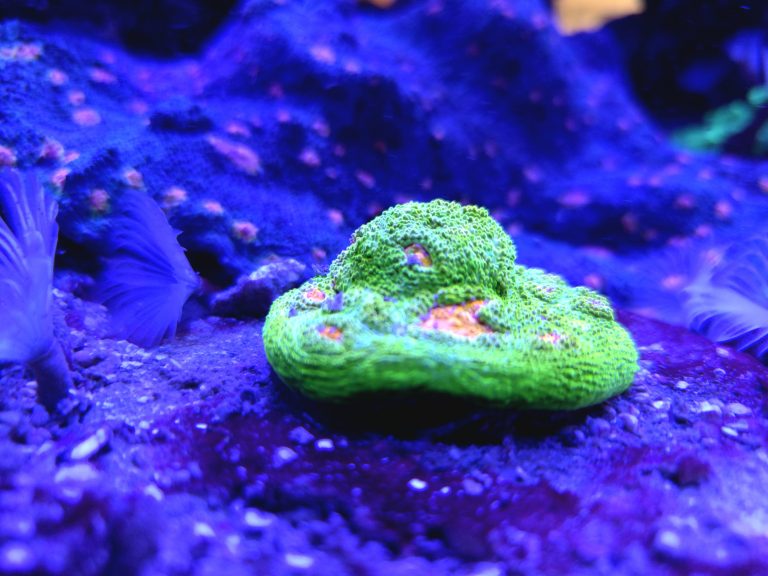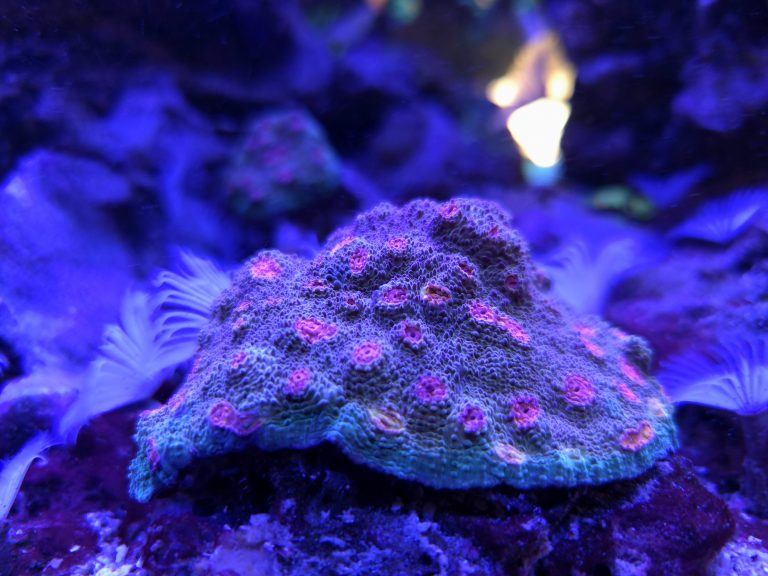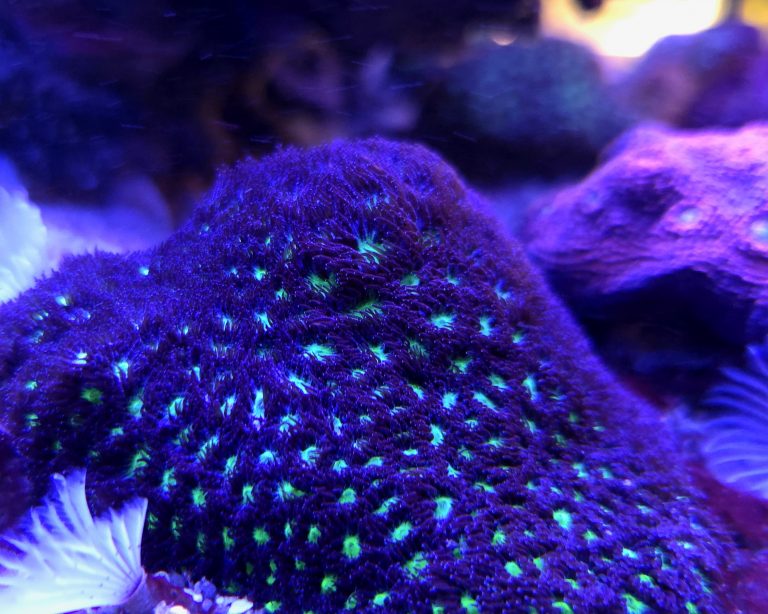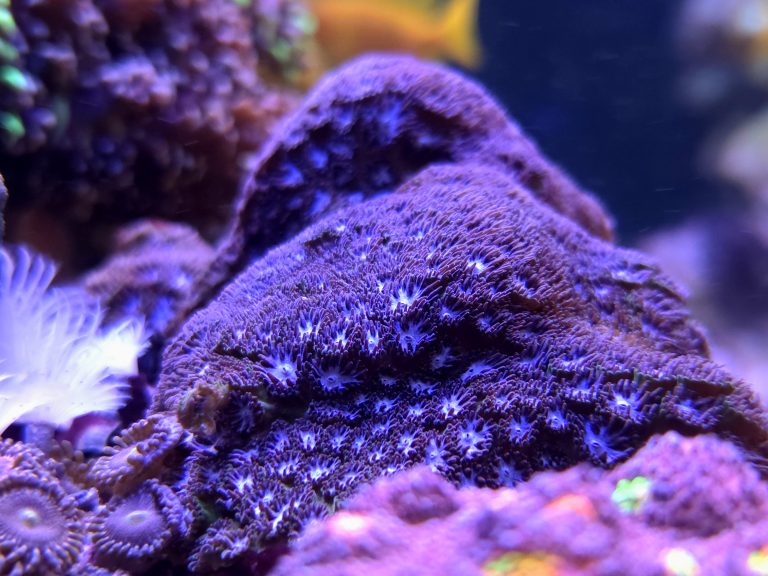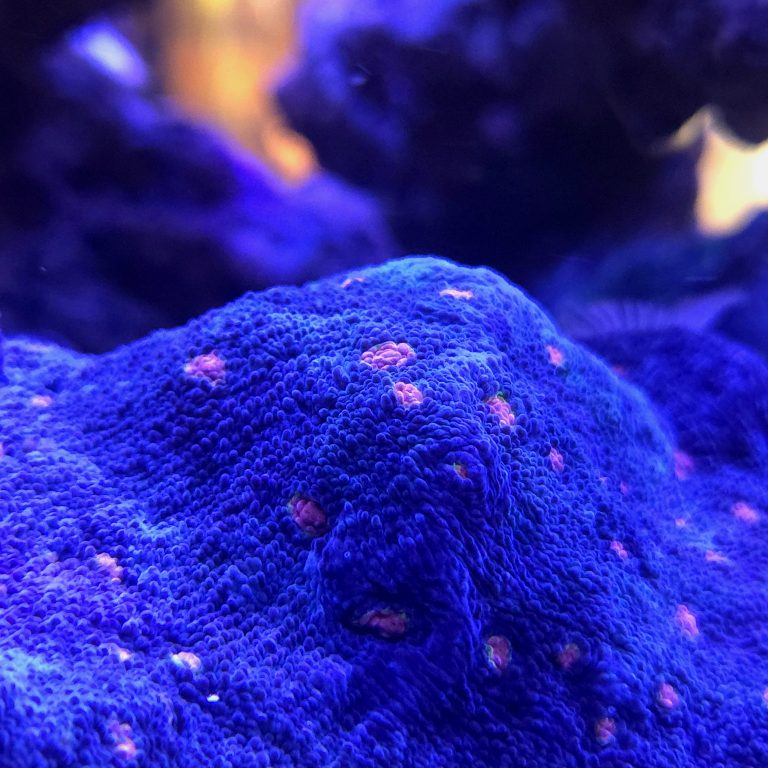
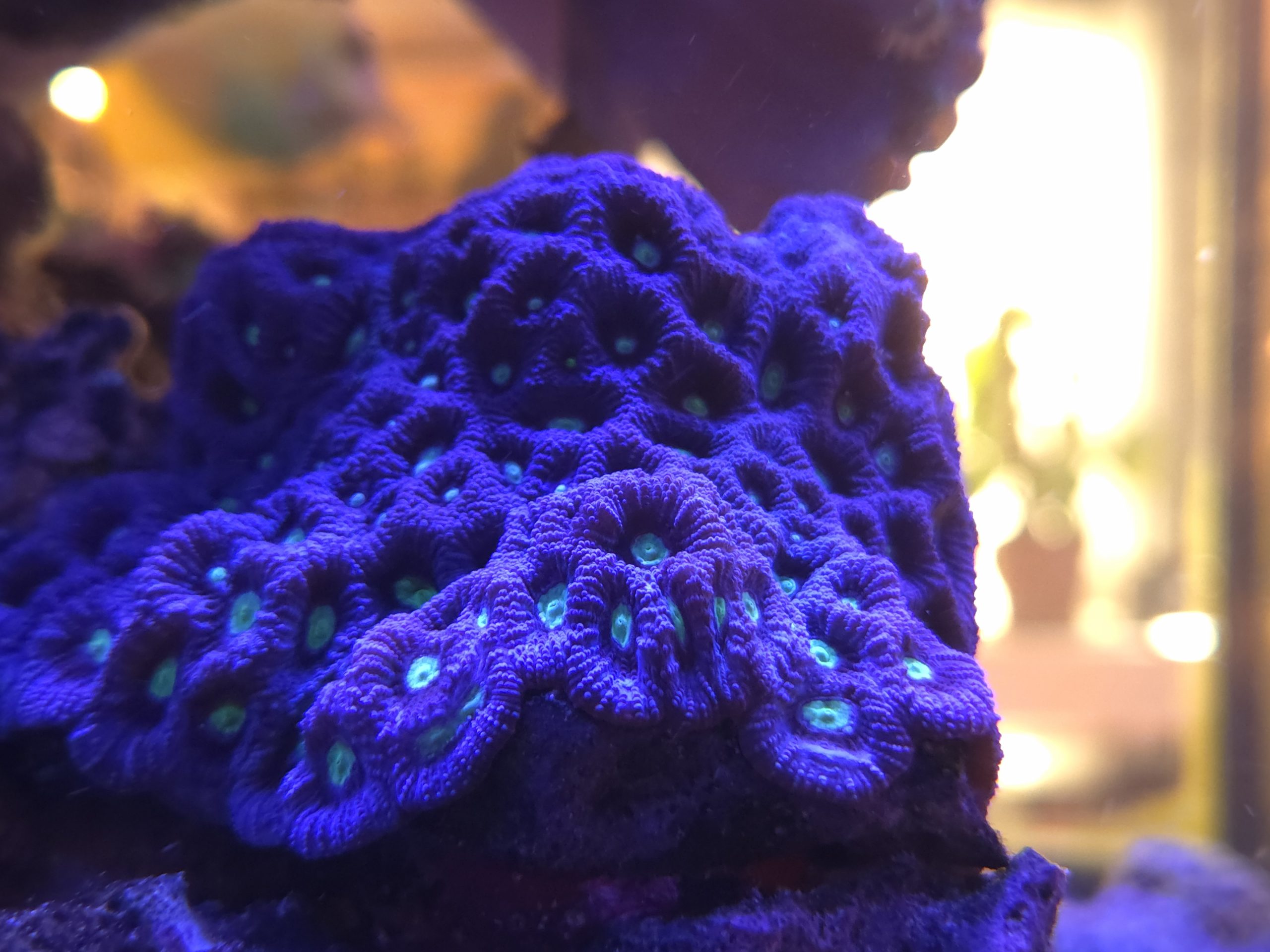
Purple War Favia
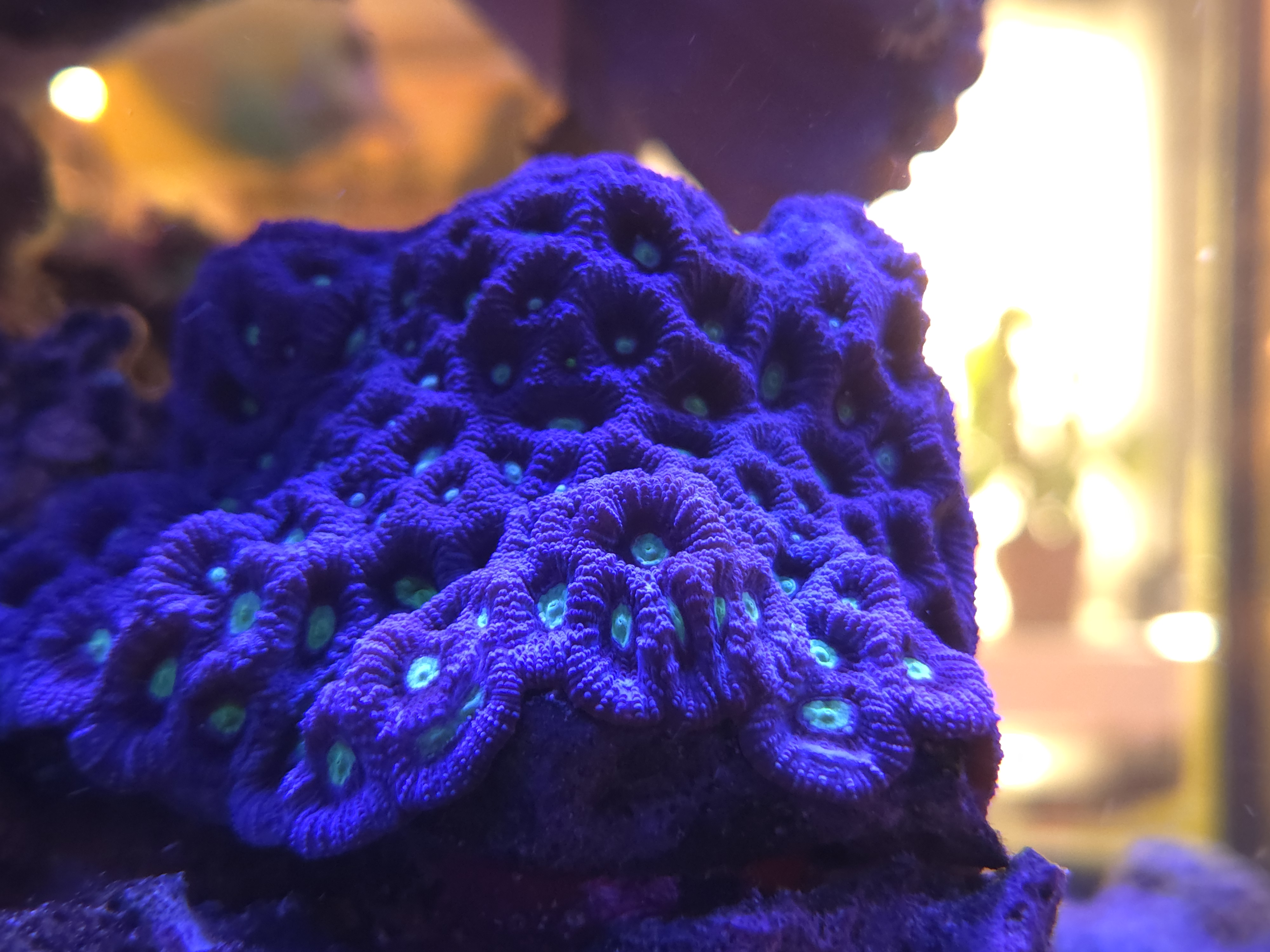
Purple War Favia is a striking LPS coral with bold purple and green patterns. It is hardy, slow growing, and ideal for many mixed reefs. With the right placement and care, it can become a glowing centerpiece in your tank.
Understanding Purple War Favia Care
Purple War Favia prefers moderate light and gentle to moderate flow. Aim for PAR between 80 and 150 at the coral’s location. Too much light can cause bleaching. Too little light leads to dull colors and slow growth.
Place this coral on the sand bed or lower rockwork at first. Let it adjust for two to three weeks. You can slowly move it higher if colors look faded or brown. Avoid placing it where powerheads blast it directly.
Keep water parameters stable. Target 1.025 salinity, 77–79°F temperature, and pH 8.1–8.4. Maintain alkalinity at 8–9 dKH, calcium 420–450 ppm, and magnesium 1300–1400 ppm. Nitrates should stay around 5–15 ppm, with phosphate at 0.03–0.08 ppm.
Follow these basic care tips:
- Acclimate slowly using drip acclimation for 30–45 minutes.
- Turn down lights 20–30% on the first day after adding.
- Test alkalinity and calcium at least twice per week.
- Use activated carbon if you see tissue irritation or slime.
Feeding, Placement, and Troubleshooting
Purple War Favia has strong feeding tentacles. It benefits from regular target feeding. Feed two to three times per week at night when tentacles extend. Use small meaty foods like mysis, reef roids, or finely chopped shrimp.
Turn off flow for 10–15 minutes during feeding. Gently squirt food over the polyps using a pipette. Avoid huge chunks. They can rot and foul the water. Watch for a feeding response. The coral should grab and pull food into its mouths.
Be careful with placement near other corals. Purple War Favia can send out sweeper tentacles at night. These can reach 1–3 inches and sting neighbors. Leave at least 3–4 inches of space around it. Give extra room near soft corals and other LPS.
- Place on a separate rock island to control growth.
- Glue frags to small tiles for easy moving later.
- Use a coral viewer or flashlight at night to check sweeper length.
Watch for warning signs. Receding tissue, exposed skeleton, or brown jelly indicate trouble. Common causes include sudden light changes, unstable alkalinity, or aggressive neighbors. If tissue recedes, move the coral to lower light and gentler flow. Perform a 10–20% water change and recheck parameters.
- If bleaching occurs, lower light intensity by 20–30% for one week.
- If colors brown out, slowly increase PAR by 10–15 over two weeks.
- Dip new frags to prevent pests like flatworms and nudibranchs.