
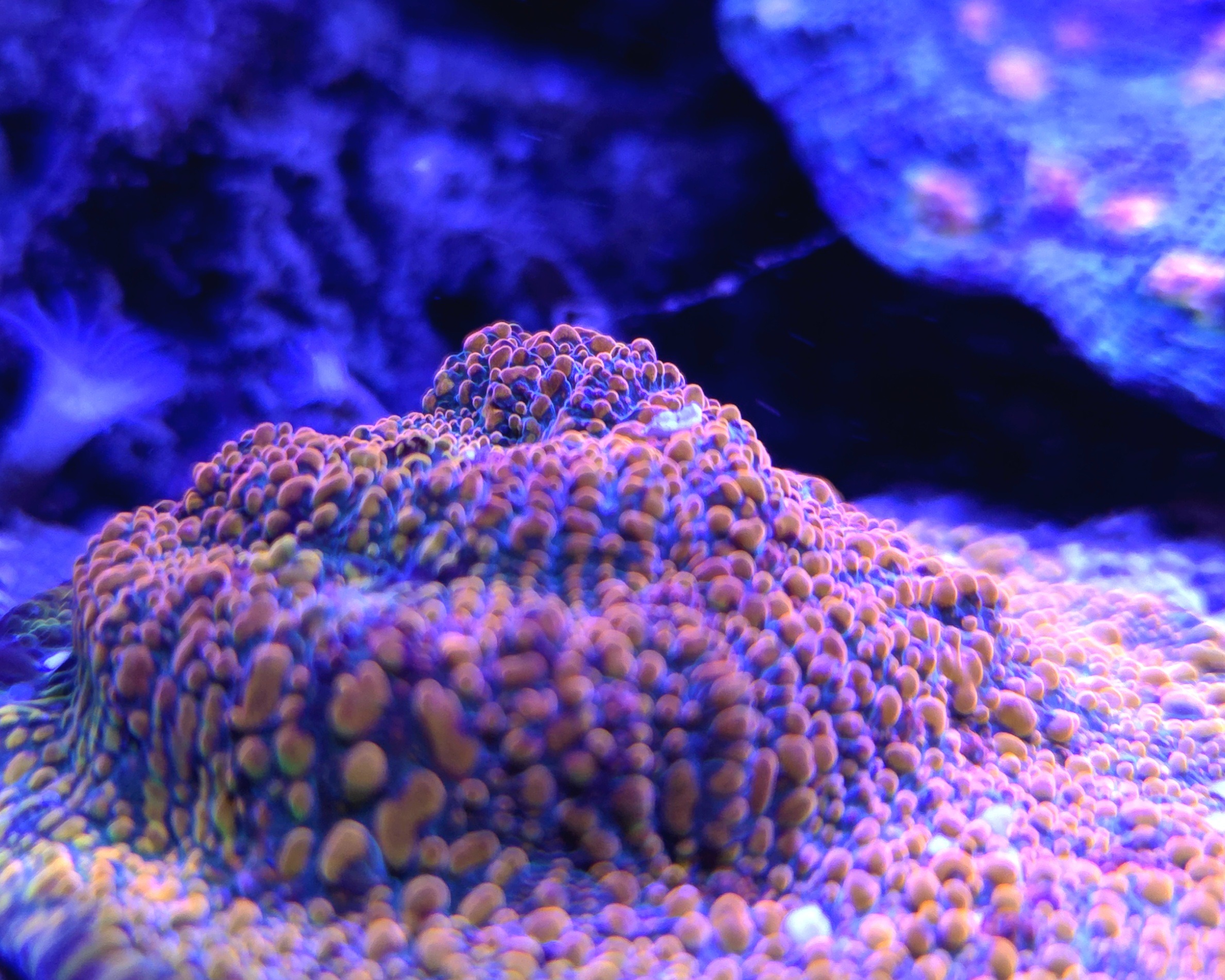
Convict Chalice: Care Guide for This Striking LPS Coral
The Convict Chalice is a standout large-polyp stony (LPS) coral prized for its bold contrast and swirling patterns. With proper care, this eye-catching coral can become the centerpiece of your reef tank, offering movement, color, and personality.
Convict Chalice Placement, Lighting, and Flow
Convict Chalice corals typically prefer moderate conditions and a stable, mature reef aquarium. Getting placement right from the start helps them settle in and color up beautifully.
- Tank placement: Lower to mid-level on the rockwork or on a stable coral tile or plug; avoid sharp edges that can damage the tissue.
- Lighting: Low to moderate PAR (70–150). Too much light can cause fading or bleaching, so start shaded and slowly move into brighter areas if needed.
- Flow: Low to moderate, indirect flow. The goal is gentle water movement that keeps the surface clean without blasting the polyps.
- Space: Provide room around the coral; Convict Chalice colonies can extend sweeper tentacles at night and may sting nearby neighbors.
Tip: When introducing a Convict Chalice, begin in a lower-light area and acclimate over 1–2 weeks to avoid light shock.
Water Parameters and Feeding
Like most chalice corals, the Convict Chalice thrives in stable, clean saltwater with balanced nutrients. Sudden swings in parameters are far more damaging than slightly elevated levels.
- Temperature: 76–78°F (24–26°C)
- Salinity: 1.025–1.026 specific gravity
- Alkalinity: 8–9.5 dKH
- Calcium: 420–450 ppm
- Magnesium: 1300–1400 ppm
- Nitrate: 5–15 ppm; Phosphate: 0.03–0.08 ppm
Convict Chalice corals are photosynthetic but respond very well to targeted feeding, especially in lower-nutrient systems.
- Offer small meaty foods such as mysis shrimp, finely chopped seafood, or quality coral foods.
- Feed after lights out or when feeding tentacles are visible.
- Target feed 1–2 times per week using a pipette or turkey baster.
Compatibility, Growth, and Common Issues
Convict Chalice corals are generally peaceful but can be semi-aggressive at close range. Planning your aquascape with their growth in mind will prevent future conflicts.
- Tank mates: Works well with most reef-safe fish and inverts. Avoid nippy fish like some angelfish and butterflyfish that may pick at fleshy polyps.
- Coral neighbors: Keep a buffer zone from other LPS and soft corals to avoid chemical and physical warfare.
- Growth pattern: Encrusting to plating, slowly covering nearby rock as it matures.
Watch for tissue recession, faded colors, or algae growing on the skeleton. These often signal issues with lighting, flow, or nutrients. A careful review of your reef tank basics, including beginner reef tank setup and LPS coral care, can help you troubleshoot quickly.
Is the Convict Chalice Right for Your Reef?
If you maintain stable parameters and can provide gentle light and flow, the Convict Chalice is a rewarding choice that adds dramatic contrast to your coral collection. For more ideas on colorful additions that pair well with this coral, explore our guide to chalice coral care and varieties.