Peach Frogspawn
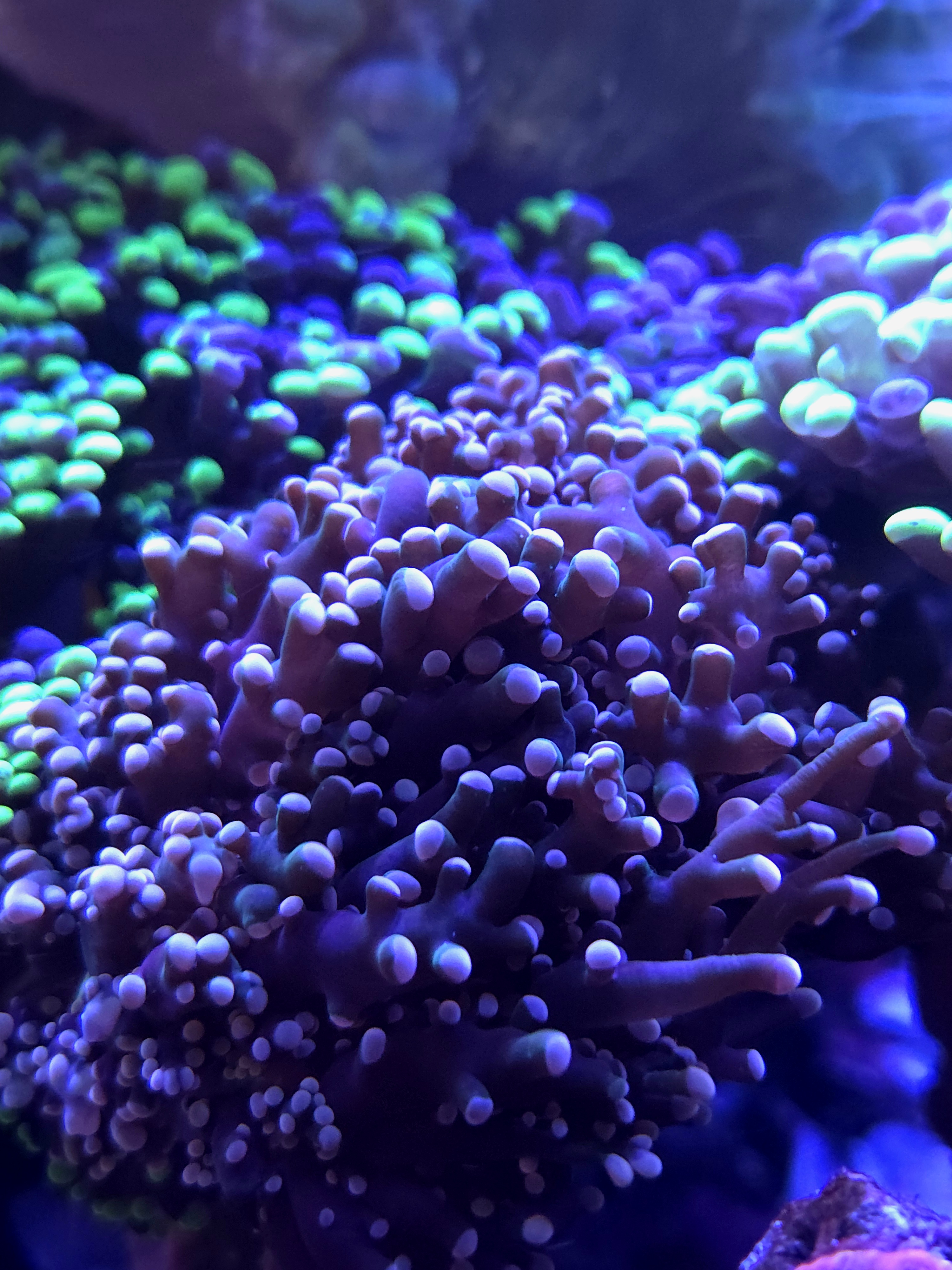
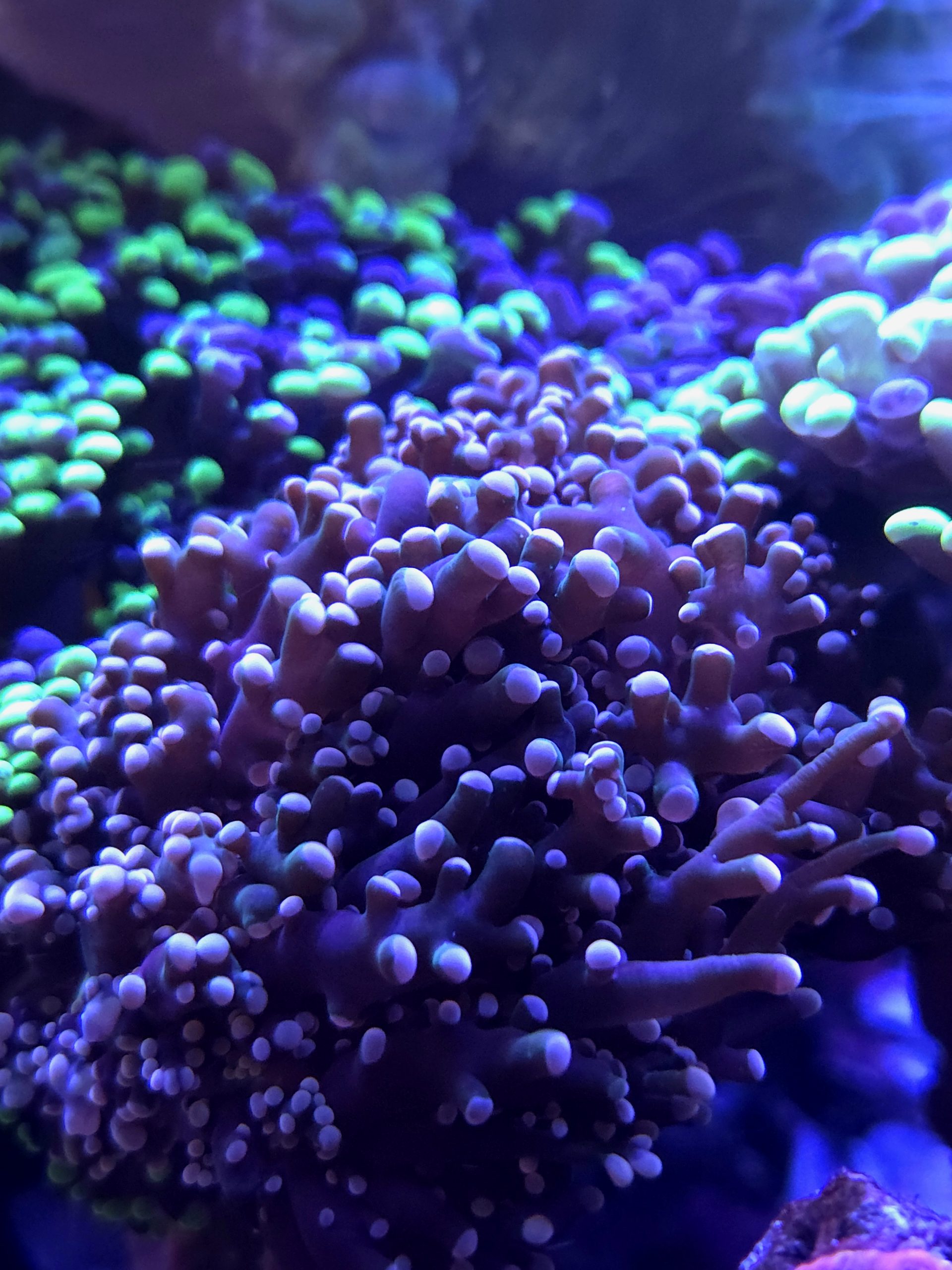
Peach frogspawn corals bring soft movement and warm color to reef tanks. Their flowing tentacles look dramatic, yet they are fairly forgiving. With the right placement and care, they can thrive for years and grow into impressive colonies.
Peach Frogspawn Basics and Placement
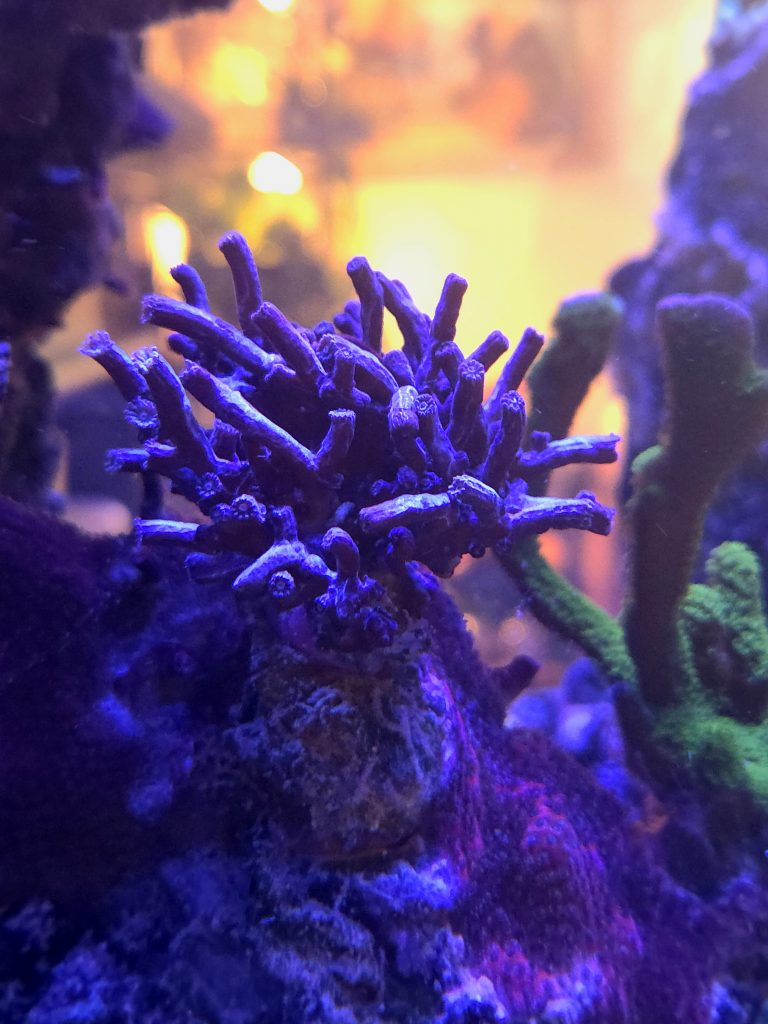
Peach frogspawn is a branching Euphyllia coral. Each branch ends in a fleshy polyp with peach or pink tips. Tentacles sway in the current and give a full, bushy look. This coral can be a centerpiece in small or medium reefs.
Place peach frogspawn in the lower to middle area of the tank. Aim for moderate light under LEDs or T5s. PAR between 80 and 150 works well for most systems. Start the coral lower and raise it slowly over two to three weeks. This prevents light shock and tissue recession.
Flow should be gentle to moderate. Tentacles should sway, not whip or fold over. Strong, direct flow can tear tissue and expose skeleton. Use angled powerheads and avoid pointing them straight at the coral.
- Target PAR: 80–150 at the coral’s level
- Flow: gentle to moderate, indirect
- Distance from aggressive corals: at least 6–8 inches
Leave space for sweeper tentacles. Frogspawn can extend stingers a few inches at night. Keep it away from acans, favias, and most SPS colonies. It usually tolerates hammers and other frogspawn if introduced slowly.
Water Parameters, Feeding, and Troubleshooting
Stable water is more important than chasing perfect numbers. Keep temperature between 77–79°F. Salinity should stay near 1.025 specific gravity. Avoid daily swings larger than 0.001. Test alkalinity weekly and keep it between 8–9.5 dKH. Calcium should be 400–450 ppm and magnesium 1300–1400 ppm.
- Temperature: 77–79°F (25–26°C)
- Salinity: 1.025–1.026 SG
- Nitrate: 5–15 ppm; Phosphate: 0.03–0.08 ppm
Peach frogspawn hosts zooxanthellae but still benefits from feeding. Target feed once or twice per week. Use small meaty foods like mysis, finely chopped shrimp, or reef roids. Turn off flow for 10–15 minutes so food stays on the tentacles. Do not overfeed, as excess food can rot and raise nutrients.
- Feed small amounts; watch that polyps actually grab food
- Resume flow gently after 15 minutes
- Siphon uneaten food during your next maintenance
Common problems include brown jelly disease, recession from the base, and bleaching. Brown jelly looks like brown slime on the tissue. If you see it, frag away healthy heads and discard infected parts. Dip the remaining pieces in an iodine coral dip for 5–10 minutes. For pale or shrinking polyps, lower light intensity by 20–30% and check nutrients. Very low nitrate or phosphate can starve the coral.
With patient acclimation, consistent parameters, and gentle flow, peach frogspawn can become one of your most rewarding LPS corals. Its movement and warm peach tones add life and depth to any reef display.
Add to Wishlist